


Yes, non-Buddhists can wear a Buddhist pendant as long as it is done with sincere respect, proper iconography, and clean intention. At Buddha Bodhis, we receive this question from non-Buddhist spiritual seekers every single week who wish to invite protection, mindfulness, and peace into their daily lives.
Wearing sacred jewelry is not reserved exclusively for monks or lifelong practitioners. Anyone can experience spiritual benefits when choosing complete full-body depictions and keeping the pendant above the waistline.
Quick Readiness Summary: Non-Buddhists are fully welcome to wear sacred amulets. To maintain positive energy alignment and avoid severe karmic disrespect, always select complete full-body figures or symbolic geometry, purify the pendant before wearing, keep it positioned above the heart line, and remove it before sleeping, bathing, or intimate moments.
Introduction
Direct Answer to Wearing Sacred Jewelry
Many people wonder if wearing sacred Eastern jewelry without belonging to the faith is considered offensive or inappropriate. The short answer is that Eastern spiritual traditions welcome anyone who seeks wisdom, peace, and loving-kindness.
Buddhism is fundamentally a philosophy of universal compassion rather than an exclusive club. When you approach a sacred amulet with a humble heart, the spiritual energy responds to your sincere state of mind.
However, wearing an amulet requires awareness because these items are energized sacred tools rather than plain fashion accessories. Understanding basic rules helps you establish a harmonious bond with your chosen piece.
The Importance of Proper Protocol
Proper protocol ensures that you align your personal energy field with the divine qualities represented by the sacred image. Treating an amulet with mindfulness protects your personal Chi (气) and keeps your spiritual boundaries clear.
When you ignore traditional guidelines, you risk disturbing the energetic harmony around your chest area. Practicing correct sacred habits prevents spiritual friction and ensures that your jewelry serves as a steady anchor for inner calm.
You can learn more about general metaphysical wearing guidelines by reading our guide on Feng Shui Bracelet Rules for daily life.
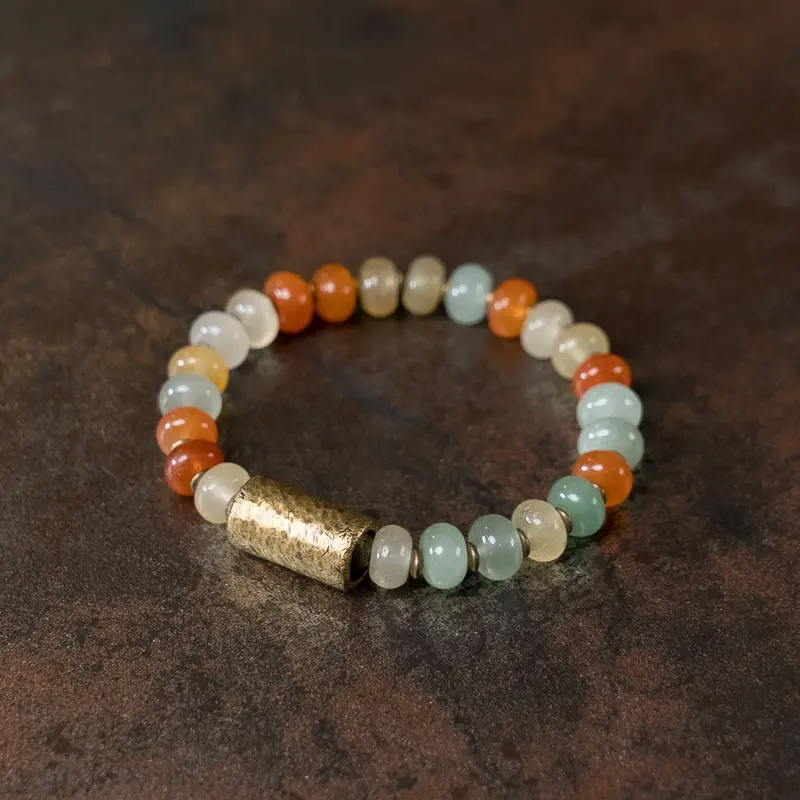
7 Chakra Multi-Color Agate Bracelet | Emotional Balance & Harmony
Align your energy centers. A spectrum of healing in one strand.
This vibrant **Multi-Color Agate Bracelet** is a wearable alignment tool. Featuring 8x5mm Abacus beads in earthy reds, soothing greens, and warm yellows, it resonates with multiple energy centers to create total **Chakra Balance**.
Anchored by a textured **Antique Brass Cylinder**, this bracelet grounds scattered energy while uplifting your spirit. It is the perfect daily companion for Yoga practice or stress relief.
- 🌈 Stone: Natural Agate (Stabilizing & Strengthening)
- ⚖️ Function: Balances Yin & Yang, Harmonizes Chakras
- 📏 Design: 8*5mm Abacus Beads with Brass Spacers
- ✨ Intention: Balance, Emotional Stability
Preparation and Essential Tools for Sacred Activation
Required Items for Purification and Preparation
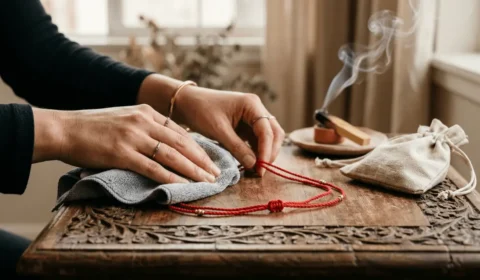
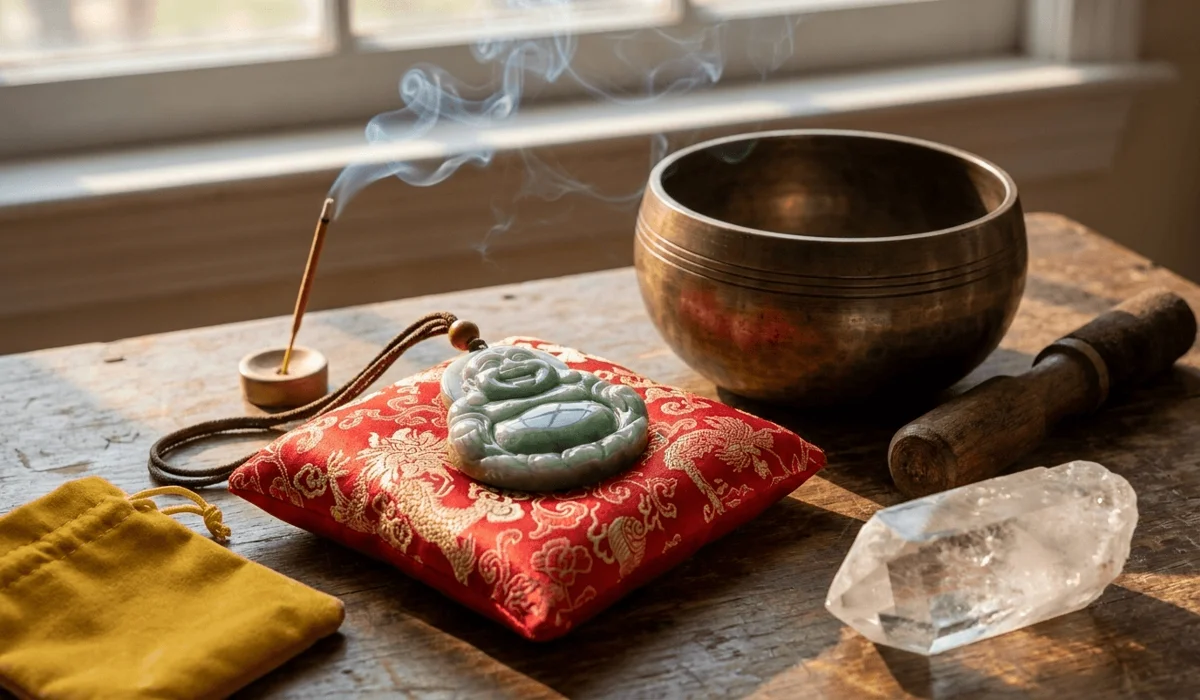
Before putting on a new amulet for the first time, our studio team recommends gathering a few simple tools to clear old energetic imprints. Having these dedicated items ready makes your cleansing process smooth and peaceful.
- ✨ Natural Incense: Natural Sandalwood sticks, Palo Santo, or dried White Sage bundle for smoke purification.
- 🕯️ Sound Tools: A small Tibetan singing bowl or clear quartz chime to clear dense stagnant energy.
- 🧭 Natural Cord or Chain: An adjustable silk cord or sterling silver chain long enough to sit over your sternum.
- 🛡️ Dedicated Storage: A clean red silk pouch, yellow velvet bag, or elevated wooden box for resting the piece overnight.
- 🧼 Maintenance Cloth: A soft microfiber cloth reserved strictly for wiping down sacred jewelry.
Using natural materials honors the traditional elements of Earth, Fire, Air, and Metal during your ritual. These tools work together to revive the natural vibration of your stone or metal piece.
Cleansing Your Space Before Ritual Activation
Preparing the surrounding atmosphere is just as important as preparing the amulet itself. Choose a quiet room with open windows during the peaceful morning hours when fresh Chi (气) is highest.
Clear away room clutter and light your natural incense so the aromatic smoke can drift through the air. Take three slow, deep breaths to quiet your mental chatter before beginning your cleansing session.
For historical context on sacred symbols across global cultures, you can research references in an Online Free Encyclopedia to broaden your understanding.
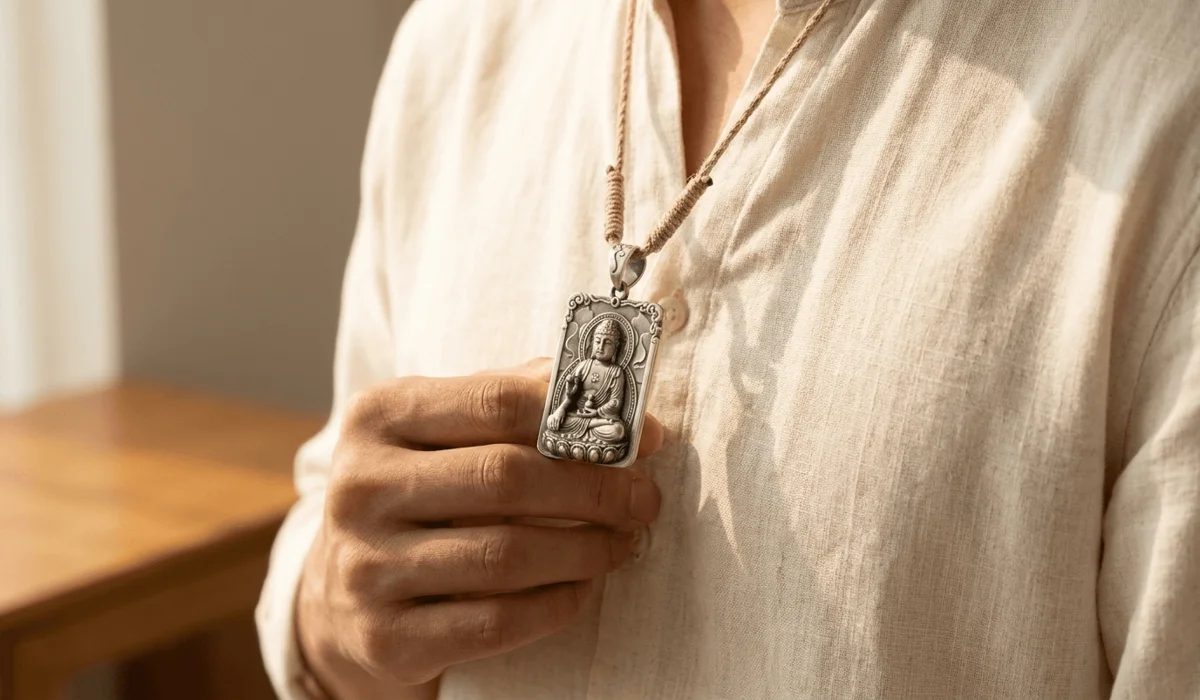
Step-by-Step Guide: How Non-Buddhists Can Respectfully Select and Wear a Buddhist Pendant
Step 1: Setting Pure Mindful Intention and Cultivating Respect
Begin by defining why you wish to wear a sacred icon. Hold the clean piece in both hands near your chest and feel its weight against your palms.
Formulate a silent thought of goodwill, protection, and gratitude. Remind yourself that the image represents wisdom, patience, and boundless compassion.
Approaching the piece with pure intention creates an immediate positive link between your heart and the sacred symbol. This subtle shift transforms a decorative item into a personal energetic shield.
Step 2: Selecting Appropriate Iconography (Full-Body vs. Symbolic Amulets)
When choosing your jewelry, always select figures that depict the complete body of the Buddha, Guan Yin, or sacred symbols like the Lotus or Vajra. Complete figures represent whole spiritual realization and balanced natural energy.
Avoid buying standalone Buddha heads or severed face pendants. In Asian history, isolated head statues were created when sacred temples were vandalized and looted, making them symbols of destruction rather than peace.
Selecting intact symbols honors historical tradition and ensures that your piece radiates uplifting vibration.
Step 3: Cleansing and Energetically Purifying the Pendant
Hold your new pendant carefully over the rising smoke of burning Sandalwood or Sage for about thirty seconds. Imagine all old lingering energy from manufacturing, shipping, and handling fading away into the air.
Next, place the pendant near your Tibetan singing bowl and strike the bowl gently. Let the clear ringing sound waves flow over the piece to restore its natural baseline energy.
This simple dual action cleanses both the physical surface and the subtle energetic aura of the stone or metal.
Step 4: Adjusting Chain Length for Above-Heart Placement
Thread your pendant onto an adjustable cord or sturdy chain. Adjust the length so the charm rests squarely on your upper sternum, right over your heart center.
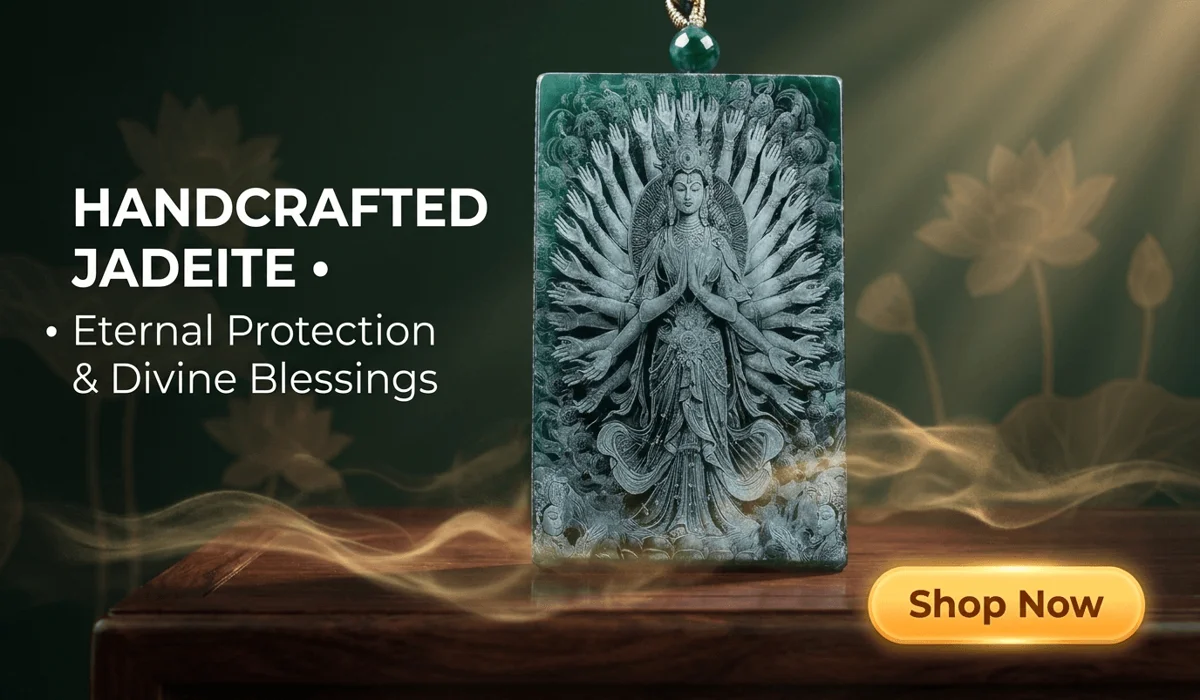
To explore authentic design options crafted for spiritual wear, view our Sacred Buddhist Necklaces Collection for daily inspiration.
Keeping the charm high on your chest ensures that it stays in an elevated, pure zone above your waistline. Check the length in a mirror to make sure it does not dangle low when you sit down.
Step 5: Adhering to Daily Wearing, Storage, and Respect Taboos
Put on your cleansed pendant every morning after washing your hands and face. Maintain a peaceful, conscious mindset as you fasten the clasp over your neck.
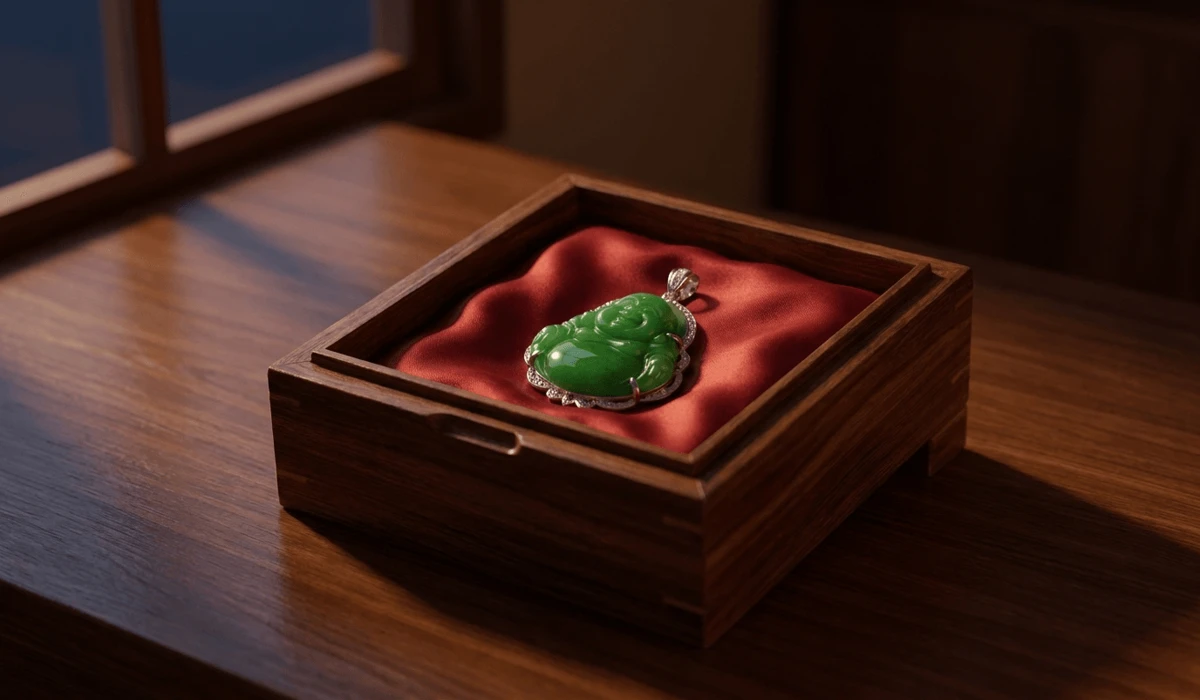
Take off the jewelry before sleeping, showering, or participating in intense physical workouts. Place it inside a dedicated silk pouch or elevated wooden box on a nightstand above floor level.
Treating your amulet with consistent daily care keeps its protective energy clear and strong for years to come.
The Logic of Sacred Placement: Energetic and Feng Shui Principles
Heart Chakra (Anahata) Alignment
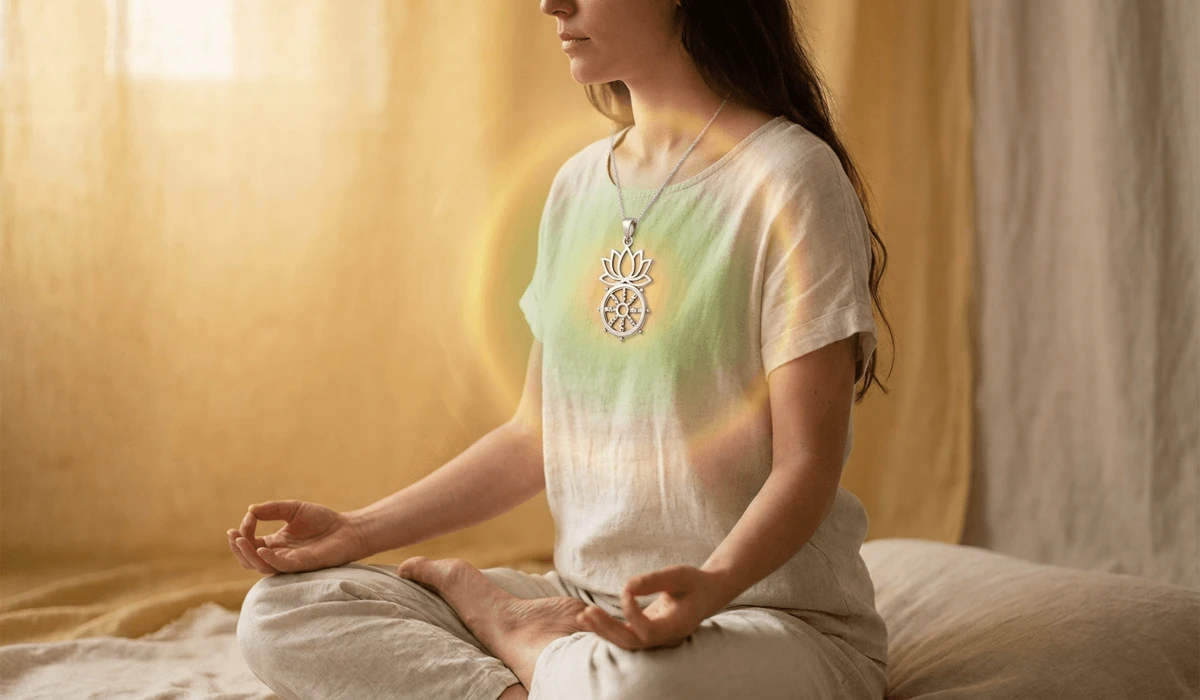
In traditional energetic systems, the heart center, known as the Anahata chakra, acts as the primary gateway for emotional harmony and self-healing. Placing enlightened imagery directly over this area nurtures personal peace.
The subtle light of the sacred figure acts as a magnifying lens for your own inner goodness. It reminds your subconscious mind to respond to daily stress with patience and gentleness.
This upper-chest positioning creates an energetic cushion that repels harsh emotional waves from your environment.
Energetic Drain of Lower Body Placement
In classical Feng Shui, the lower half of the human body handles metabolic elimination and heavy physical grounding. Allowing sacred iconography to hang near or below the waistline lowers its vibrational resonance.
Lower body placement drains the spiritual authority of the sacred symbol, causing your personal aura to lose its protective focus. Keeping sacred figures elevated maintains proper metaphysical order.
For deeper insights on spatial and personal energy balance, examine research published by Chinese Metaphysics Research.
The Cultural and Metaphysical Taboo of Isolated Buddha Heads
Understanding why severed Buddha head jewelry is problematic requires a brief look into Eastern history. During foreign invasions across Asia, invaders broke the heads off temple statues to steal valuable metals and display conquest.
Wearing an isolated head inadvertently celebrates that historical violence and decapitation. From a metaphysical view, a head severed from its body symbolizes broken energy and spiritual disharmony.
Choosing full-body carvings or abstract sacred geometry protects you from carrying heavy historical karma on your neck.
Critical Taboos and Direct Rules of Respect to Avoid Offense
Warning – Essential Sacred Rules: Never wear an isolated Buddha head, as severed imagery represents historical desecration. Never let your pendant hang below your waist, wear it into the shower, or keep it on during romantic intimacy. Always store sacred jewelry on elevated surfaces off the floor.
To help you navigate traditional guidelines effortlessly, our team has organized the core rules into five practical reminders. Adhering to these standards ensures your wearing practice remains respectful and spiritually beneficial.
- Reject Severed Imagery: Only wear complete full-body figures or sacred geometric symbols like the Lotus or Dharma Wheel.
- Maintain Chest Height: Keep the pendant positioned above your heart chakra and strictly above your waistline at all times.
- Remove During Impure Activities: Always take off your pendant before entering bathrooms, taking baths, swimming, or engaging in intimate encounters.
- Elevate Off the Floor: Never place your sacred jewelry directly on the ground, carpet, or under unwashed clothes.
- Avoid Empty Fashion Use: Treat your piece as an active spiritual reminder rather than a superficial trend item.
Following these clear boundaries demonstrates true cultural reverence and keeps your personal energetic field clear of disharmony.
Video source: YouTube
Author: TashiTangka
Original video link: https://www.youtube.com/watch?v=b_5dwInIMXU
Maintenance and Recleaning: When to Repeat the Purification Process
Signs Your Pendant Has Absorbed Stagnant or Heavy Chi
Over time, active natural materials like natural jade, gold, or silver absorb ambient vibrations from your environment. You might notice the piece suddenly feels unusually heavy, cold, or uncomfortable against your skin.
If you experience sudden mood swings, unexplainable fatigue, or if the chain breaks unexpectedly, your pendant has likely absorbed heavy emotional energy. Visiting hospitals, attending funerals, or enduring heated arguments can also saturate the piece with stagnant Chi (气).
When exercising or engaging in sports, check our guide on Feng Shui Energy Wear to protect your delicate spiritual items.
Optimal Cleansing Schedule
We advise cleansing your sacred pendant at least once a month, ideally during the night of the Full Moon. Place your piece near a window sill where pure moonlight can bathe the stone or metal overnight.
If your pendant is touched by strangers or accidentally falls onto an unclean floor, perform an immediate smoke purification session. Regular clearing keeps the spiritual pathway between you and your amulet completely open.
| Purification Method | Recommended Frequency | Primary Energetic Benefit |
|---|---|---|
| Sandalwood Smoke Purification | Weekly or after crowded events | Clears superficial emotional debris and lingering environmental stress |
| Singing Bowl Sound Bath | Bi-weekly or after stressful conflict | Resets crystal vibrational frequency and clears deep stagnant energy |
| Full Moon Light Bath | Once per month on Full Moon night | Recharges stone vitality and amplifies gentle intuitive Chi (气) |
To align your cleansing rituals with traditional lunar timing, explore resources at Traditional Chinese Astrology.
Frequently Asked Questions
Q: Is it culturally acceptable for a non-Buddhist to wear a Buddhist pendant?
A: Yes, non-Buddhists can wear a Buddhist pendant provided it is selected and worn with genuine respect, proper full-body iconography, and pure mindful intention.
Q: Why is wearing a Buddha head pendant considered bad luck or offensive?
A: Isolated head pendants originate from the historical vandalizing and looting of Asian temples, making severed head symbols representative of destruction, violence, and spiritual disharmony.
Q: Can I wear my sacred Buddhist pendant in the shower or while swimming?
A: No, you should always remove your sacred pendant before bathing, showering, or swimming to prevent physical damage and maintain traditional energetic purity.
Q: What should I do if my sacred Buddhist pendant breaks or falls off?
A: A suddenly broken pendant or chain often indicates that the item has absorbed a heavy energetic impact on your behalf. Cleanse the broken pieces, wrap them in clean red paper or silk, and return them respectfully to nature by burying them in soil.
Q: Can I sleep while wearing my Buddhist pendant?
A: No, you should remove your pendant before sleeping and store it in an elevated silk pouch or wooden box to keep it safe from accidental damage and restless sleep energy.
Embracing Mindfulness: How Sacred Jewelry Enhances Daily Life
The Supremacy of Mindful Intention
Ultimately, a physical pendant serves as a clear mirror reflecting your internal spiritual state. The object itself holds potential energy, but your daily mindset and actions activate its true spiritual value.
When you align clean personal intentions with traditional rules of respect, your jewelry becomes a constant source of inspiration. It anchors your attention back to the present moment whenever you touch it during a busy workday.
Approaching your pendant with ongoing reverence nurtures a peaceful environment within your home and mind.
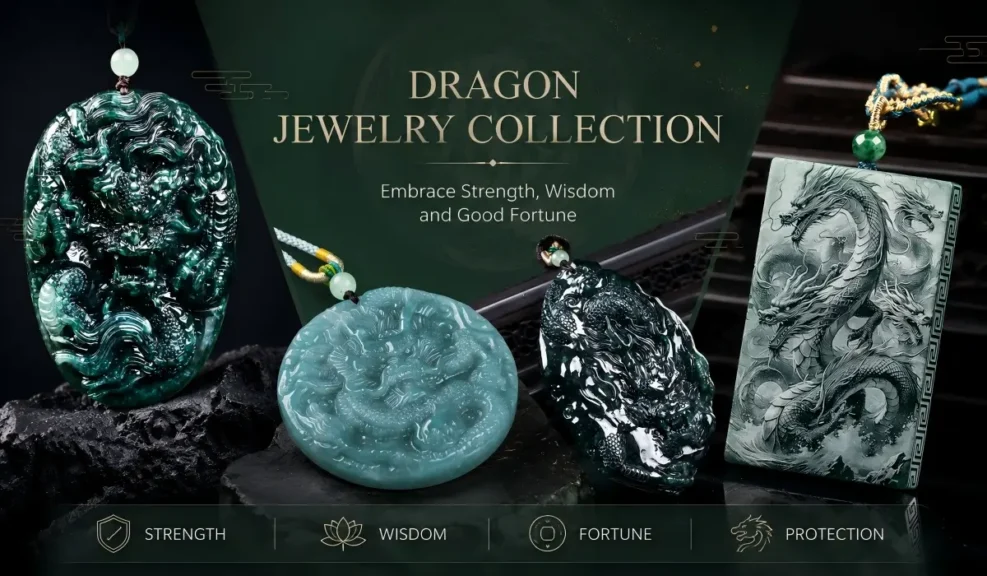
Living with Daily Reverence
Allow the gentle physical weight of the charm against your chest to act as a reminder for peaceful speech, thoughtful actions, and emotional calm. Whenever you catch your reflection in a mirror, let the image prompt you to practice patience.
By treating Eastern spiritual traditions with authentic honor, you build a bridge of genuine cultural appreciation. Sacred jewelry worn with mindfulness transforms daily routines into a walking spiritual practice.
Final Energetic Reminder: True protection and harmony flow from within. Keep your heart clear, wear your sacred symbols high with respect, and let your pendant serve as a daily compass toward compassion and inner peace.
Next Steps for Authentic Energy Alignment
Now that you understand the essential rules and energetic logic behind wearing sacred Eastern iconography, you can select your piece with complete confidence. Explore Buddha Bodhis’ curated collection of ethically sourced full-body pendants to begin your personal journey today.
This article is provided strictly for educational, informational, and cultural exchange purposes. It does not constitute medical, legal, financial, or professional advice. Readers seeking personalized spiritual or health guidance should consult qualified professional practitioners.
Written by the Buddha Bodhis Team
Since 2020, we have been devoted to exploring traditional year-based wisdom, classical Feng Shui principles, and the rich spiritual symbolism rooted in Eastern cultural heritage. Our work bridges ancient metaphysical systems with modern life, interpreting annual cycles, elemental energies, and symbolic meanings to offer thoughtful insight and practical guidance. Through continuous research and practice, we aim to preserve traditional knowledge while making it accessible, relevant, and meaningful for contemporary seekers of balance, intention, and personal growth.
TikTok | YouTube | Pinterest | X
buddhabodhis@gmail.com