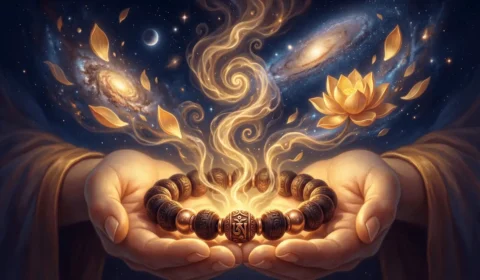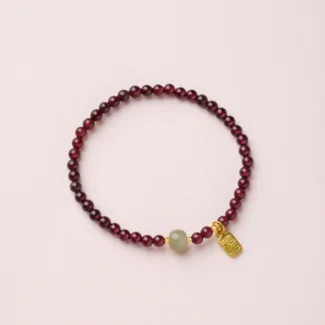




Om Mani Padme Hum Mantra and Mala Practice is a beautiful way to bring more peace and compassion into your life. Many of us feel overwhelmed by the fast pace of the modern world. We often search for a way to stay grounded and connected to our inner selves. Based on our experience at Buddha Bodhis, using prayer beads makes this ancient chant much more powerful and easier to follow.
- The Om Mani Padme Hum mantra is linked to the Bodhisattva of Compassion.
- Using 108 beads helps you track your progress and stay focused.
- Each syllable has a deep meaning that cleanses the mind and heart.
- Correct finger placement is key to a traditional and respectful practice.
- Proper care and cleansing keep your spiritual tools energetically fresh.
What Is the Om Mani Padme Hum Mantra and Mala Practice?
This practice is a core part of Tibetan Buddhism that focuses on the heart. The mantra is the most famous chant in the world because of its simple yet deep power. We find that combining the sound with the physical touch of Buddhist Mala Beads creates a strong mental anchor.
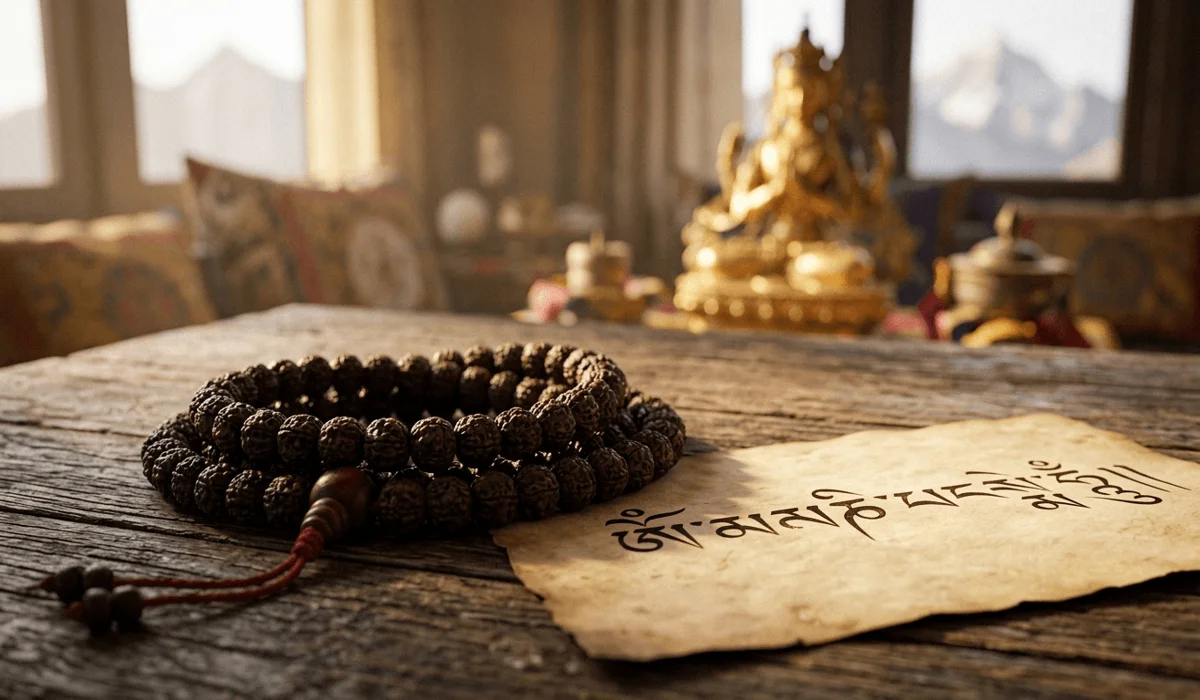
Definition of the Six-Syllable Mantra
The mantra is the primary sound associated with Chenrezig (Avalokiteshvara), the figure of ultimate compassion. It is a sacred vibration used to turn the mind toward helping others and finding enlightenment. Many people call it the Mani mantra because it is so central to daily life in Tibet.
Tibetan Buddhist Mantra Meaning
This chant acts as a bridge between your current state and the enlightened qualities of the heart. It is said to hold the entire essence of the Buddha’s teachings in just six sounds. When we recite it, we are asking for universal peace and a deep sense of empathy for all living things.
Overview of Buddhist Meditation Tools
A mala is a string of beads used to count how many times you say a prayer. Traditionally, it has 108 beads and one larger bead called a Guru bead. These tools are often made from materials like dark Bodhi seeds or sandalwood to help you feel more connected to nature.
Spiritual Meaning & Symbolism of the Mani Mantra
Understanding the symbolism of each sound helps you focus during your daily routine. Each part of the chant works on a different level of your soul and mind. Our team has noticed that knowing these details makes the practice much more meaningful for beginners.
Meaning of Each Syllable in Om Mani Padme Hum
The word Om represents the impure body and mind transforming into the pure state of a Buddha. Mani translates to Jewel, which stands for the love and compassion needed to reach enlightenment. Padme means Lotus, a flower that grows in mud but stays beautiful and pure.
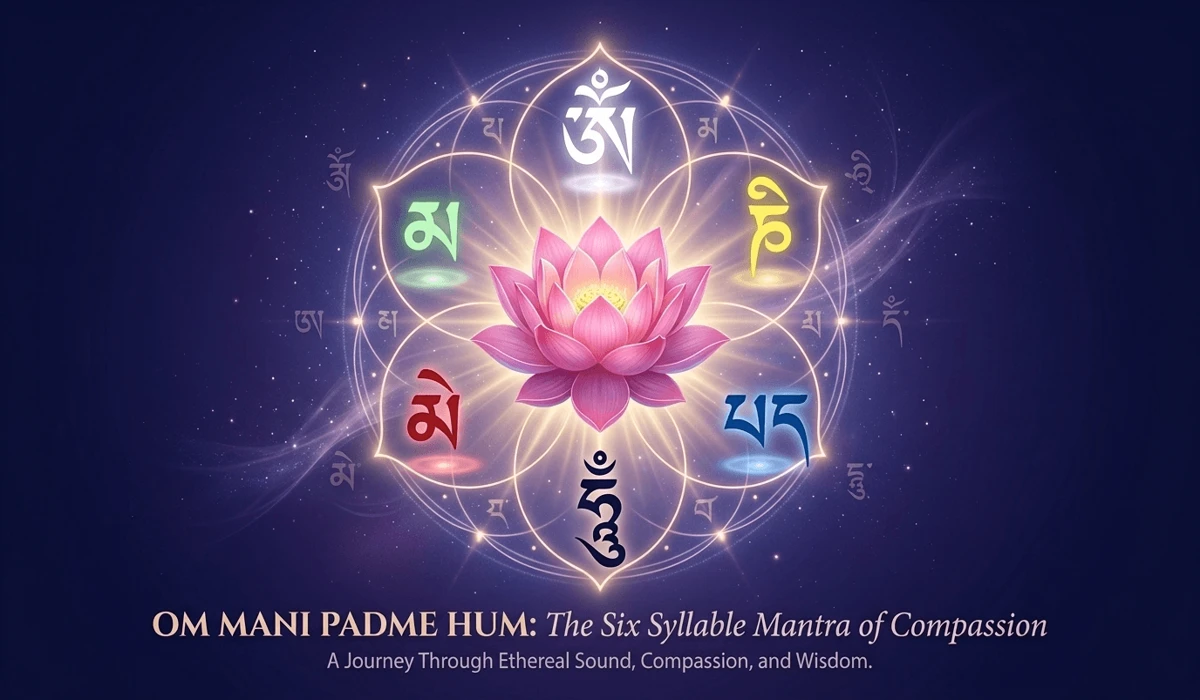
The final sound, Hum, represents the unity of wisdom and method that cannot be broken. Together, these six syllables guide the practitioner toward a higher state of being. You can learn more about how these concepts relate to your life in our Sacred Mantra Meanings article.
Connecting with Avalokiteshvara through Mantra
Avalokiteshvara is seen as the embodiment of infinite compassion in the Buddhist world. By chanting this mantra, you are calling out to this energy to wake up the same seeds of love inside you. We believe the sound vibrates in the heart chakra to help you open up to the world.
Significance of 108 Beads in Buddhist Practice
The number 108 is very special and appears often in Eastern spiritual traditions. These beads represent the 108 different worldly sins or distractions that we want to overcome. Moving through a full circle on your mala ensures you spend a good amount of time being mindful.
Benefits & Intentions of Chanting Om Mani Padme Hum Daily
Consistency is the secret to seeing real changes in your mood and outlook. When we chant every day, we build a “muscle” for patience and kindness. Many of our customers say they feel a “cooling” sensation in their emotions after just a few minutes of practice.
Spiritual Merit Accumulation
In traditional teachings, this chant is said to close the doors to the six realms of suffering. It is a powerful way to clear away bad karma and past mistakes that hold you back. We view it as a way to gather spiritual “merit” or positive energy for the future.
Mindfulness and Mantra Integration
The repetitive rhythm of the chant helps stop the mind from wandering off to worry about work or bills. It creates a state of “calm abiding” that lowers stress and mental noise. It also reminds us to practice Metta (慈悲), which is the act of wishing well for everyone you meet.
Experiential Observations of Sacred Sound
The physical vibration of your voice during the chant can actually help balance your internal energy. We have seen many practitioners find emotional release or a sense of deep peace during these sessions. It acts as a protective shield for your mind against negative thoughts and bad moods.
| Syllable | Symbolic Color | Purifies This Realm |
|---|---|---|
| Om | White | Gods / Pride |
| Ma | Green | Demi-gods / Envy |
| Ni | Yellow | Humans / Desire |
| Pad | Blue | Animals / Ignorance |
| Me | Red | Hungry Ghosts / Greed |
| Hum | Black/Blue | Hell / Anger |
This table shows how each sound connects to a specific part of the human experience. If you are interested in how physical stones help with these energies, see our Crystal Energy Guide. Many people choose specific beads to match these traditional colors for better focus.
How to Use Mala Beads for Om Mani Padme Hum
Using the beads correctly is a sign of respect and helps you stay in the flow of meditation. It might feel a bit strange at first, but it quickly becomes a natural habit. We suggest practicing the movement slowly for the first few days until you feel comfortable.
Video source:YouTube
Author:Scout
Original video link:https://www.youtube.com/watch?v=E7hovSTyIjk
Proper Way to Hold a Mala for Mantra Recitation
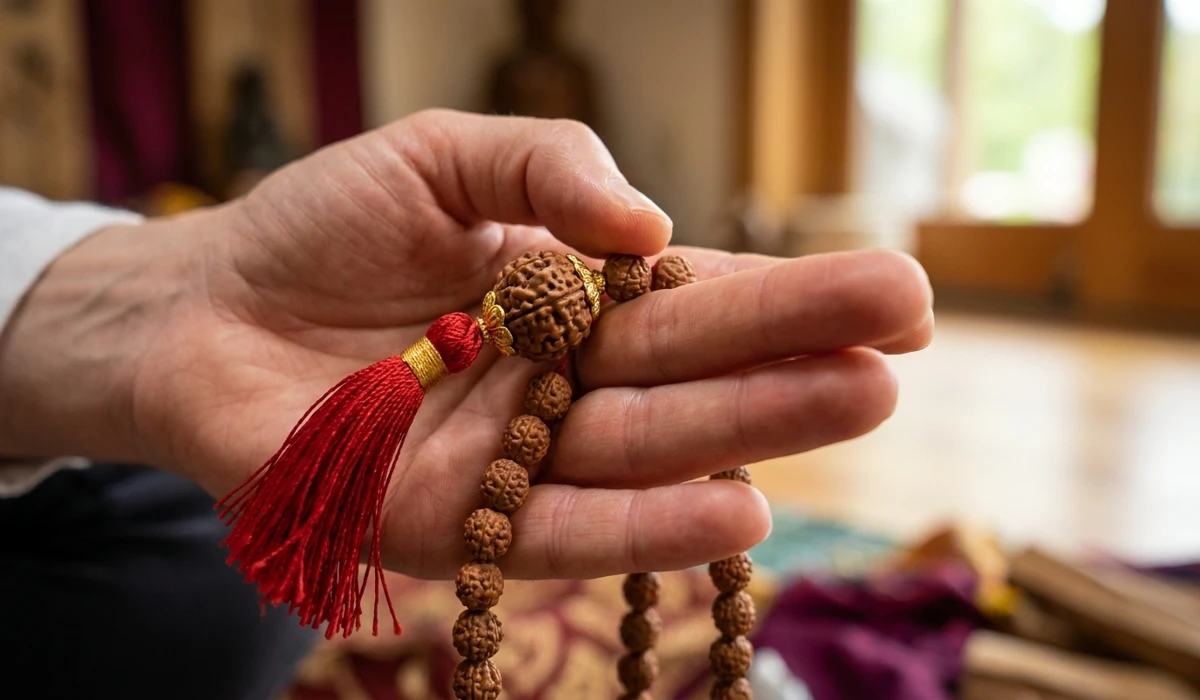
In the Tibetan tradition, you should hold the beads in your left hand. This hand represents wisdom, while the right hand usually represents the physical work or method. You can let the beads drape over your middle or ring finger to keep them steady and safe.
Mala Bead Finger Placement and Technique
Use your thumb to hook the bead and pull it toward your palm as you finish each mantra. Pulling the beads toward you symbolizes that you are bringing blessings into your life. When you reach the large Guru bead, do not cross over it; instead, turn the mala around and go back.
Intention-Setting and Wearability
Before you start, take a moment to set an intention for your practice. Many people wear their beads as a necklace or wrap them on their wrist when they are not meditating. This keeps the energy of the mantra close to you all day long, even when you are working.
Om Mani Padme Hum Mala Practice vs. Other Mantra Recitations
There are many beautiful chants in the world, and each has its own purpose. The Mani mantra is often chosen by beginners because it is very easy to learn. We often get questions at Buddha Bodhis about how it compares to other popular chants like the Tara mantra.
Mani Mantra vs. Tara Mantra
While both are used for spiritual growth, they have different “flavors” in meditation. The Mani mantra is focused on universal compassion and healing the heart. The Tara mantra (Om Tare Tuttare Ture Soha) is often used for fast protection and overcoming specific fears in life.
Six-Syllable Mantra vs. Single Syllable Om
Chanting “Om” alone is a way to align yourself with the sound of the entire universe. However, the six syllables of the Mani mantra provide a specific path for training your mind. Using beads for this chant gives you a more structured framework for your daily spiritual work.
For those looking for academic details on the stones used in these tools, you can check the Gemological Research Institute. They offer great data on the physical properties of many sacred materials. Understanding the science behind the beads can sometimes make you appreciate them even more.
Who Is the Mani Mantra Mala Practice Suitable For?
This practice is open to everyone, regardless of their background or experience. You do not need to be a monk or have years of training to start. We believe that anyone with a sincere heart can benefit from the calming effects of the Mani mantra.
Beginners Seeking Spiritual Foundation
If you are new to meditation, this is one of the best ways to build a habit. The beads give your hands something to do, which stops you from getting bored or distracted. It is a very practical entry point into the world of mindfulness and self-care.
Energy Alignment and Compassion Building
This is also great for people who work in stressful jobs like healthcare or teaching. It helps prevent burnout by keeping your heart open but calm. It is a tool for emotional healing that anyone can use to find balance during a busy week.
Educational groups like London Buddhist Education offer more resources on how these traditions are taught today. They provide a wider context for why these rituals have lasted for thousands of years. Learning about the history can deepen your own personal connection to the beads.
How to Cleanse, Prepare, and Care for Your Mala
Your mala is a sacred tool and should be treated with care and respect. Over time, the beads can absorb your energy and the environment around you. We suggest keeping them in a dedicated place to maintain their spiritual quality.
Guidelines for Keeping Mala Beads Sacred and Clean
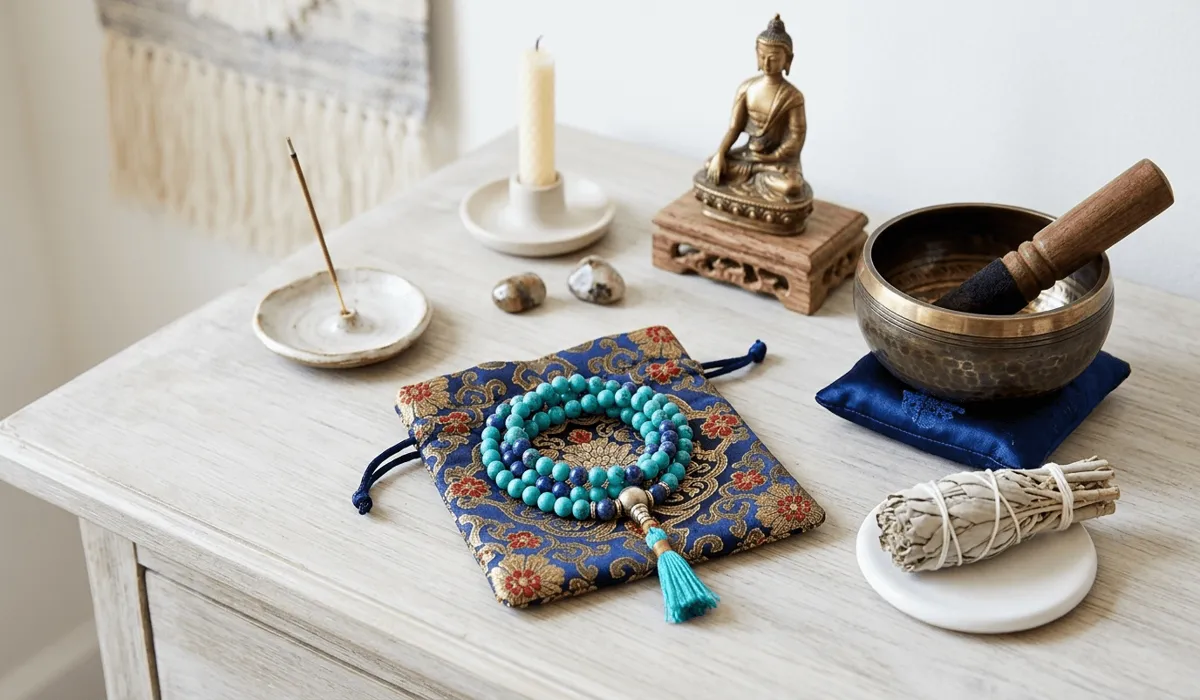
Always store your beads in a clean, elevated spot or a silk pouch. Avoid leaving them on the floor or taking them into messy or impure places. If your beads are made of wood or seeds, you can gently wipe them with a slightly damp cloth if they get dirty.
How to Prepare Your Buddhist Mala for Practice
To “activate” your beads, hold them between your hands and say the mantra several times. At the end of your session, some people choose to blow gently on the beads to “seal” the good energy. Think of the mala as an extension of your own spiritual path, not just a simple necklace.
Daily Care and Storage
Natural materials like wood and seeds can crack if they get too wet, so keep them away from water. If the string breaks, it is often seen as a sign that your karma has shifted or “ripened.” You can also look for gemstone advice at the British Gemmological Standards to see how to care for harder stones.
Summary Recommendation: We suggest starting with just 10 minutes of mantra practice each morning. Use your beads to count one round of 108 repetitions. This small commitment will create a lasting sense of peace that stays with you throughout the whole day.
Frequently Asked Questions
Q: What is the meaning of the Om Mani Padme Hum mantra?
A: This six-syllable prayer represents the path to turning an impure mind into the pure and compassionate mind of a Buddha. Each part of the sound helps cleanse a different emotional struggle like pride, jealousy, or greed.
Q: Which hand should I hold my mala in while chanting?
A: Most Tibetan traditions suggest holding the mala in your left hand at the level of your heart. This symbolizes that you are working on your internal wisdom while your right hand remains ready for action in the world.
Q: How many times to chant Om Mani Padme Hum on a mala?
A: A standard practice is one full circuit of the 108 beads, which is called one “round.” Many people do one round a day, while others do 21 repetitions for a quick boost of calm.
Q: Difference between oral and mental mantra recitation?
A: Oral recitation uses your physical voice and helps you focus your body. Mental recitation is done silently in your mind and is often considered more powerful because it works directly with your thoughts.
Q: How do I prepare my Buddhist mala for practice?
A: You can prepare your beads by holding them in both hands and setting a positive goal for your session. You may also want to visualize light filling the beads as you begin your very first round of chanting.
Conclusion & Gentle Next Step
The Om Mani Padme Hum mantra is a timeless gift that helps us find a heart of gold. Using a mala adds a physical touch to your spiritual journey, keeping you grounded when life feels fast. We invite you to try this practice and see how it changes your daily energy. By spending just a few minutes with your beads, you are joining a long tradition of people spreading love and peace. Explore our collection of handcrafted tools to find the one that speaks to your soul today.
This content is provided for informational and cultural exchange purposes only. It does not constitute medical, legal, financial, or other professional advice. Readers should consult with qualified professionals if they have specific needs or concerns.
Written by the Buddha Bodhis Team
Since 2020, we have been devoted to exploring traditional year-based wisdom, classical Feng Shui principles, and the rich spiritual symbolism rooted in Eastern cultural heritage. Our work bridges ancient metaphysical systems with modern life, interpreting annual cycles, elemental energies, and symbolic meanings to offer thoughtful insight and practical guidance. Through continuous research and practice, we aim to preserve traditional knowledge while making it accessible, relevant, and meaningful for contemporary seekers of balance, intention, and personal growth.
TikTok | YouTube | Pinterest | X
buddhabodhis@gmail.com