

We often look for peace in a busy, noisy world. Many people turn to ancient art to find a sense of calm and clarity. Among all sacred symbols, few speak to the human heart as quietly as the painted Zen circle.
This simple circular stroke looks modern and clean, yet it carries centuries of spiritual depth. It reminds us to slow down, breathe, and find rest in the present moment. At Buddha Bodhis, we study these sacred forms to help you bring timeless harmony into your daily routine.
When we understand Enso Circle Meaning: The Zen Symbol of Enlightenment, we realize that life does not demand rigid perfection. Instead, it invites us to meet each day with an open and honest spirit. This single brushstroke holds the gentle wisdom of an entire spiritual tradition.
Quick Summary: The Enso is Zen Buddhism’s sacred circle, brushed in a single exhale to signify enlightenment, the fertile void (Sunyata), and cosmic wholeness. It symbolizes non-duality, the beauty of imperfection (Wabi-Sabi), and the truth that wholeness embraces our unfinished, ever-changing nature in the present moment.
Ancient Origins and Sacred Lore of the Enso
The story of the Zen circle began long ago in Eastern monasteries. It grew from deep spiritual encounters within Japanese Zen Buddhism and Chinese Chan Buddhism. These early masters wanted to share truth without relying on endless books or spoken lectures.
The Early Roots of Chan Buddhism
In the sixth century, early Chan teachers would sit with their students on dusty monastery grounds. When a student asked about the true nature of reality, the master often stayed silent. Instead of lecturing, the teacher would pick up a small twig and trace a simple circle in the dust.
This dust circle spoke louder than words. It pointed directly to the mind of the seeker and showed that truth lives inside us right now. Scholars at the Online Cultural Encyclopedia note how these early gestures formed the backbone of wordless wisdom across Asia.
The lineage of Bodhidharma carried this direct method across generations. Masters taught that enlightenment is not a distant trophy you earn through hard study. It is an innate quality of the human spirit that awakens when we stop overthinking.
Hitsuzendo and the Single Breath Stroke
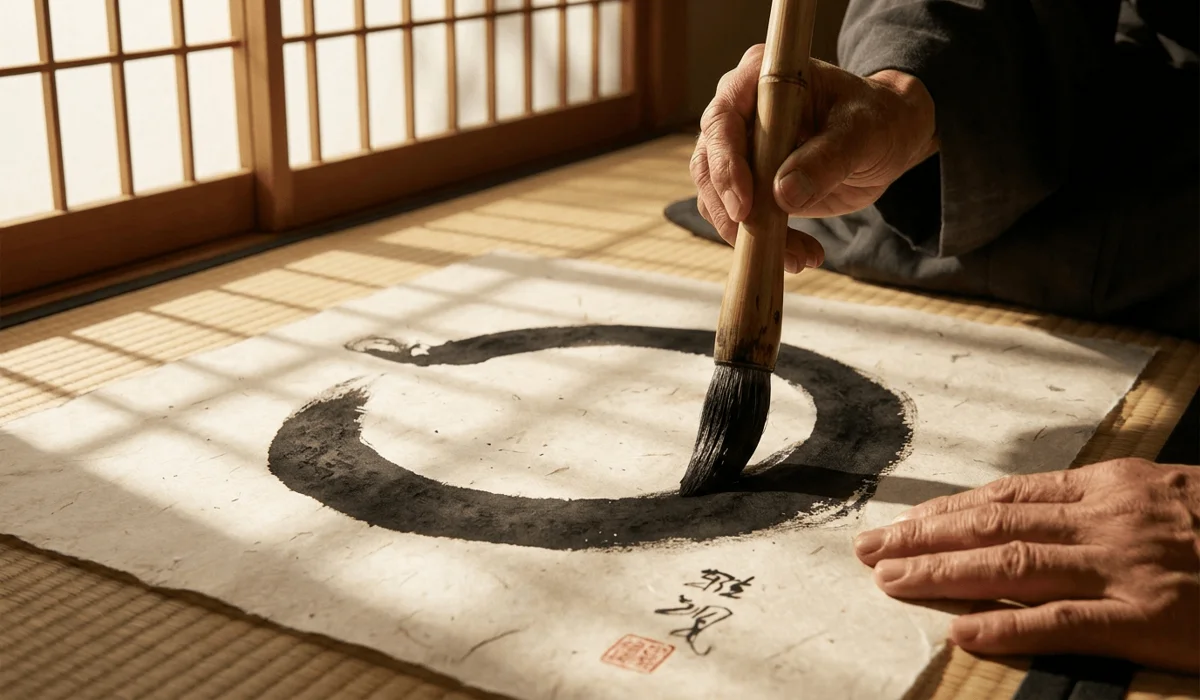
As the tradition traveled to Japan, this practice evolved into Hitsuzendo, which means the way of the brush. Japanese masters treated ink and paper as a mirror of the soul. They picked up the thick bamboo brush not to make pretty pictures, but to train their minds.
During the Edo period, great masters like Hakuin Ekaku and Sengai Gibon transformed this discipline into high art. They would stand over a sheet of raw paper, quiet their thoughts, and gather their life force. Then, in one long, unhurried exhale, they swept the brush across the page in a single arc.
This ritual of one breath allowed no second chances and no touch-ups. If the ink skipped or splattered, that raw texture remained as part of the truth. The finished piece served as an honest reflection of the master’s mind at that exact second in time.
Core Wisdom Note: Rooted in early Chan encounters where 6th-century masters traced circles in dust to transmit wordless truth, the Enso blossomed through Japanese Hitsuzendo brushwork. Masters like Hakuin Ekaku captured enlightened mind-states in a single, uncorrectable brushstroke executed in one exhale.
This honest method shows us that true spiritual practice begins with showing up fully for reality as it stands.
The Hidden Philosophy: Decoding the Sacred Zen Circle
At first glance, an inked ring seems basic and easy to draw. Yet the philosophy hidden behind this stroke touches the deepest questions of existence. It bridges the space between nothingness and everything that exists.
Sunyata and the Fertile Void
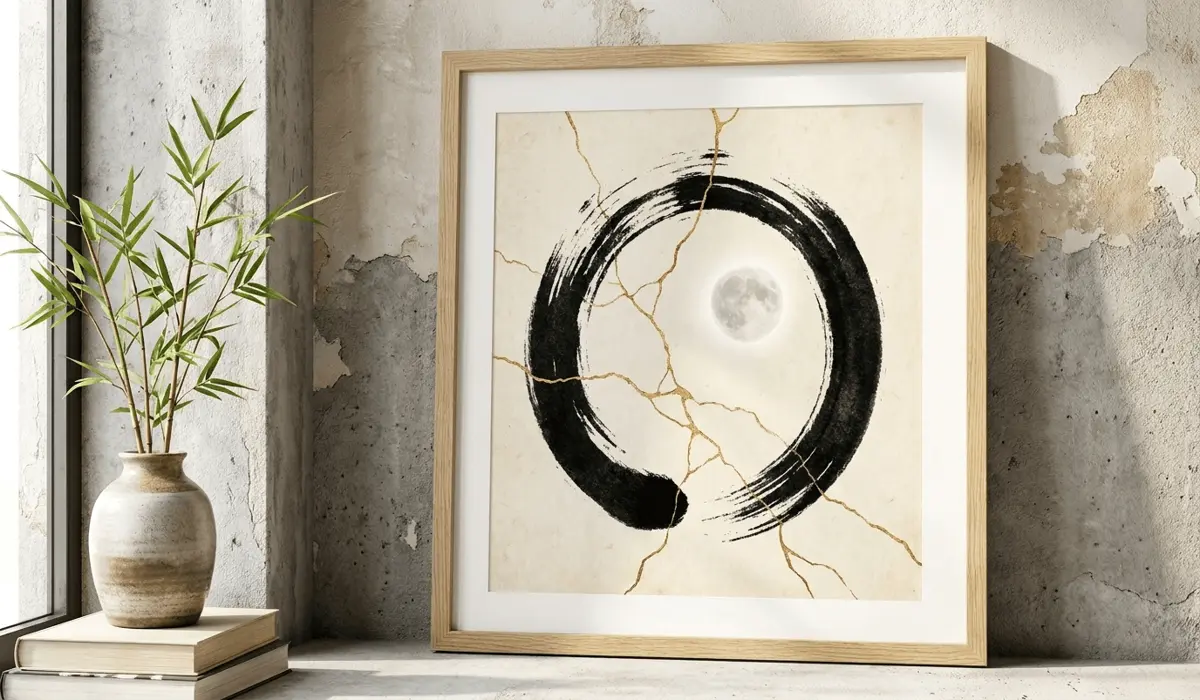
Central to this symbol is the concept of Sunyata, often called the fertile void. In Western thought, empty space often feels lonely or hollow. In Eastern thought, emptiness is fertile ground full of creative potential.
The open center of the circle is not empty air. It represents Mu, the quiet source from which all physical forms appear and to which they all return. Just as a cup is only useful because of its empty interior, the circle draws its power from the space inside it.
This dynamic reflects the classic teaching that form is emptiness and emptiness is form. The dark ink cannot exist without the clean paper beneath it. By looking at both together, we learn that outer events and inner peace share the exact same room.
The Geometry of Imperfection and Wabi-Sabi
Unlike mathematical circles drawn with metal compasses, this sacred form is never symmetrical. The line thickens where the brush presses down and thins out where the bristles lift. This asymmetry is the heart of Wabi-Sabi, the quiet appreciation of natural imperfection.
Nature never creates straight lines or flawless spheres. River stones have rough ridges, tree trunks grow with natural twists, and clouds drift in irregular shapes. When we accept the rough texture of the brush, we learn to stop judging our own human mistakes.
The circle teaches us that our flaws are not errors to hide. They are the marks of our growth and the signs of our real lived experience. True enlightenment happens when we stop fighting reality and welcome our natural lives with grace.
Open Versus Closed Enso Circles
You will often notice two distinct styles when you look at traditional brushwork. Some artists close the loop into a complete ring, while others leave a deliberate opening. Both styles carry deep symbolic lessons for our daily lives.
Here are the key philosophical qualities found in these two sacred expressions:
- ☸️ Open Enso: Leaves a distinct space between start and finish to honor beginner’s mind, personal growth, and continuous learning.
- 🕉️ Closed Enso: Joins smoothly into a complete ring to honor cosmic harmony, full completion, and the unified cycle of nature.
- 🧿 Fertile Space: Reminds the viewer that the open gap invites fresh energy and inspiration into everyday thoughts.
- 🌸 Whole Cycle: Shows that every ending in our daily experience holds the natural seed of a fresh beginning.
Choosing between an open or closed design depends on what you need most in your life right now.
| Design Style | Core Symbolic Theme | Spiritual Meaning | Daily Application |
|---|---|---|---|
| Open Circle | Beginner’s Mind (Shoshin) | Receptivity to change, modesty, and ongoing personal evolution. | Releasing perfectionism and staying curious in new projects. |
| Closed Circle | Universal Wholeness | Totality, self-containment, and integrated cosmic awareness. | Cultivating inner stability, closure, and emotional grounding. |
| Uneven Stroke | Wabi-Sabi Reality | Honoring the beauty of rough textures and honest human limits. | Accepting life transitions and forgiving personal past errors. |
| Full Moon Motif | Awakened Mind (Chogetsu) | Illumination cutting through mental clouds and restless confusion. | Deep meditation, breath focus, and quiet evening reflection. |
Both variations ultimately point back to the same peaceful truth of being alive in the present hour.
Cultural Evolution: From Ancient Monasteries to Global Mindfulness
Over the centuries, this sacred mark stepped out of secluded mountain temples and entered the wider world. In feudal Japan, it hung in the quiet alcoves of tea houses to settle the minds of busy visitors. Today, it serves as a worldwide emblem of mental health, mindful living, and organic balance.
Eastern Roots and Modern Western Psychology
In traditional Eastern practice, painting this circle was never treated as decorative amusement. It was an uncompromising spiritual deed and a real test of inner stillness. A master could look at a student’s brushwork and instantly tell if their breath was rushed or steady.
When Western thinkers began studying Eastern thought, they noticed powerful psychological parallels. Carl Jung spoke often about mandalas and circular symbols as representations of the integrated Self. Gestalt psychology also showed how human minds naturally seek closure while finding deep meaning in open forms.
Today, people around the globe use the circle to counter the constant stress of digital life. It cuts through screen glare with a gentle reminder of paper, brush, and breath. It proves that simplicity still has the power to quiet our restless thoughts.
The Dialogue Between Enso and Yin Yang
There is also an intimate energetic kinship between the Zen circle and classic Taoist cosmology. Both symbols celebrate natural cycles, fluid balance, and the dance between complementary opposites. They show that life thrives on harmony rather than rigid control.

In the physical stroke, dark ink represents bold action and focused energy, while the white ground represents receptive quiet. This balance mirrors how ancient masters viewed seasonal rhythms and bodily health. You can see this same gentle unity within our Zen Balance Jewelry Collection that pairs warm wood with polished metal.
Many homeowners arrange their rooms around these circular concepts to support smooth energetic flow. Certified consultants from the Feng Shui Society often highlight how curved shapes soften sharp edges and reduce family tension. Bringing circular art into your living room creates a serene resting spot for tired eyes.
When we surround ourselves with harmonious shapes, our nervous systems naturally downshift into deep peace.
Wearing the Sacred Circle: Daily Anchors for Presence
Modern living moves at a frantic speed that can leave us feeling scattered and drained. Many seekers choose to wear sacred symbols close to their skin as physical touchstones. Wearing a mindful piece transforms an ancient teaching into a practical everyday habit.
Overcoming Digital Burnout and Overthinking
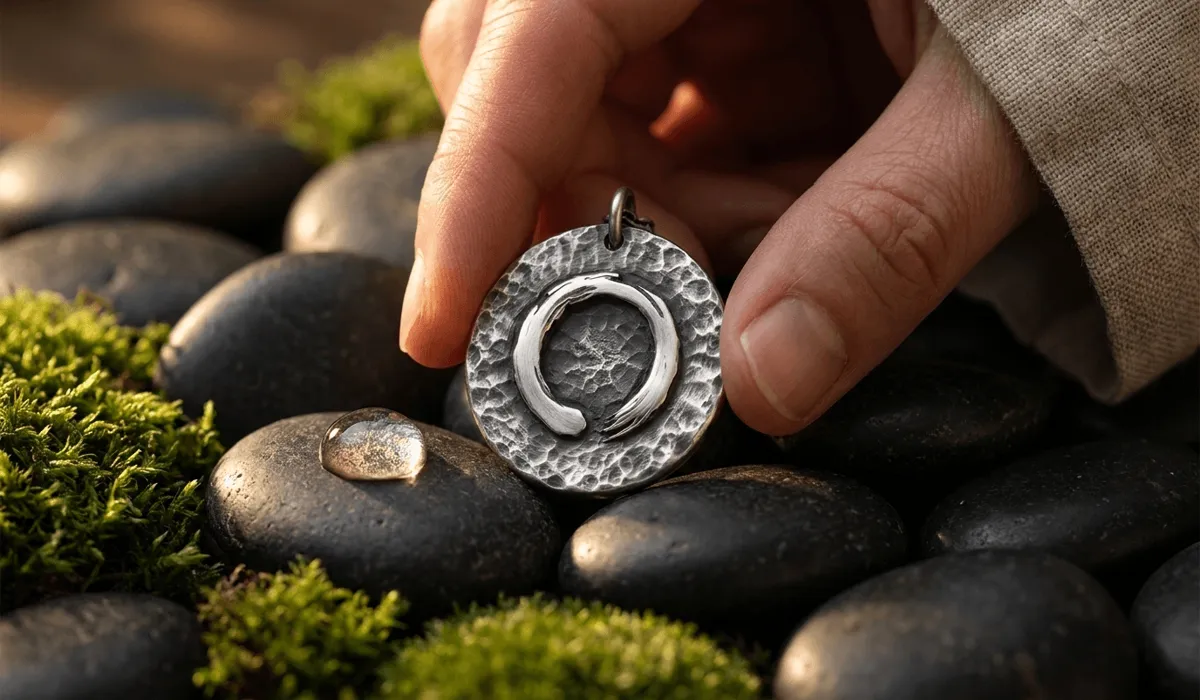
We spend hours every day scrolling through glowing phones and typing on loud keyboards. This constant digital flow fractures our attention and breeds quiet anxiety. A tactile pendant acts as a grounding anchor that brings your wandering mind back to your physical body.
Whenever you feel stress rising during a busy meeting, you can touch your pendant beneath your collar. Feel its smooth edge, its steady weight, and its circular boundary. That single touch acts as a silent cue to take a slow, restorative breath.
This small somatic habit helps break the cycle of frantic overthinking before it takes over your afternoon. It functions like an instant micro-meditation that fits seamlessly into modern professional life. Just as people find strength in Chinese Zodiac Talismans for annual protection, wearing a Zen circle nurtures daily inner peace.
A Badge of Survival and Personal Growth
Many people also choose this sacred emblem after walking through seasons of grief, loss, or personal change. The open circle carries a message of surviving fracture and learning to walk forward again. It says that broken plans do not mean a ruined life.
In traditional Japanese culture, broken ceramics are often repaired with real gold lacquer in an art called kintsugi. The repair makes the vessel stronger and more beautiful than it was before the fall. In the exact same way, the unfinished circle honors the scars and life lessons we carry.
Wearing this piece declares that you are whole even while you are still healing and growing. It gives you permission to be human, complete, and perfectly unfinished all at once. It turns your past difficulties into sources of quiet resilience.
Core Wisdom Note: Embodying Sunyata (the fertile void) and Wabi-Sabi (the beauty of imperfection), the Enso demonstrates that enlightenment is not rigid perfection, but fluid openness to reality exactly as it unfolds.
Carrying this emblem reminds us that every step of our journey holds sacred worth.
Ritual and Practice: How to Meditate with the Enso
You do not need to live in a mountain monastery to experience the benefits of Zen contemplation. You can practice simple mindfulness exercises in your bedroom or home office using a visual image or pendant. These gentle techniques help settle scattered energy and calm an overactive mind.
Breath Alignment and Gaze Meditation
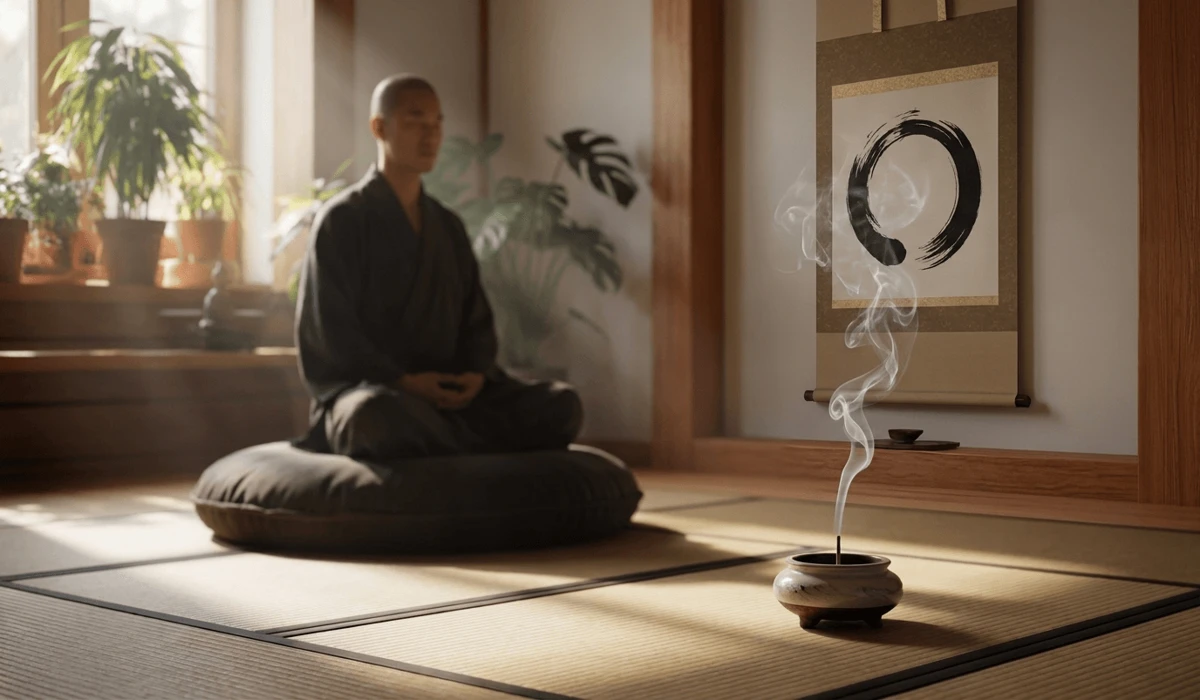
One classic way to practice is through a gentle gaze technique inspired by traditional breathwork. Hang a brushwork scroll on your wall or place a small talisman on your meditation altar. Light a natural stick of sandalwood incense and sit in an upright, comfortable posture.
Fix your soft gaze upon the unpainted center of the circular perimeter. Allow your peripheral vision to relax without staring hard at any single point. Notice how your breathing naturally deepens as you rest your attention in that quiet central space.
Next, align your natural breath with the drawn line of the circle. As you breathe in, imagine energy entering through the open gap and filling your lungs with clarity. As you exhale, follow the dark inked perimeter around, releasing built-up tension from your neck and shoulders.
Video source: YouTube
Author: Symbol Sage
Original video link: https://www.youtube.com/watch?v=vf1etlfrXmY
This simple circular breathing rhythm calms your nervous system within five minutes of focused practice. Just as students study Sacred Deity Symbolism Guides to understand spiritual balance, working with sacred geometry trains the mind to hold calm focus under pressure.
Regular repetition turns this simple visualization into an automatic haven of tranquility during difficult weeks.
Cultural Etiquette and Mindful Respect
Whenever we welcome sacred symbols from traditional cultures, we should do so with sincerity, humility, and care. The Zen circle carries centuries of monastic dedication and spiritual insight. Treating it with reverence honors the lineage that preserved this wisdom for the world.
Intentional Adornment and Conscious Living
People often ask if it is respectful for someone outside of Japan or Buddhism to wear this symbol. The answer lives in your heart and in your daily intention. The masters created this art to communicate universal human truths that transcend borders, languages, and creeds.
Historical records documented by the Historical Encyclopedia Archive describe how Chan and Zen teachings welcomed any sincere seeker regardless of background. As long as you approach the symbol with genuine respect rather than treating it as cheap fashion, you honor its heritage.
When selecting jewelry or home artwork, look for pieces made by mindful artisans who understand the brush stroke. Avoid mass-produced plastic items that distort the form into a cold, computer-generated graphic. Choose materials like sterling silver, natural wood, or hand-loomed paper that carry organic warmth.
Store your talismans in a clean, elevated spot rather than tossing them carelessly across cluttered tables. By treating your mindfulness tools with kindness, you cultivate deeper respect for your own daily practice.
Four-Step Daily Enso Integration Ritual:
- ☸️ Morning Gaze: Spend two quiet minutes looking at your circle while taking five deep, unhurried belly breaths.
- 🕉️ Tactile Intention: Hold your pendant between your thumbs before leaving home, setting an intention to meet delays with patience.
- 🧿 Midday Reset: When work stress peaks, touch your talisman and visualize worries dissolving into the fertile open center.
- 🌸 Evening Release: Before sleep, trace the circular path with your finger, letting go of all unfinished tasks from your day.
These simple micro-actions anchor ancient monastic calm into the flow of modern everyday life.
Frequently Asked Questions
Q: What does the Enso circle mean spiritually in Zen Buddhism?
A: The Enso represents spiritual awakening, the fertile void (Sunyata), non-duality, and cosmic wholeness. It serves as an unedited mirror of the painter’s state of mind, showing that true enlightenment embraces reality exactly as it unfolds in the present moment.
Q: What is the difference between an open Enso and a closed Enso circle?
A: An open circle features a deliberate gap that symbolizes the beginner’s mind, continuous learning, modesty, and openness to growth. A closed circle forms a complete ring that represents universal wholeness, cyclic balance, and integrated spiritual completion.
Q: Why is the Enso symbol associated with Wabi-Sabi and imperfection?
A: The symbol is drawn in a single, uncorrectable breath stroke that proudly displays uneven ink, rough bristle textures, and natural asymmetry. These organic qualities embody Wabi-Sabi by honoring authenticity, natural wear, and the beauty found within human limits.
Q: What is the connection between the Zen Enso and the Yin Yang symbol?
A: Both symbols originate in ancient Asian wisdom traditions and share a deep focus on balanced polarities and cyclical change. The dark ink strokes and empty paper ground reflect the dynamic interplay between yielding yin and deliberate yang energies working in complete harmony.
Q: Is it culturally disrespectful to wear Enso jewelry or get an Enso tattoo?
A: It is not disrespectful when approached with sincere reverence, understanding, and positive intention. The masters intended this sacred mark as a universal mirror of human consciousness, making it a supportive mindfulness tool for any dedicated seeker regardless of cultural background.
Conclusion: Embracing the Sacred Unfinished Journey
Life rarely follows a perfectly straight or predictable line. We encounter sudden curves, unexpected pauses, and seasons of quiet waiting. When we try to force our lives into rigid perfection, we only create unnecessary heartache and worry.
The sacred Zen circle invites us to take a deep breath and let go of impossible standards. It reminds us that an open, irregular path holds deep beauty and lasting wisdom. Like the master’s brush swept across rough washi paper, your life is already an unfolding work of art.
May your daily practice remain fluid and light. May your heart rest comfortably in the fertile void of quiet moments. And may you always remember that you are whole, worthy, and complete right now in this very breath.
This article is published solely for educational, cultural, and informational purposes. The spiritual philosophies, traditions, and symbolic interpretations shared here do not constitute medical, psychological, legal, or financial advice. Readers experiencing chronic stress, anxiety, or personal health challenges should always consult certified healthcare professionals or qualified counselors.
Written by the Buddha Bodhis Team
Since 2020, we have been devoted to exploring traditional year-based wisdom, classical Feng Shui principles, and the rich spiritual symbolism rooted in Eastern cultural heritage. Our work bridges ancient metaphysical systems with modern life, interpreting annual cycles, elemental energies, and symbolic meanings to offer thoughtful insight and practical guidance. Through continuous research and practice, we aim to preserve traditional knowledge while making it accessible, relevant, and meaningful for contemporary seekers of balance, intention, and personal growth.
TikTok | YouTube | Pinterest | X
buddhabodhis@gmail.com