





Never use an untreated natural wooden comb on soaking wet hair because the excess moisture destroys both your strands and the organic timber. At our Buddha Bodhis studio, we always advise waiting until your hair reaches at least seventy to eighty percent dry before touching it with wood. Observing this simple boundary stops grain expansion, prevents mold, and protects your delicate hair cuticles from mechanical breakage.
When hair is drenched, water forces open the outer cuticle scales and weakens the internal hydrogen bonds, making each strand stretch like an elastic band. Natural wood is porous and thirstily drinks in free surface water, leading to rough swelling along every tine that tears through vulnerable hair shafts. Honouring this boundary preserves your tools for decades while safeguarding your vital vitality.
Quick Summary: Natural wooden combs require gentle, mindful handling away from running water and soaking wet locks. Wait until hair is cool and slightly damp (seventy percent dry), coat your comb lightly with botanical oil, and store it flat in a dry room. Following these steps shields your hair cuticles from micro-tears and keeps the artisan timber pristine.

Introduction
Many clients ask our team whether an authentic timber comb can replace their ordinary shower detangler. The direct answer is an absolute no, as raw timber behaves like a living sponge when exposed to standing water. Through years of guiding personal rituals, we have seen fine combs ruined simply by sitting beside humid bathtubs.
Using a dense wooden comb on soaking wet hair ruins the keratin sheath of your strands. Water-saturated hair stretches easily, and rough wooden tines strip away protective oils while snagging vulnerable knots. To read more about foundational balance, check our insights on Sacred Energy Adornments for personal alignment.
Protecting your comb means protecting the energetic connection between your hands, your crown, and nature. By respecting the natural grain of your wood, you turn a quick bathroom routine into a grounded self-care ceremony. Let us explore the proper tools and mindful techniques needed to detangle your hair without causing harm.

Preparatory Steps and Essential Grooming Tools
Preparing your sacred grooming space demands thoughtful planning and the right botanical supplies. In our workshop, we select fine hardwoods that resist minor humidity while balancing personal Chi (气). Gather your physical implements before touching a single strand of hair.
Here are the essential items you need to carry out a safe grooming session:
- ✨ A seamless, high-density comb carved from green sandalwood, peachwood, or neem.
- 🌿 Pure botanical oil, such as cold-pressed camellia seed oil, jojoba oil, or sweet almond oil.
- 🧼 An ultra-absorbent organic microfiber towel or a soft waffle-weave cotton wrap.
- 🛡️ A lint-free buffing cloth reserved strictly for drying and conditioning wooden surfaces.
Step completely away from your steamy bathroom before you begin detangling your hair. High humidity swells raw wood grain and traps damp air within organic fibers, weakening the comb’s structure over time. Move directly to a serene, well-ventilated dressing table bathed in soft morning light.
Take three deep belly breaths to clear your mind of rushing thoughts before lifting your comb. When you approach grooming with genuine calm, you avoid tugging forcefully through tangled patches. Mindful presence transforms routine maintenance into a grounding ceremony of respect and restoration.
Step-by-Step Guide: Safe Technique for Combing Semi-Dry Hair with Wood
Detangling semi-dry strands requires a steady hand and systematic care to prevent strand snap. We have developed five clear milestones to guide you through a safe routine. Follow these numbered steps to honor both your crown and your wooden instrument.
- Assess your hair hydration levels using a soft pressing towel.
- Release primary knots using your clean fingers as wide guides.
- Inspect the wood grain and condition the teeth with plant oil.
- Section your locks and comb deliberately from the ends upward toward the crown.
- Dry your comb completely and store it flat in an airy bedroom tray.

Milestone 1: Assessing Hair Hydration
Wrap your wet hair gently inside an ultra-absorbent microfiber towel immediately after bathing. Press down firmly with both hands without rubbing or twisting the fabric roughly against your head. Rubbing roughens the delicate cuticle layer, making your hair look frizzy once it dries.
Release the towel and inspect your strands under natural light to verify their dryness level. Hair must never drip water or glisten with moisture before coming into contact with wood. Your locks should feel cool, soft, and slightly damp to the touch, indicating you have reached seventy percent dryness.
Milestone 2: Pre-Grooming Finger Detangling to Relieve Mechanical Stress
Before introducing your wooden teeth to damp locks, employ your own fingers as gentle rakes. Work through your mid-lengths down to the ends to separate large clusters formed during washing. This simple action removes eighty percent of tension before any wooden tool touches your scalp.
If you encounter a tight tangle, gently wiggle it apart horizontally using your thumbs. Pulling downward on wet knots tightens the fibers into hard snarls that snap under comb pressure. Finger-raking ensures your wooden teeth glide effortlessly without meeting sudden physical resistance.
Milestone 3: Inspecting and Conditioning the Wood Surface with Plant Oil
Take a quiet moment to examine the tines of your wooden comb under bright light. Look closely for raised grain, micro-splinters, or chalky dryness caused by past exposure to dry air. A healthy comb exhibits a silky, unbroken sheen that glides over tender skin.
Place two drops of pure camellia seed oil onto your palm and rub your hands together. Buff the oil lightly across the tines using your fingertips or a clean cotton cloth. This delicate film creates an active water-repellent shield that stops moisture from seeping into raw timber pores.
Milestone 4: Sectional Bottom-Up Combing Following Scalp Meridians
Divide your hair into four balanced quadrants using your hands to maintain total control. Always start detangling at the bottom two inches of each section rather than dragging down from the roots. Once the ends flow freely, move your comb two inches higher and continue smoothing downward.
When the lengths are detangled, rest the smooth wooden teeth against your frontal hairline. Glide the comb along the cranial meridians toward the Baihui point at the top center of your head. This rhythmic motion awakens sluggish microcirculation while soothing tired mental faculties.
Milestone 5: Post-Routine Moisture Evaporation and Safe Dry Storage
Wipe your wooden comb right away using a dry cotton cloth once your grooming ritual ends. Remove any stray hair strands trapped between the tines with a clean wooden toothpick or dry cloth. Leaving damp residues on timber encourages bacterial bloom and warps the slender teeth.
Rest your comb completely flat on an open, breathable wooden or ceramic tray in your bedroom. Never tuck a damp comb inside a closed toiletry bag, dark cabinet, or steamy bathroom drawer. Free airflow allows microscopic moisture droplets to evaporate naturally, preserving the wood’s structural integrity.
Warning: Combing hair while water is still dripping from the tips causes serious damage. The wooden teeth swell rapidly upon contact with pooled water, snagging and tearing fragile hair strands. Keep your wooden comb strictly for semi-dry or completely dry hair routines.
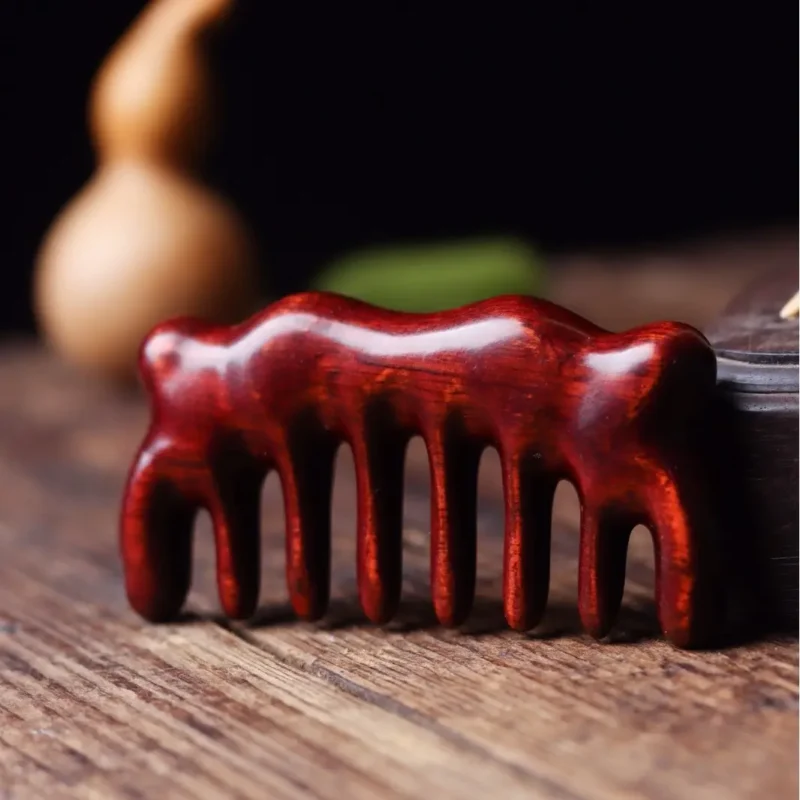
Handcrafted Indonesian Rosewood Cat Ear Comb | Scalp Gua Sha & Meridian Massage Tool
Heal from the crown down. A handheld anchor for mental clarity and tension relief.
The Indonesian Rosewood Cat Ear Massage Comb is a specialized tool engineered for Scalp Gua Sha and meridian therapy. Unlike flat combs, this 2.2cm thick piece is carved to fit the natural curve of your palm, allowing you to apply consistent, soothing pressure to the scalp’s acupressure points. Crafted from high-density Purple Sandalwood, it naturally neutralizes static, protecting your Crown Chakra from energetic noise.
The playful Cat Ear silhouette is not just aesthetic; the dual peaks are designed to target the temples and the base of the skull (Feng Chi points). Whether used for a morning wake-up ritual or a nightly Anxiety Relief session, this 70g weighted comb grounds your energy in the Wood Element, promoting circulation and unshakeable peace.
The Gua Sha Guide: How to use the “Cat Ear” tips for tension headaches?
- 🪵 Material: Authentic Indonesian Rosewood (Purple Sandalwood)
- 🐱 Shape: Ergonomic Cat Ear Design (Easy Grip)
- 💆 Function: Scalp Gua Sha & Deep Tissue Massage
- ⚖️ Weight: 70g Substantial Feel (Sinks in Water)
The Energetic Logic of Scalp Meridians and the Wood Element
In classical Eastern cosmology, our body’s wellness mirrors the dynamic balance of natural forces. The human cranium serves as the primary meeting ground where all Yang meridians converge. Brushing the scalp is a vital practice that clears mental heaviness and balances your subtle field.
Understanding traditional elemental interactions explains why moisture control matters so deeply during grooming. The dynamic between water and wood is documented across classical texts preserved on Historical Encyclopedia Archives for modern study. While water nourishes living roots, stagnant excess drowns raw wood, leading to decay, warping, and energetic heaviness.
When you use a damp, swollen comb, you transfer compromised, stagnant Chi directly to your scalp. A pristine, dry comb made of sandalwood or peachwood acts as an antenna for vibrant life energy. Maintaining clean, dry wood ensures that the life force flowing to your crown remains clear and unclouded.

Direct your comb strokes from the frontal hairline backward toward the base of your neck. This deliberate directional stroke disperses pent-up mental stress, calms chaotic inner Wind, and harmonizes Liver energy. Gentle pressure along the Bladder meridian relieves tension headaches built up from long hours behind glowing computer screens.
Take sixty deliberate strokes each evening before resting to center your mental spirit. Breathe deeply with each pass, picturing tension leaving your scalp through the tips of your hair. This intentional habit fosters sound sleep while distributing natural scalp oils down the entire hair shaft.
Scientific Comparison: Hair and Comb Interactions Across Moisture Levels
Managing moisture levels protects both fragile hair proteins and the organic structure of carved timber. To choose the right tools, review this technical comparison of hair vulnerability, wood stability, and optimal actions:
| Hair Moisture State | Cuticle & Strand Condition | Wood Grain Reaction | Recommended Action |
|---|---|---|---|
| Soaking Wet (100%) | Cuticles lifted; hydrogen bonds broken; strands stretch easily and snap. | Rapid water absorption; grain expands; high risk of warping and mold. | Do not use wood. Gently squeeze with a microfiber towel. |
| Towel-Damp (70-80% Dry) | Cuticles flattening; natural elasticity returning; minimal breakage risk. | Safe when wood is sealed with plant oil; no standing water transfer. | Apply oil to comb teeth; gently detangle from tips upward. |
| Completely Dry (0% Free Water) | Keratin bonds stable; cuticles tight; natural sebum ready for distribution. | Zero water absorption; grain remains smooth; releases pleasant aromas. | Ideal for meridian scalp massage and daily smooth styling. |
As shown in the data table above, the damp transition phase demands careful physical boundaries. Never expose high-end timber tools to standing droplets or soaking wet shower conditions. Sticking to semi-dry and dry hair guarantees both strand vitality and enduring comb durability.
For those seeking exquisite handcrafted tools built to last, our studio offers timeless creations. Explore our artisanal Polished Wood Comb Selection designed for restorative scalp wellness. Pairing quality tools with mindful care creates a deeply fulfilling self-care practice.

Critical Maintenance Taboos: What Never to Do with Natural Wood Combs
Caring for natural timber requires ditching the careless cleaning habits used for cheap plastic brushes. Natural hardwoods react strongly to their surrounding environment, so avoiding water damage is essential. Respect these physical taboos to prevent cracking, mildew, and tooth distortion.
Here are the crucial maintenance taboos every wooden comb owner must respect:
- 🚫 Never submerge, soak, or wash your wooden comb under running tap water.
- 🚫 Never comb dripping wet locks, which pulls swollen teeth against lifted cuticles.
- 🚫 Never speed-dry a damp comb using a hairdryer, heat gun, or radiator.
- 🚫 Never rest a wooden comb inside a steamy shower stall or on wet marble sinks.
Exposing a wooden comb to direct hot air robs the timber of its natural moisture balance. Fast drying causes the outer grain to shrink faster than the core, causing permanent cracks along the teeth. If your tool accidentally gets wet, let it dry slowly in a cool, shaded spot away from direct heat.
Absolute Taboo: Storing your comb on damp bathroom countertops invites black mold spores into open wood pores. Mold damages the timber and can transfer harmful fungal spores directly onto your scalp. Keep your tools in dry, clean spaces, separate from wet items and old papers.
To deepen your understanding of living in rhythm with your surroundings, discover authentic teachings from Classical Metaphysics Insights on personal spatial harmony. Maintaining a clean dressing sanctuary keeps disruptive environmental influences out of your daily routine. Mindful storage protects both your physical belongings and your emotional peace.
Tool Maintenance & Energetic Reset: When and How to Re-oil
Every wooden grooming comb requires regular conditioning to stay resilient against dry air and occasional humidity. Over time, wood loses its natural plant resins, leaving the surface feeling chalky, light, or dry. When static electricity returns to your hair, your comb is signaling an urgent need for botanical nourishment.

A deep conditioning session restores your comb’s protective barrier and revives its natural wood scent. Apply four to six drops of camellia or jojoba oil across the entire comb body. Wrap the oiled comb neatly in clean brown parchment paper and let it sit undisturbed for twelve full hours.
Buff the wood vigorously using a clean cotton cloth once the deep conditioning time has finished. This rubbing motion warms the oil, helping it penetrate deeply into the grain while leaving a smooth, mirror-like finish. Re-oil your comb once a month, or whenever the timber appears faded from frequent use.
If your comb accidentally falls into a filled sink, quick emergency action can prevent lasting damage. Immediately blot all surface water using a dry, thick microfiber towel, pressing firmly between every tooth. Place the comb on its side across an open wire rack in an airy bedroom to dry slowly over twenty-four hours.
Regular maintenance acts as an energetic refresh, clearing away heavy, stagnant Chi built up from daily use. To explore traditional seasonal timing and cycle protections, read our complete guide on Tai Sui Energy Alignment for grounded harmony. Caring for your personal tools honors the craftsmanship behind them and supports your own inner balance.
Dermatologist Insights on Wooden Combs and Hair Care
Modern dermatologists and hair specialists share valuable clinical perspectives on using wooden combs properly. In the educational video below, a skin and hair expert breaks down why porosity matters and why styling should wait until hair is damp rather than soaking wet.
Video source: YouTube
Author: Dr. Aanchal MD
Original video link: https://www.youtube.com/watch?v=z1nk6ZYQ7X4
Reviewing clinical insights reminds us that traditional wisdom aligns closely with modern hair biology. Combining scientific hair facts with traditional tool maintenance gives you the best of both worlds. For personal planetary cycles and mindful timing, explore timeless guidance via Astrological Almanac Wisdom to enrich your daily routines.
Frequently Asked Questions
Q: Can I use a wooden comb to distribute conditioner or hair masks in the shower?
A: No, you should never bring a natural wooden comb into the shower stall. Soaking water and rich cream emollients will penetrate the raw wood pores, causing immediate swelling, tooth misalignment, and bacterial rot. Use smooth silicone or specialized shower detanglers for wet conditioning instead.
Q: How does water cause a wooden comb to warp and splinter over time?
A: Wood fibers naturally absorb surrounding water through capillary action, expanding in size as moisture fills internal pores. As the comb dries out unevenly, the outer layers shrink much faster than the moist core. This uneven physical tension creates micro-fissures, split tines, and permanent curvature.
Q: What should I do if my wooden comb starts smelling musty or shows signs of mold?
A: Wipe the surface thoroughly with a dry cloth dipped in a drop of tea tree oil to clear surface mold spores safely. Allow the comb to air out in a warm, dry room with good cross-ventilation for two full days away from moisture. Once completely dry, coat the entire comb in camellia seed oil to seal the raw timber grain.
Q: Which types of natural wood are best suited for handling occasional humidity?
A: High-density, resin-rich hardwoods like genuine green sandalwood, dense rosewood, and aged peachwood naturally resist occasional humidity best. These fine-grained timbers possess natural protective oils that help stop moisture from sinking into the wood. Even with premium woods, keeping your tools dry remains essential for long-lasting performance.
Q: How often should I oil my wooden comb to maintain its waterproof seal?
A: In typical household climates, treating your comb once every four to six weeks is more than enough to maintain a protective barrier. If you live in a dry climate or use the comb on towel-damp hair frequently, apply a light coat of camellia oil every two weeks. Regular oiling keeps the timber supple and glossy.
Conclusion and Mindful Grooming Intentions
Mindfully caring for your wooden comb reflects the genuine gentleness and respect you bring to your personal well-being. Hair wellness requires deliberate patience, starting with waiting for damp locks to reach that safe seventy percent dryness mark. Taking good care of your artisan comb preserves its beauty and grounds your spirit every time you pick it up.
Treat every morning stroke along your scalp meridians as an intentional pause in your busy day. Let the natural wood aroma clear away mental clutter while gently awakening your natural Chi. May your daily grooming routine become a peaceful sanctuary that nurtures both healthy hair and a balanced mind.
This guide is presented solely for educational purposes, personal care practice, and cultural appreciation. The suggestions provided do not constitute medical, trichological, dermatological, or legal professional advice. If you experience severe scalp irritation, abnormal shedding, or hair health issues, consult a certified physician or board-certified dermatologist.

Written by the Buddha Bodhis Team
Since 2020, we have been devoted to exploring traditional year-based wisdom, classical Feng Shui principles, and the rich spiritual symbolism rooted in Eastern cultural heritage. Our work bridges ancient metaphysical systems with modern life, interpreting annual cycles, elemental energies, and symbolic meanings to offer thoughtful insight and practical guidance. Through continuous research and practice, we aim to preserve traditional knowledge while making it accessible, relevant, and meaningful for contemporary seekers of balance, intention, and personal growth.
TikTok | YouTube | Pinterest | X
buddhabodhis@gmail.com