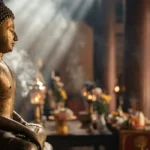




We often search for quiet moments in a very loud world. The image of Shakyamuni Buddha offers timeless peace to anyone seeking truth and calm. He was not a distant myth, but a real historical teacher who walked our earth.
His teachings guide us to look inward and understand our own minds. When we study his sacred journey, we find practical lessons for modern living.
Quick Summary: Shakyamuni Buddha means the Sage of the Shakya clan. Born as Prince Siddhartha Gautama, he found full awakening under the Bodhi tree. His teachings focus on the Four Noble Truths, inner discipline, and compassion.
The Sacred Life of the Historical Teacher
Our research into Early Indian Buddhism reveals a mortal prince who changed human history. Prince Siddhartha Gautama lived in luxury within the Shakya clan palace. Yet, he felt an inner call to understand why all mortals face sorrow.
Leaving his palace walls, he met an old man, a sick person, and a corpse. These sights broke his heart and made him search for genuine freedom. He then saw a calm wandering monk and chose to renounce his royal status.
He spent six long years studying with ascetics in dense forests. Realizing that extreme fasting only weakened his body, he embraced a balanced lifestyle. This insight became known across traditions as the Middle Way.
Video source: YouTube
Author: The People Profiles
Original video link: https://www.youtube.com/watch?v=uMTISB20Q78
The Moment of Awakening Under the Bodhi Tree
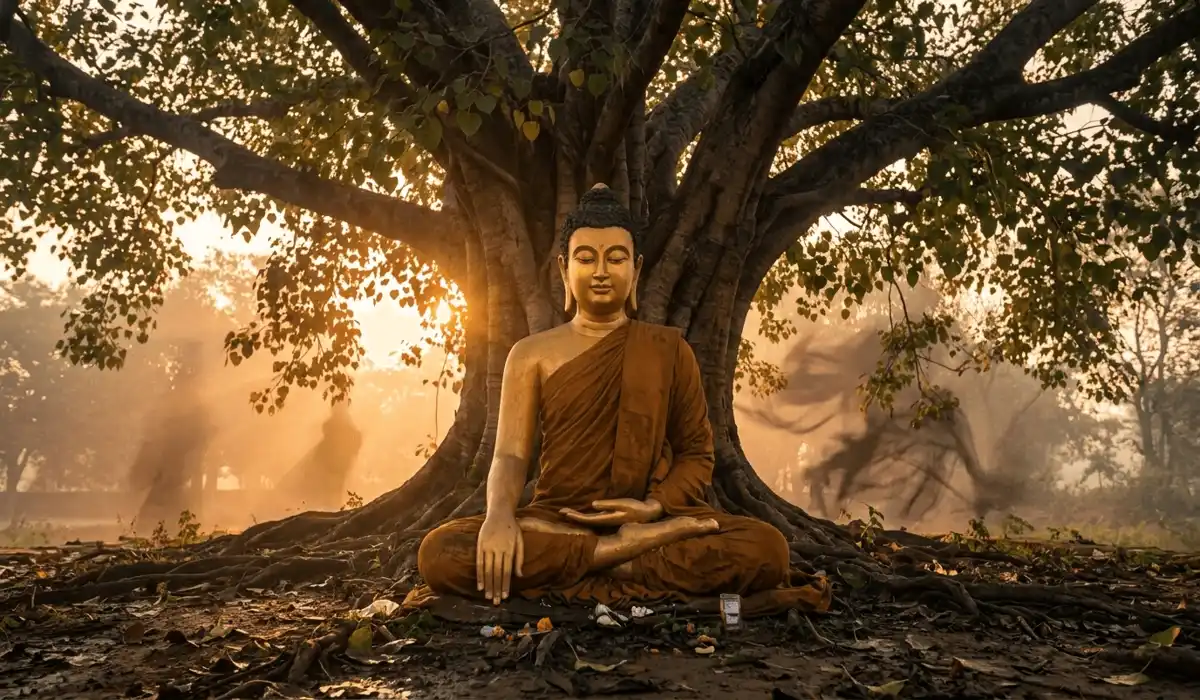
At Bodh Gaya, Siddhartha sat beneath a sacred tree with pure determination. Ancient texts recorded in the Online World Knowledge describe his fierce mental battle against Mara. Mara represented inner doubt, worldly attachment, fear, and pride.
Instead of fighting with anger, the teacher remained still and touched the ground. This sacred gesture is the Bhumisparsha mudra. He called upon the earth itself to witness his countless lifetimes of spiritual merit.
At dawn, all illusions vanished completely from his mind. He became Shakyamuni Buddha, the Awakened Sage. He dedicated the rest of his long life to sharing truth with everyone.
Iconography and the Sacred Anatomy of the Buddha
Every small detail on an antique Buddha statue holds deep meaning. Sacred craftsmen did not carve these forms for mere decoration. Each curve and symbol points to a profound state of spiritual realization.
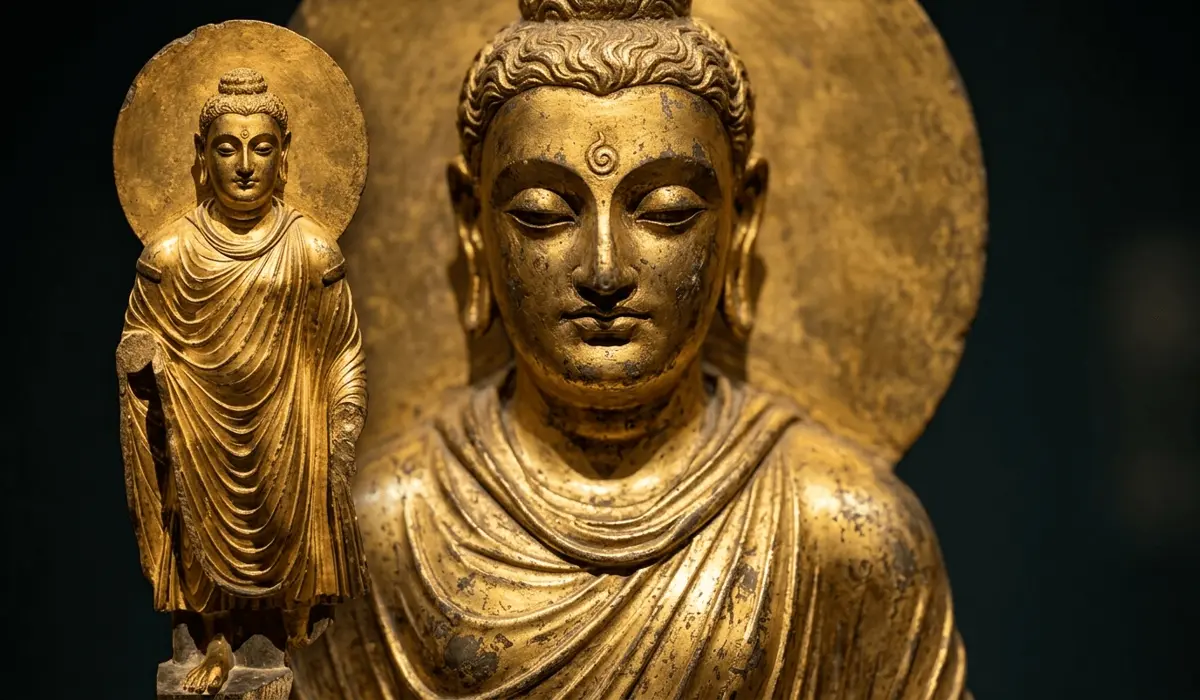
These marks help practitioners focus their minds during quiet meditation. By observing these features, we connect with the qualities of an enlightened mind.
Decoding the Sacred Physical Marks
The cranial bump on his head is called the ushnisha. It represents supreme wisdom, expanded awareness, and open spiritual vision. It shows that his mind grew beyond normal human limits through self-realization.
Between his brows rests the glowing spiral curl known as the urna. It symbolizes the inner third eye that sees through delusion and ignorance. The light from this mark reminds us to seek higher clarity in daily life.
His earlobes are unusually long and empty. In his early years as a prince, he wore heavy gold jewelry that stretched his ears. Leaving them empty shows total renunciation of material status and a willingness to listen deeply to worldly pain.
| Symbolic Feature | Physical Detail | Inner Spiritual Meaning |
|---|---|---|
| Ushnisha | Raised cranial dome | Cosmic wisdom and supreme mental awakening |
| Urna | Mark between eyebrows | Clear spiritual vision that dispels darkness |
| Long Lobes | Stretched empty earlobes | Renunciation of wealth and compassionate listening |
| Lotus Throne | Pristine blooming flower | Purity that rises untainted above muddy waters |
These ancient symbols remind us of our own natural ability to grow. They show that purity can bloom in any difficult environment.
Philosophical Core: The Middle Way and Four Truths
The historical Buddha taught practical ways to overcome suffering. He diagnosed human distress just like a skilled doctor treats a sickness. His main realization is structured as the Four Noble Truths.
First, he noted that suffering exists in everyday mortal existence. Second, he showed that clinging and selfish desire cause this pain. Third, he announced that freedom from mental suffering is possible for everyone.
Fourth, he gave us the Noble Eightfold Path as a daily practical guide. It includes right view, right intention, right speech, right action, and right livelihood. It also calls for right effort, right mindfulness, and right concentration.
Core Teaching Note: The Buddha asked his students to test every teaching themselves. He taught that peace comes from personal self-mastery rather than blind devotion or external ritual.
Historical Realism and Art Across Sacred Cultures
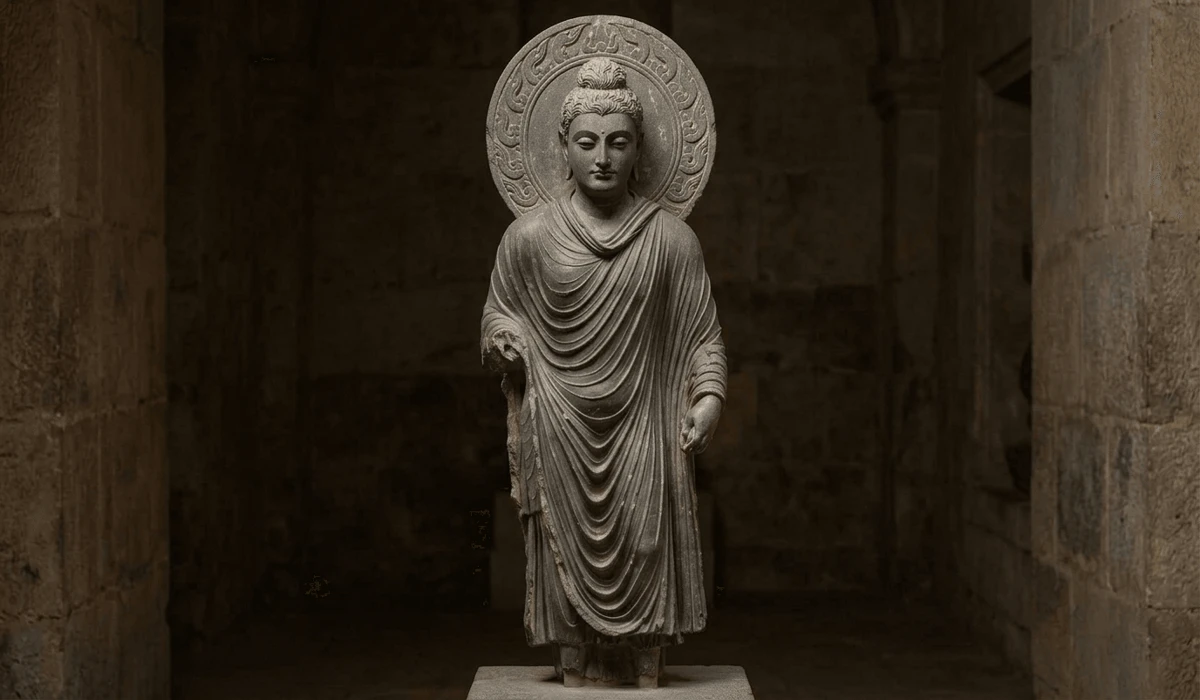
As the Dharma spread across Asian trade routes, art styles transformed. In ancient Gandhara, sculptors carved statues influenced by classical Greek styles. They depicted Shakyamuni with wavy hair and flowing robes like a classical philosopher.
In Theravada traditions of Southeast Asia, artists emphasize his monastic simplicity. Tibetan Vajrayana art presents rich thangka paintings full of vivid colors and deep cosmic symbols. Learn more about these historical shifts from Universal Reference Library.
East Asian traditions like Chan and Zen stripped away excessive decorative elements. They focused on his direct presence and silent heart-to-heart transmission. Every visual culture found its own unique way to honor this great human teacher.
Many sacred teachers appear across global traditions. For a broader comparison of iconic guides, explore the balance in our Home Placement Balance Guide.
Comparing Shakyamuni, Amitabha, and Budai
Many people confuse Shakyamuni with other well-known figures in Buddhist art. It is vital to understand their distinct historical and symbolic differences. Recognizing these figures deepens your appreciation for Eastern wisdom.
Here are the key points to remember when identifying these icons:
- ☸️ Shakyamuni Buddha represents the real historical teacher in simple robes, often touching the earth in meditation.
- 🕉️ Amitabha Buddha is a celestial guide of infinite light who welcomes pure minds into his Western realm.
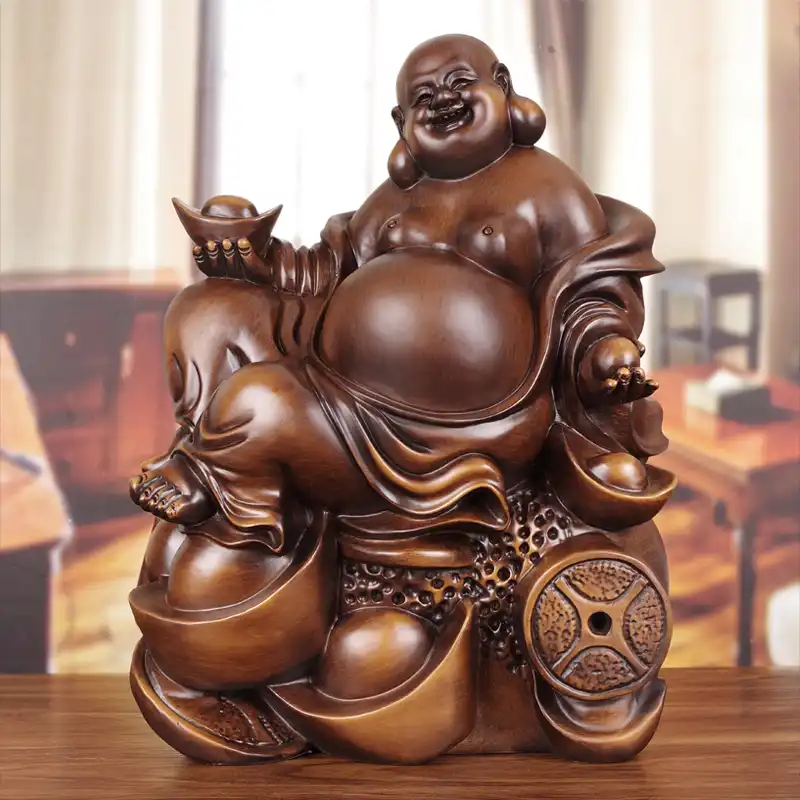
- 🧿 Budai Laughing Figure was a cheerful tenth-century Chinese folk monk carrying a cloth sack of good fortune.
- 🌸 Maitreya Buddha embodies the future teacher who will bring renewed compassion to humanity.
Each sacred symbol carries a unique energy for your spiritual study.
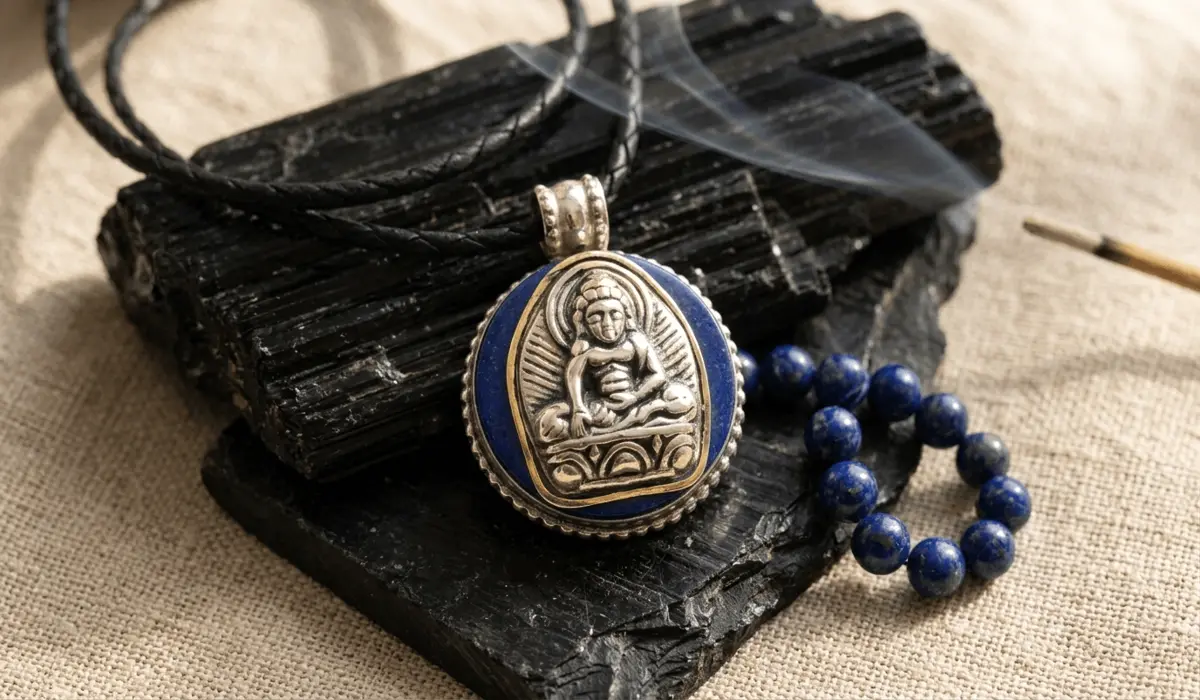
Wearing a Shakyamuni Talisman as a Modern Anchor
Modern living brings constant digital noise and restless thoughts. Wearing a sacred talisman acts as a physical touchstone for continuous mindfulness. It reminds us to slow down and breathe during frantic workdays.
When stress rises, touching a silver pendant grounds your physical senses. It recalls the stability of the Buddha touching the solid ground at Bodh Gaya. This simple habit keeps your spirit steady against emotional storms.
Different natural stones can amplify this grounding experience. Dark stones like tourmaline provide energetic protection against chaotic atmospheres. Blue lapis lazuli enhances inner truth, calm communication, and mental focus.
You can discover meaningful pieces in our collection of Sacred Buddha Jewelry. Wearing conscious jewelry reminds you of your own inner strength.

Sacred Placement and Feng Shui Harmony
Creating a peaceful home sanctuary requires respectful design choices. Traditional energy masters suggest placing sacred imagery in quiet, clean living spaces. This encourages harmonious household chi and supports mindful reflection.
According to principles shared by the Feng Shui Society, altars flourish best in elevated spots. Never place sacred statues near bathrooms, inside laundry rooms, or directly on the floor. Keep your sacred figure at eye level to inspire daily reverence.
Personal guardian figures also play an important role in personal protection systems. For deeper insights on animal signs and protective figures, read our study on the Horse Zodiac Guardian Insights.
Space Clearing Tip: Keep your altar uncluttered and wipe away dust regularly. Simple offerings like clear water, natural incense, and fresh flowers create an atmosphere of quiet contemplation.
Four Steps to Integrate the Historical Teacher’s Energy
You do not need to abandon daily duties to live mindfully. We can integrate the historical teacher’s wisdom through small daily practices. Follow these four practical steps to anchor your personal routine:
1. Morning Breath Anchoring: Sit comfortably for five minutes right after waking up. Keep your spine erect and breathe naturally without trying to control the rhythm.
2. Earth-Witness Touch: Place your hand flat on your desk or the floor when anxiety rises. Remind yourself that you are safe, grounded, and fully present right here.
3. Chanting the Ancient Sage Mantra: Repeat softly the phrase Om Muni Muni Maha Muni Shakyamuniye Svaha. This quiet recitation settles turbulent emotions and brings mental clarity.
4. Evening Reflection and Letting Go: Before sleep, review your day with kindness and release all mental clinging. Forgive yourself for mistakes and let your mind rest in natural peace.
These simple rituals bring genuine calm to any busy lifestyle.
Frequently Asked Questions
Q: What is the difference between Siddhartha Gautama and Shakyamuni Buddha?
A: Siddhartha Gautama is the birth name of the prince living in worldly luxury before his spiritual search. Shakyamuni Buddha is the title given to him after his supreme awakening under the Bodhi tree, meaning the Awakened Sage of the Shakya clan.
Q: What does the Bhumisparsha mudra mean on statues?
A: The Bhumisparsha mudra is the earth-touching hand gesture where the right hand points toward the ground. It represents the historic moment when Siddhartha called upon the earth to witness his spiritual realization and defeat of Mara.
Q: Can non-Buddhists wear a Shakyamuni Buddha pendant?
A: Yes, anyone can respectfully wear a Shakyamuni Buddha pendant as a symbol of peace, self-discipline, and inner wisdom. His universal teachings on compassion and mindfulness welcome all people regardless of their personal background.
Q: Why are Buddha statues depicted with long earlobes?
A: Long earlobes recall his early royal youth when heavy gold earrings stretched his ears. Their current empty state symbolizes his total renunciation of worldly riches and his deep ability to listen to all human sorrow.
Q: Where should I place a Buddha statue in my home?
A: Place the statue on an elevated shelf or table at or above eye level in a clean, quiet room. Avoid setting sacred statues on the floor, inside bedrooms, or near chaotic, unmindful areas like bathrooms.
Conclusion: Walking the Middle Way Every Day
Shakyamuni Buddha remains one of the greatest teachers the world has ever known. He proved that freedom from suffering is not an impossible dream reserved for gods. Through awareness and compassionate living, every human being can attain an awakened mind.
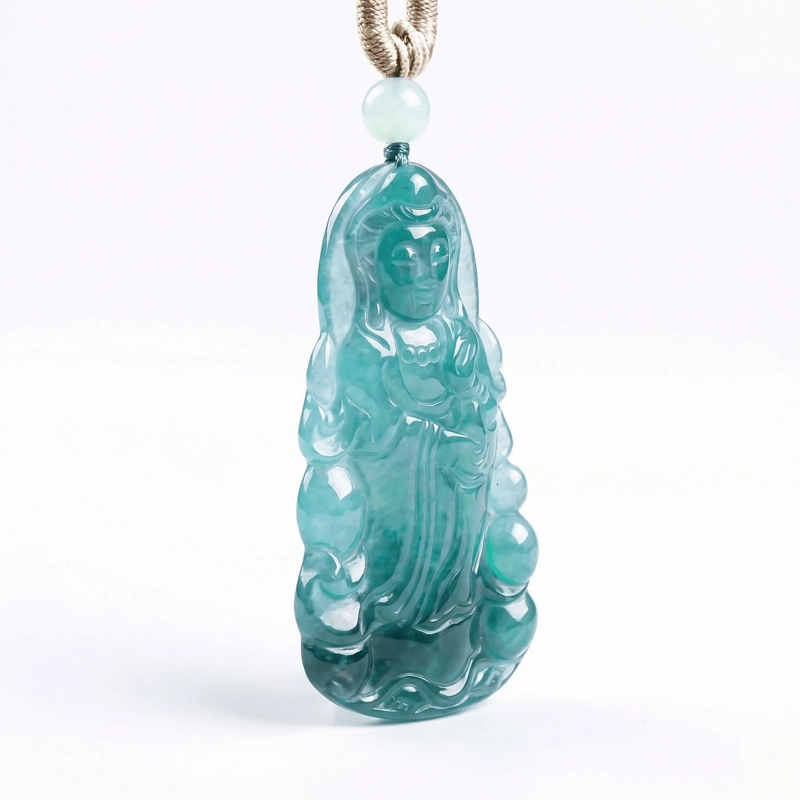
Guanyin Bodhisattva Jadeite Pendant – Divine Protection, Compassion & Auspicious Harmony
- 💎 Gemstone: Natural Grade A Jadeite (Type A)
- ✨ Features: Divine Protection, Compassion & Wisdom
- 📏 Dimensions: Approx. 2.05 x 1.10 x 0.12 inches (52 x 28 x 3 mm)
- ✋ Placement: Worn as a necklace over the Heart Chakra to synchronize the stone’s vibration with your emotional center.
May his historical journey inspire your own daily path toward inner balance. Walk with patience, stay grounded like the earth, and embrace the peace of the present moment.
This article is published solely for educational, cultural, and informational purposes. The insights presented do not constitute medical, psychological, legal, or financial advice. Readers should consult certified professionals for personal guidance regarding health or well-being practices.

Written by the Buddha Bodhis Team
Since 2020, we have been devoted to exploring traditional year-based wisdom, classical Feng Shui principles, and the rich spiritual symbolism rooted in Eastern cultural heritage. Our work bridges ancient metaphysical systems with modern life, interpreting annual cycles, elemental energies, and symbolic meanings to offer thoughtful insight and practical guidance. Through continuous research and practice, we aim to preserve traditional knowledge while making it accessible, relevant, and meaningful for contemporary seekers of balance, intention, and personal growth.
TikTok | YouTube | Pinterest | X
buddhabodhis@gmail.com