


The Medicine Buddha Meaning: Healing and Longevity (Blue Buddha) represents the ultimate fusion of spiritual wisdom, emotional purity, and physical restoration. As sacred cultural researchers, we recognize this revered figure as a living symbol of deep cellular recovery and karmic purification. Known classically as Bhaisajyaguru, his lapis lazuli radiance serves as a universal prescription for human suffering.
Quick Summary: The Medicine Buddha, or Bhaisajyaguru, embodies physical, emotional, and spiritual healing across Eastern traditions. His sapphire blue form holding a medicine bowl and a healing Myrobalan plant symbolizes the purification of the three root mental poisons: ignorance, attachment, and aversion.

Beyond Aesthetics: The Spiritual Power of the Medicine Buddha
In our research across sacred art, the Medicine Buddha emerges as far more than a decorative icon. He functions as an active energetic portal for personal transformation and inner tranquility. Practitioners across millennia have used his image to align body, mind, and spirit.
Human suffering often originates from a deep illusion of separation from universal harmony. The sacred anatomy of Bhaisajyaguru offers a visual blueprint to restore this essential connection. Through his serene presence, practitioners remember their innate potential for complete health.
Rooted deeply in Mahayana and Vajrayana Buddhism, his tradition bridges canonical scriptures with holistic health systems. Seekers who connect with his energy can explore our curated Buddha Jewelry Collection to carry his protective resonance into daily life. This sacred lineage continues to offer timeless relief in our modern world.
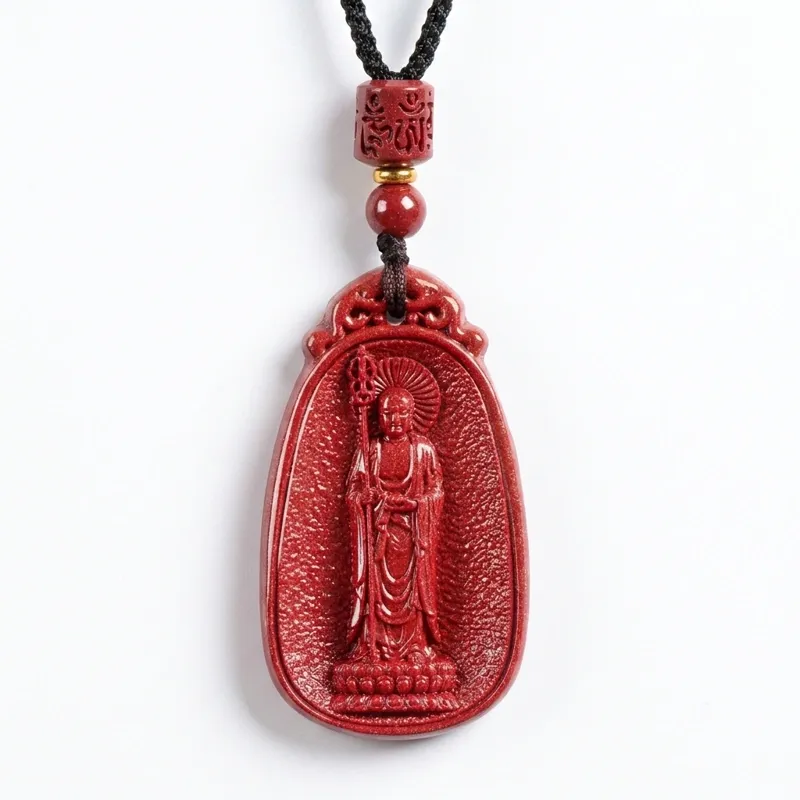
Purple Gold Sand Cinnabar Bodhisattva Necklace – Spiritual Protection, Prosperity & Inner Peace
- 💎 Gemstone: Premium Purple Gold Sand Cinnabar (High Content)
- ✨ Features: Handcrafted artisan carving, Buddhist motif, National Tide aesthetic
- 📏 Dimensions: Approx. 1.02 x 1.93 x 0.28 inches (26 x 49 x 7 mm)
- ✋ Wearing Position: Centered at the heart or throat to harmonize protective vibrations and foster compassionate communication.
Ancient Origins and Sacred Legends: Bhaisajyaguru and the 12 Vows
The history of Bhaisajyaguru is tied to early Buddhist traditions in ancient India and Tibet. Upon attaining full enlightenment, Bhaisajyaguru proclaimed twelve grand vows to free all sentient beings from physical illness, mental suffering, and spiritual blindness. Manifesting as a celestial being of radiant lapis lazuli light, he pledged to transform the cosmos into a realm of holistic recovery.
Video source: YouTube
Author: Buddha’s Wisdom
Original video link: https://www.youtube.com/watch?v=dET-Y0355ug
Canonical Mahayana texts describe his celestial realm, known as Vaiduryanirbhasa or the Pure Lapis Lazuli Land. In this paradise, every element emits a soothing blue glow that dispels karmic darkness. Historical accounts found in Online Encyclopedia Resources highlight how his veneration spread along trade routes across East Asia.
He is traditionally accompanied by two primary celestial attendants, Suryaprabha and Chandraprabha. Suryaprabha symbolizes solar energy and warm vitality, while Chandraprabha represents cooling lunar light and spiritual calm. Together, these dual forces balance the practitioner’s subtle energetic body.
The Hidden Philosophy: Unveiling the Symbolism of the Blue Buddha
The Root Cause of Disease: The Three Mental Poisons
Traditional Buddhist philosophy teaches a non-dual view of health and medicine. Physical disease is viewed as an external manifestation of unpurified mental defilements rather than a purely physical malfunction. Genuine, lasting health requires eradicating the three root poisons—ignorance, attachment, and aversion—through compassionate wisdom.
Core Philosophical Insight: Physical illness is rarely isolated from the mind. Ignorance obscures reality, attachment causes energetic grasping, and aversion creates internal inflammation. Healing the body demands purifying these mental roots.
Ignorance creates a false sense of isolation, leading to anxiety and stress. Attachment causes us to cling to unhealthy habits that destabilize our natural bodily equilibrium. Aversion generates internal anger, which weakens the immune system and destroys peace of mind.
Deconstructing the Sacred Iconography
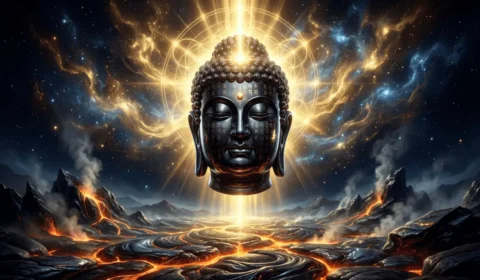
The deep azure skin of the Medicine Buddha is derived from lapis lazuli, a stone prized for its spiritual purity. This celestial color signifies ultimate reality, unconditioned clarity, and deep transformative power. It visualizes the clear, calm space of an enlightened mind.
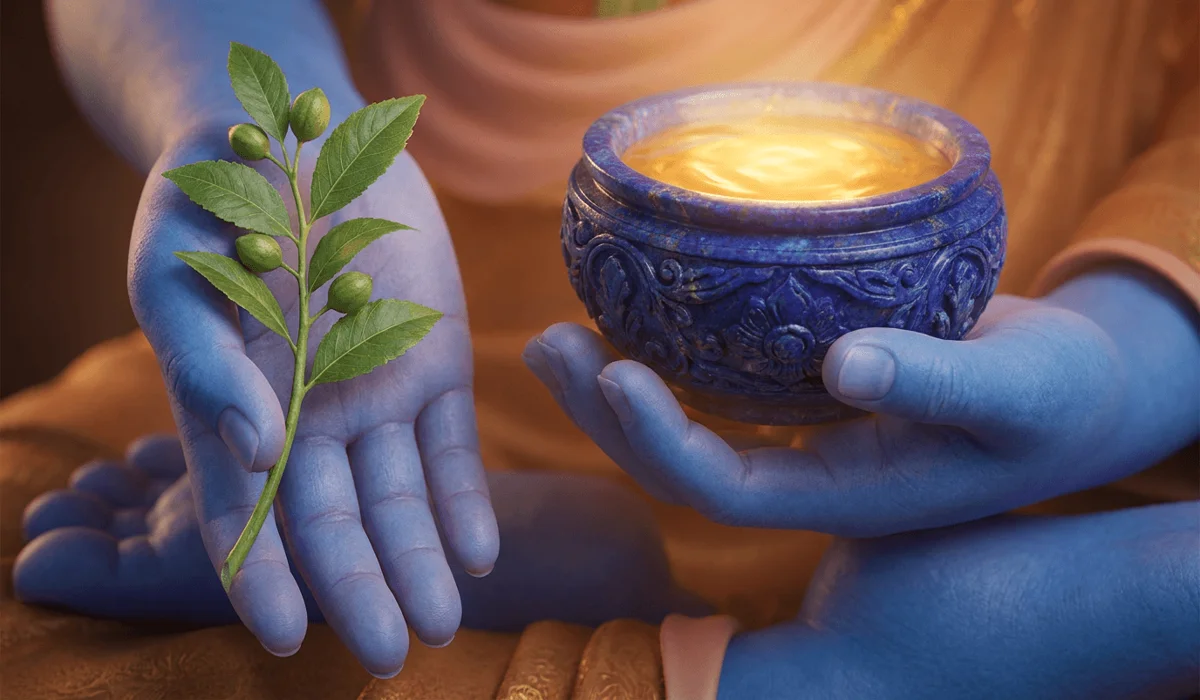
In his extended right hand, resting in the Varada Mudra of generosity, he holds a stem of the Myrobalan plant. Known as Arura in Tibetan medicine, this botanical cure symbolizes the supreme healing of physical ailments. To explore complementary energetic tools for emotional balance, consult our Rose Quartz Healing Guide.
His left hand rests in his lap in the Dhyana Mudra of meditative balance, holding a lapis lazuli bowl. This vessel contains the nectar of immortality, which cleanses karmic imprints and restores subtle energy channels. Seated in full lotus upon an eight-petaled lotus throne, his form reflects complete stability.
| Symbolic Feature | Iconographic Form | Spiritual & Health Significance |
|---|---|---|
| Lapis Lazuli Hue | Deep Azure Blue Body | Ultimate reality, mental clarity, and cellular purification. |
| Myrobalan Stem | Plant in Varada Mudra | Universal physical cure and supreme botanical wisdom. |
| Nectar Bowl | Lapis Vessel in Dhyana Mudra | Purification of karmic debts and longevity essence. |
| Eight-Petaled Lotus | Throne Seat Base | Purity blooming unblemished above worldly suffering. |
Cultural Evolution: From Ancient Traditions to Modern Western Life
Tibetan Vajrayana and East Asian Practices
In Tibetan traditions, sacred scroll paintings called thangkas map the Medicine Buddha’s energetic field. These detailed artworks guide practitioners in visualizing internal energy channels during complex healing rituals. Tibetan medical doctors frequently invoke his presence before diagnosing patients or preparing traditional remedies.
In East Asian Mahayana traditions, temples celebrate his teachings during public festivals to protect communities from illness. Historical guidelines published by the Feng Shui Society emphasize creating quiet indoor spaces that reflect his peaceful energy. Communities frequently recite his scriptures to encourage societal harmony and emotional well-being.
Modern Integration and Mind-Body Science
Modern mind-body medicine recognizes the practical benefits of Medicine Buddha meditation practices. Focused visualization of cool blue light helps activate the parasympathetic nervous system, effectively lowering stress hormones. This meditative state allows the physical body to initiate natural self-repair mechanisms.
Wellness practitioners embrace his icon as a universal symbol of self-compassion and mental resilience. By shifting focus away from fear and toward his serene image, individuals cultivate emotional stability. This simple practice builds inner strength in demanding environments.
Wearing Sacred Emblems: Medicine Buddha Jewelry as an Energetic Shield
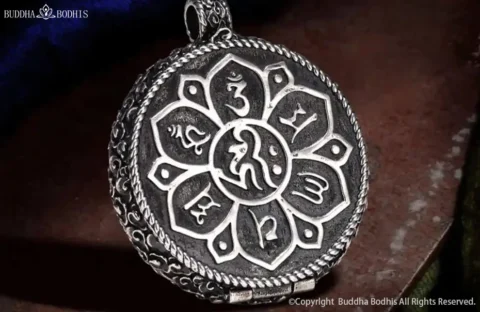
Carrying or wearing a Medicine Buddha pendant provides a personal shield against modern environmental stress. The vibrant lapis lazuli stone offers a tactile connection to ultimate peacefulness during busy days. Touching your pendant acts as an immediate trigger to slow down and breathe deeply.
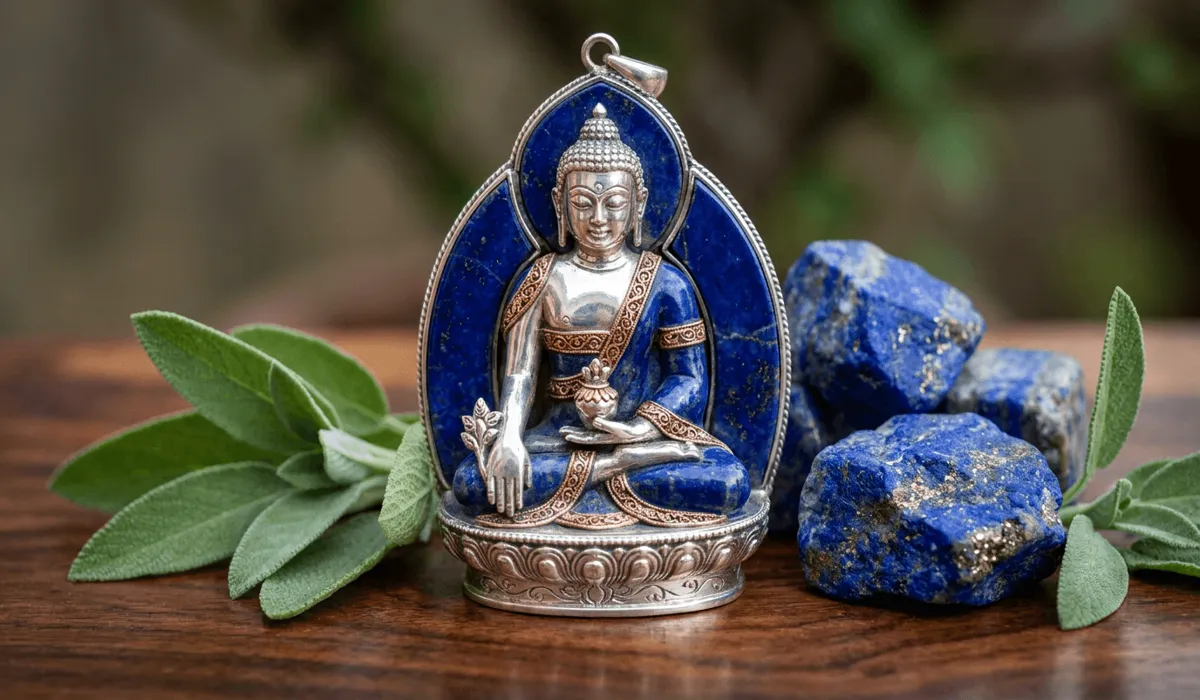
We observe that wearing sacred symbols converts passive belief into an active daily practice. The talisman serves as a personal commitment to purify toxic thoughts and guard bodily health. For details on pairing gemstones for emotional restoration, review our Self Love Crystals Guide.
By honoring the sacred vows represented by the Blue Buddha, wearers nourish their own vitality. This mindful connection strengthens intentions for healthy living and emotional balance. Over time, the amulet becomes a cherished companion on your healing journey.
Rituals and Practice: How to Meditate with the Medicine Buddha
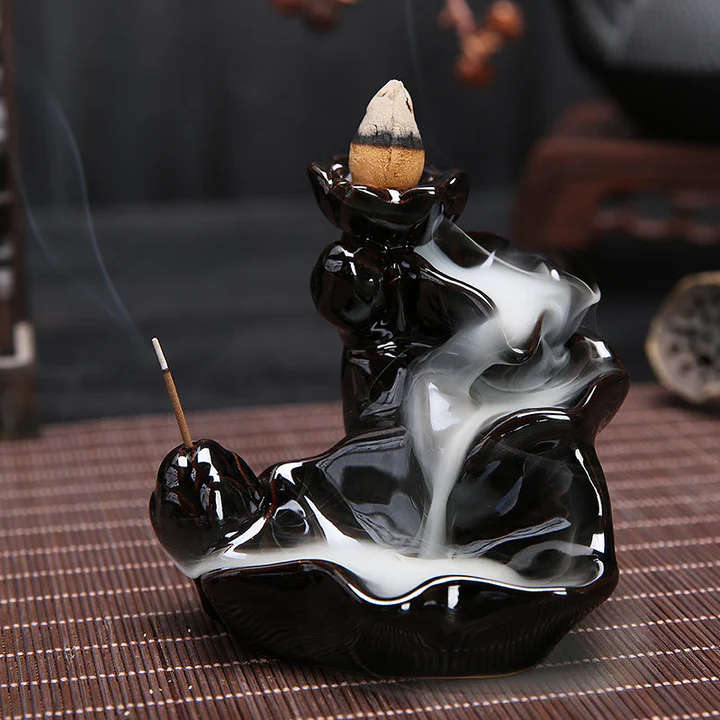
Establishing a personal ritual begins with creating a peaceful space in your home. Place an image or statue of the Medicine Buddha facing East on a clean elevated table. Offer clear water bowls and light natural incense to signal your sacred intention.
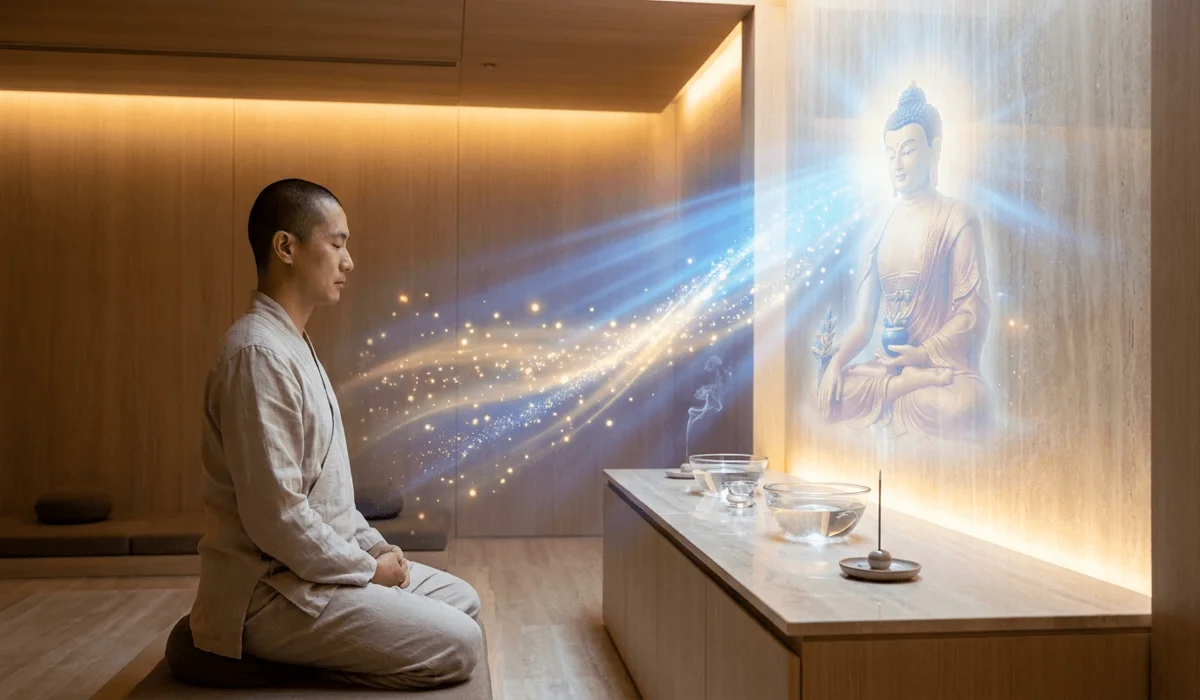
Sit comfortably and visualize the Medicine Buddha resting in front of you, glowing with radiant sapphire light. Imagine brilliant blue streams flowing from his medicine bowl into the crown of your head. Feel this cooling liquid wash away physical pain, emotional stress, and old karmic burdens.
Mantra Recitation Guide: Recite the sacred Sanskrit chant: Tayata Om Bhekandze Bhekandze Maha Bhekandze Radza Samudgate Soha. Focus on sending healing vibrations outward to all living beings.
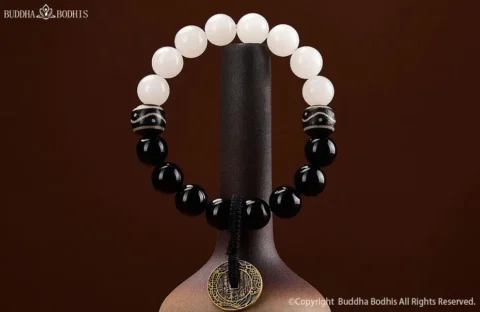
Maintain steady, rhythmic breathing as you recite the mantra 108 times using meditation beads. Inhale restorative azure energy directly into your heart center, and exhale gratitude and peace. Conclude your session by dedicating the positive energy generated to the wellness of all living beings.
Placement Etiquette, Feng Shui, and Respectful Display
Feng Shui Guidelines for the Home
In classical Feng Shui practices, the Medicine Buddha serves as a potent remedy for health afflictions. Position his image in the sector affected by the annual sickness star to neutralize disharmonious energies. Classical principles documented by World of Feng Shui recommend elevated placements facing main entryways.
Always place your sacred statue on an altar or high shelf above eye level to demonstrate respect. Keep the surrounding area clean, uncluttered, and well-lit to cultivate fresh chi energy. Never place sacred statues in bathrooms, bedrooms, or directly on the floor.
To maintain proper etiquette and maximum energetic resonance, keep these rules in mind:
- ☸️ Position statues on elevated shelves well above eye level.
- 🕉️ Keep the surrounding area free of clutter and dust.
- 🧿 Cleanse gemstone pendants regularly with natural smoke or sound.
- 🌸 Treat all sacred images with mindful reverence and care.
Adhering to these simple guidelines ensures your living space remains balanced and filled with protective energy.
Actionable Ritual Checklist
1. Daily Morning Alignment: Touch your Medicine Buddha amulet and state a clear intention for physical and emotional health.
2. Space Clearing: Light natural sandalwood incense near your altar each week to maintain a fresh energetic environment.
3. Evening Visualization: Spend five minutes visualizing lapis lazuli light cleansing your nervous system before sleep.
4. Compassionate Dedication: End every practice by offering your positive energy to friends, family, and those suffering from illness.
Frequently Asked Questions
Q: What does the lapis lazuli blue color of the Medicine Buddha represent?
A: Lapis lazuli represents the pure, unblemished nature of ultimate reality and spiritual wisdom. Its deep azure radiance symbolizes the healing power that cleanses mental obscurations and physical suffering.
Q: How does the Medicine Buddha help cure physical and mental ailments in modern times?
A: The practice targets the psychological roots of disease by dissolving stress, anger, and delusion. Concentrating on his restorative form activates deep parasympathetic relaxation and promotes internal balance.
Q: What is the symbolic meaning of the myrobalan plant held in the Medicine Buddha’s right hand?
A: The myrobalan plant, known as Arura, is regarded as the king of botanical medicines. It represents the ultimate healing tool capable of balancing all bodily humors and overcoming spiritual sickness.
Q: How is the Medicine Buddha used in Feng Shui to counter sickness energy?
A: In Feng Shui, his lapis lazuli aura acts as an energetic cure against the annual number two sickness star. Displaying his image in the affected home sector suppresses negative health energies and maintains vitality.
Q: How can you distinguish the Medicine Buddha from Sakyamuni Buddha?
A: The Medicine Buddha has a distinctive deep lapis blue body. He holds a stem of the myrobalan plant in his right hand and a bowl of nectar in his left hand, whereas Sakyamuni usually touches the earth with his right hand.
Conclusion: Integrating the Medicine Buddha’s Wisdom
The Medicine Buddha teaches us that true health requires nourishing both physical vitality and inner wisdom. By releasing mental attachments and cultivating compassion, we activate our own innate healing capacities. His radiant presence reminds us that balance and wholeness are always within reach.
Embodying his grand vows inspires us to care for our bodies while offering unconditional kindness to others. As we integrate his timeless wisdom into our daily routines, we transform our living environments into sanctuaries of health. May his lapis lazuli radiance illuminate your path to enduring well-being and peace.
Disclaimer: This content is provided for informational and cultural purposes only. It does not constitute medical, legal, financial, or other professional advice. Readers seeking health support should consult a qualified healthcare professional.
Written by the Buddha Bodhis Team
Since 2020, we have been devoted to exploring traditional year-based wisdom, classical Feng Shui principles, and the rich spiritual symbolism rooted in Eastern cultural heritage. Our work bridges ancient metaphysical systems with modern life, interpreting annual cycles, elemental energies, and symbolic meanings to offer thoughtful insight and practical guidance. Through continuous research and practice, we aim to preserve traditional knowledge while making it accessible, relevant, and meaningful for contemporary seekers of balance, intention, and personal growth.
TikTok | YouTube | Pinterest | X
buddhabodhis@gmail.com