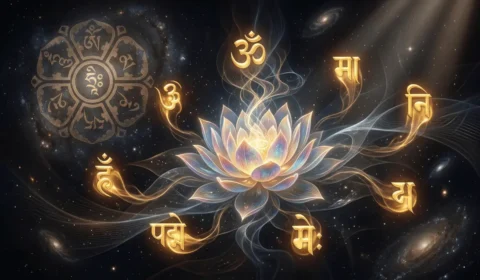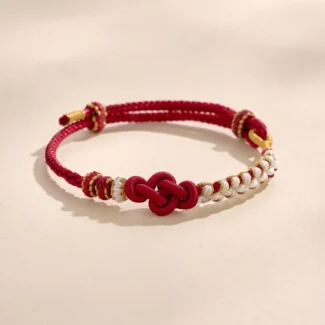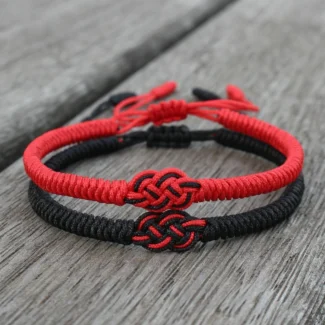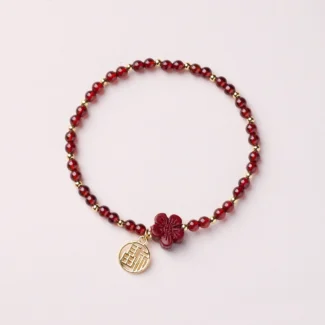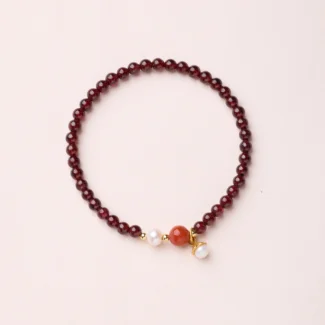



An Om Mani Padme Hum Spinning Ring: Why It is Called a Prayer Wheel comes down to its traditional design and sacred purpose. In our studio practice at Buddha Bodhis, we often explain that this unique piece of jewelry acts as a wearable, compact version of the traditional Himalayan Mani wheel. By physically rotating the outer band around your finger, you perform the exact spiritual ritual of spinning a large temple prayer wheel in daily life.
In Tibetan Buddhist traditions, spinning sacred mantras engraved on a physical object radiates spiritual blessings and purifies karma just as effectively as reciting the prayers out loud. The outer rotating band of a Buddhist spinner ring carries sacred Tibetan letters that movement activates with every turn. Wearing a spiritual spinning ring offers a quiet, personal way to stay grounded, focus your mind, and express loving-kindness during busy days.
Quick Summary & Key Takeaways
- 💎 A Tibetan prayer wheel ring condenses the ancient ritual of temple Mani wheels into a portable, modern form.
- 💎 The physical turning mechanism allows the wearer to practice active mantra recitation without speaking aloud.
- 💎 Rotating the sacred script clockwise aligns your personal energy with traditional Himalayan circumambulation practices.
- 💎 The carved six syllable mantra focuses on purifying negative emotions and cultivating universal compassion.
- 💎 Serving as an effective mindfulness spinner ring, it gently calms anxiety and brings your focus back to the present moment.
What Is an Om Mani Padme Hum Spinning Ring?
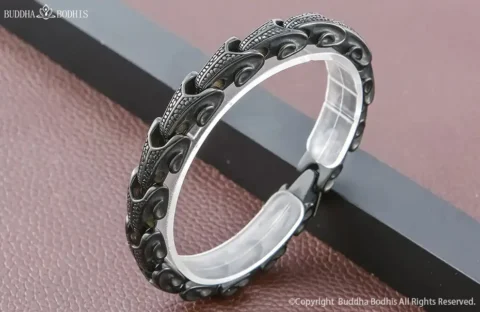
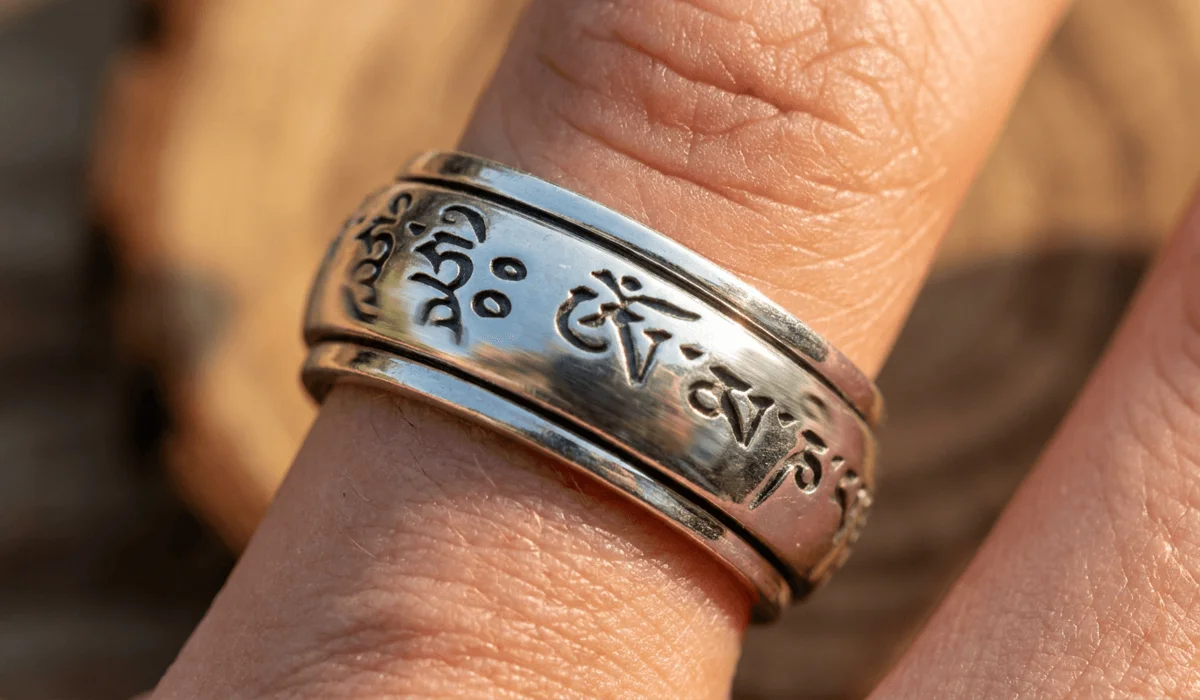
A Buddhist prayer ring is crafted with a special dual-band mechanism where the outer ring spins smoothly over a stationary inner band. This outer band features carved or embossed Tibetan script depicting the sacred six syllable mantra. Our team works closely with skilled artisans to ensure every piece turns effortlessly while sitting comfortably on the finger.
Definition and Functional Design
The core function of this sacred jewelry is to combine movement with spiritual intention. Instead of keeping prayers static, the dual-band construction allows you to turn the words continuously with your thumb. This movement transforms the piece into a personal, portable sanctuary that supports silent contemplation during work or travel.
When you spin the band, you participate in an ancient lineage of physical prayer. The smooth movement gives your hands something meaningful to do while helping your mind settle down. It serves as an accessible bridge between formal meditation sessions and modern daily routines.
Craftsmanship and Sacred Metals
Most traditional spinning rings are made from high-grade sterling silver, brass, or copper. Artisans often use dark oxidation treatments in the recessed background so the raised Tibetan characters stand out clearly. You can learn more about how physical elements carry energetic weight in our Crystal Meanings Reference guide.
The engineering behind these rings requires great precision and balance. The inner ring must fit your skin securely, while the outer band needs enough clear space to rotate without catching or grinding. This careful craft ensures that your daily spiritual practice remains smooth and peaceful.
Key Physical Characteristics
Understanding the features of a sacred ring helps you appreciate its dual identity as fine jewelry and a meditative tool. Here are the primary physical qualities you will find in an authentic spinner piece:
- ✨ Dual-band design featuring a stationary inner ring and a smooth outer rotating track.
- ✨ Deeply carved or embossed Sanskrit or Tibetan script displaying sacred syllables.
- ✨ Clockwise rotational movement designed for comfortable thumb interaction.
- ✨ Durable metal construction made from sterling silver, brass, or mixed metals.
- ✨ Hand-polished surfaces with oxidized detailing for high visual clarity.
Spiritual Meaning and Sacred Symbolism
The spiritual depth of a Tibetan mantra ring comes directly from the sacred words inscribed across its surface. The phrase Om Mani Padme Hum forms the heart of Mahayana and Tibetan Buddhist practice. Understanding its deeper message turns simple physical interaction into a powerful act of devotion.
The Six Syllables of Compassion
The phrase translates loosely to “the jewel is in the lotus,” reflecting how wisdom grows out of challenging worldly conditions. You can read our detailed breakdown of this phrase in our Six Syllable Mantra Meaning article. Each syllable corresponds to purifying a specific negative emotion, such as pride, jealousy, passion, or greed.
As the ultimate compassion mantra, it honors Avalokiteshvara, the Bodhisattva who embodies endless mercy. Repeating or spinning these words invites a wave of gentle energy into your surrounding space. It serves as a personal vow to respond to life with patience and love.
Symbolic Link to Traditional Mani Wheels
Traditional Himalayan prayer wheels store thousands of written prayers on paper scrolls packed tightly inside a metal cylinder. Monks and pilgrims spin these wheels because tradition holds that one turn releases the same spiritual merit as reciting all those printed prayers at once. A Mani wheel ring captures this exact symbolic power on a micro scale.
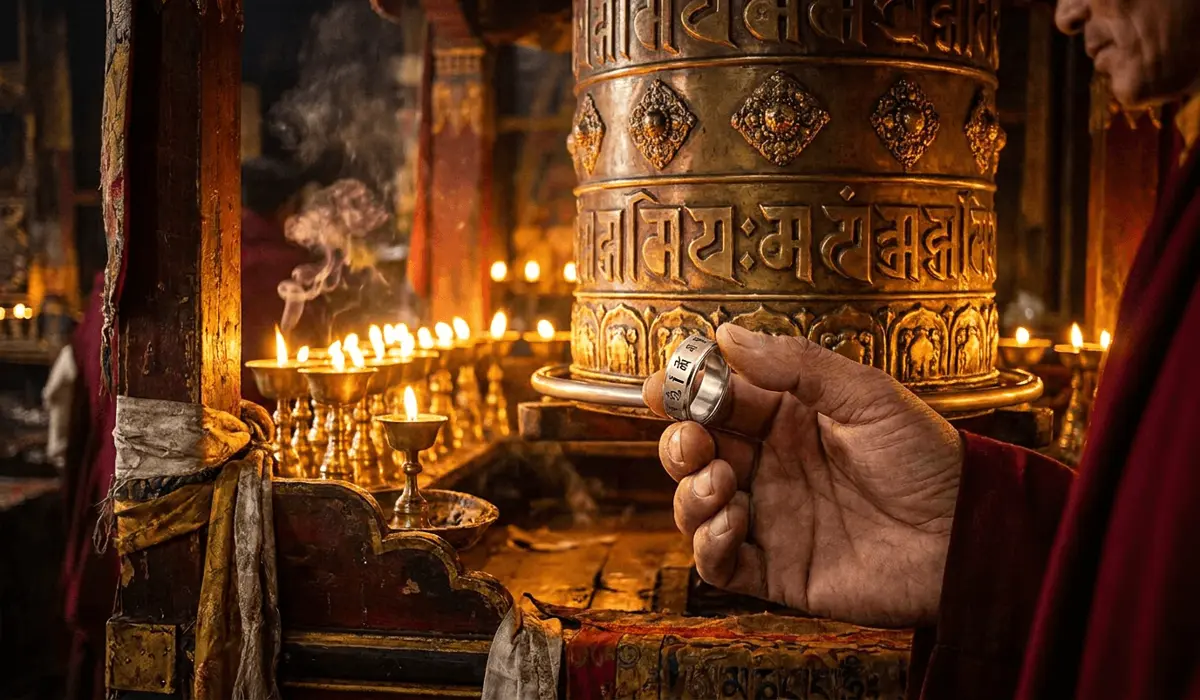
Turning the sacred band also represents moving the Wheel of Dharma (Dharmachakra). This motion symbolizes continuous growth, spiritual movement, and the active unfolding of wisdom. It reminds us that spiritual transformation is an ongoing practice rather than a static state.
Energy Centers and Chakra Alignment
Many practitioners notice that using a sacred spinner ring helps clear blocked personal energy. The intentional practice of spinning opens the Heart Chakra (Anahata), softening emotional friction and welcoming self-compassion. Standard gemological and mineral evaluations, such as those published by Gemological Institute Standards, show how natural materials interact with touch and daily wear.
The physical act of touching the ring also guides scattered mental energy downward into a steady center. This quiet grounding movement connects your Heart, Third Eye, and Crown Chakras during brief meditative pauses throughout the day.
Benefits and Intentions Associated with the Ring
Wearing a karma accumulating ring carries both deep spiritual values and modern practical benefits. Many people who come to our studio look for simple tools to help manage daily stress while staying true to their spiritual values. The spinning motion offers a physical release for nervous tension while reminding you of higher ideals.
Accumulating Positive Karma
In traditional Himalayan culture, turning sacred texts generates merit (Puṇya) that balances past negative actions. When you turn the ring with a selfless mind, you radiate good intentions out toward all living beings. This repeated physical act builds a habitual mindset of kindness and empathy.
The ring serves as an anchor during difficult moments or challenging conversations. When you feel anger rising, touching the carved letters reminds you to pause and speak with grace. Over time, this subtle habit reshapes how you interact with the world around you.
Mindfulness and Stress Relief
Beyond traditional religious practice, the piece works wonderfully as a meditation spinner ring. The rhythmic motion gives restless hands a peaceful focus, making it a great tool for managing anxiety in noisy environments. It offers a subtle way to calm your nerves during public speaking, long meetings, or busy travel schedules.
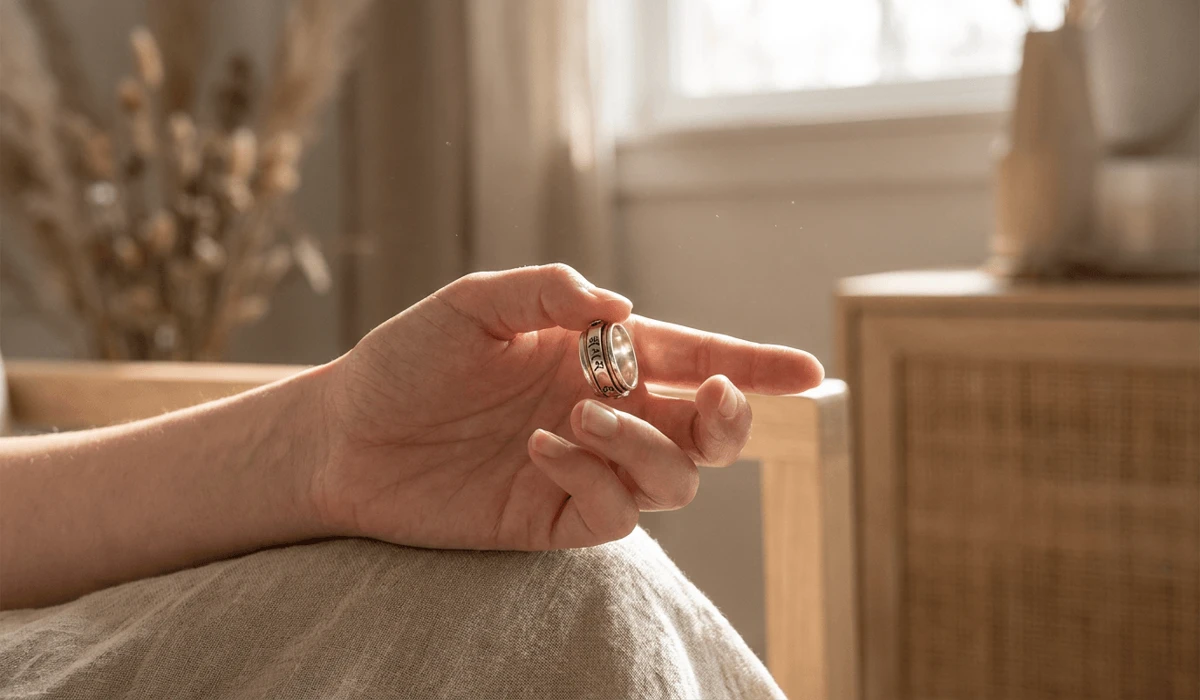
Unlike common fidget toys, a sacred spinning ring encourages quiet, reverent awareness. The tactile feel of the engraved letters under your thumb grounds your thoughts instantly in the physical body. It transforms nervous energy into a gentle opportunity for deep breath work.
Comparing Sacred Spiritual Tools
Different sacred tools offer unique ways to support your personal growth. The comparison chart below shows how spinning rings fit alongside other traditional meditation aids:
| Tool Type | Primary Mechanism | Portability Level | Best Usage Environment |
|---|---|---|---|
| Handheld Prayer Wheel | Weighted cylinder spinning on a wooden or metal handle | Moderate (Requires bag or storage) | Home altars, temple walks, dedicated meditation rooms |
| Spinning Mantra Ring | Outer band rotating smoothly on a stationary inner band | Highest (Worn directly on finger) | Daily commutes, office meetings, discreet public practice |
| Mala Prayer Beads | Passing 108 individual beads through fingers to count chants | High (Worn around wrist or neck) | Formal seated meditation, mantra counting recitations |
How to Wear an Om Mani Padme Hum Spinning Ring
How you wear your sacred ring can deepen your personal connection to its energy. While there are no rigid rules, understanding traditional hand placement guidelines helps you choose a setup that fits your daily intentions.
Left Hand vs Right Hand Guidance
In traditional energy practices, the left hand is viewed as the receiving side of the body. Wearing your ring on the left hand supports internalizing compassion, encouraging emotional self-healing, and deepening private meditation. It helps you absorb peaceful energy from your environment throughout the day.
The right hand is considered the active, giving side that projects energy outward into the world. Wearing the ring on your right hand emphasizes sending loving-kindness to others and making mindful decisions in daily interactions. Many people choose their index or middle finger for easy spinning with the thumb.
Daily Wear and Intention Setting
We recommend starting your morning with a short, quiet routine before putting on your ring. Take a deep breath, hold the ring between your palms, and dedicate your day to patience and kindness. This brief pause transforms your ring from simple jewelry into an active spiritual companion.
To explore handcrafted pieces designed with traditional symbols, feel free to browse our Om Mani Padme Hum Collection. Choosing a ring made with care ensures that your daily practice remains comfortable and uplifting.

Blue Aura Jadeite Buddha & Demon Pendant – Spinning Mantra
Master the duality within. A luminous anchor for inner balance and shadow integration.
The Blue Aura Jadeite “One Thought Between” Pendant is a profound spiritual tool that explores the thin line between enlightenment and chaos. Hand-carved from rare Blue Aura Jadeite (Lan Shui), the front features a master-level shadow carving of the split face: the Serene Buddha and the Fierce Wrathful Deity. It serves as a visual reminder that peace is a choice made in every moment.
The reverse holds a functional Spinning Mantra Wheel engraved with Om Mani Padme Hum. Encased in a retro silver-plated copper frame with turquoise and coral accents, this 38g piece provides a substantial weight to ground your Third Eye Chakra. It is the ultimate talisman for Balance & Focus in a world of distraction.
- ☸️ Feature: Kinetic Spinning Mantra Wheel (Anxiety Relief)
- 💎 Stone: Natural A-Grade Blue Aura Jadeite (Ice-Glutinous)
- 🛡️ Function: Shadow Work, Protection, and Spiritual Grounding
- 🎨 Craft: Intricate Jade Shadow Carving & Retro Metalwork
Om Mani Padme Hum Spinning Ring vs Similar Spiritual Tools
Understanding how a spinner ring compares to traditional tools helps you build a practice that fits your lifestyle. While each item shares a similar origin, their physical forms serve different daily needs.
Spinning Ring vs Handheld Prayer Wheel
A handheld prayer wheel features a hollow metal cylinder filled with written scrolls mounted on a spindle. Spinning it requires a swinging motion created by a small weighted weight on a chain. While beautiful, handheld wheels need dedicated space and attention, making them better suited for temple walks or quiet home altars.
Video source: YouTube
Author: Amir Explores
Original video link: https://www.youtube.com/watch?v=CpDl6acuWZ8
By contrast, a clockwise spinning ring puts that same rotational concept right on your finger. It lets you spin sacred mantras quietly in crowded spaces, office environments, or during quiet conversations. Traditional jewelry research from organizations like Gemmological Association Insights highlights how wearable metals stand up well to frequent physical touch.
Spinning Ring vs Mala Prayer Beads
Mala beads are designed to count specific repetitions of spoken or whispered chants. You move your thumb over individual beads one at a time until completing a full circuit of 108 repetitions. This makes malas ideal for structured, numerical meditation practices.
A spinner ring offers a continuous, non-countable rotation. Instead of keeping track of numbers, your focus rests on the smooth, endless flow of the turning outer band. Many practitioners use mala beads at home for structured sessions and rely on a spinner ring for ongoing focus throughout the workday.
Who Is the Om Mani Padme Hum Spinning Ring Suitable For?
The universal theme of compassion means that anyone can wear a sacred mantra ring with respect and open-hearted intention. It appeals to long-time meditators as well as newcomers seeking balance in a fast-paced world.
Energy Alignment and Personality Types
This ring is especially beneficial for people working through emotional stress or feelings of burnout. If you tend to take on other people’s stress, turning the ring helps maintain clear emotional boundaries. It gently clears away heavy feelings and restores a calm, stable inner state.
Overthinkers and people with busy schedules also benefit from the tactile feedback of a spinning band. The simple physical movement grounds scattered thoughts, helping you return to the task in front of you with fresh focus.
Zodiac and Astrological Resonance
Because the six syllable mantra focuses on universal compassion, it transcends specific astrological boundaries. However, certain zodiac signs often feel a strong natural connection to its grounding motion:
- 🌿 Water Signs (Cancer, Scorpio, Pisces): Helps soothe intense emotions and restore inner harmony.
- 🌿 Earth Signs (Taurus, Virgo, Capricorn): Offers a satisfying tactile connection that strengthens daily focus.
- 🌿 Air Signs (Gemini, Libra, Aquarius): Directs restless mental energy into a calm, centered physical flow.
- 🌿 Fire Signs (Aries, Leo, Sagittarius): Encourages patience, emotional cooling, and thoughtful reflection.
How to Cleanse, Charge, and Care for the Ring
Proper physical and spiritual care protects both the mechanical spin and the visual detail of your sacred jewelry. Taking time to clear accumulated energy keeps your ring feeling fresh and supportive.
Cleansing Methods for Sacred Jewelry
We suggest smudging your ring regularly using natural plant smoke from white sage, palo santo, or traditional incense. Simply pass the ring through the rising smoke for a few moments while keeping a clear, peaceful mind. You can discover more about historical cleansing customs in documented resources like Buddhist Cultural History online archives.
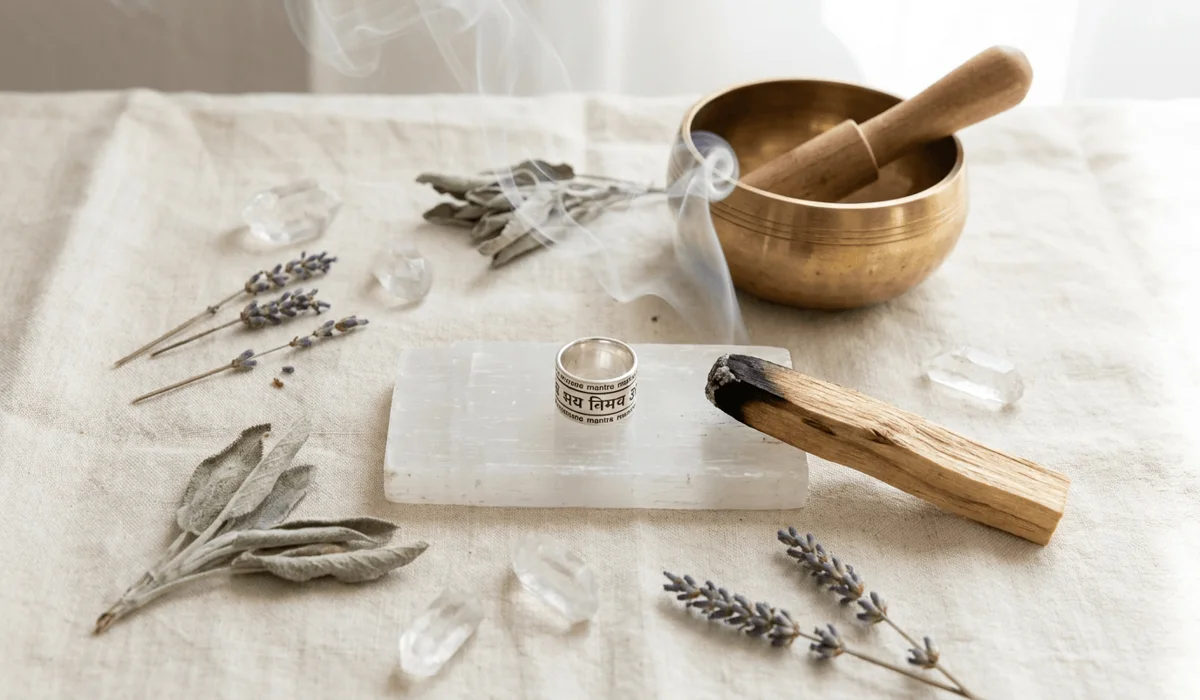
Sound vibrations offer another gentle way to refresh your ring’s energy. Placing the piece near a singing bowl or tingsha bells while playing them clears out stagnant energy without touching the metal. Avoid using aggressive chemical cleansers, as harsh liquids can wash away the dark oxidation that highlights the carved script.
Charging Practices and Daily Maintenance
To refresh your ring’s vitality, rest it under soft full moonlight overnight or in gentle morning sunlight for half an hour. Setting the ring on a raw selenite plate or near clear quartz crystals overnight keeps its spiritual intention clear and bright.
Keep the spinning track free of thick hand lotions, heavy oils, soap residue, and sand to protect its mechanical movement. Remove your ring before swimming in chlorinated pools or doing heavy manual labor. Storing the piece in a soft pouch prevents scratches and preserves the delicate Tibetan characters for years to come.
Frequently Asked Questions
Q: Why is an Om Mani Padme Hum spinning ring referred to as a portable prayer wheel?
A: It receives this title because its dual-band construction allows the carved mantra script to rotate around the finger. This rotational mechanism mirrors the physical movement and spiritual intent of traditional Himalayan prayer wheels, bringing ancient ritual into a convenient, wearable form.
Q: Which direction should you spin an Om Mani Padme Hum ring?
A: Traditional custom recommends spinning the band in a clockwise direction, moving from left to right across the front view. This direction aligns with the path of the sun and follows the sacred circumambulation pattern used around temples and Mani wheels in Tibetan tradition.
Q: What is the spiritual meaning behind the six syllables of Om Mani Padme Hum?
A: The six syllables represent the transformation of an unrefined body, speech, and mind into the pure, exalted state of a Buddha. Each syllable works to purify a specific negative emotion—such as pride, jealousy, or attachment—while cultivating universal compassion.
Q: Which hand should you wear an Om Mani Padme Hum ring on?
A: You can wear the ring on either hand depending on your personal goal. The left hand is traditionally chosen to receive grounding energy and support quiet self-reflection, while the right hand emphasizes projecting compassionate intentions outward into your daily work.
Q: How do you cleanse and charge a Buddhist mantra ring?
A: You can cleanse your ring by passing it through natural sage or palo santo smoke, or by placing it near a vibrating singing bowl. To charge its energy, rest the piece under full moonlight or set it alongside natural selenite crystals overnight.
Conclusion and Final Reflection
An Om Mani Padme Hum spinning ring brings ancient Himalayan wisdom into contemporary life, giving you a beautiful way to carry mindful intentions wherever you go. By reproducing the rotational movement of temple prayer wheels, every simple turn becomes a gentle reminder of peace, patience, and universal goodwill.
Bringing a sacred spinner ring into your routine turns simple everyday moments into opportunities for reflection and calm focus. We invite you to reflect on your daily intentions and explore how sacred symbol jewelry can support your personal journey toward emotional balance and spiritual growth.
Disclaimer: The contents of this article are provided strictly for informational purposes, personal reflection, and cultural exchange. They do not constitute medical, legal, financial, or other professional advice. Readers seeking guidance regarding physical or emotional health conditions should consult qualified healthcare practitioners.
Written by the Buddha Bodhis Team
Since 2020, we have been devoted to exploring traditional year-based wisdom, classical Feng Shui principles, and the rich spiritual symbolism rooted in Eastern cultural heritage. Our work bridges ancient metaphysical systems with modern life, interpreting annual cycles, elemental energies, and symbolic meanings to offer thoughtful insight and practical guidance. Through continuous research and practice, we aim to preserve traditional knowledge while making it accessible, relevant, and meaningful for contemporary seekers of balance, intention, and personal growth.
TikTok | YouTube | Pinterest | X
buddhabodhis@gmail.com