



Lapis Lazuli vs. Sodalite: How to Tell the Difference comes down to examining golden pyrite flecks, blue color saturation, and white calcite veining under natural light. Many gemstone lovers seek to differentiate these two famous blue stones because their prices, physical compositions, and traditional meanings vary widely. In this hands-on guide, we share clear authenticity tests, geological comparisons, and mindful practices to help you choose the right stone with confidence.
Here are the key takeaways to keep in mind when comparing these two blue stones:
- 💎 Lapis lazuli is an ultramarine rock dotted with shimmering golden pyrite specks.
- 💎 Sodalite is a single denim-blue mineral with cloudy white calcite veins and zero pyrite.
- 💎 Hardness & Density: Lapis measures 5 to 5.5 on the Mohs scale, while sodalite measures 5.5 to 6.
- 💎 Chakra Work: Both stones balance the throat and third eye chakras, but lapis sparks spiritual vision while sodalite calms racing thoughts.
- 💎 Water Care: Both gems are porous and must stay away from salt water, harsh cleansers, and long baths.
What Is Lapis Lazuli vs. Sodalite: How to Tell the Difference
Telling these two stones apart begins with understanding their geological roots. When we handle raw rough specimens in our workshop, the physical differences become clear right away. Let us break down their mineral makeup, surface details, and density markers so you can spot them in any setting.
Definition & Mineral Composition
Lapis lazuli is not a single mineral, but rather a complex metamorphic rock. It is formed primarily of lazurite, along with calcite, sodalite, and glittering pyrite. You can study complete geological data on these mineral groups through the Gemmological Association Information database.
Sodalite, on the other hand, is an independent chloric sodium aluminum silicate mineral. It forms naturally within igneous rocks and rich pegmatites. Interestingly, sodalite often appears as a minor mineral inside lapis lazuli, but pure sodalite never contains lazurite or pyrite.
This composition difference explains why lapis displays rich ultramarine layers while sodalite remains more uniform. When you hold pure sodalite, you are holding one distinct mineral species. When you hold lapis lazuli, you hold a harmonious tapestry of ancient rock layers.
Visual Characteristics & Color Comparison
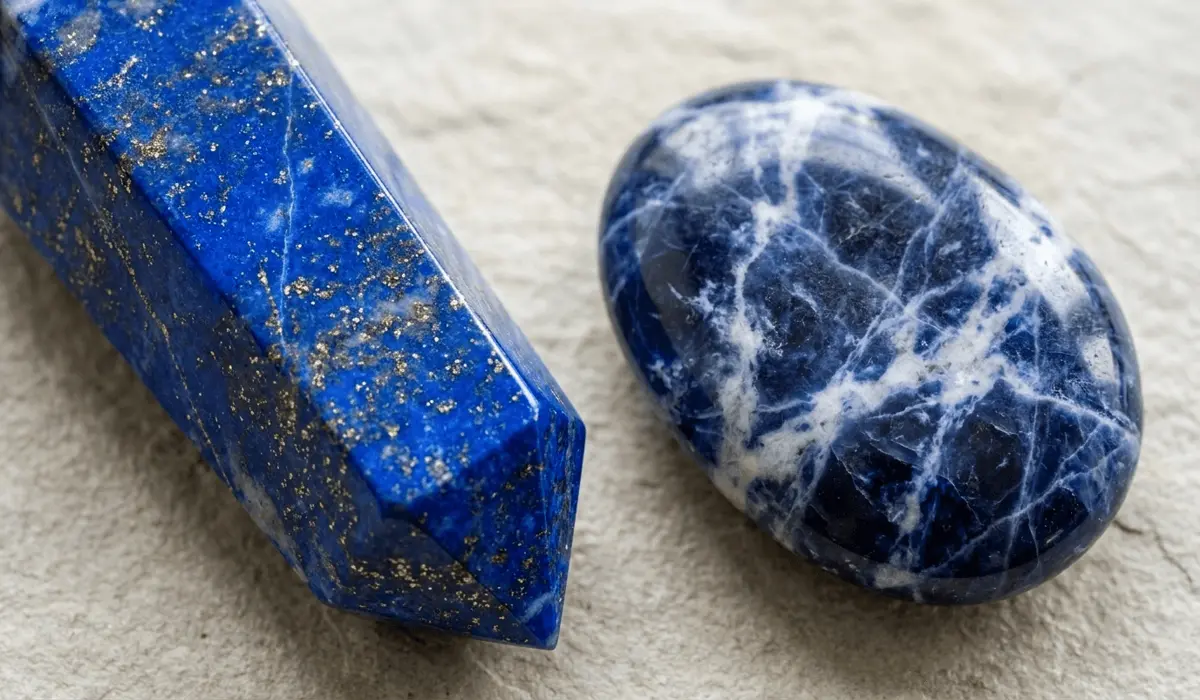
The easiest test is checking the stone under warm morning daylight. Lapis lazuli shows off a bold, royal ultramarine blue that feels deeply saturated. Sodalite shows a cooler, muted navy or denim blue tone that can look translucent around thin edges.
Next, look closely for metallic specks across the surface. Genuine lapis lazuli almost always displays natural golden pyrite flecks, commonly known as fool’s gold. Natural sodalite never forms with golden pyrite inclusions, showing only cloudy white or grey calcite veins instead.
If you see a dark blue stone with thick white marbling and zero golden sparkle, it is sodalite. If you see royal blue with starry gold specks and soft white banding, you are looking at true lapis. Learning these simple visual markers makes shopping for authentic jewelry much easier.
Video source: YouTube
Author: Crystal Guidance
Original video link: https://www.youtube.com/watch?v=uxHLdCljCqI
Gemstone Hardness & Physical Density
Both stones feature moderate surface durability, but they sit at slightly different positions on the Mohs scale. Lapis lazuli scores between 5 and 5.5, while sodalite registers slightly harder at 5.5 to 6. You can review standard mineral hardness criteria through the Gemological Research Database.
Weight provides another reliable physical clue. Lapis lazuli feels noticeably heavier in the palm because of its dense metallic pyrite inclusions. Sodalite has a lower specific gravity, making it feel lighter and cooler when held in a bead strand.
Surface polish also behaves differently across the two stones. Sodalite takes on a bright, glassy vitreous shine after tumbling. Lapis lazuli tends to retain a softer, waxy to greasy luster because its mixed minerals polish at uneven rates.
| Physical Property | Lapis Lazuli | Sodalite |
|---|---|---|
| Mineral Classification | Metamorphic rock (Lazurite + Pyrite + Calcite) | Chloric sodium aluminum silicate mineral |
| Primary Color Tone | Royal ultramarine to deep cobalt blue | Denim blue, navy, or dark indigo |
| Common Inclusions | Golden pyrite flecks, white calcite bands | White calcite veining, light grey patches |
| Mohs Hardness | 5.0 to 5.5 | 5.5 to 6.0 |
| Surface Luster | Dull to waxy, soft sheen | Vitreous to greasy, glossy glass shine |
Spiritual Meaning & Symbolism
Beyond their physical traits, both gems carry centuries of rich cultural folklore. In our studio, we often notice people responding to the different emotional atmospheres of these stones. One inspires noble leadership, while the other nurtures steady mental focus.
Traditional Symbolism of Lapis Lazuli
Ancient civilizations cherished lapis lazuli as an emblem of sacred truth, divine authority, and celestial wisdom. In ancient Egypt, pharaohs wore powdered lapis on their eyelids, viewing the golden-flecked blue stone as a physical mirror of the starlit heavens. Sumerian and Persian royals similarly carved royal cylinder seals from lapis blocks to sign legal decrees.
Traditional lore associates this stone with vocal sovereignty and inner dignity. It helps you stand firmly in your personal truth without fear or hesitation. When you wear lapis, you connect with a royal lineage of seekers who valued honesty above all else.
Spiritual Meaning of Sodalite
Sodalite is affectionately called the Thinker’s Stone across modern crystal communities. Rather than projecting royal majesty, sodalite promotes rational analysis, emotional poise, and mental order. It is celebrated among artists, writers, and students who want to organize creative ideas without getting overwhelmed.
Folk traditions hold that sodalite calms racing mental chatter, allowing clear logic and quiet intuition to work hand in hand. It invites you to release outdated self-criticism and welcome balanced self-acceptance. If your mind tends to jump from one worry to the next, sodalite provides a peaceful anchor.
Chakra Associations
Both gems are beloved as potent throat chakra blue crystals, but they express this throat energy differently. Lapis lazuli urges you to speak your deepest, most sacred truths with courage. Sodalite guides you to communicate with gentle logic, diplomatic clarity, and grounded patience.
As third eye chakra stones, they also support meditative perception. Lapis awakens spiritual vision, symbolic dreaming, and intuitive insight. Meanwhile, sodalite keeps your analytical mind quiet and steady so intuitive downloads can land peacefully.
For a broader look at energetic associations, our reference on Spiritual Crystal Meanings offers valuable insights into stone traditions. Balancing your throat and brow centers helps you express thoughts that truly reflect your authentic spirit.

Handcrafted Natural Red Cinnabar & Lapis Lazuli Bracelet | Koi Fish Amulet for Wealth & Success
Balance your fire. Flow with success. A vibrant armor of mineral strength and aquatic grace.
The Red Cinnabar & Lapis Lazuli Koi Bracelet is a sophisticated spiritual tool designed for an effortless daily ritual. Hand-strung with high-vibration Natural Cinnabar and truth-seeking Lapis Lazuli, this piece encircles your wrist in a continuous loop of energetic harmony. Known as the “Stone of Immortality,” cinnabar provides an intense Yang frequency to ground your Root Chakra, while the deep blue Lapis Lazuli opens the Throat Chakra for clear communication and wisdom.
This design features the Koi Fish, a traditional symbol for Wealth & Abundance and the power to overcome obstacles. Whether worn as a versatile daily accessory or a meaningful gift for a career milestone, it acts as a magnetic anchor for your Protection & Support, ensuring you navigate life’s currents with confidence.
Fire and Water: Why is the pairing of Cinnabar and Lapis Lazuli so potent for success?
- 🛡️ Stone: Natural High-Content Cinnabar (Fire) & Deep Blue Lapis Lazuli (Water)
- 🐟 Symbol: Enamel Koi Fish for transformation and financial surplus
- 🤝 Style: Minimalist Zen with a vintage aesthetic
- ✋ Tactile: Hefts with a reassuring mineral density and a cool-to-the-touch temperature
Benefits & Intentions Associated with Lapis Lazuli and Sodalite
Working with crystals is most effective when paired with clear, mindful personal intentions. Rather than looking for supernatural miracles, view these gems as tactile reminders of the qualities you want to cultivate. Here is how our community uses them in everyday wellness practices.
Commonly Associated Intentions
We frequently help clients pair stones with life transitions, academic goals, or creative projects. Depending on your personal focus, each blue stone lends itself to a distinct emotional frequency:
- 🌿 Sodalite for Mental Peace: Ideal for calming workplace stress, studying complex subjects, and easing heated conversations.
- 🌿 Sodalite for Truthful Calm: Supports honest self-reflection and quiets harsh internal dialogue during tough times.
- 🌿 Lapis Lazuli for Personal Leadership: Enhances public speaking, clear boundary-setting, and purposeful decision-making.
- 🌿 Lapis Lazuli for Creative Expression: Sparks poetic thought, authentic art, and fearless vocal delivery.
These practices draw on long-standing folk traditions rather than clinical medicine. Treating your stones as tangible focal points reinforces personal growth, focus, and inner calm.
Mindfulness & Personal Practices
Incorporating these blue stones into your daily quiet time is straightforward and deeply relaxing. When your thoughts feel scattered during long work hours, hold a smooth sodalite palm stone in your left hand. Take slow diaphragmatic breaths for two minutes to let the cool stone ground your awareness.
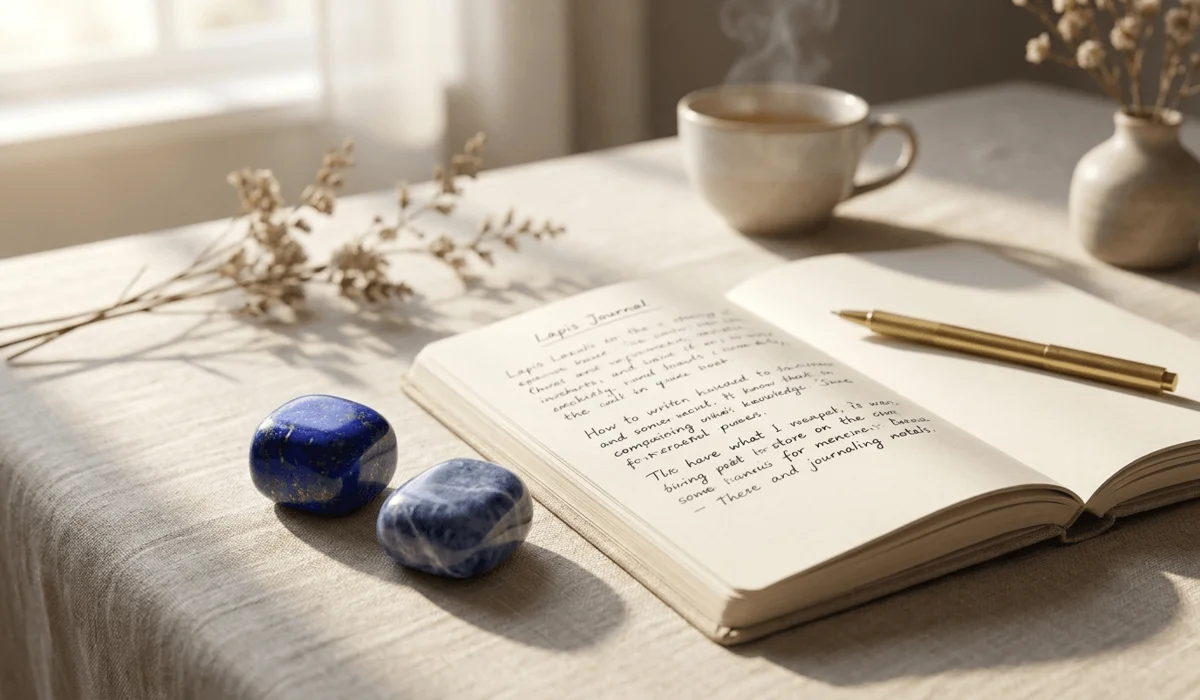
If you practice reflective journaling, place a tumbled lapis lazuli on your desk right beside your notebook. Allow its regal blue color to remind you to write down your unedited feelings without judgment. This simple routine frees your voice and clears creative blocks.
Mindful stone practices do not change the outer world; they change how calmly and honestly you show up within it.
How to Wear Lapis Lazuli and Sodalite
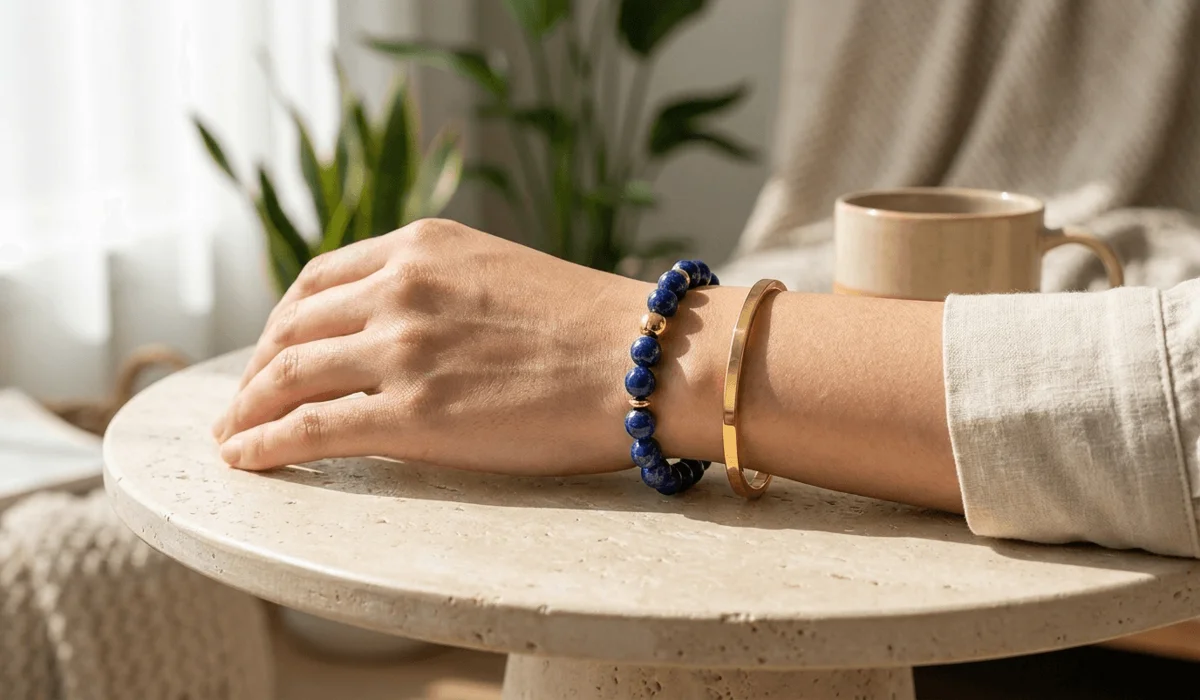
Wearing natural gemstone jewelry keeps you in touch with your intentions all day long. From a traditional energy standpoint, how and where you wear your bracelet shapes your daily experience. Let us examine the subtle mechanics of wrist placement.
Left Hand vs. Right Hand (Feng Shui Logic)
In traditional Eastern energetic philosophy, the left side of the body represents the receptive channel, while the right side represents the projective channel. This principle guides how personal Chi (气) flows through your aura.
Wear your blue stone bracelet on your left wrist when you want to absorb energy inwardly. If you need mental stillness, emotional balance, or deeper meditative focus, your left arm welcomes these calming vibrations. It serves as your personal energetic sponge.
Wear your bracelet on your right wrist when you want to project your energy outward. If you must deliver a keynote address, negotiate a business deal, or set firm boundaries, the right wrist sends out authority, truth, and vocal clarity.
When People Choose to Wear It
Many of our clients wear sodalite on busy weekdays filled with research, data review, or intense group meetings. Its quiet energy keeps temperaments steady when deadlines approach. It is a wonderful stone for students and teachers alike.
In contrast, people often reach for lapis lazuli during significant personal milestones, gallery openings, or spiritual retreats. Wearing genuine lapis imparts an unmistakable feeling of dignity and poise. You can discover authentic pieces in our Lapis Lazuli Collection crafted for daily mindfulness.

Both stones can also be combined gracefully. Wearing both brings together sodalite’s cool analytical restraint and lapis lazuli’s inspiring spiritual depth, creating a wonderful balance between mind and heart.
Intention-Setting Practices
Before putting on your jewelry in the morning, pause for a quiet moment. Roll the polished beads between your fingertips and take three slow, conscious breaths. This brief habit clears away morning rush and centers your attention.
Quietly state a supportive mantra that reflects your daily goal. You might whisper: “My words carry truth, calm, and clarity.” By infusing your jewelry with mindful focus, your bracelet transforms from an ordinary accessory into an empowering personal talisman.
Lapis Lazuli / Sodalite vs Similar Stones
Blue minerals can easily confuse new collectors. Besides lapis and sodalite, several other stones share similar midnight, royal, or indigo hues. Learning to spot these related minerals will sharpen your eye.
Lapis Lazuli vs. Azurite
Azurite presents an intense, electric azure hue that differs noticeably from the deep ultramarine of lapis lazuli. It is a copper-carbonate mineral that frequently forms alongside bright green malachite. In terms of durability, azurite is quite soft, rating only 3.5 to 4 on the Mohs scale, which makes it far more fragile than lapis.
Traditional crystal lore links azurite with deep subconscious release and psychic exploration. Lapis lazuli remains more closely tied to noble truth, practical leadership, and clear throat-chakra expression. If you enjoy comparative crystal guides, you might also appreciate our look at Sunstone Gemstone Differences.
Sodalite vs. Dumortierite
Dumortierite is another popular blue stone that often gets mixed up with sodalite. While sodalite has a denim-blue body with soft white calcite veining, dumortierite displays a uniform, matte indigo or violet-blue tone with a fibrous texture. It rarely shows prominent white calcite patches.
Mineral hardness sets them apart quickly. Dumortierite scores between 7 and 8.5 on the Mohs scale, making it substantially harder and more scratch-resistant than sodalite. Energetically, dumortierite stands for patience and endurance, while sodalite centers on communication and rational logic.
You can read more comprehensive mineral profiles across the vast General Knowledge Database to deepen your gemological studies. Understanding these differences ensures you always know what you are buying.
Who Is Lapis Lazuli and Sodalite Suitable For?
Choosing between these two stones is a personal journey. While both blue gems offer wonderful support, certain life circumstances and personality traits align more naturally with one over the other.
Chakra or Energy Alignment
If you frequently feel timid about expressing your true opinions, or if you struggle with imposter syndrome, lapis lazuli provides bold encouragement. Its noble frequency supports your inner voice and empowers you to express healthy personal boundaries.
If your mind feels constantly overwhelmed by racing thoughts, anxiety, or emotional turbulence, sodalite is the gentler companion. Its cooling presence helps you pause, sort out chaotic emotions, and look at problems through a calm, objective lens.
Zodiac & Astrological Associations
In traditional astrology, lapis lazuli shares a deep affinity with Sagittarius and Libra. It supports the truth-seeking expansion of Sagittarius while helping Libras communicate with fair, honest balance. Its regal energy elevates both signs toward their highest potential.
Sodalite connects naturally with analytical Virgo and communicative Gemini. It helps Virgos quiet their inner perfectionist and gives Geminis a steady anchor for their swift ideas. That said, your intuitive connection always matters more than any astrological chart.
Lifestyle & Personal Intentions
Writers, editors, researchers, and coders often find sodalite to be the perfect desk companion for daily mental endurance. It helps you stay focused on intricate details without feeling drained.
Public figures, educators, community leaders, and artists often lean toward lapis lazuli. It carries a commanding, authentic presence that helps you present ideas with confidence and grace.
How to Cleanse, Charge, and Care for Lapis Lazuli and Sodalite
Both stones have porous surfaces that require gentle, conscious care. Using harsh chemicals or wrong cleansing methods can easily damage their finish. Here is how we recommend caring for your natural blue stones.
Safe Cleansing Methods
Because lapis and sodalite contain delicate calcite and porous silicates, water is not their friend. Prolonged soaking, hot water, and salt baths can cause them to lose their polish or crumble over time. We advise keeping both stones dry whenever possible.
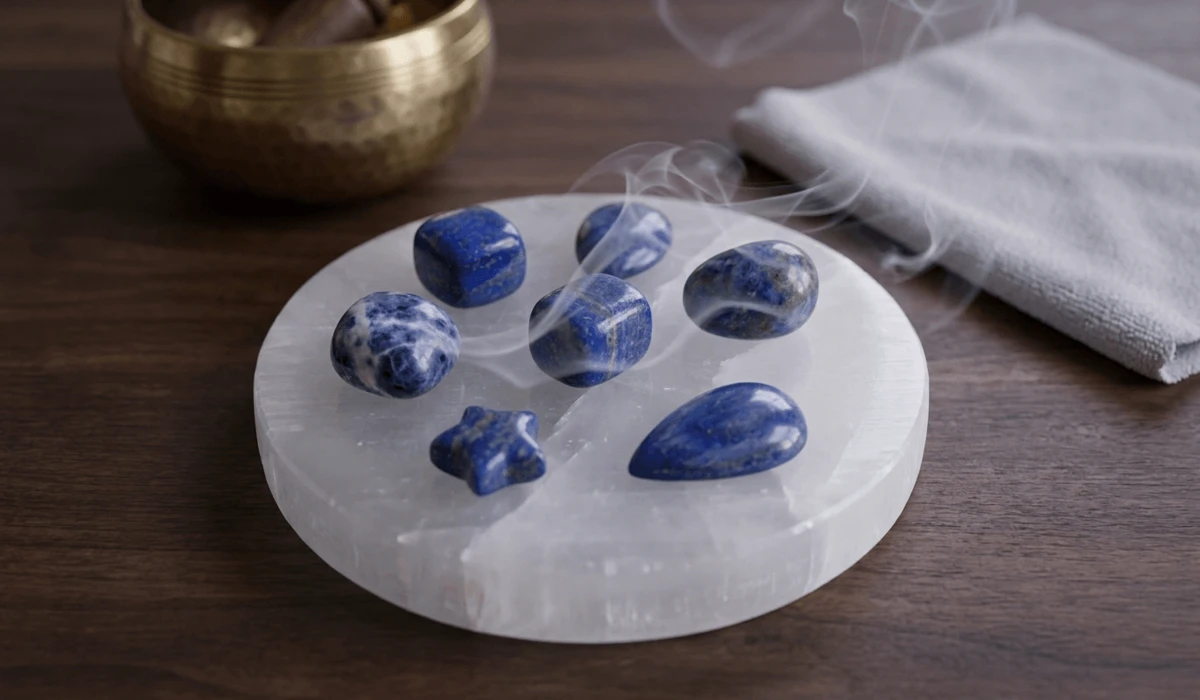
Instead, use sacred botanical smoke from dried sage, cedar, or sweetgrass to cleanse them energetically. Simply wave your stone gently through the cool smoke for thirty seconds. Sound cleansing using brass singing bowls, bells, or chimes is another safe, non-invasive method.
Charging Practices
To refresh your stones’ energetic vitality, place them near a window under the soft glow of a full moon. Moonlight offers cool, restorative energy without the color-fading heat of intense direct midday sun.
You can also lay your blue bead bracelets atop a dry selenite charging plate or inside a clear quartz geode overnight. These high-vibration clearing minerals reset your jewelry safely without scratching its surface.
Daily Care & Storage
After wearing your jewelry, wipe each bead gently with a clean, dry microfiber cloth. This quick wipe removes skin oils, perfume residue, and sweat that can dull natural stone surfaces over time.
Store your blue gemstone pieces in separate soft fabric pouches away from harder gems like quartz, beryl, or diamonds. Always take off your bracelets before swimming, exercising, or cleaning the house to avoid chemical exposure.
Mindful Care Checklist: Protect your natural blue stones by keeping them away from swimming pools, hot showers, and household cleaning sprays. A soft dry wipe and moonlight rest will keep them glowing for years to come.
Frequently Asked Questions
Q: How do I tell the difference between sodalite and lapis lazuli?
A: Look closely for golden pyrite specks; natural lapis lazuli features these metallic gold flecks, while sodalite never contains them. In addition, lapis lazuli displays a vibrant royal ultramarine blue, whereas sodalite shows a deeper, muted denim blue crossed with cloudy white calcite veins.
Q: Why is sodalite called the poor man’s lapis?
A: Sodalite earned this historical nickname because it is much more plentiful in nature and therefore more affordable than gem-grade lapis lazuli. It has long been used as an accessible substitute in decorative carvings and beads, though it remains a valuable, authentic mineral in its own right.
Q: Can I wear lapis lazuli and sodalite together?
A: Yes, wearing both stones together creates a balanced harmony between sodalite’s rational logic and lapis lazuli’s higher spiritual vision. Both crystals support the throat chakra, helping you speak clearly with both intellectual calm and authentic truth.
Q: Which hand should I wear my lapis lazuli bracelet on?
A: Wear your lapis lazuli bracelet on your left wrist when you want to absorb wisdom, heighten intuition, and welcome inner calm. Wear it on your right wrist when your daily goal is to speak publicly, lead projects, and project vocal authority.
Q: Why does lapis lazuli have gold flecks?
A: The golden specks scattered across lapis lazuli are natural inclusions of iron pyrite, commonly known as fool’s gold. These metallic crystals form alongside lazurite and calcite during the metamorphic rock cycle and serve as a reliable sign of genuine lapis lazuli.
Conclusion & Gentle Next Step
Distinguishing between lapis lazuli and sodalite becomes natural once you focus on base blue tones, golden pyrite specks, and white calcite veining. Neither gem is inherently superior to the other; lapis offers royal vision and truthful courage, while sodalite grants quiet reflection and intellectual clarity. By taking time to observe their unique physical textures and subtle frequencies, you can mindfully select the blue companion that best supports your daily journey.
This content is created strictly for informational and cultural appreciation purposes. It does not constitute medical, legal, financial, or other professional advice. Readers should always consult qualified professionals for any health concerns or personal guidance.

Written by the Buddha Bodhis Team
Since 2020, we have been devoted to exploring traditional year-based wisdom, classical Feng Shui principles, and the rich spiritual symbolism rooted in Eastern cultural heritage. Our work bridges ancient metaphysical systems with modern life, interpreting annual cycles, elemental energies, and symbolic meanings to offer thoughtful insight and practical guidance. Through continuous research and practice, we aim to preserve traditional knowledge while making it accessible, relevant, and meaningful for contemporary seekers of balance, intention, and personal growth.
TikTok | YouTube | Pinterest | X
buddhabodhis@gmail.com