


Knowing how to tell if your vintage jade brooch is real begins with testing surface temperature, physical density, light diffusion, and period-correct metalwork. Collectors often cherish these historical heirlooms for their serene beauty and rich cultural legacy. This practical guide shares our studio testing methods to help you identify authentic antique jade jewelry with complete confidence.
Key Identification Summary:
- 💎 Surface Temperature: Genuine jade feels noticeably cool to the touch and warms up very slowly.
- 💎 Specific Gravity: Real jade displays a heavy heft in the palm due to its compact mineral structure.
- 💎 Internal Matrix: Flashlight inspection reveals cloudy fibrous grain patterns rather than spherical air bubbles.
- 💎 Period Metalwork: Vintage settings feature authentic hallmarks, hand-solder joins, and historical clasps.
- 💎 Acoustic Tone: Suspended natural jade creates a clear, musical chime when gently tapped.
What Is an Authentic Vintage Jade Brooch?
An authentic vintage jade brooch features a natural jade gemstone set into a jewelry pin crafted decades ago. True antique examples range from delicate late Qing dynasty carvings to bold mid-century lapel ornaments. Collectors love these treasures because every piece preserves exquisite historic artistry.
Gemological Classification of Heirloom Jade
In gemology, the term jade applies strictly to two distinct mineral species: jadeite and nephrite. Jadeite is a sodium-aluminum pyroxene mineral famous for its vivid emerald tones and glassy shine. Nephrite is a calcium-magnesium amphibole rock renowned for creamy whites, deep greens, and a smooth waxy surface.
Historic jewelry from China favored local nephrite for thousands of years. Vivid Burmese jadeite became fashionable during the nineteenth century and dominated early twentieth-century designs. Authentic heritage brooches represent natural untreated Type A material according to established Gemological Institute Standards.
Material Characteristics and Physical Composition
Natural jade owes its remarkable durability to a densely interlocked crystal matrix. Nephrite consists of tightly felted microcrystalline fibers that resist chipping better than steel. Jadeite displays a granular to fibrous framework that reflects brilliant light across polished surfaces.
Natural mineral inclusions produce soft color transitions inside authentic stones. Gemologists describe these organic shade shifts as natural color zoning. In our studio bench examinations, we rarely see uniform flat colors across genuine antique carvings.
Physical Identification Tests for Collectors
The thermal conductivity touch test provides an immediate clue for curious collectors. Authentic jade draws heat away from skin instantly, feeling frosty against your cheek. Imitation materials like glass or plastic warm up almost immediately in your hands.
The specific gravity heft test helps you assess mineral mass without special tools. Real nephrite carries a density of about 3.0, while jadeite averages around 3.3. When bounced gently in the palm, an authentic brooch feels much heavier than imitation stones of identical size.
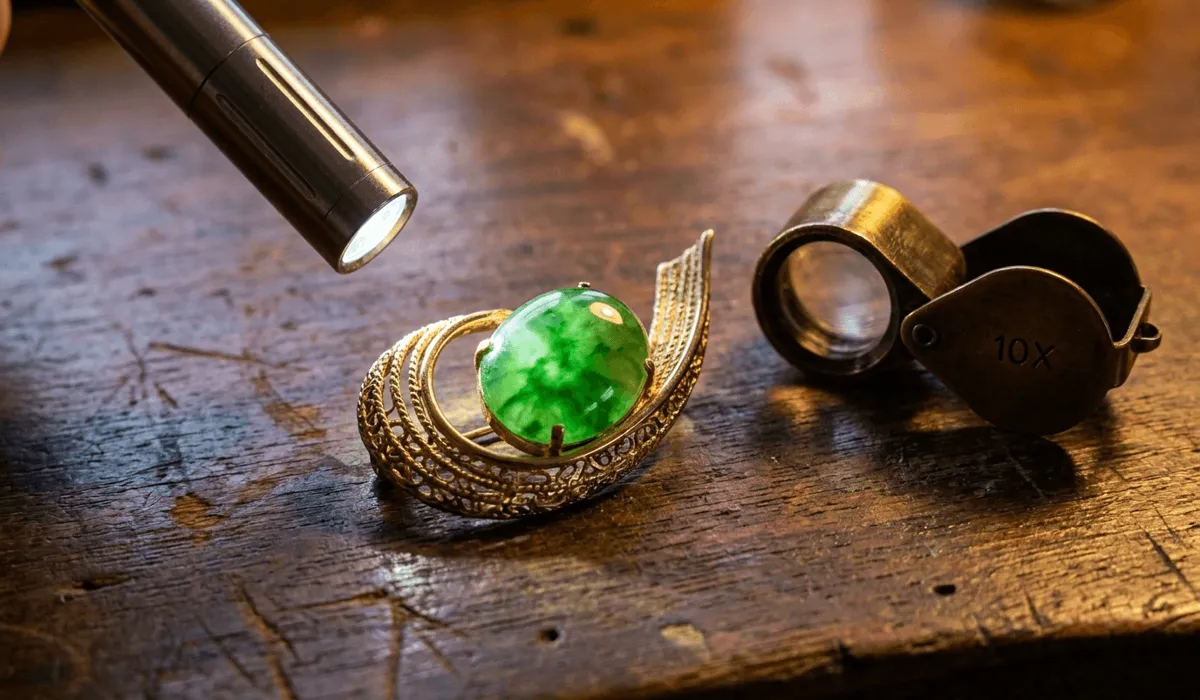
Directional light testing highlights internal structural formations inside the gem. Holding a bright penlight at a forty-five-degree angle reveals organic clouding and fibrous veining. In contrast, common glass paste jewelry displays perfectly clear pockets or tiny circular air bubbles.
True vintage jade carries a quiet weight and an icy touch that synthetic stones can never replicate.
Vintage Hardware and Craftsmanship Markers
Inspecting the metal pin mechanism offers reliable clues regarding the age of your piece. Simple C-clasps point to Victorian origins, while safety trombone catches suggest early European fabrication. Rolling safety barrel clasps became standard across commercial jewelry during the nineteen thirties.
Authentic vintage settings often feature stamped precious metal purity marks. Look for marks such as 14K, 18K, 925 sterling, or early Chinese export stamps on the frame. These hallmarks confirm quality standards similar to those detailed in our Gemstone Authentication Principles.
Hand-carved vintage jade plaques display gentle variations across curves and edges. Antique lapidary masters carved each openwork motif using manual bow drills and abrasive pastes. These subtle artisan tool marks stand in sharp contrast to the sharp ridges seen on modern molded resin copies.
Spiritual Meaning and Symbolism of Vintage Jade Brooches
Beyond material value, vintage jade brooches carry deep cultural wisdom and protective meaning. Ancient cultures revered the stone as a conduit of heavenly virtue and earthly harmony. Wearing an antique brooch connects the modern collector with centuries of spiritual tradition.
Traditional Feng Shui and Chinese Symbolism
In classical Feng Shui, jade stands as the supreme mineral for harmonizing personal Chi (气). Traditional texts associate jade with five noble human virtues: benevolence, wisdom, integrity, bravery, and steadfast endurance. Heirlooms passed through family lines hold concentrated auspicious energy.
Traditional carved motifs on antique brooches convey specific well-wishes for the wearer. A carved bat represents overflowing fortune, while a ripe peach symbolizes vibrant health and longevity. Lotus blossom carvings celebrate personal purity and spiritual resilience through difficult circumstances.
Chakra Associations and Energetic Resonance
Green jadeite and nephrite resonate deeply with the Anahata heart chakra. This energy center governs love, emotional balance, forgiveness, and mindful relationships. Placing green jade over the chest helps soothe nervous tension and quiet self-critical thoughts.
White nephrite, historically called mutton-fat jade, connects with the crown chakra and higher spiritual awareness. Lavender jadeite stimulates the third eye chakra, encouraging peaceful intuition and emotional composure. You can learn more about these mineral vibrations in our Crystal Energy Directory.
Historical Traditions of Chest Adornment
Many vintage Chinese export brooches began life as aristocratic ornamental plaques. During the early twentieth century, jewelers refashioned antique belt buckles and hairpins into Western lapel pins. This creative repurposing created breathtaking fusion jewelry that defined the Art Deco period.
Wearing jade over the heart served as a tactile reminder of personal character. Ancient scholars touched their chest pendants during tense meetings to cultivate inner calm. This mindful practice helped wearers maintain dignity, gracious speech, and composed leadership.
Benefits and Daily Intentions for Jade Brooches
Working with vintage jewelry brings mindful awareness into your daily routine. Authentic jade serves as a wearable anchor for inner serenity and emotional stability. Many collectors find that wearing a vintage piece transforms ordinary dressing into an intentional ritual.
Common Intentions for Emotional Balance
Jade encourages grounded composure during periods of intense career or personal transition. The dense mineral structure provides a stabilizing earth energy that counteracts mental scatteredness. When life feels overwhelming, holding the cool stone restores steady breathing.
The stone also carries long-standing associations with gentle prosperity and mindful abundance. Rather than promoting reckless ambition, jade encourages steady gratitude and thoughtful stewardship of resources. It fosters healthy personal boundaries, protecting your emotional space from draining external influences.
Mindfulness Practices with Tactile Gemstones
You can use your brooch as a tangible mindfulness touchstone throughout the workday. When you notice rising stress, rest your fingers gently against the smooth, chilled surface. Take three slow breaths, allowing the cooling mineral to reset your nervous system.
Many people set a silent intention while fastening the pin clasp each morning. You might focus on patience, clear communication, or open-hearted compassion. The physical act of securing the brooch seals that chosen mindset for the day ahead.
How to Wear and Style a Vintage Jade Brooch
Styling an antique brooch combines historic charm with energetic purpose. Where you fasten your jewelry influences how its energy interacts with your presence. Mindful placement creates an elegant statement while honoring traditional body dynamics.
Placement and Energetic Logic
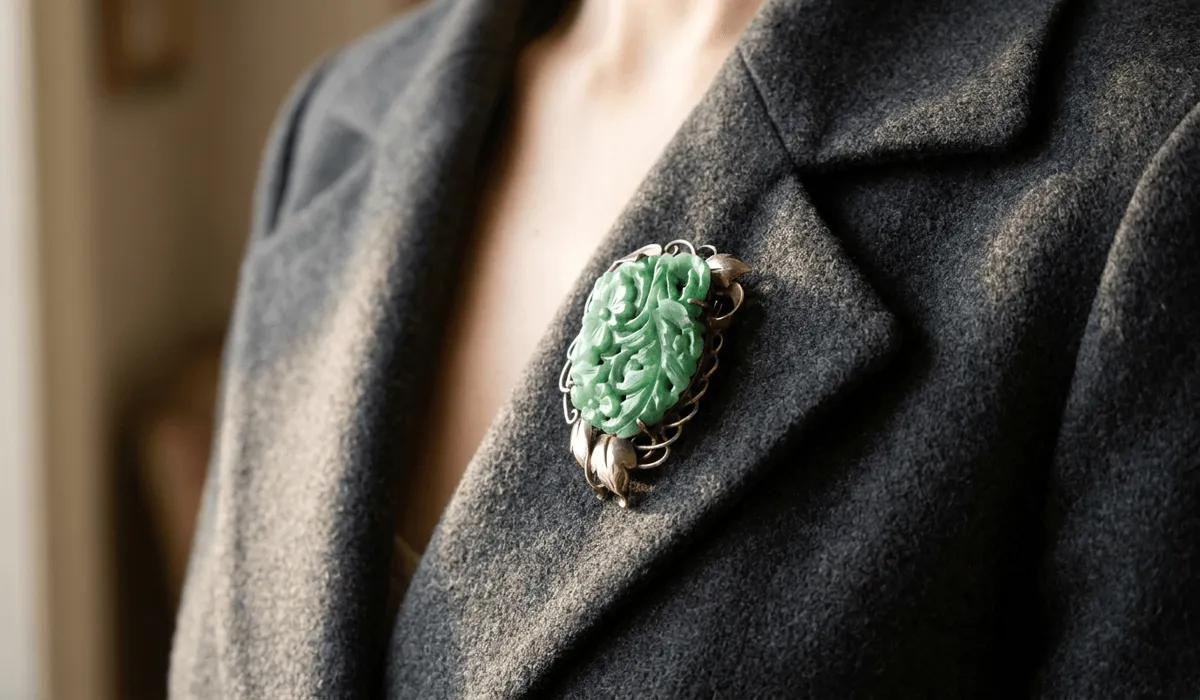
Fastening your brooch to the left lapel places the gemstone directly over your heart. In traditional body energetics, the left side serves as the receptive channel for incoming energy. Wearing jade here invites calming, nourishing Chi into your emotional center.
Pinning the brooch onto the right shoulder represents active outward expression. The right side governs how you direct energy into your surrounding environment. A brooch worn here acts as an energetic shield of protective poise during public engagements.
You can also fasten your vintage brooch at the center of a buttoned collar or silk scarf knot. This central placement aligns with the throat chakra, supporting calm and diplomatic communication. It draws flattering focus to the neckline while elevating formal business attire.
Occasions and Mindful Styling Choices
A vintage jade brooch adds distinguished character to tailored blazers, cashmere coats, and evening wraps. Wear your piece to important negotiations, family celebrations, or formal gallery openings. The understated sheen of antique jade conveys quiet sophistication without ostentation.
Brooches look equally stunning when secured to velvet berets, vintage hats, or fabric evening clutches. Mixing antique jewelry with contemporary tailoring creates a timeless, individual look. To find complementary artisanal pieces, browse our thoughtfully curated Artisan Brooch Collection.

Imperial Stone & Shell Flower Mother of Pearl Brooch – Elegant Sophistication & Timeless Grace
- 💎 Gemstones: Natural Sea Shell (Mother of Pearl) & Green Imperial Stone
- ✨ Features: Hand-carved floral artistry, 14K Gold Plated finish, Anti-fade technology
- 📏 Dimensions: Height: 2.08″ (53mm) | Width: 1.49″ (38mm)
- ✋ Position: Wear on the left lapel to stay close to the heart, enhancing self-love and emotional receptivity.
Simple Intention-Setting Routines
Begin your morning styling by wiping the stone gently with a dry microfiber cloth. This physical clearing removes dust and creates a quiet pause before you leave home. Hold the brooch in both palms, feeling its weight and comforting chill.
State your primary intention for the day in a single clear phrase. Visualize a soft green light radiating outward from the gemstone to wrap your heart in serene safety. Carefully pin the clasp shut, trusting the stone to keep your focus steady.
Authentic Vintage Jade vs Common Simulants
Because genuine jade has always commanded high value, market simulants have existed for centuries. Antique costume jewelry frequently substituted cheaper minerals or colored glass for expensive jadeite. Learning to spot these substitutes is essential for every vintage collector.
Video source: YouTube
Author: Gemstone Identification Channel
Original video link: https://www.youtube.com/watch?v=4Nos35w6DS8
Recognizing the difference between natural mineral aggregates and clever imitations requires careful observation. Professional gemologists follow rigorous diagnostic procedures to identify tricky simulants. Reviewing guidelines published under Gemmological Association Criteria clarifies how structural testing separates jade from its lookalikes.
Authentic Jade Compared to Serpentine
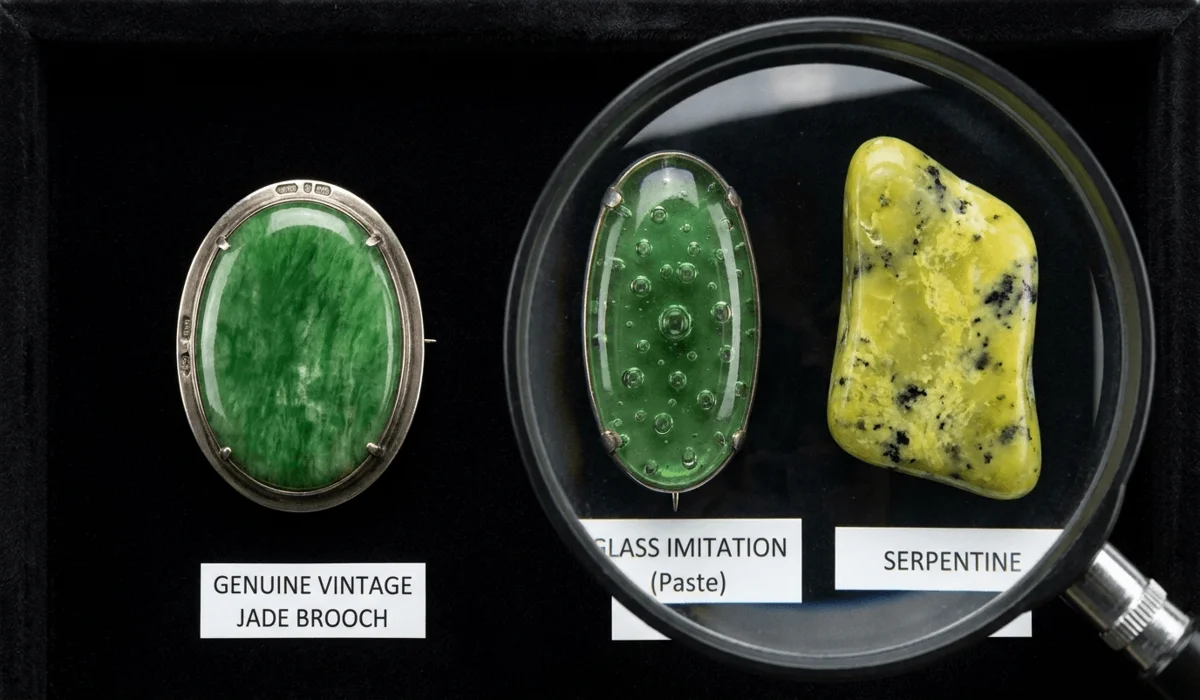
Serpentine represents the most frequent mineral substitute for natural jade in vintage jewelry. Often traded under misleading names like Bowenite or New Jade, serpentine is noticeably softer. It measures between 2.5 and 5.5 on the Mohs hardness scale, making it prone to surface scratches.
Serpentine also feels much lighter in the palm because of its lower mineral density. Under magnification, serpentine displays a uniform yellowish-green color and a greasy, candle-like luster. It lacks the interwoven crystalline threads that define genuine nephrite and jadeite.
Authentic Jade Compared to Glass Imitations
Vintage glass brooches, historically described as Peking glass or French paste, can mimic jade colors remarkably well. However, glass is an amorphous material that cools and heats very rapidly. A glass brooch warms to body temperature within seconds of touching your hand.
A simple jeweler’s loupe quickly reveals diagnostic air bubbles trapped inside molded glass paste. Genuine jade formed under immense tectonic pressure and never contains spherical gas bubbles. Furthermore, chipped glass shows smooth, curved conchoidal fractures, whereas broken jade shows a granular, splintery texture.
Authentic Jade Compared to Chrysoprase and Aventurine
Aventurine is a green quartz mineral often mistaken for high-grade Burmese jadeite. It contains tiny glittering flakes of mica that produce a shimmering effect called aventurescence. Genuine natural jade never displays this metallic, sparkling interior flash.
Chrysoprase is an attractive apple-green chalcedony colored by natural nickel deposits. While durable and lovely, chrysoprase has an even, solid body color without organic shading. Authentic vintage jade almost always reveals cloudy mineral plumes and subtle color zoning.
The table below provides a quick reference to distinguish genuine jade from common vintage simulants:
| Material Name | Mohs Hardness | Specific Gravity | Key Visual Feature | Internal Texture |
|---|---|---|---|---|
| Natural Jadeite | 6.5 to 7.0 | 3.30 to 3.38 | Vitreous shine, color zones | Granular, interlocking fibers |
| Natural Nephrite | 6.0 to 6.5 | 2.90 to 3.03 | Greasy waxy luster | Felted fibrous weave |
| Serpentine (Bowenite) | 2.5 to 5.5 | 2.44 to 2.62 | Oily sheen, easily scratched | Cloudy, structureless mass |
| Peking Glass Paste | 5.0 to 5.5 | 2.20 to 2.50 | Shell-like curved breaks | Round trapped gas bubbles |
| Green Aventurine | 7.0 | 2.64 to 2.69 | Glittering mica sparkles | Crystalline quartz matrix |
Who Should Wear a Vintage Jade Brooch?
Vintage jade brooches offer beauty and harmony to many different individuals. Whether you seek emotional grounding, aesthetic history, or symbolic protection, this gemstone adapts to your personal journey. It bridges timeless elegance with gentle metaphysical support.
Chakra and Energetic Alignment
People working through emotional recovery or relationship strain find great comfort in jade. Its calming frequency softens self-judgment and encourages deep compassion for oneself and others. The stone acts like a cool spring breeze across an overheated emotional landscape.
Meditation practitioners and mindfulness seekers appreciate the tactile stability of antique jade. Holding the cool carving between your fingertips helps draw wandering thoughts back to the present moment. It is also wonderful for diplomats and managers who must lead challenging discussions with poise.
Astrological and Zodiac Harmony
Taurus and Libra share a natural kinship with green jade because both signs are guided by Venus. These signs appreciate enduring quality, tactile beauty, and harmonious surroundings. Jade supports their desire for balanced relationships, artistic expression, and financial stability.
Virgo individuals connect with jade’s historic symbolism of purity, humility, and quiet discernment. The stone helps calm the active, overthinking Virgo mind, promoting peaceful acceptance over endless perfectionism. Water signs such as Cancer, Scorpio, and Pisces also benefit from jade’s anchoring earth energy.
Lifestyle and Heritage Jewelry Admirers
Vintage jade brooches appeal deeply to lovers of antique fashion and sustainable jewelry. Choosing an antique carving honors historic craftsmanship while avoiding the environmental footprint of modern mining. Each piece serves as a wearable work of art carrying personal stories across generations.
Heirloom collectors also treasure jade brooches as thoughtful gifts for family milestones. Passing an authentic brooch down to a daughter or granddaughter celebrates lasting love and enduring lineage. It remains a precious talisman that never loses its refined appeal.
How to Cleanse, Charge, and Care for Vintage Jade
Caring for an antique jade brooch requires gentle methods that protect both stone and vintage metal. Harsh modern jewelry cleaners can strip delicate historic patinas or damage aged solder joints. Mindful, non-invasive maintenance preserves the beauty of your heirloom for future generations.
Safe Cleansing Rituals
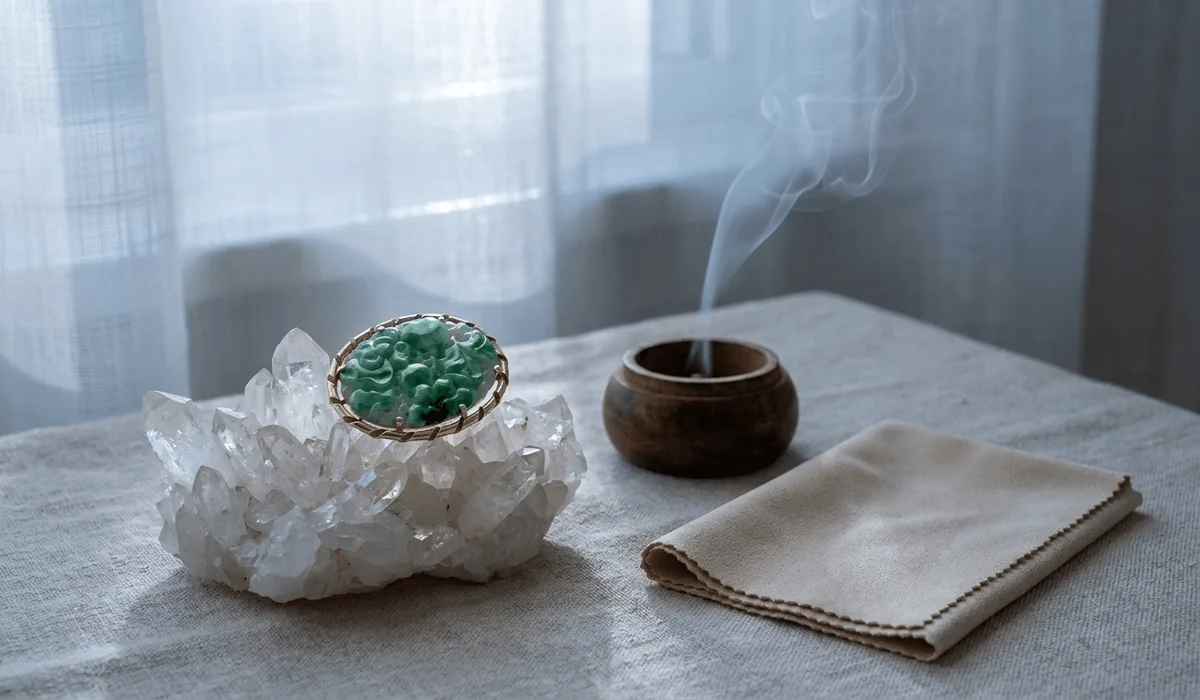
Energetic smoke cleansing provides a safe way to refresh the vibrational clarity of your brooch. Slowly pass the piece through fragrant smoke from dried white sage, sandalwood incense, or cedar needles. This ancient ritual dissolves stagnant impressions without exposing aged metal to moisture.
Sound clearing offers another effective, touch-free method to revitalize your jewelry. Sounding a bronze singing bowl or clear tuning fork near the brooch restores energetic equilibrium. These sonic waves clear energetic residue while safeguarding fragile pin mechanisms.
Never submerge a vintage brooch in harsh chemical dips, ultrasonic machines, or boiling water. Steam and ultrasonic vibrations can loosen antique bezel settings or crack aged natural stones. Salt water baths should also be avoided, as corrosive salts pit antique silver and gold alloys.
Gentle Charging Practices
Moonlight charging nurtures the cooling, receptive Yin qualities of genuine jade. Place your brooch on an interior windowsill where it can absorb the soft light of the Full Moon. Overnight exposure to lunar rays revitalizes the gem’s serene, harmonizing vibrations.
Resting your brooch on a natural clear quartz cluster or selenite plate provides gentle energetic renewal. Natural crystal beds draw away dense vibrations and restore the gem’s natural earth frequency. This resting method is safe for all types of vintage metal hardware.
Preserving Vintage Mountings and Stones
Clean your vintage brooch physically using only lukewarm water and a drop of mild, plant-based soap. Gently brush around the setting using an extra-soft baby toothbrush to lift dust and skin oils. Dry the piece thoroughly with a clean microfiber cloth before storing it away.
Store your brooch flat inside a fabric-lined jewelry box or soft velvet pouch. Keep it separate from harder gemstones like diamonds, rubies, and sapphires to prevent accidental surface scratches. Ensure the pin stem rests without tension to prevent bending antique hinges.
If you suspect you possess an exceptional family heirloom, consider seeking independent laboratory analysis. Accredited institutions following International Gemological Laboratory protocols can issue formal documentation confirming untreated Type A jadeite status. Professional testing protects your financial investment and confirms historic authenticity.
Conclusion and Honoring Your Vintage Jade
Summary of Heirloom Appreciation:
Identifying an authentic vintage jade brooch requires inspecting its icy touch, substantial heft, organic interior matrix, and period metal craftsmanship. Taking time to test these physical properties deepens your connection to the piece and its remarkable history. Each genuine antique brooch stands as a lasting testament to natural beauty and artisan mastery.
When you hold an authentic vintage brooch, you hold millions of years of geological formation shaped by human hands. We invite you to wear your vintage treasures with pride, calm mindfulness, and reverence for the past. Cherish the quiet harmony that natural jade brings to your daily life.
Frequently Asked Questions
Q: How to test jade to see if it’s real?
A: Perform simple non-destructive tests at home by checking the stone’s temperature and weight. Authentic jade feels icy cool to the touch and takes several seconds to absorb body heat. It also feels noticeably heavy in your hand because of its dense mineral structure. Finally, inspect the surface with a ten-power jeweler’s loupe to confirm natural fibrous textures rather than molded glass seams.
Q: How to test jade with a flashlight?
A: Press a bright LED penlight against the side or back of the brooch at a forty-five-degree angle. True jade shows soft, cloudy translucency with subtle color zoning and fibrous mineral veining. If the stone looks completely transparent, contains round bubbles, or reveals bright dye concentrated along cracks, it is not authentic untreated jade.
Q: What gets mistaken for jade?
A: Serpentine is the most common mineral mistaken for jade because of its translucent green color and waxy surface. Green aventurine quartz, chrysoprase, prehnite, and green grossular garnet are also frequently confused with jadeite. In costume jewelry, vintage green Peking glass paste and molded resin pins are widespread lookalikes.
Q: Does real jade have bubbles?
A: Real jade never contains internal spherical air bubbles. Jade is a dense crystalline metamorphic rock formed deep under the earth under immense heat and pressure. Round or elongated bubbles are clear indicators of colored glass, poured resin, or acrylic plastic imitations.
Q: How to tell if brooch is vintage?
A: Inspect the clasp mechanism, solder construction, and metal hallmarks on the reverse side of the brooch. Antique pieces typically feature early C-clasps, trombone slides, or early safety barrel catches. Look for hand-engraved metalwork, natural age patina, and historical purity stamps like sterling, 14K, or antique export stamps.
This guide is published solely for educational, cultural, and informational purposes. The spiritual and energetic qualities discussed reflect traditional metaphysical beliefs and do not constitute medical, legal, or financial advice. For definitive gemstone valuation and authentication, readers should consult an accredited gemological laboratory.

Written by the Buddha Bodhis Team
Since 2020, we have been devoted to exploring traditional year-based wisdom, classical Feng Shui principles, and the rich spiritual symbolism rooted in Eastern cultural heritage. Our work bridges ancient metaphysical systems with modern life, interpreting annual cycles, elemental energies, and symbolic meanings to offer thoughtful insight and practical guidance. Through continuous research and practice, we aim to preserve traditional knowledge while making it accessible, relevant, and meaningful for contemporary seekers of balance, intention, and personal growth.
TikTok | YouTube | Pinterest | X
buddhabodhis@gmail.com