


Real vs. Fake Dzi Beads: How to Spot Authentic Patterns is a vital skill for anyone drawn to these sacred Himalayan treasures. Identifying genuine pieces involves looking for specific mineral markers like cinnabar dots and unique weathering marks on natural agate. In this guide, we share our expertise to help you distinguish between historical etched craftsmanship and modern resin imitations.
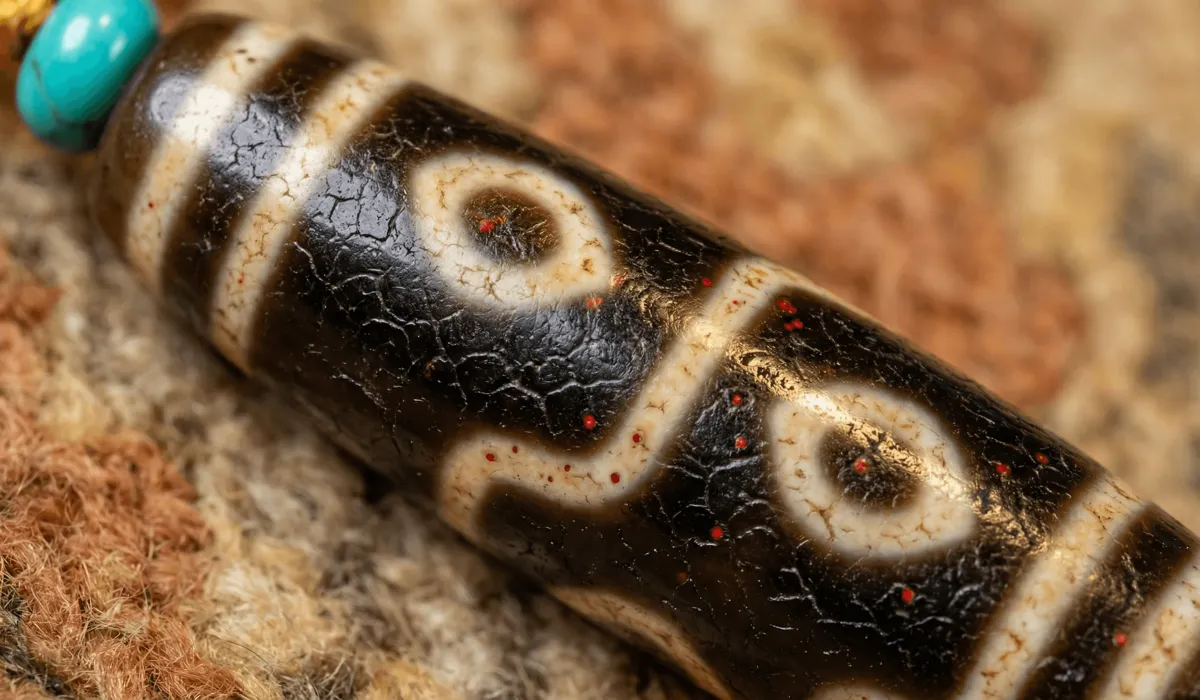
- Authentic Dzi beads are made from high-quality natural agate or chalcedony.
- Genuine patterns are etched deep into the stone using traditional alkaline dyes.
- Real beads feature a waxy patina and irregular weathering marks from age.
- Cinnabar dots are rare mineral inclusions that indicate high-quality oxidation.
- Imitations often use glass, resin, or plastic and feel much lighter.
What Is a Real vs. Fake Dzi Bead?
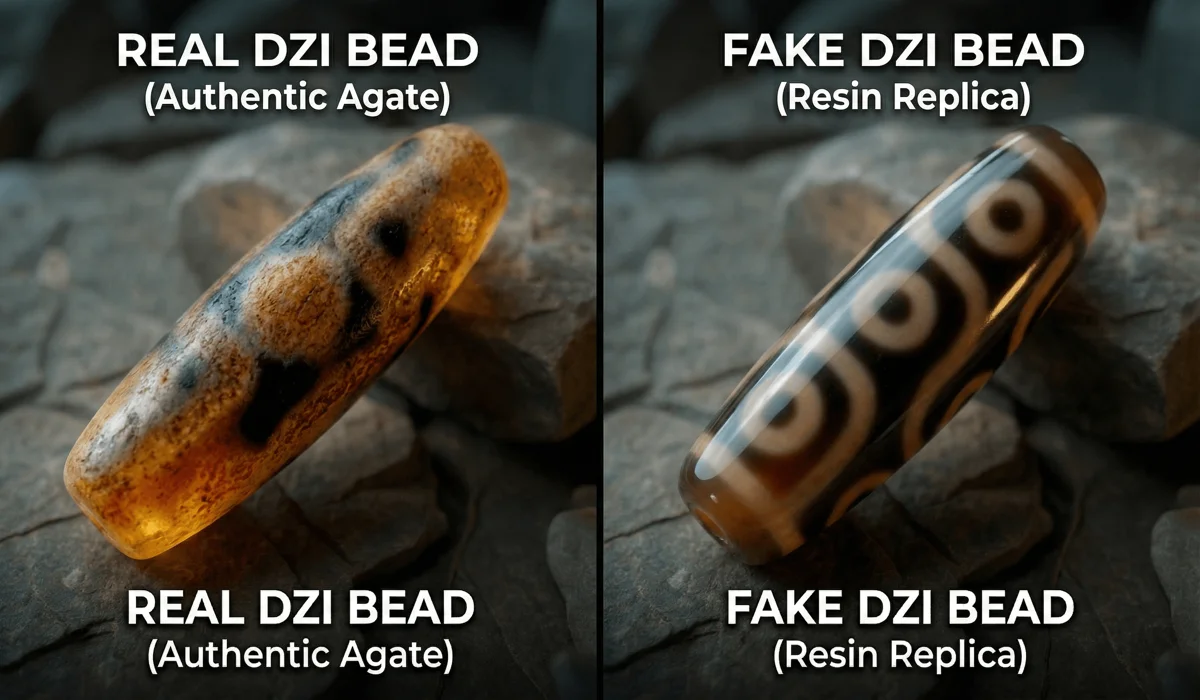
Distinguishing between an authentic Dzi and a replica starts with understanding the base material and the creation process. Authentic beads are either ancient relics or high-quality modern pieces crafted from natural agate using traditional etching methods. In contrast, imitation beads are mass-produced from glass, resin, or plastic with surface-level patterns that do not penetrate the stone.
Definition of Authenticity
True authenticity is found in the marriage of stone and pattern where the design is part of the mineral structure. We often see replicas where the “eyes” are simply painted on the surface and can be scratched off with effort. According to our experience sourcing these gems, the most valuable pieces are those with Gemstone Authenticity Standards that prove the material is genuine chalcedony.
Origin and Materials
Real beads have a substantial weight and density that feels cool to the touch before warming up against your skin. Resin and plastic fakes often feel “warm” immediately or have a hollow sound when tapped against another bead. Many fakes are made from bone or lime-powder composites which lack the natural mineral density characteristics found in true Himalayan agate.
Basic Characteristics of Authenticity
When you hold a genuine bead to a strong light source, it should show a degree of milky translucency within the stone. The surface texture of an authentic bead is smooth and waxy, often described as a “grease luster” caused by decades of contact with skin oils. The colors are typically deep blacks, earthy browns, and ivory whites that look like they have “grown” into the agate body.
Spiritual Meaning and Symbolism
The symbolism of Dzi beads is rooted in ancient Tibetan culture where they are viewed as protective totems sent from the heavens. The most famous designs are the “eye” patterns which represent the “third eye” or all-seeing wisdom that watches over the wearer. We find that many collectors choose specific eye counts to align with their personal goals for wisdom or prosperity.
Traditional Symbolism
Different motifs offer various forms of protection, such as squares representing shields and waves representing the flow of life. Traditional patterns like the Lotus, Nectar Bottle, and Tiger Tooth each carry specific historical meanings within Himalayan heritage. These designs were originally created to protect humanity from illness and negative energy during difficult times.
Chakra Associations
Dzi beads are often linked to the Root Chakra because of their dense, earthy connection to the ground through agate stone. They also resonate with the Third Eye Chakra, especially those featuring the “eye” patterns that enhance intuition and mental clarity. Understanding Crystal Meanings can help you choose a bead that matches your specific energetic needs.
Benefits and Intentions Associated with Dzi Beads
Many people wear these beads as a tactile focal point during meditation to help maintain mindfulness and presence. The traditional belief is that the bead acts as an energetic shield, helping to repel bad karma and protect the wearer’s spirit. Based on our work with these stones, the natural trace minerals in the agate may also help harmonize the body’s magnetic field.
We recommend using your bead as a companion for daily breathwork or intention-setting rituals. By holding the bead and focusing on its unique texture, you can ground yourself during high-stress moments throughout the day. This practice turns a piece of jewelry into a meaningful tool for personal balance and spiritual growth.
How to Wear Authentic Dzi Beads
Choosing which hand to wear your Dzi bead on often follows traditional Feng Shui principles regarding energy flow. The left hand is typically chosen for receiving energy and internal protection, making it ideal for spiritual growth. The right hand is often used when you need to project energy or during active physical work in the world.
Many people choose to wear their beads during travel to provide a sense of security and “traveler’s protection” in unfamiliar places. It is also common to see them worn during spiritual retreats to deepen the connection to ancient traditions. Before wearing a new bead, we suggest preparing it with focused thought to align its energy with your personal intentions.
You can find a variety of authentic options in our Tibetan Dzi Beads collection. Selecting a bead that feels “right” to your intuition is often the best way to start your journey with these stones. Whether you wear it as a single pendant or part of a bracelet, the intention behind it remains the most important factor.
Real vs. Fake: Identifying Key Markers
To truly identify a real Dzi bead, you must look closely at the surface for signs of natural aging and mineral growth. Authentic weathering marks appear as irregular, moon-shaped “fish scales” that have formed over hundreds of years of wear. Fake weathering often looks like uniform, acid-etched lines or high-temperature “baking” cracks that appear too perfect or repetitive.
Cinnabar Dots and Blood Spots
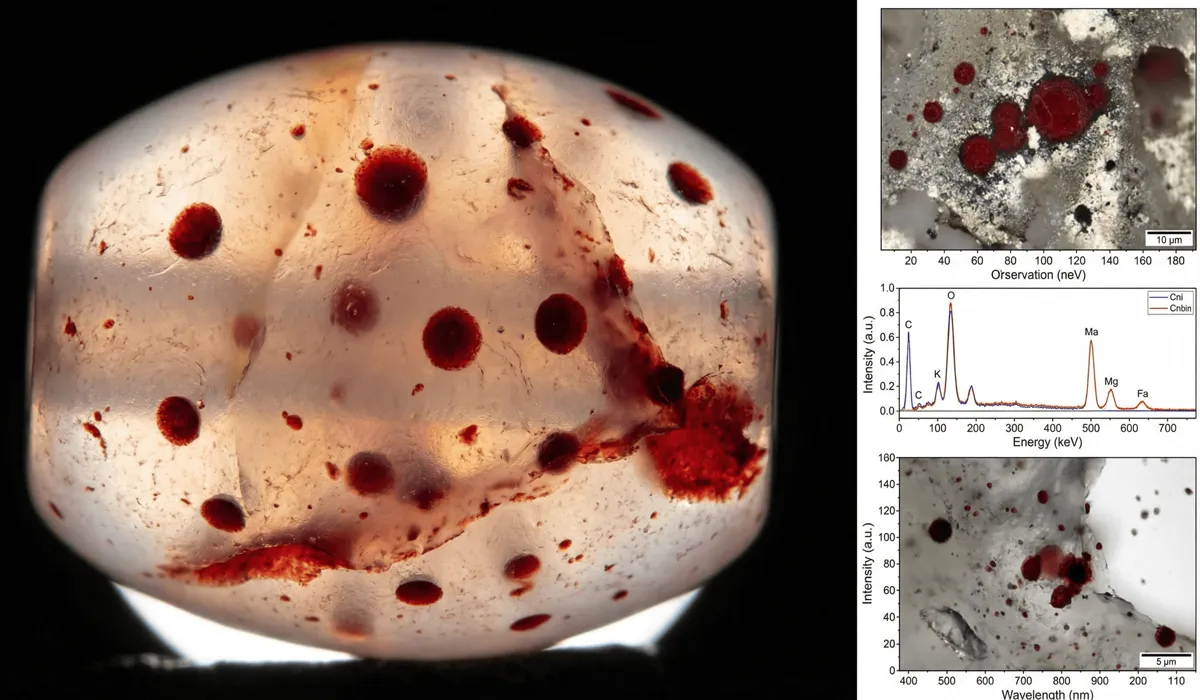
One of the most sought-after features is the presence of microscopic cinnabar dots, also known as “blood spots.” These tiny red or black dots emerge from within the stone due to iron content and long-term oxidation over centuries. Unlike fake dots which are laser-printed on the surface, authentic cinnabar dots are found at varying depths within the stone body.
Patina and Gloss
The patina of an authentic Dzi bead is a “grease luster” or waxy shine that develops from decades of human contact. This shine is deep and cannot be washed off with water or soap, as it is part of the stone’s aged surface. Fake beads often have a glassy or “wet” look that comes from chemical glazes or plastic coatings which feel sticky over time.
Dzi Beads vs. Similar Stones
| Feature | Authentic Dzi Bead | Banded Agate | Resin Imitation |
|---|---|---|---|
| Material | Etched Chalcedony | Natural Agate | Synthetic Plastic |
| Pattern Origin | Man-made Etching | Natural Layers | Surface Printing |
| Surface Luster | Waxy Grease Luster | Vitreous Gloss | Glassy or Dull |
| Weight | Heavier (Stone) | Heavier (Stone) | Lightweight |
While Dzi beads are made from agate, they are different from standard banded agate because their patterns are intentionally etched. Banded agate features natural stripes formed by geological processes over millions of years. For more information on how to wear different protective stones, you can read about the Obsidian Bracelet Benefits which often complement Dzi beads.
Who Is an Authentic Dzi Bead Suitable For?
These beads are perfect for individuals who want to ground their energy or enhance their focus during spiritual practices. They are particularly popular among those who feel a strong pull toward Himalayan or Tibetan spiritual lineages. In many cultures, they are recommended for people going through “challenging” years in their astrological cycles to serve as a symbolic protector.
The bead is considered a universal guardian stone, making it inclusive for all zodiac signs and backgrounds. We often suggest them for frequent travelers or people working in high-stress environments who need a physical reminder of peace. Collectors who value historical craftsmanship and natural material analysis will also find great satisfaction in owning a real piece.
Lifestyle and Personal Intentions
Integrating a Dzi bead into your lifestyle is about more than just fashion; it is about setting a daily intention. Whether you are seeking mental clarity or emotional balance, the bead serves as a constant anchor for your goals. Its durability makes it a practical choice for daily wear, surviving the rigors of modern life while maintaining its spiritual significance.
How to Cleanse, Charge, and Care for Your Dzi
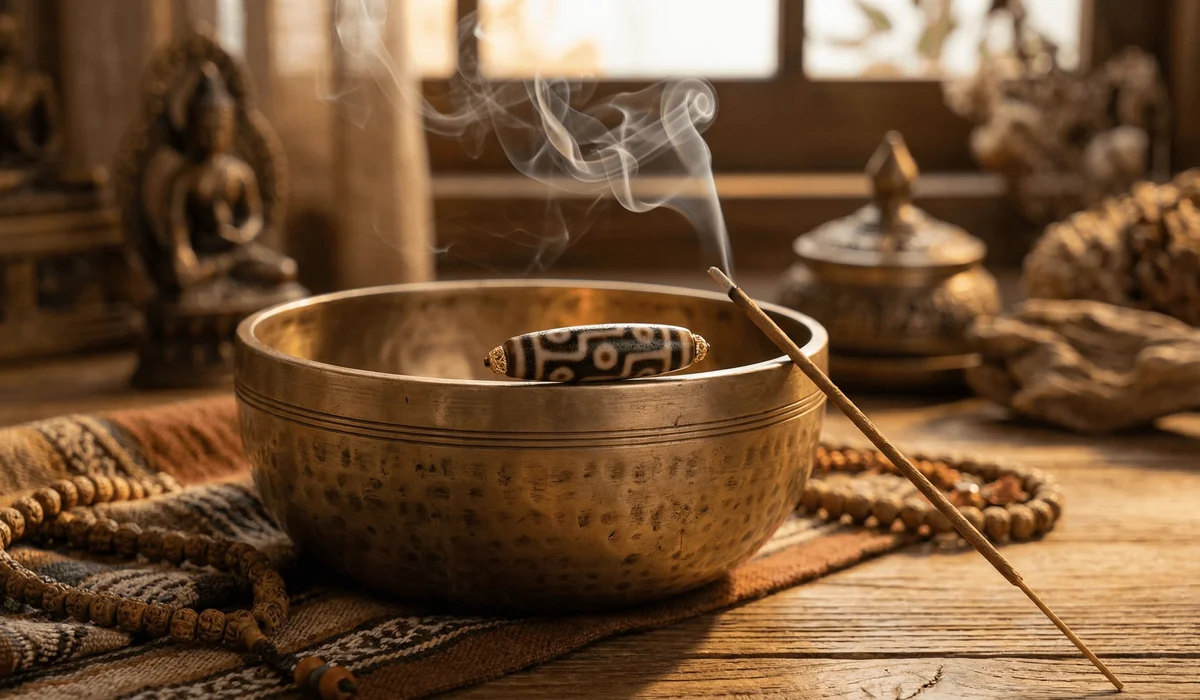
To keep your Dzi bead at its best, we recommend regular spiritual cleansing and physical care. Smoke cleansing with sandalwood or sage is a traditional way to clear any stagnant energy the stone may have absorbed. You can also use the vibrations of a Tibetan singing bowl to refresh the bead’s energy through a sound bath.
Charging your bead is often done by placing it under the light of a full moon to revitalize the natural agate energy. During this time, you can hold the bead in silence to realign it with your personal path and goals. For physical cleaning, simply wipe the bead with a soft, damp cloth and avoid harsh chemicals that might damage the natural patina.
- 🌿 Cleanse regularly with sacred smoke or sound.
- 💎 Charge under moonlight to refresh the stone energy.
- 🔮 Store in a silk pouch to prevent surface scratches.
- 🌿 Wipe with a soft cloth to maintain the waxy luster.
- 💎 Avoid wearing during heavy swimming or chemical cleaning.
Proper care ensures that your Dzi bead remains a beautiful and powerful companion for many years. Treat it as a sacred tool rather than just an accessory to honor its rich cultural history.
Frequently Asked Questions
Q: How can I know if my Dzi bead is real or fake?
A: Look for irregular weathering marks, a waxy (not glassy) luster, and check the weight; real agate is much denser than resin or glass.
Q: Do real Dzi beads always have cinnabar dots?
A: No, cinnabar dots are a rare feature found in certain ancient stones and are not a requirement for a bead to be considered authentic agate.
Q: What is the difference between weathering marks and acid-etched lines?
A: Weathering marks are natural, irregular “moons” caused by age, while acid-etched lines are often too uniform and look like “cracks” rather than smooth indentations.
Q: Why does the weight and density of a Dzi bead matter?
A: Dzi bead material analysis shows that natural agate has a specific gravity; if a bead feels “light” or hollow, it is likely a resin or plastic imitation.
Q: What are blood spots in authentic Dzi beads?
A: Also known as cinnabar dots, these are deep-seated mineral inclusions that “grow” to the surface over centuries of wear and interaction with body heat.
Conclusion and Gentle Next Step
Authenticity in Dzi beads is found in the harmony of natural material, traditional etching, and the unique signs of time. By understanding the difference between natural agate density and resin imitations, you can choose a piece that truly resonates with your practice. We hope this guide empowers you to collect these Himalayan treasures with confidence and respect for their heritage.
We invite you to explore our thoughtfully curated selection of Dzi beads, chosen for their quality and symbolic integrity. Embrace the ancient wisdom of the Himalayas by integrating these meaningful patterns into your mindfulness journey today. May your chosen bead bring you the balance and protection you seek on your personal path.
• The content provided here is for informational and cultural exchange purposes only.
• It does not constitute medical, legal, financial, or other professional advice.
• Readers should consult with qualified professionals if they have specific concerns or needs.

Written by the Buddha Bodhis Team
Since 2020, we have been devoted to exploring traditional year-based wisdom, classical Feng Shui principles, and the rich spiritual symbolism rooted in Eastern cultural heritage. Our work bridges ancient metaphysical systems with modern life, interpreting annual cycles, elemental energies, and symbolic meanings to offer thoughtful insight and practical guidance. Through continuous research and practice, we aim to preserve traditional knowledge while making it accessible, relevant, and meaningful for contemporary seekers of balance, intention, and personal growth.
TikTok | YouTube | Pinterest | X
buddhabodhis@gmail.com