


Beyond a beautiful piece of jewelry or a trending motif, the Hamsa Hand is an archetypal symbol that speaks a universal language of protection, blessing, and divine power. It is an ancient technology for the soul, a visual prayer understood across continents and millennia. As cultural researchers, we see it not merely as an object but as a living conduit of sacred energy, deeply rooted in the human quest for safety and connection to the divine.
This guide moves beyond surface-level admiration to immerse you in the profound spiritual principles encoded within this sacred sign. We will explore its journey through history, decode its every element, and reveal how to integrate its formidable power into your daily life. This is the story of a symbol that has shielded generations and continues to offer its unwavering protection in our complex modern world.
The Hamsa Hand is an ancient Middle Eastern and North African amulet symbolizing divine protection. As a universal sign across multiple faiths, including Judaism, Islam, Buddhism, and Hinduism, it is primarily believed to ward off the “evil eye” and deflect negative energy. With its palm open, it simultaneously acts as a talisman for attracting blessings, good fortune, peace, and abundance.
Table of Contents
The Ancient Origins & Sacred Legends: A Cross-Cultural Shield
The Hamsa’s story begins not in one place, but in the fertile crescent of human civilization, spreading like a protective vine through the world’s great spiritual traditions. Originating in ancient Mesopotamia as a symbol of divine protection, the Hamsa was adopted by multiple faiths. Its resilience lies in its ability to adapt its narrative while retaining its core function: a powerful, watchful hand that deflects the evil eye and safeguards the wearer.

Mesopotamian Dawn: The Hand of Ishtar/Inanna
The earliest known iterations of the divine hand amulet can be traced back to ancient Mesopotamia, thousands of years before the Abrahamic religions took root. Here, it was associated with powerful goddesses like Ishtar and Inanna, deities of love, war, and justice. This open right hand was a symbol of supreme divine power, invoked for protection over one’s home and family.
This archaeological fact is crucial because it establishes the Hamsa as a pre-religious, archetypal symbol. It represents a fundamental human impulse to seek safeguarding from a higher, benevolent power. The hand was, and remains, a universal sign of both authority and benediction.
The Judaic Tradition: The Hand of Miriam
In Jewish mysticism, particularly within the esoteric traditions of Kabbalah, the Hamsa is known as the Hand of Miriam. It is named in honor of Miriam, the prophetess who was the sister of Moses and Aaron. Her strength and faith were instrumental in the survival of the Jewish people during the Exodus.
The five fingers (*khamsa* is the Arabic root for five, while *chamesh* is its Hebrew equivalent) are symbolically linked to the five books of the Torah, the holy scripture that forms the foundation of Jewish law and ethics. It also represents the fifth letter of the Hebrew alphabet, “Heh,” which is one of the holy names for God. In this context, the Hand of Miriam is a direct representation of God’s protective presence over His people.
The Islamic Faith: The Hand of Fatima
Within the diverse world of Islam, the symbol is revered as the Hand of Fatima, named for Fatima Zahra, the beloved daughter of the Prophet Muhammad. She is considered a figure of immense purity, compassion, and faith. The hand serves as a powerful reminder of her virtues and as a talisman for protection.
In this tradition, the five fingers are often interpreted to represent the Five Pillars of Islam: Shahada (the declaration of faith), Salat (prayer), Zakat (charity), Sawm (fasting during Ramadan), and Hajj (the pilgrimage to Mecca). Wearing or displaying the Hand of Fatima is an act of faith, invoking patience, loyalty, and protection from all forms of evil. As one of the most comprehensive articles from The Metropolitan Museum of Art explains, its use is widespread across the Islamic world.
Buddhist & Hindu Interpretations: The Hand of Universal Energy
While the Hamsa is not a central icon in Dharmic traditions like Buddhism and Hinduism, the gesture of the open palm is profoundly significant. It directly mirrors the Abhaya Mudra, a sacred hand gesture (mudra) meaning “fearlessness.” This gesture is displayed by countless depictions of the Buddha and various Hindu deities, signifying divine protection, peace, and the dispelling of fear.
Furthermore, the five fingers find a deep resonance with elemental and energetic philosophies. They correspond to the five elements (Tattvas) — Earth, Water, Fire, Air, and Ether — and are linked to the body’s five primary energy centers (Chakras). The Hamsa, in this view, symbolizes the perfect harmony of the human body and its senses with the vast energies of the universe.
The Hidden Philosophy: Decoding the Symbolism
The Hamsa’s power is not merely superstitious; it is rooted in a sophisticated spiritual philosophy. Each element of its design is intentional, contributing to its function as a tool for energetic management and spiritual alignment. It is a masterclass in symbolic language.
The core philosophy of the Hamsa represents the principle of spiritual shielding and divine benediction. It acts as a universal ‘stop sign’ to negative energy, jealousy, and harm, creating a firm boundary. Simultaneously, its open palm is a gesture of receiving, opening the wearer to channel blessings, luck, good fortune, and grace from the universe. This duality is what makes it such a complete and potent spiritual tool.
The Symmetrical Form: A Divine, Not Human, Hand
A curious and significant feature of many Hamsa designs is their perfect symmetry. Often, the hand is depicted with two thumbs, creating a form that is not anatomically human. This is a deliberate design choice with deep meaning.
This symmetry signifies that the hand is not that of a mortal but is the Hand of God, the Hand of the Divine, or the Hand of a higher protective consciousness. It elevates the symbol from a mere representation to an embodiment of absolute, unwavering divine power. This divine origin makes its protective qualities infallible and omnipresent.
The Five Fingers: The Power of “Khamsa”
The number five is central to the Hamsa’s identity and power. Across cultures, it is a number that represents the human being in microcosm: the four limbs and the head, the five senses, the five elements. It is a number of balance, integration, and corporeal existence.
By grounding its form in the number five, the Hamsa connects its divine protective power directly to the human experience. It is a shield for the body, the mind, and the spirit. As we’ve seen, this number is then mapped onto the core tenets of different faiths, making it a powerful and versatile teaching tool.
The Eye in the Palm: Proactive Spiritual Defense
The addition of an eye in the palm, often a blue eye known as the Nazar, transforms the Hamsa from a passive shield into an active defense system. This is not a passive eye; it is the all-seeing Eye of God, or Divine Providence, that is perpetually watchful. Its purpose is to “see” the malevolent gaze of the evil eye—a look of envy or jealousy believed to cause misfortune—and reflect its harmful energy back to the sender.
This feature symbolizes omniscience, wisdom, and the ability to perceive and neutralize threats before they can manifest as harm. It’s a spiritual early-warning system, ensuring that the wearer is protected not just from overt attacks but from the subtle, unseen energies that can disrupt one’s peace and progress. This active defense mechanism is a key component of its enduring appeal as a talisman.
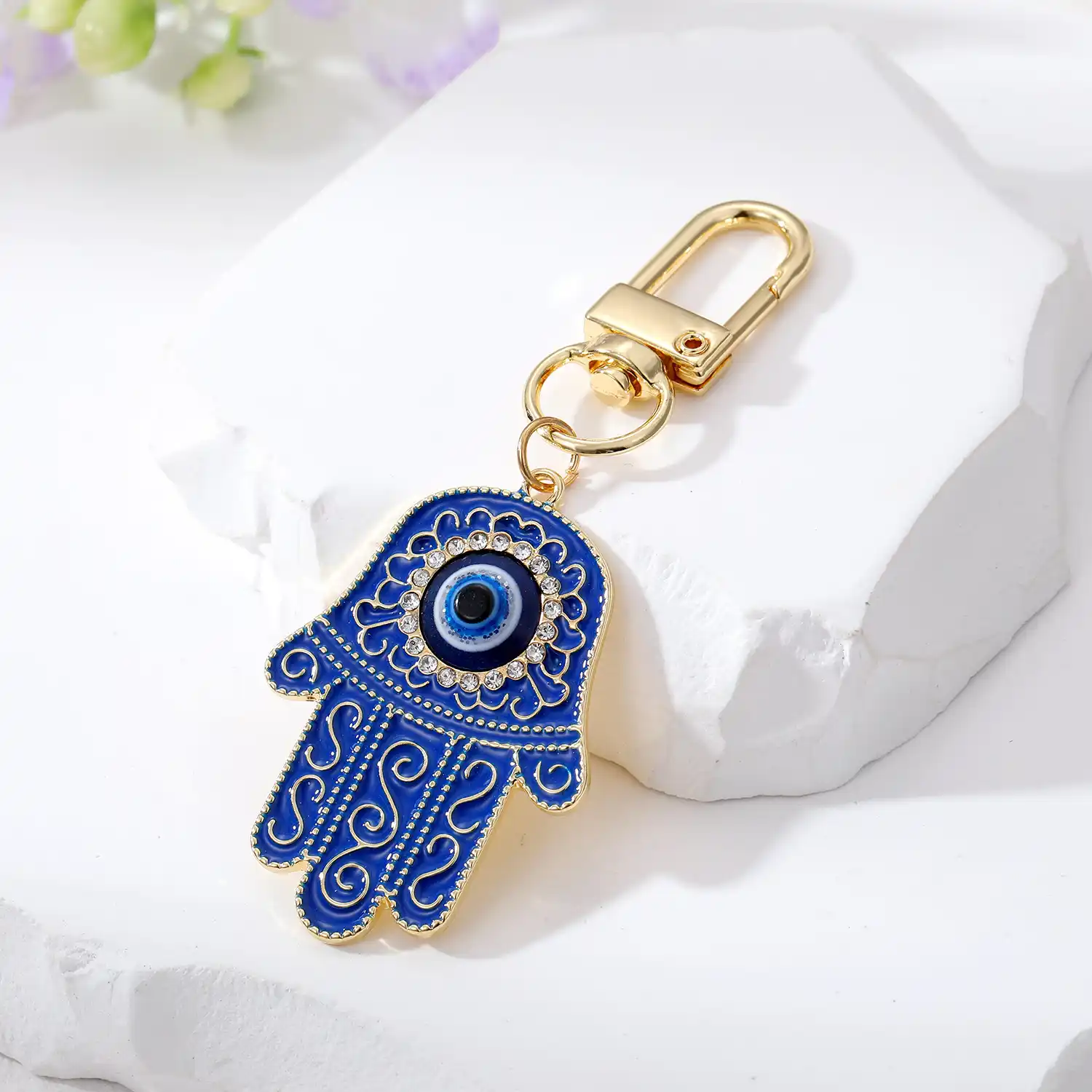
Cultural Evolution: How the Hamsa Hand is Viewed East vs. West
The journey of the Hamsa from an ancient regional amulet to a global spiritual icon is a fascinating story of cultural exchange. Its meaning shifts subtly depending on the context in which it is found, yet its core protective essence remains unchanged.
The Eastern Perspective: An Integrated Talisman
In its cultures of origin—across the Middle East, North Africa, and parts of South Asia—the Hamsa is a deeply integrated part of the spiritual and cultural landscape. It is not considered a mere decoration or a fashion accessory; it is a functional tool for spiritual hygiene and protection, as common and necessary as locking one’s front door.
You will see it hanging above the doorways of homes, dangling from the rearview mirrors of cars, and pinned to the clothing of newborn infants to shield them from harm. Its use is instinctual, a piece of ancestral wisdom passed down through generations. It is a constant, visible reminder of faith and the presence of divine safeguarding in everyday life.
The Western Perspective: A Symbol of Universal Spirituality
In the West, the Hamsa has been enthusiastically adopted by those in New Age, wellness, and yoga communities. Here, it is often appreciated for its universal message of peace and protection, frequently detached from its specific Abrahamic religious contexts. Its journey is well documented in academic resources like those from the Jewish Virtual Library, which highlight its cross-cultural significance.
Its beautiful and mysterious aesthetic has made it a staple in jewelry, tattoos, and home decor. For many, it represents a personal spiritual awakening, a connection to ancient wisdom, and a search for meaningful symbols that resonate with a global, non-denominational spirituality. It serves as a bridge to the sacred for the modern soul.
Wearing the Talisman: Why Hamsa Hand Jewelry Matters Today
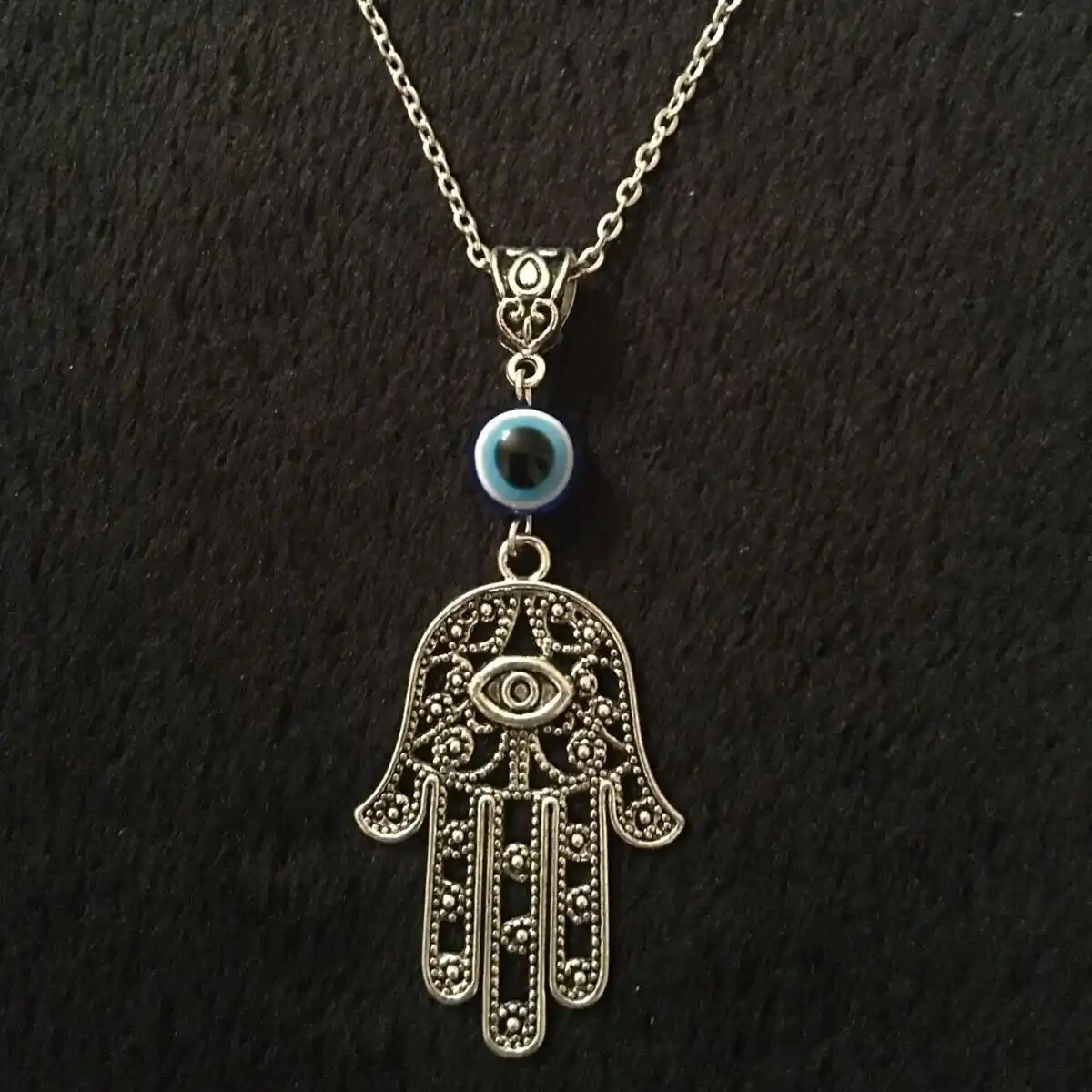
In an age of constant connectivity and information overload, the ancient wisdom of the Hamsa is more relevant than ever. Wearing it as a piece of jewelry is not just a stylistic choice; it is an active practice of energetic self-care and boundary setting.
Shielding from the “Digital Evil Eye”
The concept of the “evil eye” has evolved. In the modern world, it is no longer just a malicious glance from a rival; it is the constant, passive scroll through social media feeds that can breed comparison, self-doubt, jealousy, and a sense of inadequacy. This is the “digital evil eye.”
Wearing Hamsa jewelry acts as a conscious shield against this pervasive psychic drain. It protects your energetic field from the subtle but cumulative negativity of the digital realm, preserving your mental and spiritual peace. It is a tangible reminder that your worth is not determined by external validation.
The Mindful Anchor: A Touchstone for Presence
The physical sensation of a Hamsa necklace resting against your sternum or a bracelet on your wrist serves as a powerful “pattern interrupt.” Throughout a busy day, its touch can bring you back from anxious thoughts or external pressures into the present moment. This is a practice that can be augmented with other yearly awareness rituals; for those interested, you can explore this year related guides on spiritual timing.
It acts as a mindful anchor, a touchstone prompting you to check in with your own energy. This simple act encourages you to reinforce your boundaries, breathe deeply, and stay aligned with your intention for peace, clarity, and protection.
A Declaration of Energetic Sovereignty
Ultimately, to wear the Hamsa is to make a powerful, silent declaration: “My energy is sacred space.” It is an outward symbol of an inner commitment to maintain your energetic sovereignty. If you’re wondering what to do when you are read: Clashing with Tai Sui in 2026? Your Practical Guide to Cures, Amulets, and Protection, the Hamsa can be a complementary source of personal shielding.
It empowers you to not absorb the negativity, stress, or drama of others, whether in the workplace, social settings, or even within family dynamics. It signifies that you are the conscious guardian of your own inner peace and well-being.
Ritual & Practice: How to Meditate with the Hamsa Hand
To fully unlock the Hamsa’s potential, we recommend engaging with it through intentional ritual. This transforms it from a passive object into an active partner in your spiritual practice. A deeper exploration of talismans can be found in cultural resources like the Encyclopædia Britannica.
Step 1: Cleanse and Activate Your Amulet
Before its first use, it’s essential to clear any residual energies your new Hamsa may have picked up on its journey to you. This attunes it specifically to your own energy and intention.
- 🧿 Smudging: Carefully pass the jewelry through the sacred smoke of cleansing herbs like white sage, palo santo, or cedar. Visualize the smoke carrying away any unwanted energies.
- 🌸 Sunlight/Moonlight: Place your Hamsa in direct sunlight for a few hours to charge it with active, masculine energy, or under the light of a full moon to cleanse it with gentle, intuitive feminine energy.
- ☸️ Intention Setting: Hold the Hamsa in your palms at your heart center. Close your eyes and state your intention clearly, either aloud or silently. For example: “I consecrate this amulet to be my shield of divine protection, a magnet for blessings, and a constant reminder of my inner peace.”
Step 2: The Hamsa Shield Visualization
This meditation actively engages the Hamsa’s protective qualities to fortify your aura. Find a comfortable, seated position, either holding your Hamsa or placing it in front of you.
Close your eyes and take three deep, grounding breaths, releasing tension with each exhale. Visualize a large, luminous Hamsa Hand, shimmering with brilliant blue and white light, materializing a few feet in front of your body with its palm facing outwards. This is your divine shield.
As you inhale, see this hand absorbing and instantly dissolving any negative thoughts, anxieties, or external energies directed toward you. Watch as they vaporize upon contact with the sacred palm. As you exhale, see the Hamsa Hand radiating a protective, egg-shaped field of light that completely envelops your aura, sealing it from any intrusions. Feel yourself secure, calm, and sovereign within this shield of light. Remain in this protected space for 5-10 minutes, feeling the unwavering peace and strength it provides.
Cultural Etiquette & Taboos: Wearing the Hamsa with Respect
As a symbol with deep roots in multiple sacred traditions, wearing the Hamsa comes with a responsibility to do so with awareness and respect. Its power is amplified when its history is honored.
The key to wearing the Hamsa respectfully is to move from appropriation to appreciation. To wear it simply because it is fashionable, while remaining ignorant of its profound significance, is to miss its true power. The highest form of respect you can pay this ancient symbol is to educate yourself on its history and wear it with a conscious intention that honors its legacy of protection and unity.
Reverence Over Religion
The primary prerequisite for wearing the Hamsa is not adherence to a specific religion, but reverence for its profound history and sacred meaning. It is a symbol that beautifully transcends any single doctrine. It acts as a unifier between faiths by pointing to a shared, universal human desire for protection, blessing, and a tangible connection to the divine.
A Symbol of Unity
The Hamsa is a rare and precious example of a symbol that serves as a bridge of peace and understanding. It is particularly poignant in its shared heritage between Jewish and Islamic communities, where it is cherished by both, often living side-by-side in the same marketplaces and neighborhoods.
To wear it can be seen as an act of solidarity, honoring this shared history and the universal human values it represents. It is a testament to the idea that what unites us in our search for the sacred is far greater than what divides us.
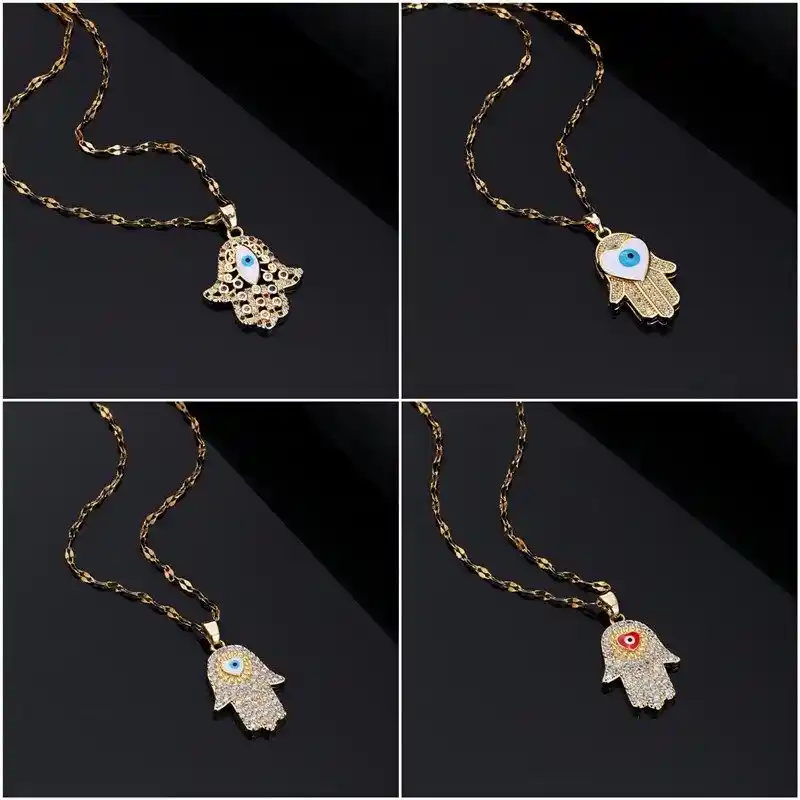
Integrate the Hamsa’s energy into your daily life with these four actionable steps:
- Morning Intention: When you put on your Hamsa jewelry each morning, take one moment to hold it. State a simple intention: “Today, I am protected. I am open to blessings.”
- Mindful Touch: Throughout the day, whenever you feel stress or negativity, consciously touch your Hamsa amulet. Use it as a physical anchor to return to your breath and your center.
- Doorway Guardian: Place a Hamsa wall hanging or art piece near your front door. Each time you pass it, visualize it cleansing the energy of your home and all who enter.
- Gratitude Practice: Before bed, hold your Hamsa and reflect on one blessing you received that day. This aligns the amulet’s “receiving” function with the energy of gratitude, amplifying its power to attract more good fortune.
Frequently Asked Questions (FAQ)
What is the spiritual difference between the Hamsa hand facing up versus down?
Hamsa Hand Up (Fingers Together): This position, mirroring the *Abhaya Mudra*, is primarily for protection. It functions as a universal “stop sign” to ward off the evil eye, jealousy, negative energy, and internal fear. This is the most common orientation for active spiritual shielding.
Hamsa Hand Down (Fingers Often Spread): This position is a symbol of benediction and generosity, known as the *Varada Mudra*. It represents an open hand ready to receive blessings, abundance, and goodness from the universe. It also signifies the act of bestowing blessings upon others. Many choose this orientation to invite good fortune and positive opportunities into their life.
Why is the Hamsa symbol so often paired with an eye in its palm?
This pairing creates a powerful synergy of spiritual defense. The hand provides the divine authority and power to block and shield, while the eye (Nazar) provides the all-seeing awareness to detect the threat in the first place. The eye sees the “evil eye” and reflects its malevolent energy back to the source, neutralizing it. It is a complete system, combining the Hamsa’s passive, boundary-setting shield with the eye’s active, watchful defense.
Where is the most powerful place to display a Hamsa in my home for family protection?
According to both ancient tradition and Feng Shui principles, the most potent location is by the main entrance or front door. When hung here, the Hamsa acts as a spiritual guardian, inspecting all energy that crosses the threshold. It is believed to neutralize any negativity at the point of entry, thereby protecting the entire home and all who dwell within from external harm.
Can the Hamsa help shield me from my own negative thoughts and self-doubt?
Absolutely. The Hamsa’s protective energy is not limited to external threats. When used as a focal point in meditation or worn as a mindful anchor, it serves as a potent reminder to halt your own inner critic. It helps you become the “all-seeing eye” of your own mind, enabling you to catch self-deprecating thoughts and consciously replace them with blessings, self-compassion, and positive affirmations.
Which is a better protector for personal wear, the Hamsa or the Evil Eye symbol?
They are complementary, not competitive, but serve slightly different functions. The Evil Eye (Nazar) is a specialist, laser-focused on one task: deflecting the malevolent gaze of envy. The Hamsa is a more holistic protector. It not only shields from the evil eye but also provides a broader defense against general negativity, while simultaneously working to attract positive blessings. For comprehensive, all-in-one spiritual protection and abundance, the Hamsa is arguably the more complete talisman to wear.
Conclusion: Integrating the Wisdom of the Hamsa Hand
The Hamsa Hand is far more than an ancient curiosity or a fashionable motif; it is a living symbol, a piece of spiritual technology refined over millennia of human experience. It serves as a profound affirmation of your right to feel safe, a powerful magnet for the blessings you deserve, and a beautiful testament to the enduring power of faith that unites us across cultures.
By understanding its deep history and integrating its symbolism into your life, you carry not just an amulet, but a lineage of protection that has been trusted for generations. May its presence serve as a constant reminder of your own divine strength, your resilience, and the sacred, protected space you inhabit both internally and externally.
We invite you to embrace this universal shield and discover the piece that resonates with your personal journey. We encourage you to see HAMSA picks for this year and find the perfect talisman to accompany you on your path.

Cultural Researchers & Feng Shui Practitioners. We have been exploring traditional year-based wisdom and spiritual symbolism since 2020.