


Sacred treasures from the Roof of the World. Handcrafted for the soul.
Our **Tibet’s Collection** is a curated gateway to the mystic traditions of the Himalayas. Unlike mass-produced decor, these items are crafted by artisans in Nepal and Tibet who have preserved the lineage of **Vajrayana Buddhism** for generations.
From the protective gaze of Dzi Beads (“Heaven’s Pearls”) to the meditative focus of Thangka Paintings, every piece is a vessel for Dharma. Bring the grounding energy of the mountains and the high vibration of the Prayer Wheel into your modern life.
Culture Guide: Why are Yak Bone and Dzi Beads so sacred?
- Origin: Handcrafted in Tibet, Nepal, and the Himalayas
- Materials: Silver, Dzi Agate, Yak Bone, Copper, Thangka Canvas
- Intention: Spiritual Awakening, Karma Purification, Protection






🏔️ The Spirit of the Himalayas: More Than Art
Tibetan art is unique in the world because it serves a specific function: Enlightenment. In the harsh, high-altitude environment of the Himalayas, spiritual practice is woven into daily survival. Every object, from a door curtain to a necklace, carries a blessing.
When you acquire a piece from our Tibet’s Collection, you are supporting the preservation of ancient craftsmanship—whether it is the hammering of copper singing bowls or the intricate painting of a Thangka deity.

☸️ Dharma Tools: Which one do you need?
Tibetan ritual objects act as “technologies of the spirit.” Use this chart to understand their purpose:
| Ritual Object | Symbolism | Usage |
|---|---|---|
| Prayer Wheel (Mani) | The Wheel of Dharma. Filled with thousands of mantras (Om Mani Padme Hum). | Spun clockwise to accumulate wisdom, purify bad karma, and spread compassion to all beings. |
| Tingsha Bells | Clarity & Alertness. Two cymbals joined by a leather strap. | Struck together to start/end meditation or to clear “stuck” energy in a room (Space Clearing). |
| Prayer Flags (Lungta) | Wind Horse. 5 colors representing the 5 elements. | Hung outdoors. As the wind blows, it carries the prayers printed on the flags to bless the surrounding area. |
| Vajra (Dorje) | The Thunderbolt. Represents indestructible truth and method. | Usually held in the right hand during ceremonies, representing male energy (Upaya). |
📿 Jewelry of the Highlands: Mystery & Impermanence
Tibetan jewelry is rugged, bold, and laden with meaning. Two materials stand out:
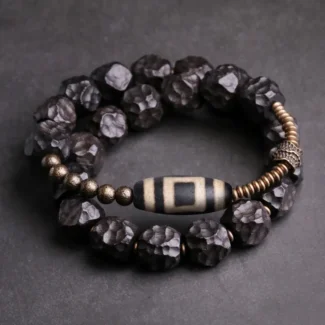
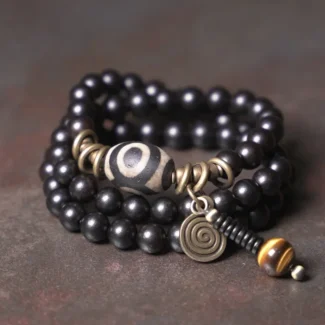
1. Tibetan Dzi Beads: “Heaven’s Pearls”
The most mysterious beads in the world. Authentic Dzi beads are etched agate found in the Himalayas. Tibetans believe they are not man-made but “fallen from the sky.”
Meaning: They are the ultimate amulet for Protection against spiritual attack and illness. The number of “Eyes” on the bead determines its specific power (e.g., 9-Eyes for immense wealth and merit).
2. Yak Bone Jewelry: Embracing Impermanence
To the Western mind, wearing bone might seem strange. In Tibet, it is a sacred reminder of Impermanence (Anicca).
Yak Bone malas remind us that life is fleeting, urging us to practice compassion now. It is not morbid; it is liberating. Wearing bone grounds the wearer and tames the fear of death.
🎨 Thangka Paintings: Maps to Enlightenment
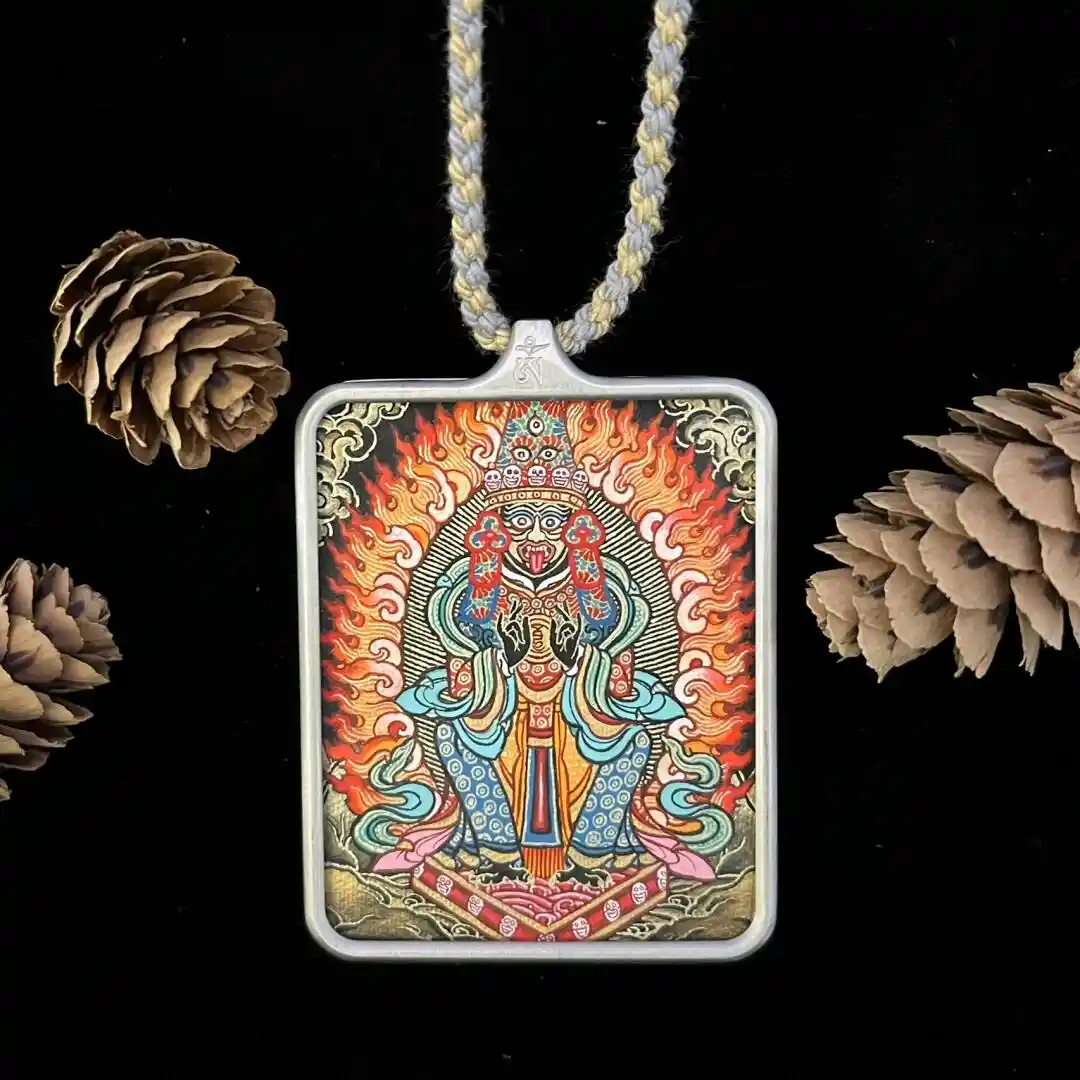
A Thangka is not just a painting; it is a meditation grid.
Painters follow strict iconometric grids passed down for centuries to depict deities like Green Tara or Manjushri in perfect proportion.
How to Use: Hang a Thangka in your altar space. By gazing at the deity (Visualization), you imprint their qualities—such as compassion or wisdom—onto your own mind.
🔊 The Sound of the Void: Singing Bowls & Tingsha
Tibetan sound healing tools are designed to alter brainwave states.
- Singing Bowls: Hand-hammered from 7 metals (representing 7 planets). When played, they produce a multiphonic resonance that synchronizes the brain hemispheres, inducing deep relaxation.
- Conch Shells: Used to call spirits and announce the truth of Dharma. A symbol of power and authority.
❓ Frequently Asked Questions
Q: Are these items truly made in Tibet?
A: Due to geopolitical changes, most “Tibetan” crafts are now made by Tibetan refugees and artisans living in Nepal (Kathmandu Valley) and Northern India (Dharamshala). We source directly from these artisan communities to ensure cultural authenticity and support their livelihood.
Q: How do I choose a Dzi bead?
A: Choose based on the “Eyes.” 1-Eye is for clarity; 2-Eyes for love; 9-Eyes is the “Emperor” bead for total protection and wealth. Trust your intuition—if a bead pattern calls to you, it is the one you need.
Q: Is it disrespectful to wear Yak Bone?
A: No. In the Himalayan tradition, using every part of the Yak after its natural death is a sign of respect for the animal that sustains life. It honors the creature’s spirit. It is a powerful tool for grounding.
Q: Can I hang Prayer Flags indoors?
A: Yes. While they are traditionally hung outdoors for the wind to carry the prayers, hanging them indoors brings the energy of the 5 Elements into your home. They serve as a beautiful, colorful reminder of your spiritual intentions.
Journey to the Himalayas. Explore our authentic Tibetan spiritual collection below.
📝 Curated by: Buddha Bodhis Spiritual Team