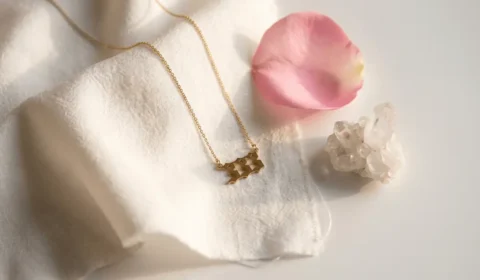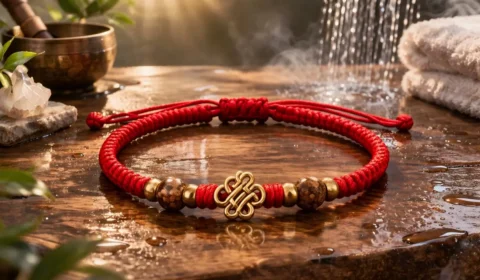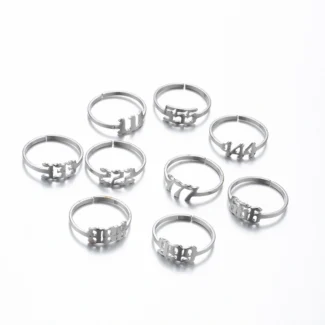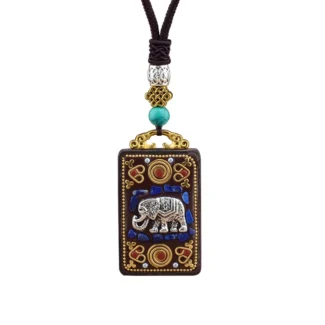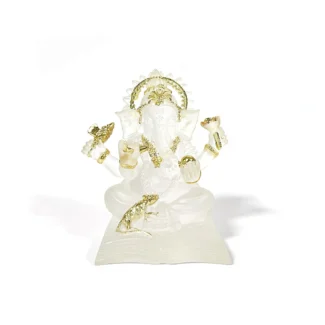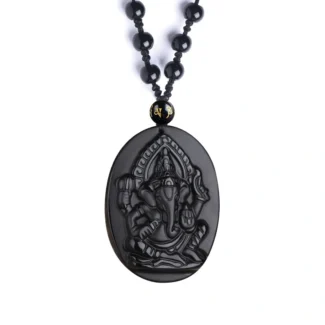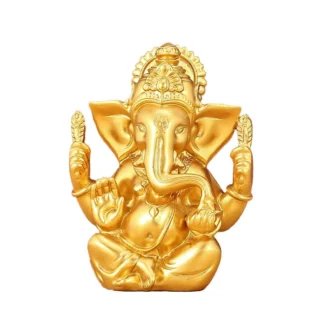



Ethically sourced Tibetan bracelets are defined by transparency in jewelry making, the use of natural material sourcing, and a commitment to fair trade practices that support Himalayan communities. When we select pieces for our collection, we prioritize the Artisan Craftsmanship that ensures every bead and charm tells a story of cultural heritage. Understanding how to identify these pieces is the first step in ensuring your spiritual tools align with your personal values and respect the traditions they represent.
- Ethical sourcing involves fair trade practices and living wages for Himalayan artisans.
- Authentic pieces feature hand-hammered textures and natural material variations.
- Sustainable wood sourcing and genuine yak bone are hallmarks of quality.
- Transparency in the supply chain protects against mass-produced replicas.
- Choosing ethical jewelry supports vital Tibetan cultural preservation efforts.
What Is Ethically Sourced Tibetan Jewelry?
Definition and Core Principles
Ethical sourcing in the context of Tibetan jewelry refers to a holistic approach where every step of the Ethical Supply Chains respects both the environment and the artisan. We believe that true beauty comes from fairness, ensuring that Himalayan craftsmen and women receive living wages and work in respectful conditions. This process involves total transparency in jewelry making, where a brand can clearly communicate the journey of a Tibetan Bracelet from raw material to finished accessory.
By focusing on Conscious Purchasing, we help collectors honor the spiritual lineage of a piece rather than consuming it as a passing mass-market trend. This approach ensures that the energy of the item remains pure and untainted by exploitation. When you wear an ethically made piece, you are wearing a symbol of Monastic Artisan Support that benefits the entire community.
Sustainable Material Sourcing
Ethical bracelets prioritize Sustainable Wood Sourcing, utilizing reclaimed or responsibly harvested sandalwood, bodhi seeds, or rosewood. We often find that Natural Material Sourcing, such as Genuine Yak Bone Authenticity, follows traditional, non-wasteful practices where the animal is honored. This contrasts sharply with industrial materials that lack a connection to the Himalayan landscape and its sacred traditions.
Regarding gemstones, Ethical Crystal Sourcing involves tracking stones like turquoise, lapis lazuli, and carnelian back to specific mines that avoid exploitative labor practices. Authentic Tibetan jewelry markers include the use of high-quality metals like 925 sterling silver or traditional copper alloys. We advise staying away from toxic “Tibetan Silver” replicas, which are often made of mystery metals that may contain harmful substances.
| Material Type | Ethical Source Indicator | Common Fake/Replica |
|---|---|---|
| Metals | 925 Sterling Silver / Pure Copper | Nickel-based “Tibetan Silver” |
| Gemstones | Natural Inclusions / Raw Texture | Dyed Glass or Plastic |
| Beads | Sustainably Harvested Wood/Seeds | Chemically Treated Wood |
Traditional Tibetan Techniques
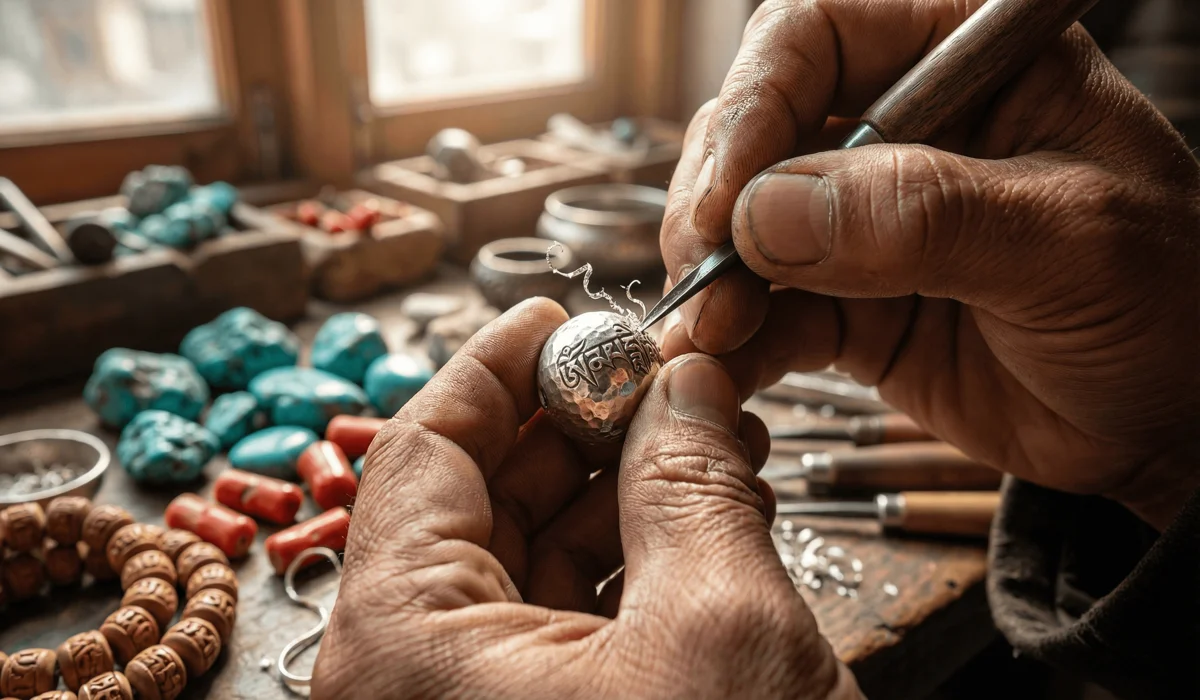
The Artisan Craftsmanship of a real bracelet is characterized by techniques passed down through generations of monastic and village smiths. If you look closely, you will see hand-hammered textures and hand-engraved mantras that show slight variations. These Sacred Jewelry Origin markers are impossible for high-speed machines to replicate perfectly, giving each piece a unique soul.
Meaningful jewelry is typically created in small batches, reflecting the meditative pace of the artisans who craft them. We have observed that this slower production allows for greater Material Integrity and a higher level of detail. When a bracelet is made with intention, it carries a weight of Cultural Heritage that mass-produced items simply cannot match.
Spiritual Meaning & Symbolism
Traditional Symbolism
Tibetan bracelets often feature the “Om Mani Padme Hum” mantra, representing the path to enlightenment and compassion. Another common symbol is the “Endless Knot” (Srivatsa), which represents the interdependence of all things and the Spiritual Meaning of our shared journey. These symbols are not just decorations; they are Traditional Tibetan Techniques of prayer and mindfulness meant to guide the wearer.
Colors in authentic pieces also carry specific meanings that we respect during the design process. You will often see the following colors used with specific intent:
- 💎 Blue: Represents wisdom and the vastness of the sky.
- 💎 White: Symbolizes purity and the beginning of the spiritual path.
- 💎 Red: Signifies life force, fire, and preservation.
- 💎 Green: Represents balance, nature, and successful action.
- 💎 Yellow: Symbolizes humility and the earth.
Understanding these Crystal Meanings and color associations helps you choose a piece that resonates with your current life path. To learn more about how stones impact energy, you might explore Gemstone Healing Properties to find your perfect match.
Cultural and Historical Context
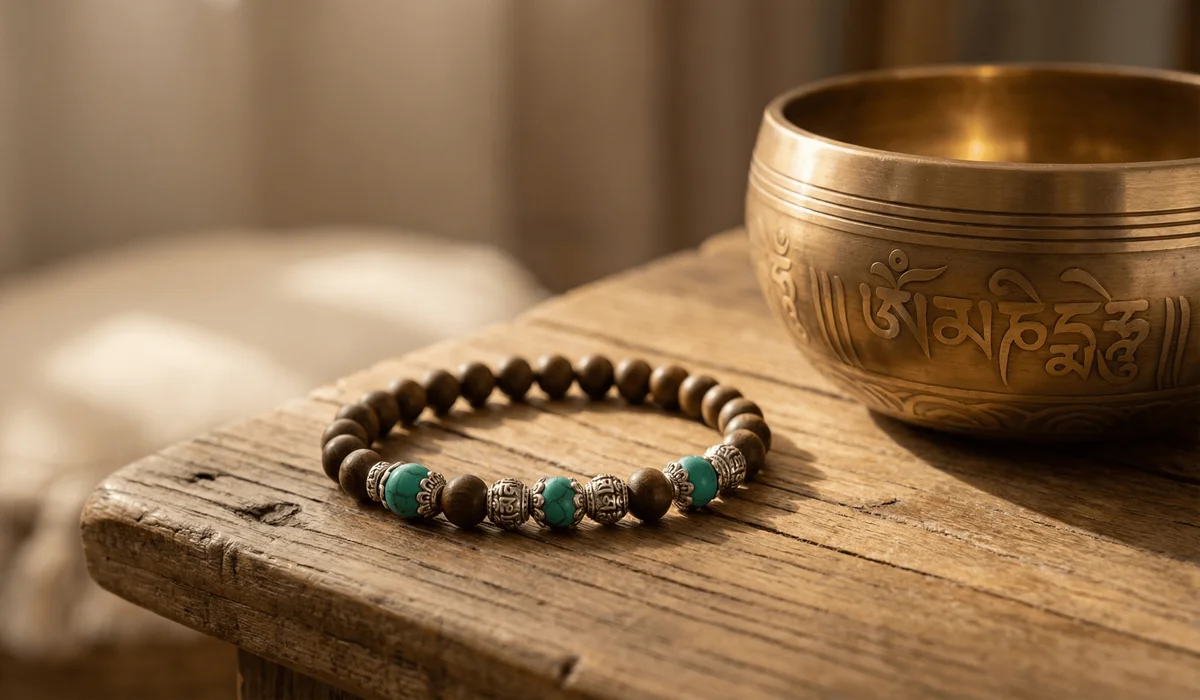
Historically, jewelry in Tibet served as both a portable form of wealth and a protective amulet known as a “Sungwa” (Protective Amulet). Supporting Monastic Artisan Support through jewelry helps maintain the temples and communities that have preserved these spiritual technologies for centuries. This is why Tibetan Cultural Preservation is at the heart of everything we do at Buddha Bodhis.
On Reddit’s r/jewelry community, user u/Good-noodles82 shared a beautiful example of family heritage:
“My mother in law’s traditional Sherpa/Tibetan Jewelry… 24k gold featuring turquoise and coral. It was absolutely heavy but I felt beautiful wearing it.”
*sources:[Traditional Tibetan Jewelry](https://reddit.com/r/jewelry/comments/1rsp0so/my_mother_in_laws_traditional_sherpatibetan/)*. This highlights how these pieces are viewed as treasures that represent a living history and a deep connection to the Himalayan landscape.

*sources:[Reddit – u/Good-noodles82 – My mother in law’s traditional Sherpa/Tibetan Jewelry](https://reddit.com/r/jewelry/comments/1rsp0so/my_mother_in_laws_traditional_sherpatibetan/)*
Chakra and Energy Associations
Lapis lazuli is traditionally associated with the Third Eye chakra, intended to support clarity and intuition during meditation. Many of our customers choose turquoise to align the Throat chakra, encouraging truthful communication and Spiritual Expression. These associations are part of a broader system of Energy Balancing that has been used in Tibet for generations.
Copper beads are also a popular choice because they are believed to help balance the body’s natural energy flow. When Ethically Sourced, these materials maintain their natural vibrations, allowing for a stronger connection to the Earth. Professional organizations like the Gemological Institute of America provide resources for identifying the chemical composition of these genuine stones.
Benefits & Intentions Associated with Tibetan Bracelets
Commonly Associated Intentions
Many practitioners choose these bracelets to set intentions for mindfulness, compassion, and daily presence. The physical weight of the beads serves as a tactile reminder to return to the breath during stressful moments. We have seen how Authentic Gemstones can assist in maintaining a calm spiritual state by providing a grounding physical focus.
By selecting a bracelet with Artisan Craftsmanship, you are also making a statement about your commitment to global fairness. This intention of kindness starts with the person who made the bracelet and extends to the person who wears it. It is a cycle of Positive Energy that begins with the very first bead.
Mindfulness & Personal Practices
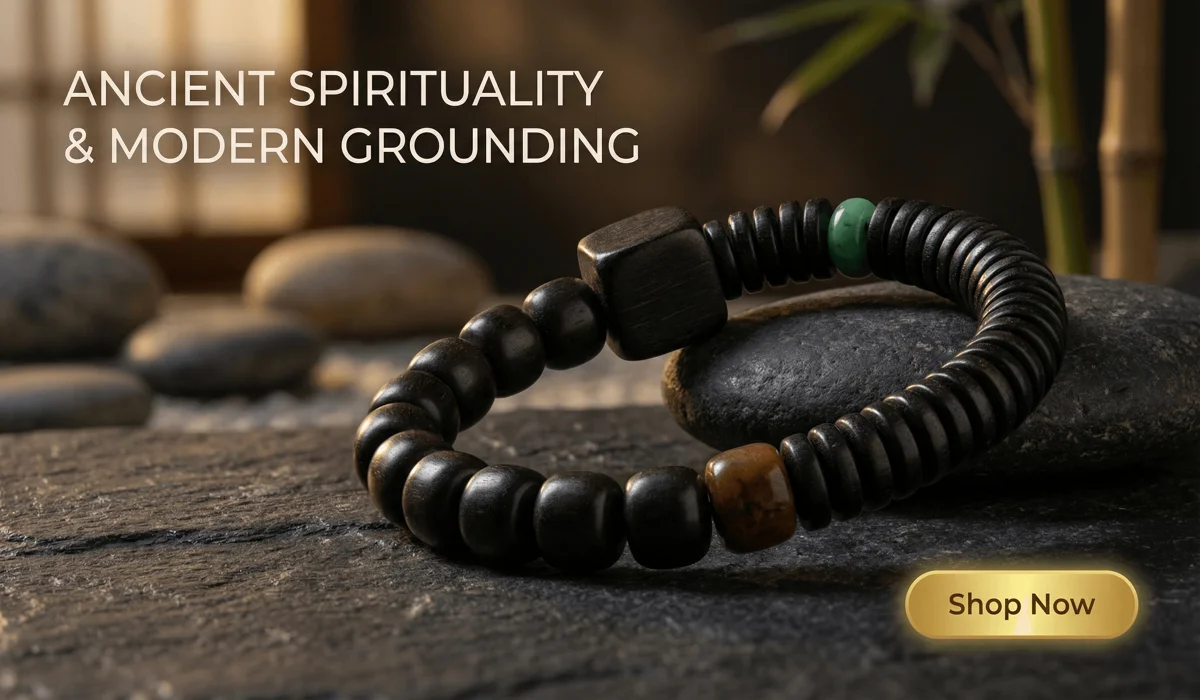
The act of Conscious Purchasing itself is viewed as the first step in a spiritual practice. Wearing meaningful jewelry allows for an experiential observation where the wearer feels a deeper connection to the Himalayan Artisans. Using prayer beads or wrist bracelets can help focus the mind during mantra recitation or personal reflection.
On Reddit’s r/WeddingRingAdvice, user u/Own_Signature_993 expressed the difficulty of identifying quality:
“Everything says things like ‘high quality,’ ‘handcrafted,’ or ‘ethically sourced,’ and I cannot tell what is actually meaningful versus just marketing language.”
*sources:[Judging Jewelry Quality](https://reddit.com/r/WeddingRingAdvice/comments/1s2ot0j/how_do_you_judge_jewelry_quality_online/)*. This concern is why we emphasize the importance of looking for specific artisan markers and Transparent Sourcing methods.
How to Wear Tibetan Bracelets
Left Hand vs Right Hand (Feng Shui Logic)
In many Himalayan and Eastern traditions, the left hand is considered the “receiving” hand. We recommend wearing your bracelet on the left if you wish to internalize the energy and intentions of the stones for personal healing. Conversely, the right hand is viewed as the “giving” hand, used when the wearer wishes to project specific intentions or protection into the world.
If you are wearing a piece for protection, you might consider how its placement affects its function. For instance, reading about the Obsidian Wrist Placement can provide insight into how different stones interact with your body’s energy channels. Practitioners often choose based on whether they seek internal growth or external compassion.
Intention-Setting Practices
Before wearing a new piece, we suggest preparing the bracelet by holding it in both hands and visualizing your personal goals. This process of Intention-Setting is a way to harmonize your energy with the Sacred Jewelry Origin of the materials. It transforms a beautiful accessory into a personal talisman that supports your spiritual journey.
We invite you to explore our Authentic Tibetan Collection to find a piece that truly resonates with your intentions. Each item is selected based on its ability to support your Mindfulness Practice while respecting the artisans who created it.
When People Choose to Wear It
Many individuals wear their bracelets daily as a constant spiritual anchor and a badge of cultural respect. Some choose to wear specific pieces only during meditation or yoga to maintain the “purity” of the item’s energy. Choosing to wear Ethically Sourced pieces ensures the wearer feels a sense of integrity and peace throughout their day, knowing their jewelry did no harm.
The cultural significance of these items is often captured in photographs from the region. User u/Psychiclord shared an image on r/iPhoneography:
“She belongs to an indigenous tribe in Nepal known for its rich cultural heritage… Their love for jewelry is profound, often incorporating handcrafted ornaments.”
*sources:[Indigenous Culture Nepal](https://reddit.com/r/iPhoneography/comments/1s4uafs/iphone_12_pro_max/)*. This demonstrates the deep-rooted tradition of wearing these items as part of daily life and identity.

*sources:[Reddit – u/Psychiclord – Indigenous Tribe Nepal](https://reddit.com/r/iPhoneography/comments/1s4uafs/iphone_12_pro_max/)*
Artisan Craftsmanship vs. Mass-Produced Replicas
Identifying Authentic Handmade Tibetan Bracelets
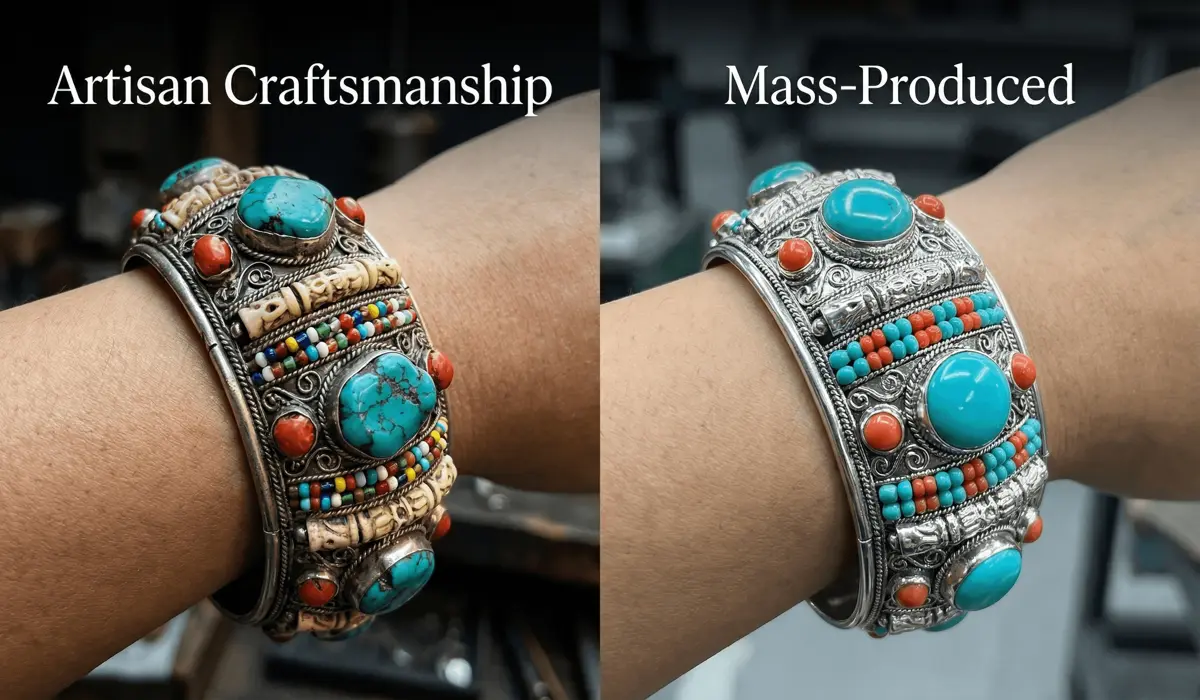
Artisan Craftsmanship results in unique variations in bead shape, engraving depth, and metal patina. In contrast, mass-produced replicas often feature perfectly uniform, shallow machine engravings and a lightweight, hollow feel. Authentic Tibetan Jewelry Markers include the presence of small tool marks, which indicate the use of traditional hand-held instruments rather than factory molds.
When comparing pieces, look for the “soul” in the work. A handmade bead will never be a perfect sphere, and a hand-carved mantra will have subtle differences in each character. These “imperfections” are actually the signs of Authentic Craftsmanship that collectors value most. Organizations like Gemmological Association of Great Britain offer advanced courses for those who want to dive deeper into stone identification.
Material Integrity and Sourcing
Genuine Tibetan silver is a high-grade alloy, whereas the “Tibetan Silver” found on many discount sites is often a base metal containing nickel. Authentic Gemstones will show natural inclusions and varied color saturations, while factory replicas often use dyed glass. Ethical Crystal Sourcing ensures the stones are natural and untreated, preserving their traditional symbolic and energetic value.
We often see users seeking identification help online. For example, u/Much-Kitchen-6274 posted on r/JewelryIdentification:
“I stumbled upon this beaded necklace… I messaged the seller to ask for more information about its origins… but he has yet to get back to me and I am hesitant to spend 200 CAD on it.”
*sources:[Antique Beaded Necklace](https://reddit.com/r/JewelryIdentification/comments/1s7528h/russiantibetan_antique_beaded_necklace/)*. This hesitation is valid; without Transparent Sourcing and responsive sellers, it is difficult to verify if a piece is a true antique or a modern imitation.
Who Is a Tibetan Bracelet Suitable For?
Cultural Respect and Allyship
These pieces are suitable for anyone who wishes to practice Cultural Respect in their purchasing habits rather than treating sacred items as mere fashion. They are ideal for those who want their purchases to have a direct positive impact on Himalayan Communities through fair trade practices. Choosing to buy from reputable sources is an act of allyship with the Tibetan people and their culture.
By avoiding cheap replicas, you help prevent the cultural dilution that occurs when sacred symbols are mass-produced without understanding. This mindful approach ensures that the Tibetan Cultural Preservation remains a priority for both the seller and the buyer. It is about honoring a living tradition through Ethical Supply Chains.
Spiritual Alignment and Lifestyle
Individuals seeking a connection to Ancient Wisdom find these bracelets to be a grounding influence in a fast-paced modern world. They appeal to those who value the story behind their jewelry, including the Transparency in Jewelry Making. These are inclusive tools for anyone, regardless of their background, who feels drawn to the intentions of peace and mindfulness.
Whether you are a seasoned meditator or someone just starting their spiritual journey, an authentic bracelet can serve as a powerful anchor. You can find more historical information about the region and its crafts on Tibetan History Wikipedia. The combination of Material Integrity and spiritual history makes these bracelets meaningful for all lifestyles.
How to Cleanse, Charge, and Care for Your Bracelet
Cleansing Methods
To keep your bracelet in top condition, gently use a soft cloth to remove dust. For wood beads, we recommend avoiding water, which can cause cracking or the loss of natural oils. Smoke cleansing with sandalwood or juniper incense is a traditional way to respect the material and refresh its Symbolic Energy without damaging the physical structure.
Sound cleansing is another beautiful option. Using a Tibetan Singing Bowl can set a harmonious tone for the bracelet and clear any stagnant energy. This practice treats the bracelet as a Sacred Tool rather than just an accessory. Always handle your bracelet with the same respect you would give any other spiritual object in your home.
Charging Practices
Placing the bracelet in the light of a full moon is a common practice to refresh the intention of the Natural Gemstones. Resting the piece on a selenite plate or near a clear quartz cluster is another method used to maintain a grounded state. We find that charging the bracelet with personal mantras during meditation reinforces the bond between the wearer and the Artisan Craftsmanship.

Daily Care & Storage
Store your bracelet in a soft fabric pouch when not in use to prevent scratches to the Hand-Hammered Textures. Keep natural materials away from harsh chemicals, perfumes, and lotions, which can degrade sustainable wood or change the color of porous stones like turquoise. We suggest periodically checking the string or cord for wear to ensure the beads remain secure.
Taking care of your bracelet is a form of Mindful Ownership. By treating the materials with respect, you extend the life of the piece and honor the hard work of the Himalayan artisan who created it.
Frequently Asked Questions
Q: What defines an ethically sourced Tibetan bracelet?
A: It is a piece made with transparency in the supply chain, ensuring fair wages for artisans and sustainable harvesting of natural materials. It involves a commitment to preserving Tibetan culture and ensuring that the creation process does not exploit the environment or the craftspeople.
Q: How can I tell if my bracelet was handmade by artisans?
A: Look for subtle irregularities in the hand-engraved mantras and hand-hammered textures of the metal. Handmade pieces generally have a more substantial weight and show signs of manual tool work rather than the sterile uniformity of machine-molded items.
Q: Why is fair trade important for Himalayan communities?
A: Fair trade practices provide economic stability for artisans, allowing them to continue their traditional crafts rather than being forced into industrial labor. It ensures that the wealth generated from Tibetan cultural products returns to the communities that own those traditions.
Q: How does conscious purchasing help preserve Tibetan culture?
A: By choosing authentic pieces, you provide the financial support necessary for artisans to pass their skills to the next generation. It creates a market for traditional techniques, discouraging the shift toward cheap, culturally diluted mass production.
Q: What are the red flags of mass-produced Tibetan replicas?
A: Extremely low prices, often under twenty dollars, are a sign of synthetic materials and exploitative labor. Sellers who cannot provide details about the specific origin or the artisans who made the piece often lack a transparent supply chain.
Conclusion & Gentle Next Step
Choosing an ethically sourced Tibetan bracelet is an act of mindfulness that honors both the artisan and the spiritual tradition. By looking for Artisan Craftsmanship and verifying Ethical Supply Chains, you ensure your jewelry is a true reflection of Himalayan heritage. We invite you to explore our curated selection of pieces that prioritize transparency, fair trade, and cultural respect.
Each bracelet in our collection is a testament to the beauty of Traditional Techniques and the importance of conscious purchasing. By choosing quality over quantity, you support a lineage of wisdom that has lasted for centuries. Find a piece that resonates with your values today: Authentic Spiritual Accessories
This content is provided for informational and cultural exchange purposes only. It does not constitute medical, legal, financial, or other professional advice. Readers should consult with qualified professionals if they have specific concerns regarding their health or well-being.

Written by the Buddha Bodhis Team
Since 2020, we have been devoted to exploring traditional year-based wisdom, classical Feng Shui principles, and the rich spiritual symbolism rooted in Eastern cultural heritage. Our work bridges ancient metaphysical systems with modern life, interpreting annual cycles, elemental energies, and symbolic meanings to offer thoughtful insight and practical guidance. Through continuous research and practice, we aim to preserve traditional knowledge while making it accessible, relevant, and meaningful for contemporary seekers of balance, intention, and personal growth.
TikTok | YouTube | Pinterest | X
buddhabodhis@gmail.com