

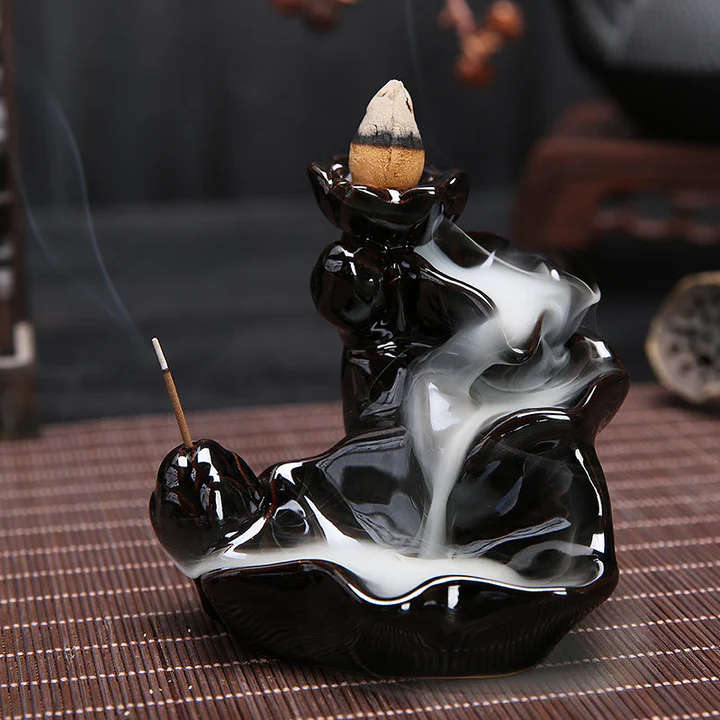

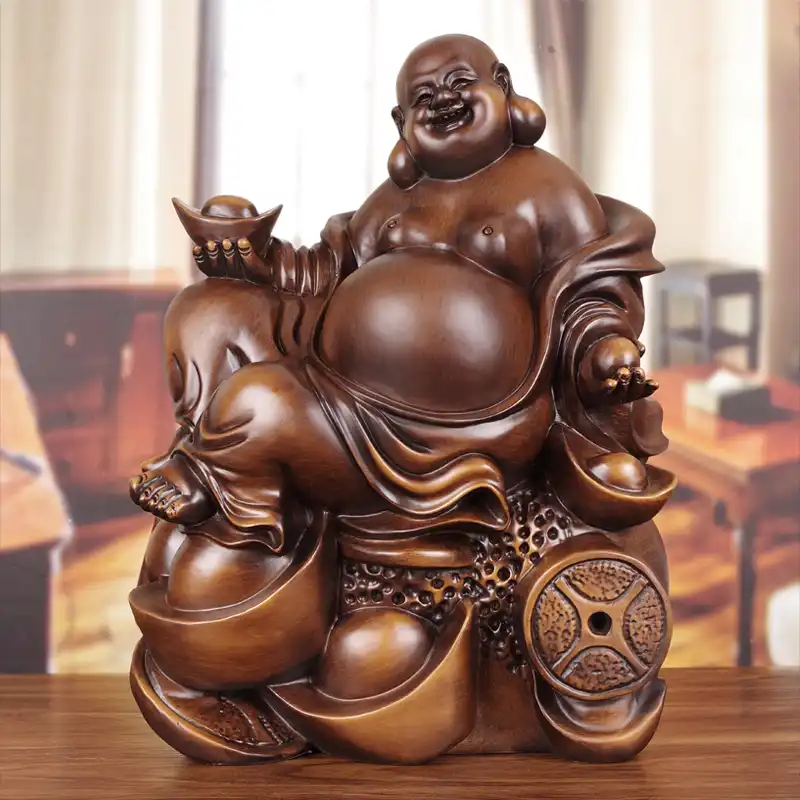

A desktop Zen garden is much more than a simple office decoration. It acts as a sacred bridge between your busy workspace and your quiet inner self. We see it as a miniature world that holds the vast energy of nature in a small wooden tray. By raking the sand, you can find a moment of peace and a way to focus your mind during a long day. This Karesansui (枯山水) or dry landscape is a tool for spiritual growth and mental clarity.
Quick Summary: A desktop Zen garden represents the “mind’s ocean” and the “immovable self.” Rooted in 14th-century Japanese Zen, it uses raked gravel and stones to help you focus and relax. It is a powerful tool to fight digital stress and find beauty in simple things.
We believe that bringing this ancient tradition to your desk helps you stay grounded. In a world full of screens, the Zen Garden for Desk Meaning and Benefits becomes very important. It teaches us that even in a small space, we can find infinite room for calm. Let us explore the deep history and spiritual power of these tiny, peaceful landscapes.
Ancient Origins and Sacred Legends
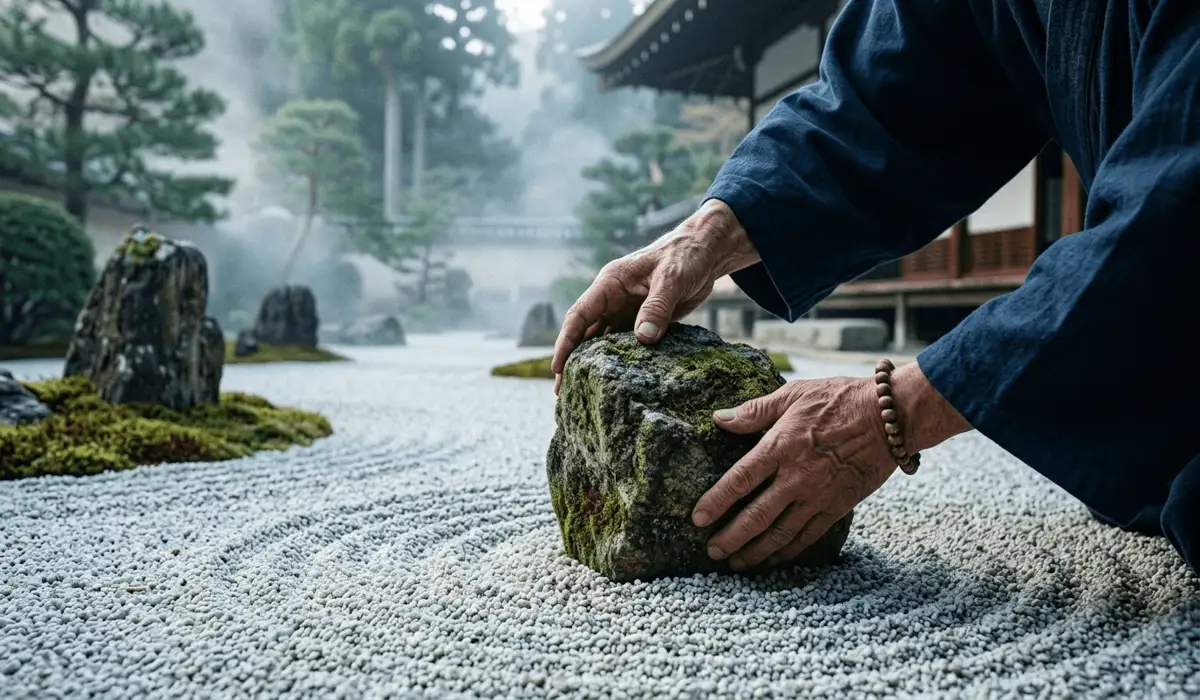
The story of the Zen garden began in 14th-century Japanese monasteries. Monks from the Rinzai (临济宗) and Soto (曹洞宗) traditions created these dry landscapes to help with their meditation. They moved away from green plants and water to focus on the pure spirit of nature. These gardens were meant to be “sermons in stone” that spoke to the soul without using any words. They helped the monks practice Zazen (坐禅) or seated meditation by giving them a perfect view of balance.
Many of these designs were inspired by the legend of Mount Penglai (蓬莱山). This is a mystical island of the immortals where eternal peace lives forever. The rocks in a Zen garden represent these holy mountain peaks reaching for the sky. When you place a stone in your tray, you are connecting to this ancient myth of a land beyond all trouble. It turns your office into a small gateway to this legendary place of quiet power.
In the monastic view, the sand or gravel represents the Chi (气) or life force flowing like water. The gravel is seen as the “ocean of the mind,” which can be rough or calm. The rocks represent the “immovable self” or the part of you that stays strong during a storm. Together, they show the balance between movement and stillness that we all need in our daily lives.
Hidden Philosophy: Decoding the Symbolism
One of the most important ideas in a Zen garden is Ma (间), which means negative space. We often think that empty space is “nothing,” but in Zen, the void is full of potential. On your desk, this empty sand allows your mind to breathe and expand. It helps reduce the heavy feeling of having too many tasks and emails to handle. By leaving space in the tray, you create space in your own thoughts for new ideas to grow.
The Beauty of Imperfection
Another core concept is Wabi-Sabi (侘寂), which is the beauty found in things that are not perfect. In nature, no two stones are exactly the same, and the sand will always have tiny flaws. We teach that a “perfect” garden is not the goal because life itself is always changing. Embracing the rough edges of a rock helps you accept the changes in your own life. This realization of Anicca (无常) or impermanence is a key step toward finding true happiness.
Geometry and Elemental Balance
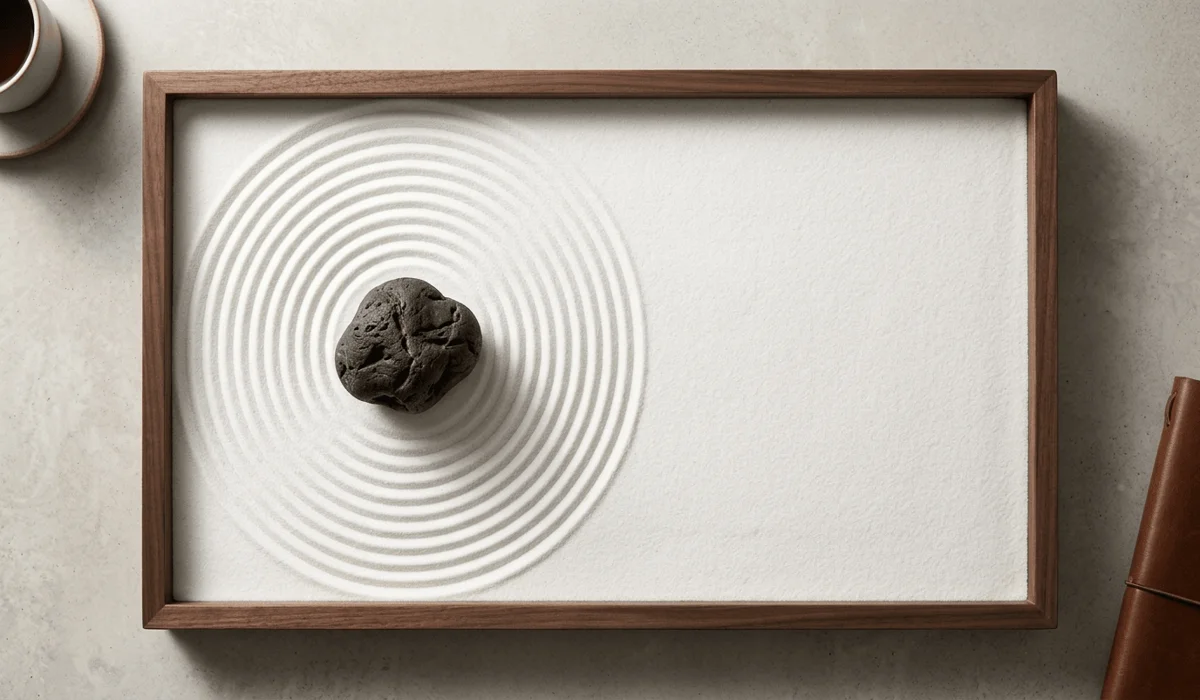
Even the shapes you rake into the sand have deep spiritual meanings. The Enso (圆相) circle is a famous symbol that represents enlightenment and the whole universe. It shows that everything is connected and that strength comes from a simple, focused mind. When you draw a circle in your Zen garden, you are reminding yourself of your own inner strength. This simple act can help you feel more balanced when things around you feel messy.
The five elements of Feng Shui Principles also play a role in these small trays. A wooden tray, stone elements, and the flowing patterns in the sand bring nature into your workspace. We find that balancing these energies helps improve the flow of creativity. A well-placed garden can change the “vibe” of a room from stressful to calm in just a few minutes. It is a small but powerful way to invite good energy into your career.
The Modern Sanctuary: Why Zen Gardens Matter Today
In the year 2026, many people feel burned out by technology and social media. We are constantly staring at blue light and feeling the pressure to be productive every second. The desktop Zen garden acts as a Digital Detox Tool that brings your focus back to the physical world. Touching the sand and feeling the wood of the rake helps ground your nervous system. It is a tactile ritual that stops the cycle of stress and gives you a much-needed break.
Using a Zen garden is a great way to improve your Samadhi (三昧) or deep concentration. When you are doing “Deep Work,” your brain needs a way to reset between difficult tasks. Spending five minutes raking patterns helps your brain waves slow down into a more relaxed state. It is like a “reset button” for your mental clarity. This simple practice keeps you from feeling overwhelmed by the fast pace of modern life.
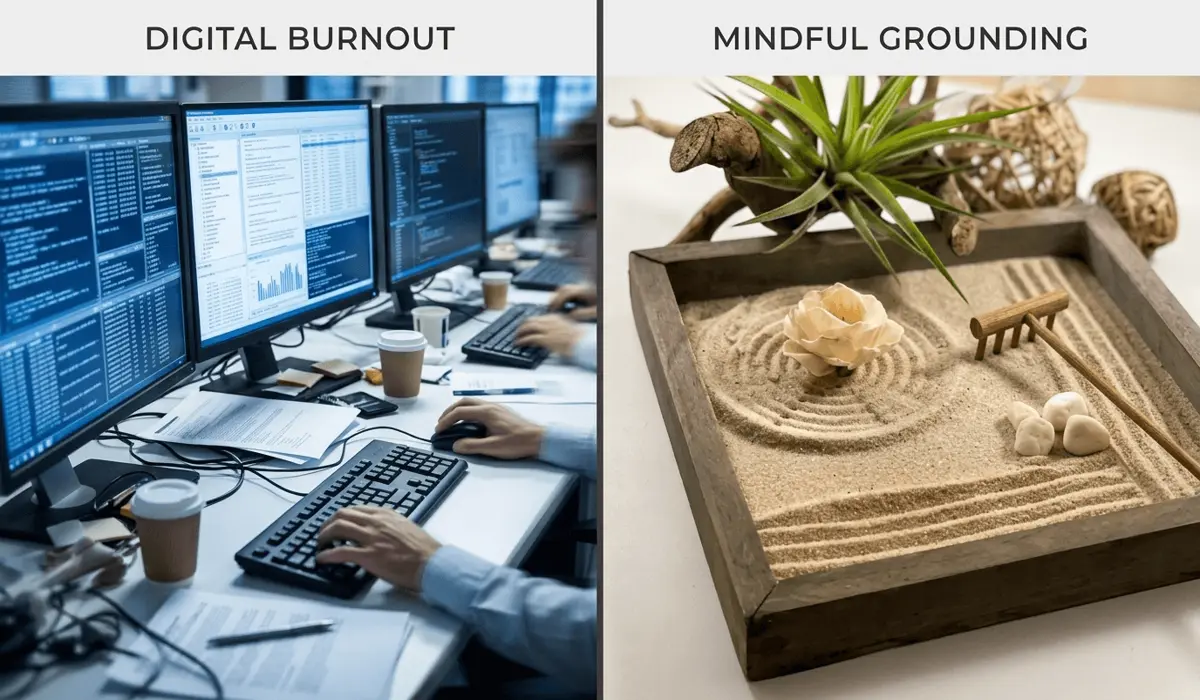
Establishing a sanctuary on your desk helps you move from “doing” to “being.” Most of our day is spent finishing lists and answering calls, which can make us feel like machines. The garden reminds us that we are human beings who need beauty and stillness to thrive. It is a physical anchor that keeps you present in the moment. When you look at your garden, you remember to take a deep breath and stay calm.
Rituals and Practice: Using the Zen Garden for Meditation
Raking the sand is a form of moving meditation that can change how you feel. The repetitive motion of the rake helps your body relax and find a natural rhythm. You can choose different patterns based on what your mind needs at that moment. For example, straight lines can help you feel more stable and organized. Concentric circles around a rock can represent ripples of insight or a calm lake.
The following list shows how you can use different patterns for specific goals:
- Straight Lines: Use these to clear your mind and find focus when you have too many thoughts.
- Wavy Lines: These represent flowing water and can help you feel more creative and flexible.
- Circular Ripples: Rake these around stones to represent spreading peace and positive energy.
- Spiral Shapes: Use spirals to go deeper into your own thoughts and find inner wisdom.
Each time you rake, you are practicing the Art of Emptiness. You are not trying to create a masterpiece, but rather a moment of peace. If you make a mistake, you can simply smooth the sand and start over again. This teaches you that every moment is a fresh start and that you don’t have to carry past mistakes. It is a beautiful way to practice being kind to yourself during the workday.
You can also use the garden for a quick Micro-Zazen session. Sit quietly for a few minutes and look at the arrangement of the stones and sand. Imagine yourself as the largest rock, strong and quiet, while the worries of the day flow around you like water. This visualization helps you feel less affected by the “noise” of the office. It is a simple way to build mental strength without needing to leave your chair.
Video source: YouTube
Author: The Art Kit
Original video link: https://www.youtube.com/watch?v=PwzlTlcJZ64
Cultural Etiquette and Sacred Taboos
To get the most benefit, it is important to treat your Zen garden with respect. We suggest thinking of it as a Sacred Altar rather than just a toy for your desk. Keeping the sand clean and the patterns neat shows that you value your mental space. When you take care of the garden, you are also taking care of your own mind. It is a reflection of your internal order and your commitment to being mindful.
There are also traditional rules for placing rocks that help the energy flow better. You should try to avoid placing stones in straight, boring lines, as this does not look natural. Instead, group them in odd numbers like three, five, or seven. This creates a sense of movement and life, mirroring the Yin Yang (阴阳) balance of the world. It is said that stones should look like they are “growing” out of the sand, not just sitting on top of it.
Anyone can use a Zen garden, regardless of their cultural background, as long as they do so with a good heart. We encourage everyone to learn about the Japanese Garden History to understand the roots of this practice. Deep study helps you move from “using” the symbol to “appreciating” its true meaning. This respect for the culture makes the practice much more powerful and rewarding for you. It turns a simple habit into a lifelong journey of learning and peace.
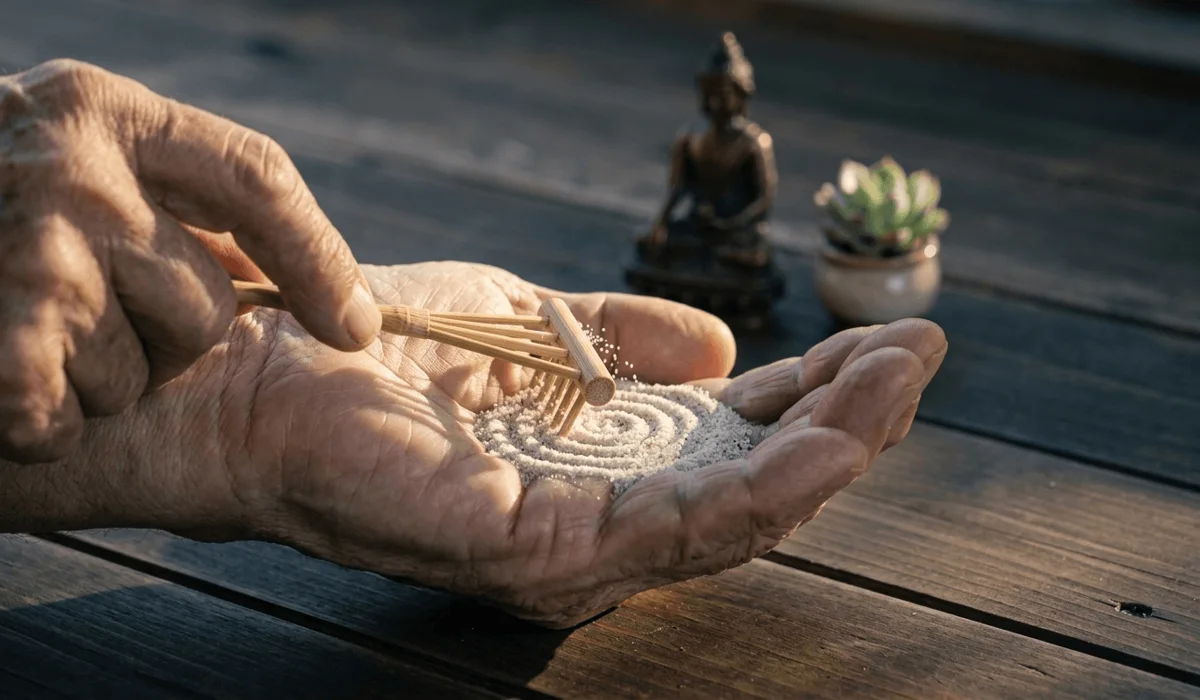
Many people find that adding other spiritual items can help the energy of their garden. You might place a small crystal or a piece of incense nearby to create a complete sensory experience. If you are looking for more ways to enhance your space, you can see Zen Selections that fit your personal style. Combining the garden with other tools can help you build a stronger daily habit of mindfulness.
The Science of Serenity: How Raking Affects the Brain
Modern science is beginning to understand why these ancient tools work so well. The rhythmic motion of raking helps your brain enter a “flow state.” This is a state where you are fully present and your worries seem to disappear. We have seen that this can help lower stress hormones and make you feel more in control. It is a physical way to signal to your body that it is safe to relax and focus.
| Zen Element | Psychological Benefit | Symbolic Meaning |
|---|---|---|
| Fine Sand | Reduced cognitive load | The Ocean of the Mind |
| Natural Rocks | Sense of stability | The Immovable Self |
| Bamboo Rake | Nervous system regulation | The Tool of Intention |
| Empty Space (Ma) | Mental expansion | Infinite Potential |
By focusing on the texture of the sand, you are practicing “sensory grounding.” This is a technique often used to help with anxiety and overthinking. When you focus on what your hands are doing, your mind stops spinning about the future or the past. This makes the Zen garden a great tool for anyone who has a high-pressure job. It allows you to stay calm even when you have a lot of work to do.
The Core Philosophy: The Zen garden reminds us that we are not our thoughts. Just as we rake over old patterns in the sand, we can let go of old patterns in our minds. This freedom is the true goal of the Zen path.
We also find that the visual beauty of the garden helps improve your mood. Looking at natural materials like stone and wood makes people feel more connected to the earth. In a sterile office environment, this small piece of nature can make a big difference. It brings a touch of the outdoors inside, which is known to boost happiness and productivity. For more insights on how these tools work, check out our guide on Wealth Stone Meanings to learn about balancing energies.

Traditional Roots and Modern Adaptations
In ancient times, a Zen garden was a large architectural feat that only monks could use. Today, we have adapted these sacred spaces into a format that fits on your desk. This change makes the wisdom of Zen accessible to everyone, not just those living in monasteries. It allows the busy modern worker to find the same peace that a monk finds in the mountains. This is a beautiful example of how culture evolves to meet new needs while keeping its spirit.
While the size has changed, the Zen Rock Symbolism remains the same. A small stone on your desk can hold the same power as a huge boulder in Kyoto. It all depends on your intention and how you choose to interact with it. We believe that a small, sincere practice is better than a large one that you never use. By spending just a few minutes every day with your garden, you can change your life for the better.
If you enjoy the balance of the Zen garden, you might also like learning about other symbols. For example, the Protection Symbol Guide can teach you how to keep your personal energy safe. All these tools work together to help you build a life full of intention and calm. We are proud to help you discover these ancient secrets for your modern life.
How to Use Your Garden for Daily Mindfulness
Starting a daily ritual with your Zen garden is very easy and only takes a few minutes. We suggest picking a time when you usually feel the most stressed, like mid-morning or late afternoon. This helps you break the tension before it becomes too much to handle. Here is a simple guide to get you started on your journey of peace.
Actionable Ritual Steps:
- Step 1: Take three deep breaths and clear your mind of all your current tasks.
- Step 2: Slowly pick up the rake and feel the texture of the wood in your hand.
- Step 3: Rake a simple pattern, like straight lines or circles, focusing only on the sand.
- Step 4: Spend one minute looking at the new pattern and feeling the stillness in the tray.
This simple habit can help you stay centered throughout the entire day. It turns your desk from a place of work into a place of practice. Over time, you will find that you can return to this state of peace even when you are not at your desk. The garden becomes a mental “anchor” that stays with you wherever you go. This is the true power of the Zen Garden for Desk Meaning and Benefits in our busy lives.
You can also find more ways to improve your home and office by reading about Feng Shui Energy. Learning how to place your items for the best energy flow can make a big difference. Your Zen garden is just one part of a larger plan to create a peaceful life. We are here to support you in finding balance and joy every single day.
Frequently Asked Questions
Q: What is the deeper spiritual meaning of raking patterns in a desk Zen garden?
A: Raking represents the active purification of the subconscious mind. The patterns you create are the outward manifestation of your inner order and the rhythmic nature of existence. It helps you see that you have the power to organize your own thoughts.
Q: How does a mini Zen garden facilitate Satori or sudden enlightenment in a workspace?
A: By providing a sudden break in the analytical mind, the garden allows for a flash of intuitive clarity. This is a moment where the boundary between the observer and the observed vanishes. It helps you find solutions to problems that your logic could not solve.
Q: Why does the number of rocks in a Zen garden affect its symbolic energy?
A: Traditional Zen aesthetics prefer odd numbers to avoid the stagnant symmetry of even numbers. This mirrors the dynamic and asymmetrical balance found in nature. It keeps the energy of the garden moving and alive rather than still and dead.
Q: How does the concept of Ma in Zen gardens combat 2026 digital burnout?
A: Ma provides a visual and mental buffer zone that prevents you from feeling overwhelmed by digital data. It preserves the space for original thought and prevents the self from collapsing into the stream of information. This space is vital for mental health in a high-tech world.
Q: What are the traditional rules for placing rocks in a mini Karesansui?
A: Rocks should be partially buried so they look like they are growing from the earth. They should be grouped to create a sense of movement and breathing between the stones. This follows the natural flow of energy and creates a more peaceful feeling in the tray.
Conclusion: Integrating the Wisdom of the Void
The desktop Zen garden is a powerful reminder that we can find peace even in the middle of chaos. It teaches us to see the world in a grain of sand and to find beauty in simple, natural things. By practicing with these small trays, we can learn to stay calm and focused no matter what happens. The journey from looking at a stone to realizing your own inner strength is a beautiful path to follow.
We hope this guide has helped you understand the deep meaning behind your Zen garden. May your raking be a prayer and your stillness be like a mountain. Remember that the space in the tray is just as important as the stones you place inside it. Embrace the void, and you will find the infinite potential that lives within you every day.
The information provided in this article is for educational and cultural exchange purposes only. It does not constitute medical, legal, financial, or other professional advice. Readers should consult with qualified professionals for specific guidance related to their personal health or business needs. Buddha Bodhis is a cultural research brand and does not make clinical claims regarding mental health treatments.

Written by the Buddha Bodhis Team
Since 2020, we have been devoted to exploring traditional year-based wisdom, classical Feng Shui principles, and the rich spiritual symbolism rooted in Eastern cultural heritage. Our work bridges ancient metaphysical systems with modern life, interpreting annual cycles, elemental energies, and symbolic meanings to offer thoughtful insight and practical guidance. Through continuous research and practice, we aim to preserve traditional knowledge while making it accessible, relevant, and meaningful for contemporary seekers of balance, intention, and personal growth.
TikTok | YouTube | Pinterest | X
buddhabodhis@gmail.com