



Among the world’s sacred flora, no plant has captured the spiritual imagination quite like the lotus. More than mere aesthetic beauty, its life cycle is a profound metaphor for the human condition and the potential for enlightenment. For millennia, it has transcended cultures, from the Nile Valley to the Himalayan foothills, serving as a universal symbol of purity, awakening, and transcendence.
We at Buddha Bodhis find that the lotus speaks a language older than words. Its journey is our journey: to rise from the challenges of our origins, navigate the complexities of life, and ultimately bloom into our highest, most pristine state of being. The lotus doesn’t deny the mud; it uses it as the foundation for its glorious emergence into the light.
The Lotus Flower represents the soul’s journey from the mud of materialism and attachment to the light of spiritual enlightenment. It is a universal symbol of purity, resilience, spiritual awakening, and rebirth. It demonstrates that a pristine consciousness can bloom untouched and immaculate, even while existing within the murky waters of worldly suffering (samsara).
Table of Contents
The Ancient Origins & Sacred Legends: Where the Lotus First Bloomed
The reverence for the lotus is not a recent phenomenon; its roots run deep into the bedrock of the world’s oldest spiritual traditions. In Buddhism, Hinduism, and the lore of Ancient Egypt, the lotus is not just a flower but a foundational element of cosmic and spiritual truth. Understanding these origins reveals why its symbolism remains so potent today.
☸️ Buddhism: The Footsteps of the Bodhisattva
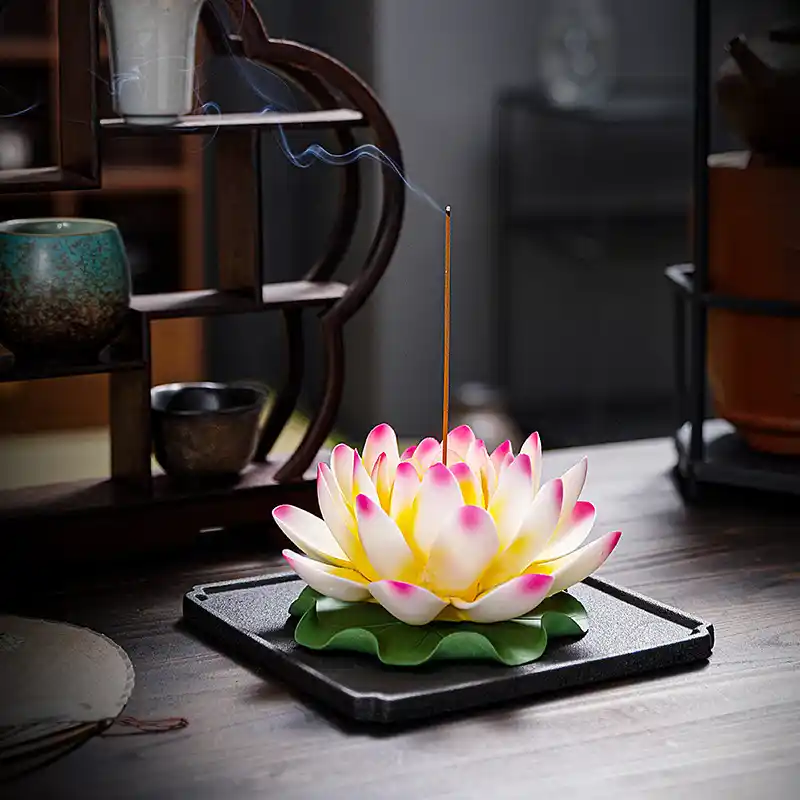
In Buddhist lore, the journey of the lotus is inextricably linked to the journey of the Buddha himself. It is said that when the infant Siddhartha took his first seven steps, a lotus flower bloomed under each footfall. This miraculous event was a prophecy, signifying his pure and transcendent path, destined to walk upon the world without being stained by it.
This flower is central to Mahayana Buddhism, particularly in the revered Lotus Sutra, which teaches that all sentient beings possess the potential to attain Buddhahood. The lotus, rising pure from the mud, is the perfect symbol for this innate potential. The physical embodiment of this symbol is found in the meditation posture of Padmasana (The Lotus Position), which creates a stable, grounded base for the practitioner to rise toward spiritual clarity.
🕉️ Hinduism: The Cosmic Womb and Seat of Deities
Within Hinduism, the lotus, or ‘Padma’, holds a place of supreme importance as a symbol of creation, divine beauty, and spiritual perfection. The creation myth describes how Lord Brahma, the creator god, was born from a magnificent lotus that emerged from the navel of the preserver god, Lord Vishnu, as he rested upon the cosmic waters. This narrative positions the lotus as the very womb of the universe.
Major deities are almost always depicted seated or standing upon a lotus throne. This elevates them, showing they exist in a state of purity and perfection, transcendent above the mundane world. For Lakshmi, the goddess of wealth and prosperity, and Saraswati, the goddess of knowledge, the lotus signifies their divine and untainted attributes.
In yogic philosophy, the body’s energy centers, or chakras, are often visualized as lotuses. The culmination of this spiritual energy is the Sahasrara, the thousand-petaled lotus at the crown of the head, which represents the attainment of full spiritual enlightenment and unity with the divine.
🧿 Ancient Egypt: The Symbol of Rebirth and the Sun
For the Ancient Egyptians, the blue lotus was a powerful symbol of creation, the sun, and rebirth. They observed the flower’s daily cycle with fascination: it would close its petals at dusk and sink beneath the water, only to re-emerge at dawn and open again. This perfectly mirrored the journey of the sun god, Ra, who was believed to travel through the underworld at night and be reborn each morning.
This direct association with death and rebirth made the lotus a central motif in funerary art and rituals. It symbolized the hope for resurrection in the afterlife, a promise that just as the lotus re-emerges from the dark water, the soul of the deceased would be reborn into the light. Its presence in tombs was an invocation for eternal life.
Across these foundational cultures, the lotus consistently represents a journey of transcendence. Whether it’s the Buddha’s pure path, Brahma’s cosmic birth, or Ra’s daily rebirth, the flower symbolizes an emergence from a lower, darker state into one of higher consciousness, purity, and divine light. This shared understanding forms the core of its enduring spiritual power.
The Hidden Philosophy: Decoding the Symbolism of the Lotus
The lotus is not just a passive symbol; it is an active teacher. Its entire life cycle is a visual sermon on the path to spiritual liberation. By examining its journey from the mud to the sky, we uncover a profound philosophy for navigating our own lives with grace and intention.
The Threefold Journey: Mud, Water, and Air
The growth of the lotus can be seen as a three-stage allegory for spiritual development, a map from our worldly condition to our divine potential.
- The Mud (Samsara): The roots of the lotus are anchored in the dark, murky mud at the bottom of the pond. This represents the human condition—the world of suffering, ignorance, attachment, and earthly desires. The mud is our starting point, the realm of samsara where we are caught in cycles of craving and confusion.
- The Stem (The Path/Dharma): The long stem strives upward through the water, reaching for the surface and the light. This symbolizes the spiritual path itself—the practice of discipline, virtue, mindfulness, and wisdom (the Dharma). It is the dedicated effort required to move from ignorance toward understanding.
- The Blossom (Nirvana): The immaculate flower finally emerges, floating pristine and radiant above the water’s surface, completely untouched by the mud from which it came. This represents the attainment of enlightenment (Nirvana), a state of pure consciousness, mental clarity, and liberation from all attachments and suffering.
The Principle of Asanga (Non-Attachment)
One of the most remarkable physical properties of the lotus is the hydrophobic nature of its petals, often called the “lotus effect.” Water and dirt simply bead up and roll off, leaving the flower perfectly clean. This is a direct and powerful metaphor for the core spiritual principle of ‘asanga’ or non-attachment.
This principle is central to the lotus’s meaning. It embodies the ability to exist within the ‘mud’ of worldly suffering (samsara) without being stained or corrupted by it. The enlightened mind, like the lotus petal, can engage with life’s challenges, pains, and pleasures without clinging to them, maintaining its innate purity and peace.
This teaches us that spiritual transcendence isn’t about escaping the world, but about learning to live within it with a purified mind. We can experience the full spectrum of human life while cultivating a spirit that remains untainted, compassionate, and free. This is a core part of what our our Symbolism & Culture guides seek to illuminate.
A Spectrum of Meaning: The Sacred Symbolism of Lotus Colors
While the lotus universally symbolizes purity and enlightenment, the specific color of its blossom adds nuanced layers of meaning, particularly within Buddhist traditions. Each hue corresponds to a different aspect of the spiritual journey, offering a richer vocabulary for expressing states of consciousness. As a team, we find these distinctions crucial for understanding the depth of this sacred flower.
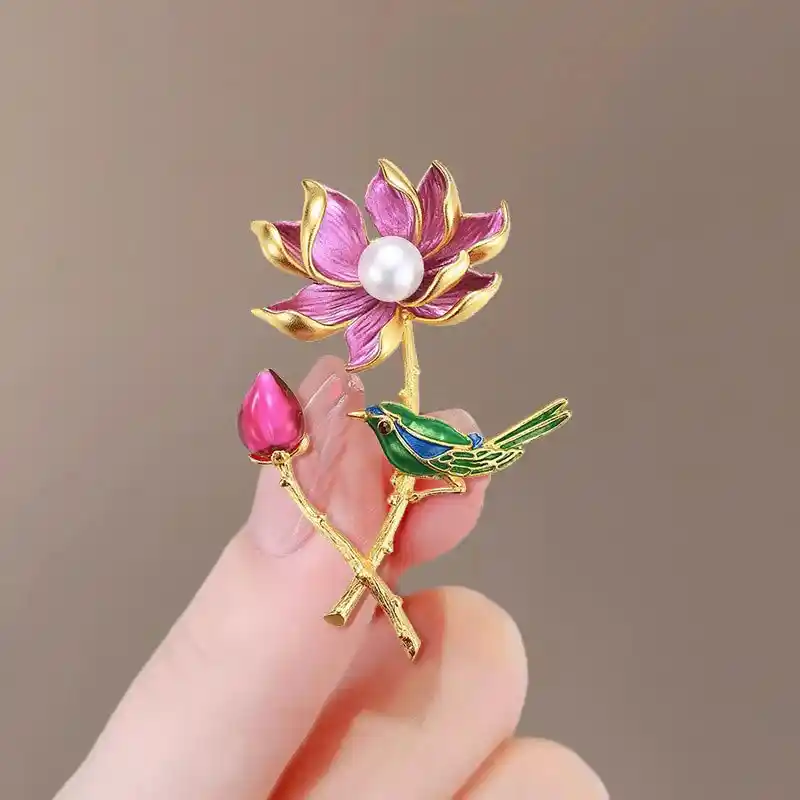
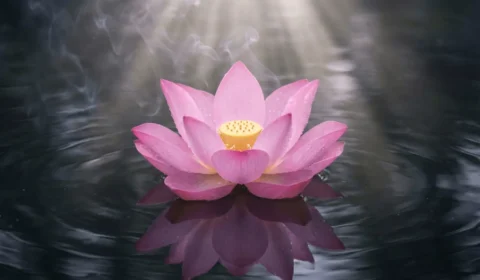
- 🌸 White Lotus (Pundarika): The white lotus represents the ultimate state of mental purity and spiritual perfection. It symbolizes Bodhi, the state of being awakened. It is often called the “Womb of the Buddhas” and signifies the pacification of one’s nature, free from all defilements.
- 🌸 Pink Lotus (Padma): Considered the supreme lotus and the true lotus of the Buddha. The pink lotus represents the historical Buddha and his earthly journey. It symbolizes the highest truth, love, and the heart’s purest state.
- 🌸 Red Lotus (Kamala): This lotus is connected to the heart (hrdaya). It symbolizes the original nature and purity of the heart, representing love, compassion, passion, and generosity. The red lotus is the flower of Avalokiteshvara, the Bodhisattva of Compassion.
- 🌸 Blue Lotus (Utpala): The blue lotus signifies the victory of the spirit over the senses. It represents wisdom, knowledge, and intelligence. It is almost always depicted as partially open, its center unseen, symbolizing that wisdom is a continuous journey of learning that never truly ends.
- 🌸 Purple Lotus (Kamala): A rarer and more mystical color, the purple lotus represents esoteric spiritual paths and the teachings of the Dharma. Its eight petals are often seen as representing the Noble Eightfold Path, the guide to ending suffering and achieving self-awakening.
Wearing the Talisman: Why Lotus Flower Jewelry Matters Today
In our fast-paced, often chaotic modern world, ancient symbols like the lotus have gained a new resonance. Wearing lotus jewelry is more than a fashion choice; it is an intentional act of carrying profound spiritual wisdom. It serves as a personal amulet, a mindful anchor, and a statement of one’s inner journey.
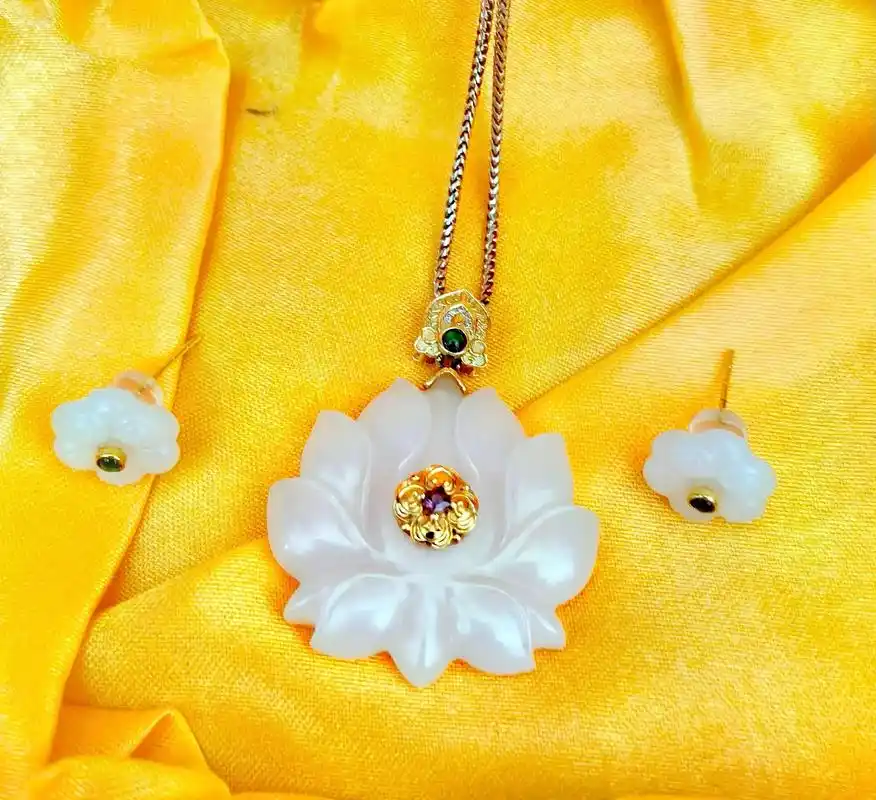
A Mindful Anchor in the Digital Age
The constant stream of information and social pressure can feel like modern-day ‘mud’. A lotus pendant or ring acts as a tactile reminder to return to your center. Its physical presence can be a cue to pause, take a deep breath, and reconnect with your intention for inner peace.
It embodies the principle of non-attachment in a tangible way. Glancing at the symbol on your wrist can remind you to let go of negativity, to shed the ‘mud’ of social media comparison, and to remain centered in your own truth. We believe this is why so many are drawn to see LOTUS (Collection) picks for this year.
A Statement of Your Spiritual Journey
For many, the lotus is a deeply personal emblem of their own story of “rising from the mud.” It represents survival through trauma, overcoming adversity, and the conscious choice to grow toward the light. Wearing it is a quiet declaration of resilience and a commitment to personal transformation.
Ultimately, wearing the lotus is an act of setting an intention. It is a vow to yourself to cultivate a clear, compassionate, and resilient mind, no matter the circumstances. It is a tool for manifesting the very qualities the flower represents: purity, strength, and enlightenment.
The lotus teaches us that true strength isn’t about avoiding hardship, but about transforming it. Wearing its symbol is a commitment to this alchemy—the process of turning the mud of our life’s challenges into the foundation for our most beautiful, authentic self to bloom.
Ritual & Practice: How to Meditate with the Lotus Flower
To truly connect with the lotus, we must move beyond intellectual understanding and engage with its energy through practice. Visualization and mantra are powerful ways to internalize the flower’s wisdom and cultivate its qualities within our own consciousness. These practices are simple yet profound, accessible to anyone seeking inner peace.
The Heart-Lotus Visualization for Inner Peace
This meditation cultivates a sense of openness, purity, and compassion directly in your heart center. It is a gentle yet powerful way to release emotional burdens and connect with your innate goodness.
- Preparation: Find a quiet space and a comfortable seated position (Padmasana if accessible). Close your eyes, rest your hands gently on your lap, and bring your awareness to the natural rhythm of your breath.
- Visualization: Imagine a small, tightly closed lotus bud at the very center of your chest, in your heart space. You can visualize it as white for purity, pink for divine love, or red for compassion.
- The Unfolding: With each slow, deep inhalation, picture one layer of petals gently unfurling. With each exhalation, consciously release a specific worry, fear, or attachment, letting it fall away like a drop of muddy water from a clean petal.
- The Full Bloom: Continue this process, breath by breath, petal by petal, until the lotus is fully open, radiant, and luminous within your chest. Rest in the feeling of this pure, open, and peaceful energy at your core, allowing its light to fill your entire being.
Chanting with “Om Mani Padme Hum”
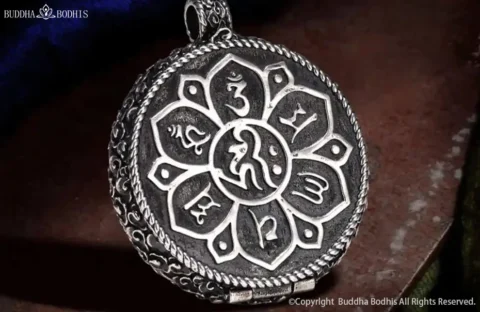
This is one of the most sacred mantras in Tibetan Buddhism, and its meaning is directly tied to the lotus. The mantra, as explained by spiritual leaders like the Dalai Lama, essentially means “Behold! The Jewel in the Lotus.” It is a powerful invocation for awakening.
- The Jewel in the Lotus: The “Lotus” (Padme) represents the purified mind and the nature of reality itself. The “Jewel” (Mani) represents the enlightened qualities of wisdom and compassion that reside within that purified mind.
- The Practice: Chanting this mantra, either aloud or silently, while visualizing the heart-lotus can profoundly deepen your meditative experience. It is a way of calling forth the “jewel” of enlightenment from within the “lotus” of your own heart.
- Mindful Observation: When facing a challenge, visualize yourself as the lotus. Acknowledge the “mud” of the situation without letting it stain your inner peace.
- Morning Intention: Begin your day by visualizing the heart-lotus opening. Set the intention to move through your day with an open heart and a clear mind.
- Practice Non-Attachment: When you feel yourself clinging to an outcome or a feeling, recall the lotus petal shedding water. Gently allow the attachment to roll away.
- Cultivate Compassion: Remember that everyone is on their own journey of rising from the mud. View others through the lens of compassion, recognizing their potential to bloom.
Frequently Asked Questions (FAQ)
As cultural researchers, we receive many questions about the lotus. Here are answers to some of the most common inquiries, aimed at deepening your understanding of this profound symbol.
What is the deeper meaning of rising from the mud like a lotus?
It is a profound metaphor for the human spiritual journey. The “mud” represents our origins in ignorance, suffering, and worldly attachment (samsara). The act of “rising” is the process of spiritual practice and self-cultivation—the path of Dharma. The final, immaculate bloom above the water represents achieving enlightenment (Nirvana) and purity while still being rooted in the human experience.
How does the lotus symbolize purity in a modern, chaotic world?
The lotus’s ability to remain pristine despite its muddy environment is a powerful message for modern times. It teaches that we can maintain our inner peace, integrity, and mental clarity (purity) even when surrounded by the chaos, negativity, and stress of contemporary life. It is a symbol of emotional and spiritual resilience, showing that our external environment does not have to dictate our internal state.
What do the different colors of the lotus flower represent in Buddhism?
Each color represents a specific aspect of enlightenment. White stands for mental and spiritual purity (Bodhi). Pink is the supreme lotus, representing the historical Buddha. Red symbolizes the heart’s compassion and love. Blue represents the victory of the spirit over the senses and wisdom. Purple signifies mysticism and the esoteric teachings.
Why do people get lotus tattoos to signify personal transformation?
A lotus tattoo is a permanent declaration of a personal journey of overcoming adversity. It often signifies emerging from a period of great difficulty, trauma, or darkness (“the mud”) and choosing a path of growth, beauty, and renewal. It is a powerful, visible symbol of rebirth and the wearer’s resilience and inner strength, a constant reminder that they have the power to bloom. Many find our guide on other symbols helpful as they explore this year related guides.
What is the connection between the lotus and the ‘Om Mani Padme Hum’ mantra?
The mantra translates to “Behold! The Jewel in the Lotus.” In this context, the “Lotus” (Padme) represents the purified mind and the world itself. The “Jewel” (Mani) represents the enlightened wisdom and compassion that resides within it. Chanting the mantra is a prayer to realize this innate union of wisdom and reality—to find the divine “jewel” within our own “lotus” mind. The Metropolitan Museum of Art showcases many artifacts that connect this mantra to physical forms of art.
Conclusion: Integrating the Wisdom of the Lotus Flower
The lotus teaches us one of the most vital spiritual truths: our circumstances do not define our potential. It is a living testament that from the darkest, most challenging origins, something of immaculate beauty and purity can arise. Within every human being, regardless of their past or present “mud,” lies the seed of wisdom and enlightenment, waiting to bloom.
This sacred flower is more than a symbol; it is a way of being. It invites us to embrace our entire journey, the mud and the light, with courage and grace. It reminds us to live in the world with an open heart but to remain untainted by negativity, always striving toward the light of our own highest truth.
May you carry this timeless wisdom with you. May you embody the spirit of the lotus, rising through challenges with grace and blooming into the radiant being you were always meant to be.
Cultural Researchers & Feng Shui Practitioners. We have been exploring traditional year-based wisdom and spiritual symbolism since 2020.