

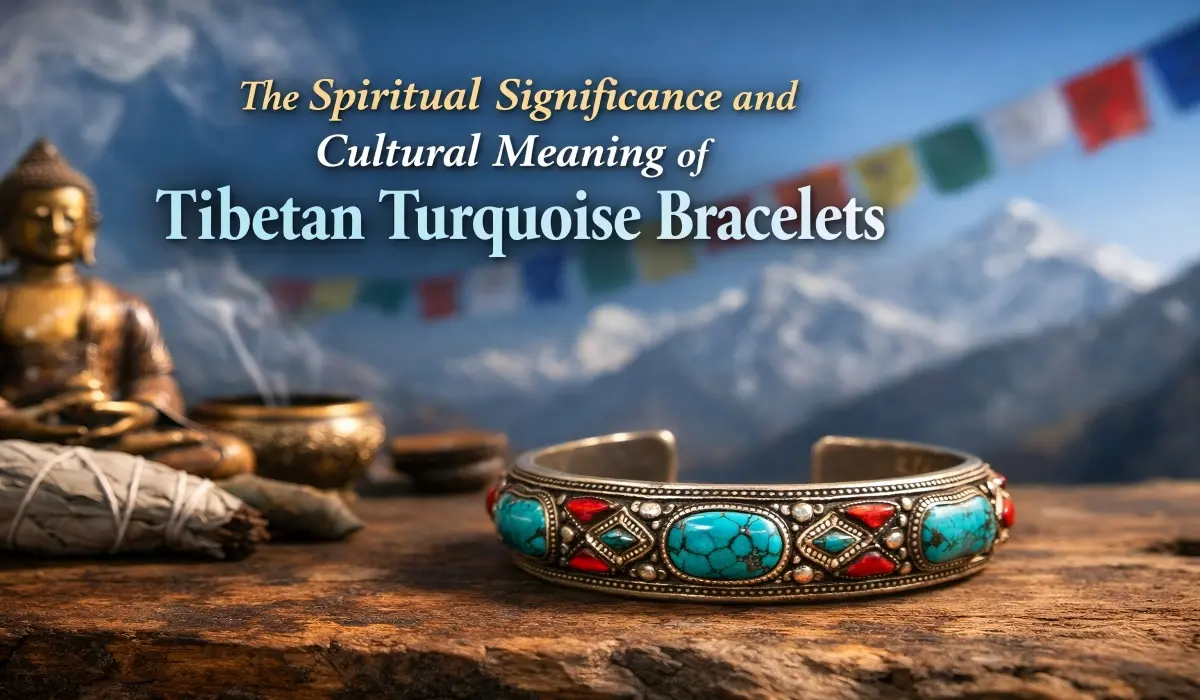
Tibetan Bracelets with turquoise inlays are sacred adornments that represent the soul of the earth, bridging the gap between the physical world and the spiritual heavens. In Himalayan culture, these bracelets serve as powerful spiritual protection stones, traditionally worn to ward off negative energies and promote inner peace. We have observed that many practitioners value these pieces for their ability to anchor the wearer in a state of mindfulness and cosmic connection.
The turquoise stone is deeply revered in Buddhism, symbolizing the sky, the sea, and the infinite nature of wisdom and serenity. These pieces often feature intricate Tibetan silver inlay craftsmanship, combining precious metals with stones to create a vessel for intention. Understanding the meaning of Tibetan bracelets with turquoise inlays allows the wearer to connect with centuries of tradition and ancient Himalayan wisdom.
- Tibetan turquoise represents the vital connection between the sky and earth.
- These bracelets act as amuletic jewelry designed for spiritual protection and healing.
- The vibrant blue and green hues symbolize the Medicine Buddha and mental clarity.
- Each piece showcases traditional Himalayan craftsmanship and sacred symbolic patterns.
- Wearing these stones helps align the Throat Chakra for honest communication.
What Is the Meaning of Tibetan Bracelets with Turquoise Inlays?
The term “inlay” refers to the meticulous process where pieces of natural stone are precisely fitted into recessed compartments of metal, usually silver or brass. A turquoise inlay bracelet is characterized by its vibrant blue-to-green mosaic patterns, often arranged in traditional motifs. These pieces are considered amuletic jewelry, meaning they are designed to hold specific energetic signatures rather than serving as mere decoration.
The Soul of Sacred Stones
Authenticity in these bracelets stems from the use of sacred stones of Tibet, often sourced from the high Himalayan regions. The metal base typically showcases traditional Tibetan silver inlay craftsmanship, which may include copper or brass accents to balance the stone’s energy. Many bracelets feature a combination of turquoise and other materials, such as coral or lapis lazuli, to represent the balance of cosmic elements.
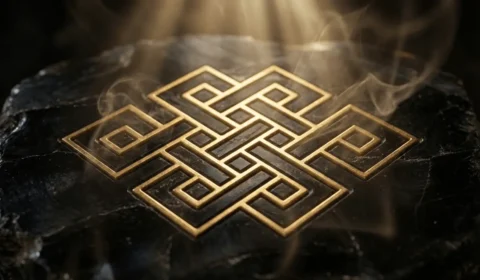
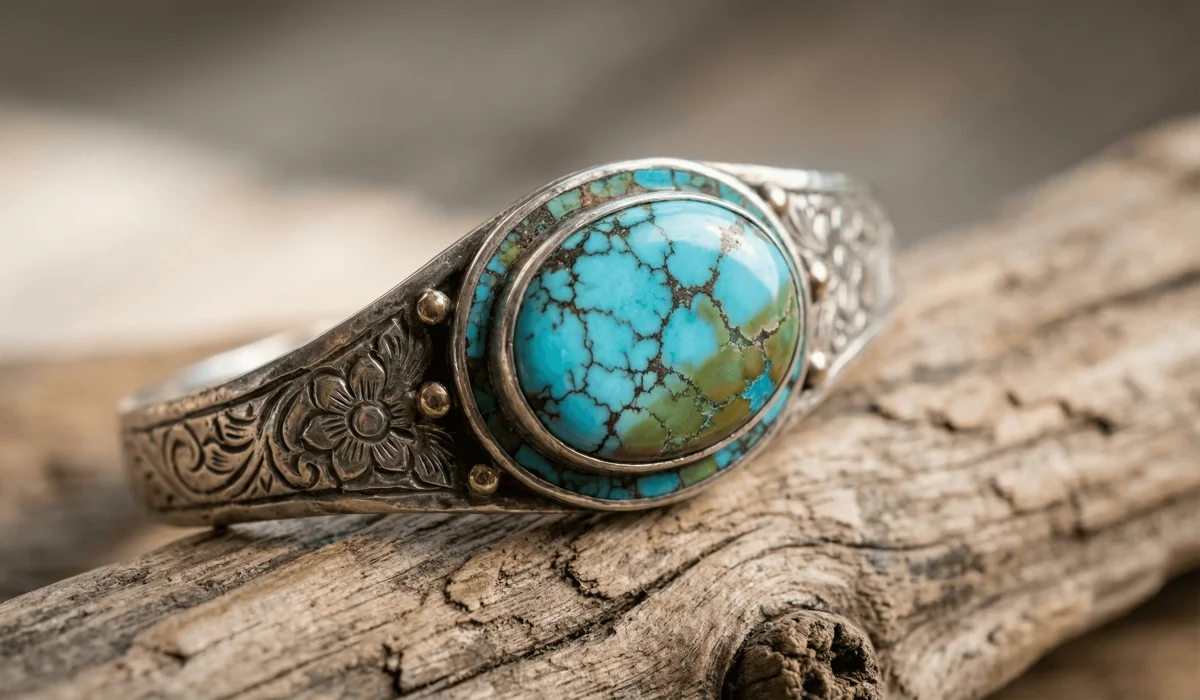
Tibetan turquoise is famous for its “matrix,” which consists of dark, spider-web-like veins of host rock that signify the stone’s natural origin. The color ranges from a deep green to a bright blue, reflecting the varied landscape of the Tibetan plateau. Designs often incorporate sacred geometry like the Endless Knot to enhance the deep Buddhist jewelry meaning within each piece.
Spiritual Meaning & Symbolism
Turquoise is considered a living stone in Tibet and it is believed to age with the wearer by absorbing their energy. It represents the turquoise sky and earth connection, acting as a tether between the mundane world and the celestial realms. In the hierarchy of sacred stones of Tibet, turquoise holds the highest status and is often called the “National Gem of Tibet.”
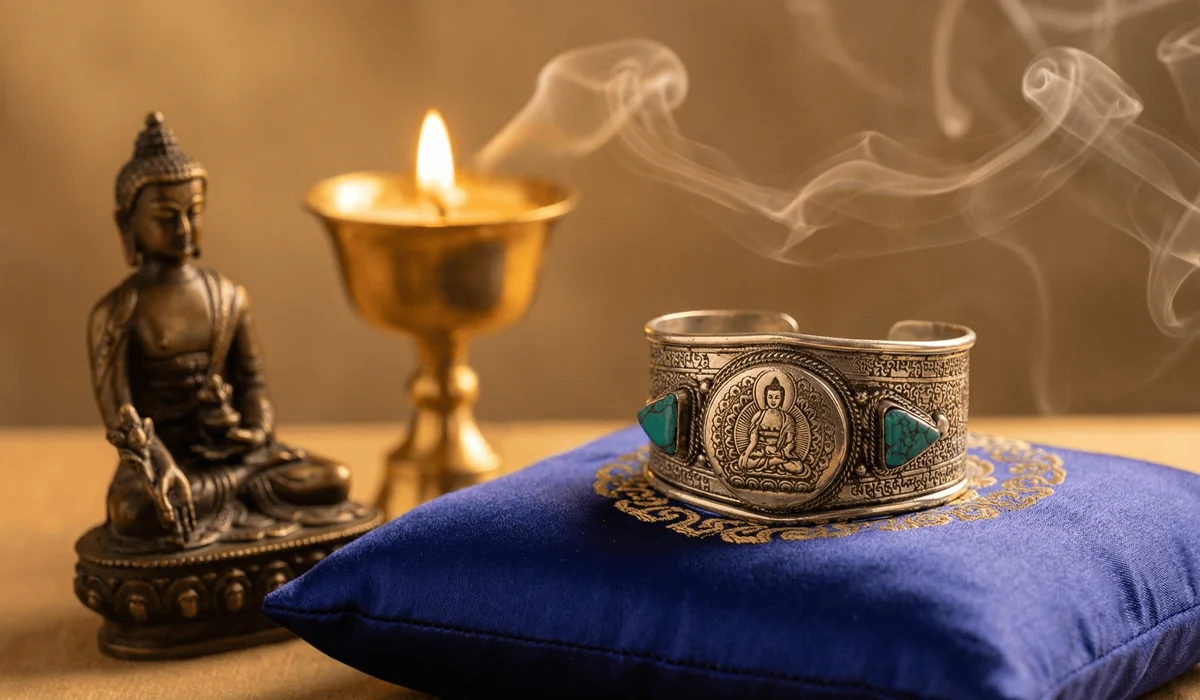
Within the context of Turquoise Bracelet Meaning, this stone is associated with the Medicine Buddha (Bhaisajyaguru). This connection represents healing and the transformation of ignorance into spiritual wisdom. The blue hue symbolizes the vastness of the “sky mind,” encouraging a state of emptiness and detachment from the ego.
Chakra Alignment and Wisdom
Turquoise is traditionally linked to the Throat Chakra (Vishuddha), acting as one of the premier wisdom and serenity stones. It is believed to help align all chakras, providing a bridge between the heart and the spirit. The metaphysical properties of these inlays are thought to provide a grounding effect while opening the third eye to spiritual insights.
Benefits & Intentions Associated with Tibetan Turquoise Bracelets
Many practitioners use these bracelets for spiritual protection, believing the stone acts as a shield against negative environmental stressors. They are frequently sought out for fostering wisdom and serenity, helping the wearer maintain a calm mind during turbulent times. The amuletic jewelry meaning suggests that wearing turquoise can assist in the journey of self-actualization and realizing one’s true nature.
Wearing a turquoise inlay bracelet serves as a “touchstone” for mindfulness, offering a physical reminder to return to the present breath. It is traditionally believed to support emotional balance, helping to transform feelings of frustration into compassion. Many find that the presence of the stone encourages a deeper connection to nature, even in busy urban environments.
| Feature | Tibetan Turquoise | Lapis Lazuli |
|---|---|---|
| Primary Chakra | Throat Chakra | Third Eye Chakra |
| Hardness (Mohs) | 5 – 6 | 5 – 5.5 |
| Element | Earth / Water / Air | Wind |
| Spiritual Focus | Protection & Healing | Truth & Vision |
When studying the physical properties of these gems, it is helpful to consult the Gemological Institute of America for technical details. We have found that understanding the scientific hardness helps our clients care for their jewelry properly over many years. According to Wikipedia, turquoise has been used for thousands of years by various cultures as a stone of power and protection.
How to Wear Tibetan Bracelets with Turquoise Inlays?
In many Eastern traditions, the left hand is considered the “receiving” side of the body. Wearing a turquoise bracelet here is thought to bring healing and spiritual protection inward to the soul. The right hand is the “giving” side, and wearing the bracelet here may help in communicating wisdom to the external world.
Before wearing your bracelet, it is common to hold it in both hands and visualize a specific goal like peace or clarity. Practitioners may pair the wearing of the bracelet with the recitation of the Om Mani Padme Hum mantra. For those interested in authentic Himalayan craftsmanship, you can explore our Tibetan Bracelet Collection to find a piece that matches your energy.
Tibetan Turquoise vs. Coral Meaning
While turquoise represents the sky and spiritual wisdom, red coral represents the life force and the fire of the earth. The comparison between Tibetan turquoise vs. coral meaning is often a study in duality. It shows the cool nature of the sky meeting the warm, vital energy of the ocean.
When inlaid together, these stones represent the union of wisdom and compassion, which is a central tenet of Buddhist philosophy. Turquoise is often worn alone for meditation, whereas coral is added when the wearer seeks physical vitality or courage. In Tibetan culture, this combination creates a complete amulet that protects both the body and the spirit.
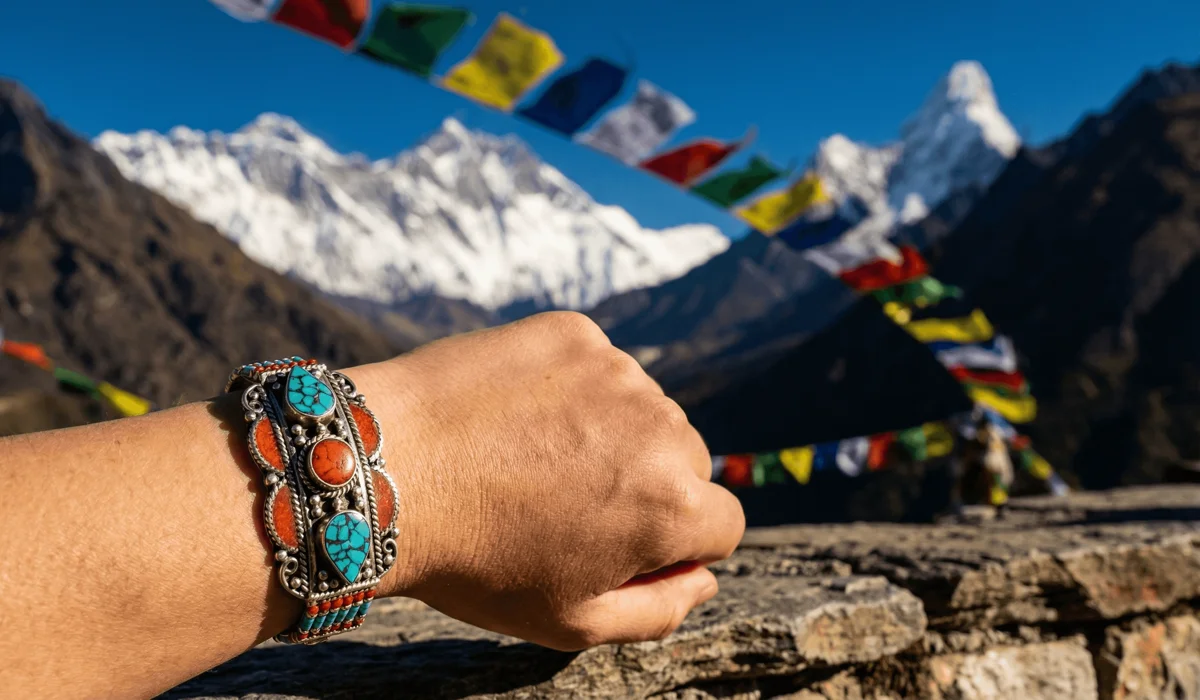
The cultural importance of these materials is often shared within the community, as seen in this experience from Reddit:
“24k gold featuring turquoise and (I believe) coral. She let me wear this beautiful necklace for a Tibetan new years celebration a few weeks ago. It was absolutely heavy but I felt beautiful wearing it 🥰”
sources:[My mother in law’s traditional Sherpa/Tibetan Jewelry](https://reddit.com/r/jewelry/comments/1rsp0so/my_mother_in_laws_traditional_sherpatibetan/)
This quote highlights how traditional jewelry is used during significant cultural celebrations to connect family generations. You can see the visual impact of these traditional pieces below:

*sources:[Reddit – u/Good-noodles82 – My mother in law’s traditional Sherpa/Tibetan Jewelry](https://reddit.com/r/jewelry/comments/1rsp0so/my_mother_in_laws_traditional_sherpatibetan/)*
This image demonstrates the stunning visual synergy between the vibrant blue of turquoise and the deep red of coral in authentic Himalayan designs.
Who Should Wear a Turquoise Inlay Bracelet?
These bracelets are often recommended for those who feel spiritually ungrounded or disconnected from their intuition. Individuals who work in communication-heavy roles may find the Throat Chakra association of turquoise helpful for finding their authentic voice. They are suitable for anyone beginning a journey into Buddhist jewelry meaning or Himalayan spiritual practices.
While not limited to specific signs, turquoise is traditionally associated with Sagittarius, Pisces, and Aquarius. Travelers often choose turquoise as amuletic jewelry to ensure safe passage during long journeys. They are highly favored by those who practice daily meditation or yoga to harmonize their lifestyle.
If you are looking for more information on how different stones impact your energy, you can explore our guide on Crystal Healing Meanings. We also suggest checking resources like Gemmological Association of Great Britain to learn about the structural integrity of natural stones.
How to Cleanse, Charge, and Care for Tibetan Turquoise
Because turquoise is a porous stone, you must avoid harsh chemicals or excessive water. Instead, use the smoke of sacred herbs like sage or cedar for energetic cleansing. Placing the bracelet on a bed of raw quartz or selenite can help clear any absorbed stagnant energy without damaging the inlay craftsmanship.
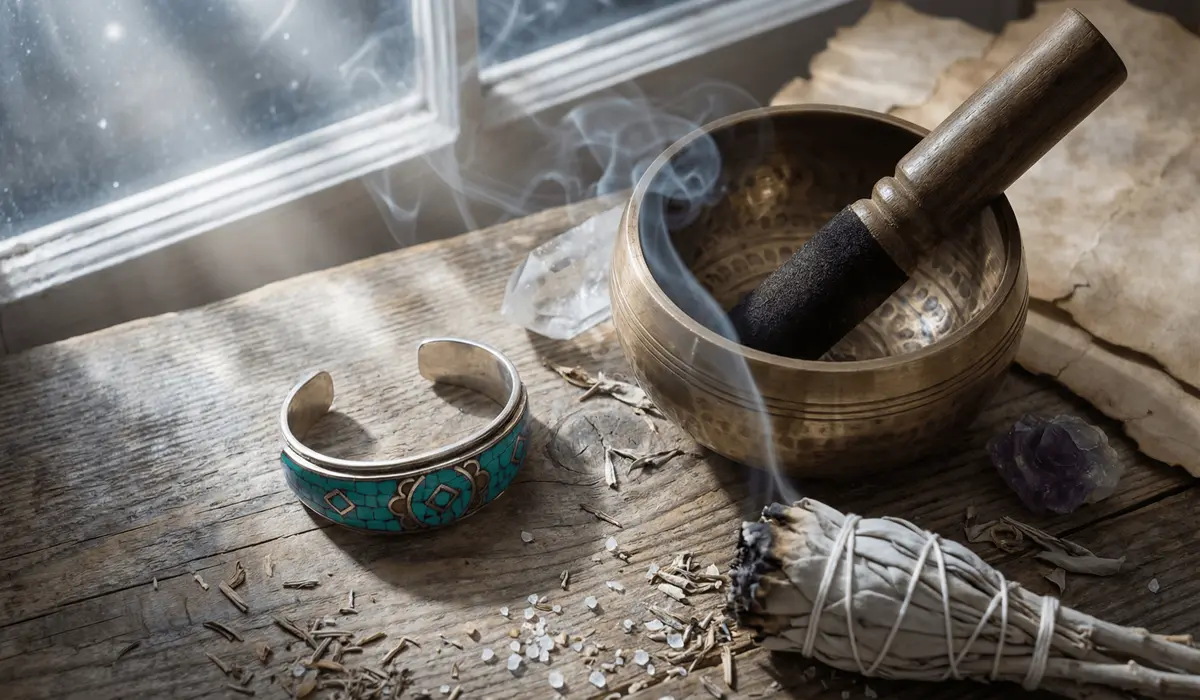
Sound cleansing with a Tibetan singing bowl is a traditional way to harmonize the vibrations of the silver and the stones. To “activate” the bracelet’s energy, place it in the soft light of a waxing moon. Avoid direct, harsh sunlight which can fade the stone’s color over time.
Practical Care Tips
We recommend following these simple steps to ensure your sacred jewelry lasts for many years:
- Gently wipe the silver and inlays with a soft, dry cloth after every use.
- Store the bracelet in a dedicated fabric pouch to prevent scratches.
- Avoid wearing the jewelry while swimming or using cleaning detergents.
- Treat the bracelet with respect as a sacred tool for mindfulness.
Setting the bracelet on clean, dry earth for a few hours can reconnect it to the soul of the earth stone energy. Mindfulness practitioners often charge their bracelets by holding them during a session of silent meditation to infuse them with personal intention.
Frequently Asked Questions
Q: What is the spiritual meaning of turquoise in Tibetan culture?
A: Turquoise is considered the most sacred stone in Tibet, symbolizing the sky, the sea, and the vitality of the spirit. It is believed to be a living stone that protects the wearer’s health and acts as a bridge between the physical and spiritual worlds.
Q: Which wrist should I wear a Tibetan turquoise bracelet on?
A: It is generally recommended to wear it on the left wrist to receive the stone’s healing and protective energies. The right wrist is chosen when the wearer wishes to project the stone’s qualities of wisdom and calm communication toward others.
Q: Does turquoise inlay signify protection in Buddhism?
A: Yes, turquoise is often associated with the Buddha of Medicine and is believed to provide spiritual protection and promote the healing of the mind and body. It is traditionally used in amulets to ward off negative influences and ensure a clear path toward enlightenment.
Q: How do I cleanse and charge my Tibetan turquoise bracelet?
A: Cleanse it using the smoke of incense or sound vibrations from a singing bowl to avoid damaging the porous stone with liquids. Charge it under the light of the moon or by setting a clear intention while holding the bracelet in a meditative state.
Q: What do the colors in Tibetan stone bracelets represent?
A: Blue represents the sky and infinite wisdom; green represents the earth and the growth of the soul. When combined with red coral, it represents the balance of wisdom and compassion; with white conch, it represents purity of thought.
Conclusion & Gentle Next Step
Tibetan bracelets with turquoise inlays are more than jewelry; they are profound symbols of the sky and earth connection and the enduring wisdom of Himalayan culture. By wearing these sacred stones, you align yourself with a tradition of protection, mindfulness, and the pursuit of inner serenity. Whether used for meditation or as a daily reminder of your spiritual path, the turquoise inlay serves as a constant companion on your journey toward balance. We invite you to explore our curated selection of authentic pieces to find the one that resonates with your personal intention: Tibetan Bracelet Collection.
Content is for informational and cultural exchange purposes only. It does not constitute medical, legal, financial, or other professional advice. Readers should consult qualified professionals if needed.

Written by the Buddha Bodhis Team
Since 2020, we have been devoted to exploring traditional year-based wisdom, classical Feng Shui principles, and the rich spiritual symbolism rooted in Eastern cultural heritage. Our work bridges ancient metaphysical systems with modern life, interpreting annual cycles, elemental energies, and symbolic meanings to offer thoughtful insight and practical guidance. Through continuous research and practice, we aim to preserve traditional knowledge while making it accessible, relevant, and meaningful for contemporary seekers of balance, intention, and personal growth.
TikTok | YouTube | Pinterest | X
buddhabodhis@gmail.com