


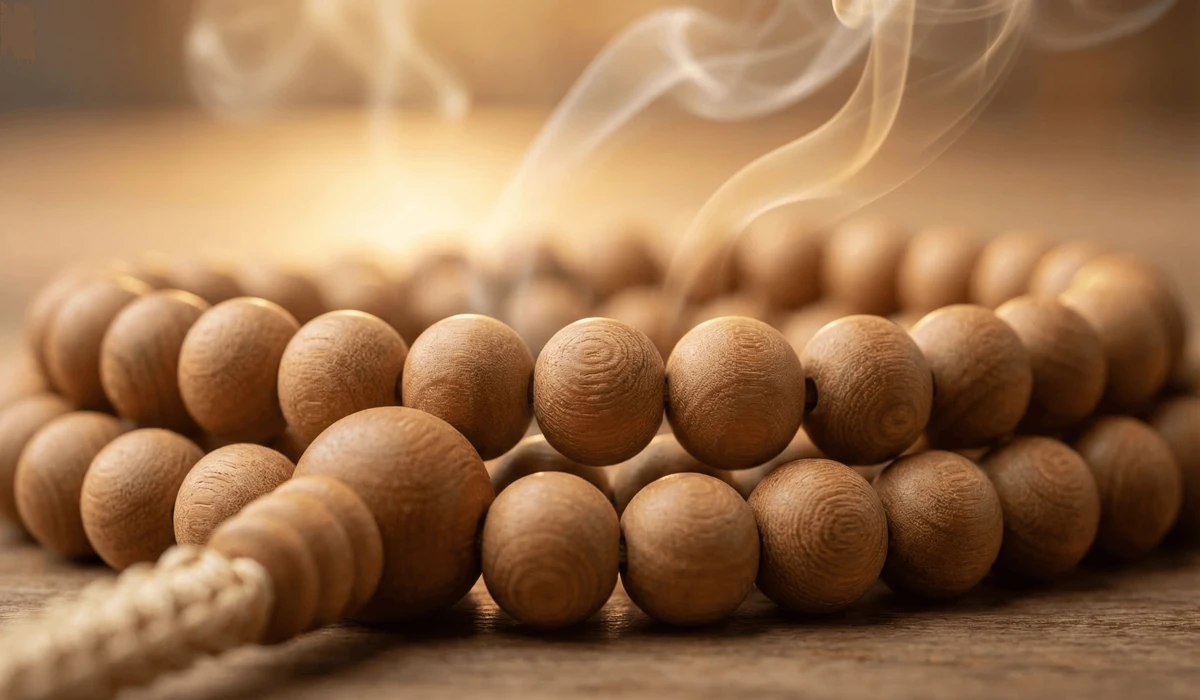
Sandalwood mala beads are sacred tools crafted from the fragrant heartwood of the Santalum tree, used for centuries in traditional Buddhist prayer and meditation. These beads serve as a bridge between the physical and spiritual realms, combining the tactile practice of Japa meditation with the profound calming effects of sandalwood scent. The primary benefits of sandalwood mala beads include promoting inner peace, enhancing mindfulness through aromatherapy, and providing a grounding anchor for the nervous system.
- Sandalwood beads provide natural aromatherapy to reduce stress and anxiety during daily life.
- A traditional 108-bead mala helps practitioners maintain focus during repetitive mantra meditation.
- The cooling energy of the wood is believed to balance emotional fluctuations and heat.
- Authentic sandalwood retains its sacred fragrance for decades, acting as a constant mindfulness reminder.
- Wearing these beads can help align the Root and Third Eye chakras for better grounding.
What Are Sandalwood Mala Beads?
Definition and Origins
Traditionally known as a Chandan mala, these prayer beads are crafted from one of the most sacred and fragrant woods in the world. Historically sourced from India and Nepal, sandalwood has been a cornerstone of spiritual practice in Hindu and Buddhist traditions for over 1,500 years. A standard mala consists of 108 beads plus a Guru bead, representing the completion of a spiritual journey or cycle.
Aromatic Properties of Authentic Sandalwood
Unlike many other types of wood, authentic sandalwood retains its fragrance for decades because the essential oils are stored within the wood’s core. The scent is characterized by a warm, woody, and balsamic aroma that is traditionally believed to attract positive vibrations. Natural wood mala beads offer a smooth texture that becomes more polished and darker with consistent use and the absorption of natural skin oils.
Sandalwood Bead Craftsmanship
The process of creating high-quality beads involves harvesting mature trees to ensure maximum oil content. Sandalwood bead craftsmanship focuses on maintaining the integrity of the wood grain to allow the natural aroma to breathe. Artisans often hand-carve these beads to maintain a traditional aesthetic that honors the sacred nature of the material. Many experts at the Gemological Institute of America recognize the importance of organic materials in cultural history.
Spiritual Meaning & Symbolism
In Buddhist practice, sandalwood represents the scent of paradise and is symbolic of a peaceful mind that has moved beyond worldly desires. The wood is often associated with the concept of Sila or moral virtue, as the fragrance remains even after the wood is cut. It is a primary tool for those seeking to transform negative emotions into a state of tranquility and compassion.
Sacred Wood Beads and Planetary Influence
Within Vedic traditions, white sandalwood is often linked to the Moon and Mercury, helping to balance emotional fluctuations and improve clarity of speech. Red sandalwood (Rakta Chandan) is associated with the planet Mars, symbolizing strength, protection, and the fire of transformation. The presence of these beads in one’s aura is believed to act as a shield against negative energy.
Chakra Associations
Sandalwood is highly regarded for its ability to stimulate the Base (Root) Chakra, fostering a sense of identity and life force. The calming aroma also works to open the Third Eye Chakra, promoting spiritual awareness and intuition during deep practice. It serves as a tool for spiritual grounding with wood beads, ensuring the practitioner remains centered during high-energy meditation.
Benefits & Intentions Associated with Sandalwood Malas
The calming effects of sandalwood scent are traditionally used to soothe the nervous system and reduce feelings of restlessness. Aromatherapy mala beads allow the user to engage their sense of smell as a mindfulness anchor, pulling the wandering mind back to the present moment. The fragrance is often observed to deepen the breath, making it an excellent companion for Pranayama (breathwork) or deep relaxation.
We have found that many practitioners prefer specific intentions when working with these beads. Some common goals include:
- 🌿 Inner Peace: Finding stillness amidst the chaos of daily life.
- 💎 Focus and Clarity: Sharpening mental discipline for students and professionals.
- 🔮 Stress Relief: Using sensory distraction to alleviate physical tension.
- 🌿 Spiritual Connection: Strengthening the bond with divine energies.
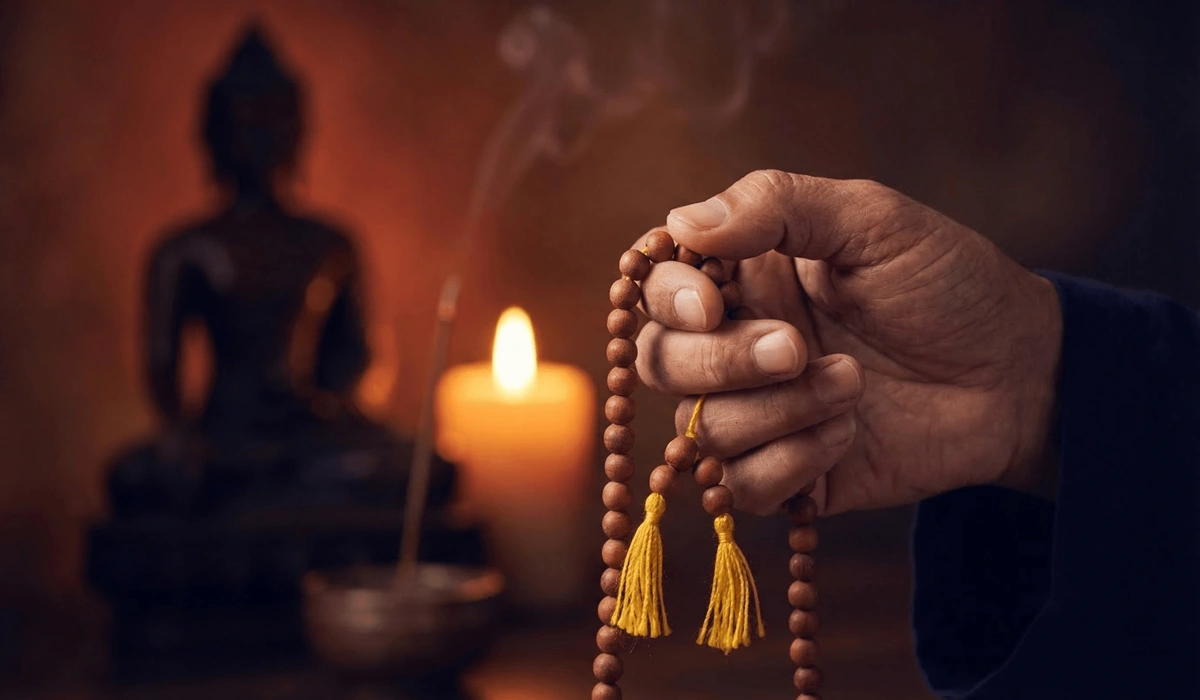
Using sandalwood beads for meditation involves reciting a mantra once for each bead, creating a rhythmic and tactile spiritual exercise. The natural warmth of the wood makes the beads comfortable for long periods of mantra recitation. Consistent use of a specific sandalwood mala for Japa is believed to “charge” the wood with the practitioner’s personal energy. You can learn more about these energetic properties by visiting Online Encyclopedia Information.
How to Wear Sandalwood Mala Beads
In many spiritual traditions, wearing a mala on the left wrist is associated with receiving energy and internal healing. Wearing the beads on the right hand is often linked to the act of giving energy or protecting one’s external environment. Many choose to alternate based on whether they are seeking personal peace or wishing to project calmness to others.
Wearing sandalwood beads daily acts as a spiritual uniform, reminding the wearer to stay aligned with their higher self throughout the day. The contact between the skin and the beads allows the natural oils of the wood to interact with the body’s warmth, subtly releasing the fragrance. Based on our experience, practitioners often pause during the day to touch their beads and take a deep, mindful breath. When you explore Wood Malas, you find tools that support this daily ritual.
Sandalwood vs. Other Wood Mala Beads
Choosing the right wood depends on your specific energetic needs and aesthetic preferences. White sandalwood is prized for its intense aromatic properties and its cooling energy. Red sandalwood is generally non-fragrant but is highly valued for its dense energy and association with protection. Our team often suggests white sandalwood for meditation and red for physical vitality.
| Feature | White Sandalwood | Red Sandalwood |
|---|---|---|
| Aroma | Strong and Sweet | Very Faint or None |
| Primary Benefit | Mental Peace | Strength & Protection |
| Element | Water / Air | Fire / Earth |
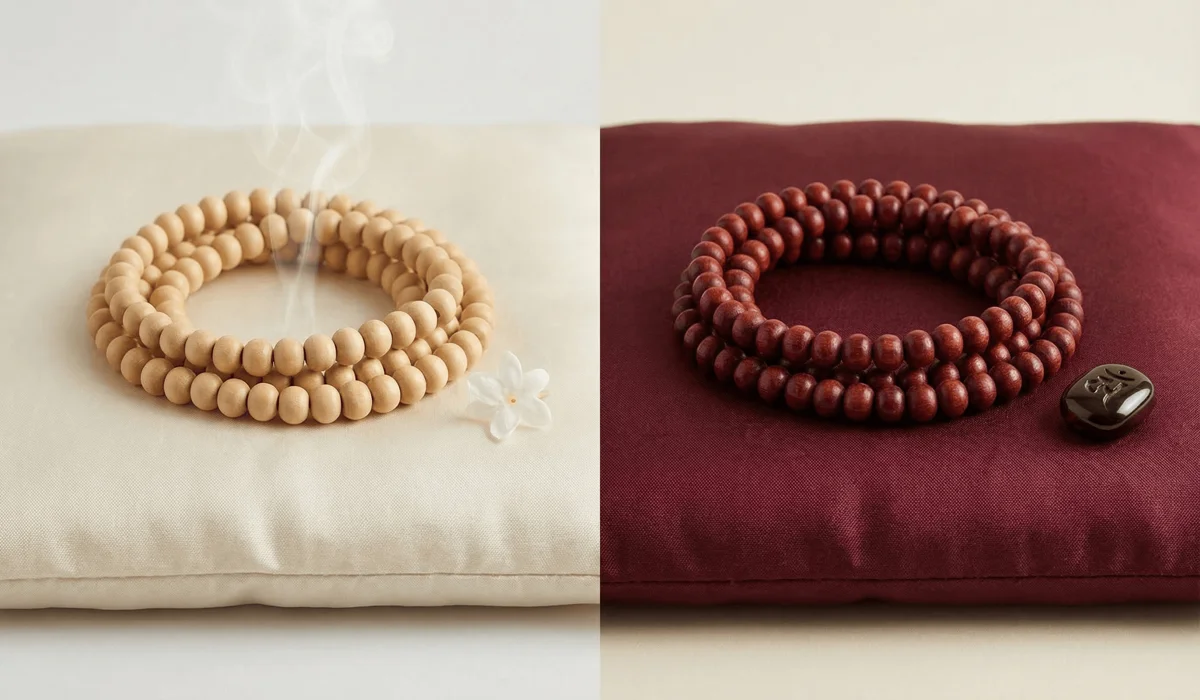
While Rudraksha beads are known for their intense, fiery energy, sandalwood is noted for its gentle, cooling nature. Practitioners often combine the two, using Rudraksha for power and sandalwood for the emotional balance required to handle that power. Sandalwood is generally smoother and more comfortable for those new to wearing wood beads. Understanding Sacred Crystal Meanings can also help you pair these woods with gemstones for a custom energy profile.
Who Is a Sandalwood Mala Suitable For?
Busy professionals find these beads ideal as a portable tool to manage workplace stress and maintain focus. Spiritual seekers use them to explore Buddhist or Hindu traditions through mantra and prayer. Wellness enthusiasts appreciate the intersection of aromatherapy and mindfulness that sandalwood naturally provides. For more on how these tools impact your life, see Sandalwood Bracelet Meaning.
Sandalwood is traditionally recommended for those with strong Moon or Mercury influences in their astrological chart. It is an excellent choice for individuals who feel “overheated” emotionally or physically, as the wood provides a spiritual cooling effect. The inclusive nature of wood beads makes them a welcoming tool for any practitioner, regardless of their specific sign. Organizations like The Gemmological Association of Great Britain often explore the cultural significance of such organic materials.
How to Cleanse, Charge, and Care for Sandalwood Beads
To keep the scent vibrant, store your beads in a sealed bag or a wooden box when not in use. Avoid exposing the beads to water, soaps, or perfumes, as these can clog the pores of the wood. If you find the sandalwood scent fades over time, you can gently buff the beads with a soft cloth to stimulate the inner oils.
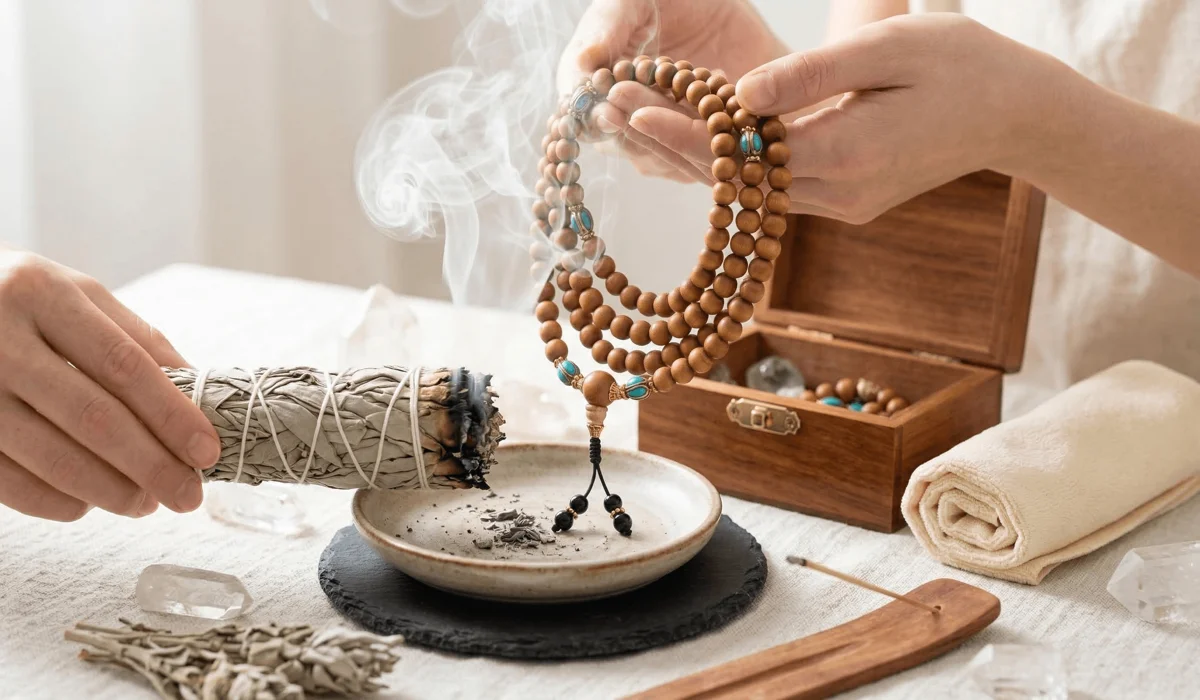
Cleansing your beads is a vital part of maintaining their spiritual integrity. We recommend several methods for our community:
- 💎 Smoke Cleansing: Pass the beads through sage or incense smoke to clear stagnant energy.
- 🌿 Rice Method: Place beads in dry brown rice overnight to absorb impurities.
- 🔮 Moonlight Bath: Leave the beads under a full moon to refresh their pure qualities.
- 💎 Soft Buffing: Use a dry cloth to remove dust and body oils after use.
Prepare your new beads by holding them in your palms and visualizing a soft, white light surrounding the wood. Recite a personal mantra or affirmation three times to set the intention for your practice. This simple ritual creates a bond between you and your sacred tool, ensuring it supports your specific path.
Frequently Asked Questions
Q: What are the spiritual benefits of sandalwood mala beads?
A: These beads are believed to purify the aura, promote humility, and shield the wearer from negative influences. They are traditionally used to attract positive vibrations and foster a deeper connection to the divine during meditation.
Q: How can I tell if my sandalwood beads are authentic?
A: Authentic sandalwood can be identified by its deep, subtle aroma that emerges with warmth. Natural wood will show grain variations and a matte texture, whereas synthetic beads often smell chemical and look uniform or painted.
Q: Can I wear my sandalwood mala every day?
A: Yes, wearing sandalwood beads daily provides continuous grounding and the subtle release of calming aromatherapy. Daily wear allows the beads to adapt to your personal energy and polish naturally against your skin over time.
Q: Does the scent of sandalwood beads last forever?
A: The oil remains inside the wood for many years, though the surface scent may diminish with use. You can often revive the fragrance by gently rubbing the beads with a soft cloth or storing them in a closed container.
Q: Which hand should I wear my sandalwood bracelet on?
A: Traditionally, the left hand is for receiving peace and inner healing, while the right hand is for protection and outward action. Most practitioners choose based on their specific intention for the day or personal comfort.
Conclusion & Gentle Next Step
Sandalwood mala beads are more than just an accessory; they are a centuries-old tradition that brings the power of aromatherapy and spiritual grounding into modern life. By understanding the symbolic meaning and the calming effects of this sacred wood, you can transform your meditation practice into a sensory journey of peace. Whether you use your beads for mantra recitation or as a daily reminder to stay centered, the authentic sandalwood experience is one of profound tranquility.
We invite you to explore our curated selection of wood malas to find the perfect companion for your spiritual journey. Start your path to mindfulness today with a tool that resonates with your soul.

The content provided in this article is for informational and cultural exchange purposes only. It does not constitute medical, legal, financial, or other professional advice. Readers should consult with qualified professionals regarding any specific health or psychological concerns.

Written by the Buddha Bodhis Team
Since 2020, we have been devoted to exploring traditional year-based wisdom, classical Feng Shui principles, and the rich spiritual symbolism rooted in Eastern cultural heritage. Our work bridges ancient metaphysical systems with modern life, interpreting annual cycles, elemental energies, and symbolic meanings to offer thoughtful insight and practical guidance. Through continuous research and practice, we aim to preserve traditional knowledge while making it accessible, relevant, and meaningful for contemporary seekers of balance, intention, and personal growth.
TikTok | YouTube | Pinterest | X
buddhabodhis@gmail.com