


Rugged, raw, and sacred. Spiritually charged tools from the High Himalayas.
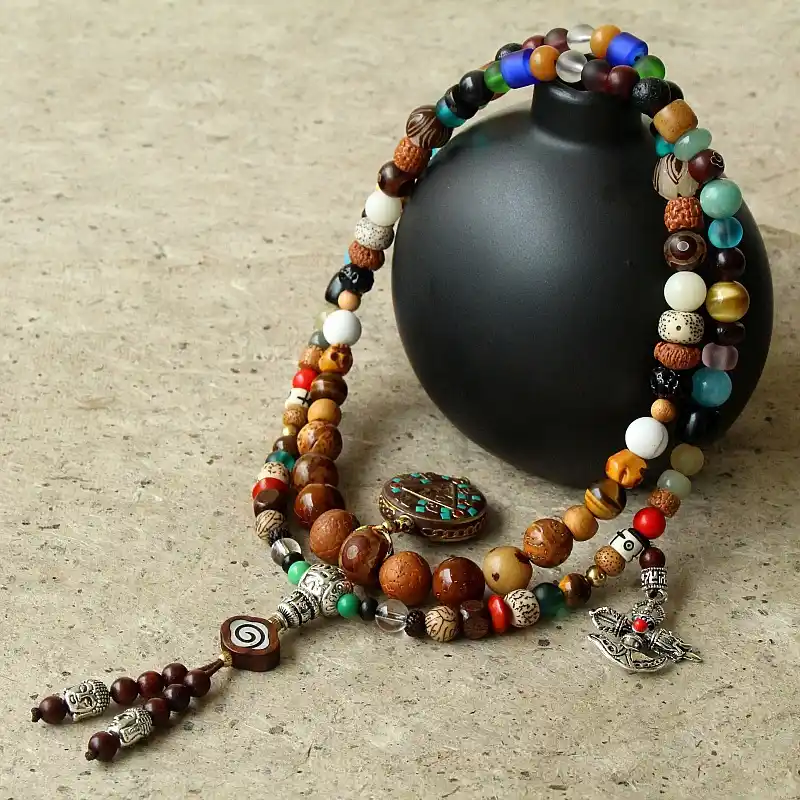
Unlike polished jewelry found in city boutiques, **Tibetan Malas and Necklaces** are forged in the mountains. They are characterized by their raw authenticity—using materials like **Yak Bone**, **Bodhi Seeds**, and **Inlaid Copper** to create heavy, grounding pieces that double as meditation counters.
Whether you choose a Yak Bone Mala to meditate on impermanence or a **Turquoise Necklace** for protection, these items carry the blessing of the Om Mani Padme Hum mantra sung by the artisans who string them.
The Anatomy Guide: What are those extra beads hanging from the mala?
- Materials: Phoenix Eye Bodhi, Yak Bone, Red Coral, Turquoise
- Style: Traditional 108 Beads, Choker Necklaces, Statement Pendants
- Feature: Often includes Dzi Beads or Counters
No products were found matching your selection.
🏔️ What distinguishes a “Tibetan” Mala?
While all malas have 108 beads, a Tibetan Mala is structurally unique. It is designed for “Heavy Duty” spiritual practice (Ngöndro).
1. Size & Texture: Tibetan beads are often larger (10mm-12mm) and flatter (disc-shaped) to be easily handled with rough hands or in cold weather.
2. Complexity: They are rarely just beads. They are adorned with spacers, counters, and amulets, making them function like a spiritual abacus.
3. Wabi-Sabi: They embrace imperfection. A raw, unpolished, or uneven bead is considered more beautiful because it is natural.
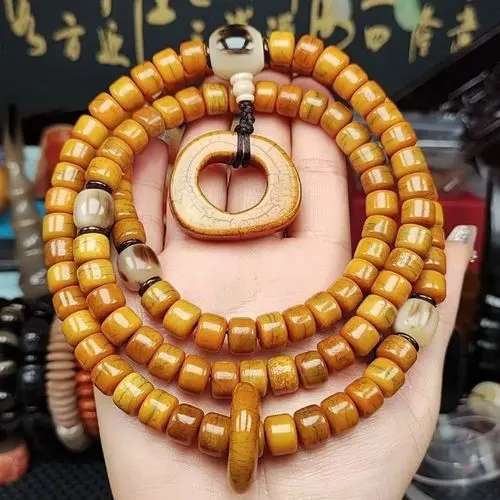
📿 Decoding the Attachments: Counters & Spacers
You will often see two extra strings of beads hanging from a Tibetan Mala. These are not just decoration; they are tools:
| Component | Appearance | Function |
|---|---|---|
| The Counters (Bhum) | Two strings with 10 small metal beads each, ending in a mini Bell and Dorje. | Tracking Thousands. One string counts rounds of 108 (up to 10). The other counts sets of 10 rounds (up to 100). Essential for tracking 100,000 mantra accumulations. |
| The Spacers | Placed after the 27th, 54th, and 81st beads. Usually a different material (e.g., Turquoise or Coral). | Mindfulness Checkpoints. If your mind wanders during meditation, the texture change of the spacer snaps you back to focus. |
| The Guru Bead (Stupa) | The large, 3-holed bead at the center. | The Teacher. Represents the wisdom of the Guru. You never cross it; you turn the mala around to show respect. |
☠️ The Philosophy of Bone & Stone
Tibetan necklaces use materials that shock the Western mind to awaken the spirit.
1. Yak Bone: Memento Mori
Wearing a necklace made of Yak Bone is a practice of Impermanence (Anicca). In Tibet, Yaks are respected partners in survival. Using their bone after natural death is an honor.
Spiritual Vibe: Grounding, raw, and fearless. It reminds the wearer: “Life is short. Practice kindness now.”
2. Phoenix Eye Bodhi
The most prized seed in Tibet. Every seed has a natural “eye” shape.
Spiritual Vibe: Wisdom and Clarity. It is said to multiply the merit of mantras by millions.
3. Dzi Beads & Inlay
Many Tibetan necklaces feature a central Dzi bead or “Inlaid” beads (metal beads filled with crushed Turquoise and Coral).
Spiritual Vibe: Protection. The chaotic, colorful patterns are believed to confuse evil spirits and deflect the Evil Eye.
✨ How to Wear Tibetan Necklaces
Tibetan jewelry is “Statement Jewelry” with a soul.
- The Layered Look: In the Himalayas, more is more. Combine a short Choker (like Turquoise or Coral chips) with a long 108 Mala. The contrast between the short color pop and the long spiritual tool creates a bohemian, traveled look.
- As a Wrapped Bracelet: A traditional 108-bead mala can often be wrapped 3 to 4 times around the wrist to create a stacked bracelet look. (Note: Check the length in the product description to ensure it fits your wrist when wrapped.)
❓ Frequently Asked Questions
Q: Why are Tibetan Malas often more expensive?
A: It comes down to Handcraftsmanship. A standard mala is just beads on a string. A Tibetan Mala often involves hand-carving bone, inlaying tiny turquoise chips into metal beads, or tying complex knots between beads. You are paying for hours of artisan labor in Nepal.
Q: Is it bad luck to wear a Mala if I don’t meditate?
A: No. While they are tools for meditation, wearing them as a necklace keeps the stones’ energy close to your Heart Chakra. It serves as a symbol of your intention to live a more mindful life, which is beneficial regardless of your formal practice.
Q: What are the “Bell and Dorje” hanging on the mala?
A: These are the traditional counters. The Bell (Ghanta) represents Wisdom (feminine principle), and the Dorje (Vajra) represents Compassion (masculine principle). Together, they symbolize the union of wisdom and method needed for enlightenment.
Q: Can I wear bone jewelry?
A: Yes. In the West, bone is sometimes associated with death in a negative way. In the East, it is a celebration of the cycle of life. Wearing bone is believed to tame the fear of death and provide immense grounding energy.
Explore our collection of authentic Himalayan malas and artisan necklaces below.
📝 Curated by: Buddha Bodhis Spiritual Team