



The awakening voice of the Dharma. A trumpet that calls the spirits.
The **Tibetan Conch Shell** (known as *Dungkar*) is one of the oldest ritual instruments in the Himalayas. Revered as one of the **Eight Auspicious Symbols**, its deep, resonant blast is believed to banish evil spirits, summon local deities, and awaken the mind from the slumber of ignorance.
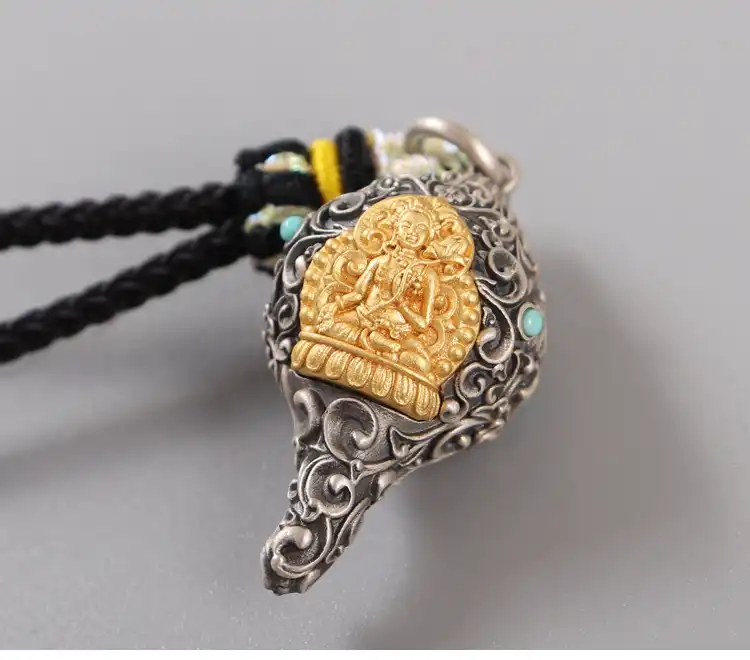
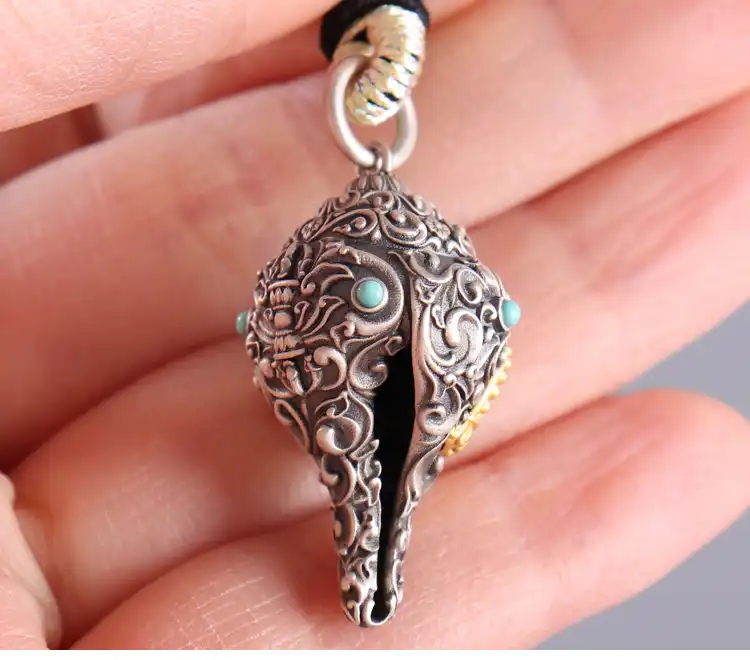
Hand-carved by artisans in Nepal, our collection features authentic shells adorned with **Repoussé Silver**, Turquoise, and **Coral**. Whether used for Sound Healing or as a centerpiece for your altar, it commands authority and Protection.
Collector’s Guide: The mystery of the “Right-Turning” Shell.
- Type: Natural White or Silver-Mounted
- Symbolism: Fame, Authority, The Truth of Dharma
- Usage: Ritual Music, Space Clearing, Altar Offering
No products were found matching your selection.
🐚 What is a Tibetan Dungkar (Conch)?
The Tibetan Conch is made from the shell of the Turbinella pyrum, a massive sea snail found in the Indian Ocean. In Tibetan Buddhism, it represents the pervasive, melodic sound of the Dharma (teachings) reaching far and wide. It is said that merely hearing the blast of a consecrated conch can plant the seed of liberation in a sentient being’s mind.
From Sea to Summit:
It is a paradox: a creature of the deep ocean becomes a sacred tool on the highest mountains on earth. This journey symbolizes the transcendence of the spirit.
🌀 Left-Turning vs. Right-Turning: The Holy Grail
This is the most critical distinction for collectors. In nature, 99.9% of shells spiral in one direction. The anomaly is sacred.
| Type | Scientific Name | Spiritual Value |
|---|---|---|
| Left-Turning (Standard) |
Vamavarta | Common. The aperture (opening) is on the left when holding the spire up. Widely used for standard ritual music and as water vessels. |
| Right-Turning (Rare) |
Daksinavarta | Extremely Rare. The spiral turns clockwise (mirroring the movement of the sun). Considered a priceless treasure. It represents the Buddha’s hair and the proclamation of truth. |
🎨 The Art of Metal Mounting (Silver Repoussé)
While some shells are left natural, high-ceremony shells are “dressed” in metal wings.
- The Wing: Artisans attach a large flange made of Copper or Silver to the side of the shell. This extends the resonance chamber and provides a canvas for art.
- The Symbols: The metal is usually embossed (Repoussé) with the Eight Auspicious Symbols, Dragons, or the mask of the Zephyr (the god of wind).
- The Inlay: To honor the shell, it is encrusted with Turquoise (Sky energy) and Lapis Lazuli (Wisdom).
🔊 How to Play the Conch (Sound Healing)
The Dungkar is a wind instrument, played similarly to a trumpet.
The Technique:
- Purse your lips tightly (like you are making a buzzing sound).
- Press your lips against the hole cut into the spire.
- Blow a focused stream of air to vibrate your lips. The shell amplifies this vibration into a loud, foghorn-like call.
The Function: Used at the beginning of meditation to clear the space of stagnant energy (Space Clearing) or to call the attention of the universe to your prayer.
🏡 Altar & Feng Shui Placement
Even if you do not play it, the Conch is a powerful Feng Shui cure.
Meaning: It represents Fame, Reputation, and Authority. It is the voice that cannot be ignored.
Placement:
- South Sector: Place it in the South (Fame area) to boost your reputation and recognition in your career.
- The Altar: Place it on the left side of your altar (as you face it), often used as a vessel to hold holy water (Saffron water) for offerings.
❓ Frequently Asked Questions
Q: Is the shell real?
A: Yes. All our Tibetan Conches are natural, authentic Turbinella pyrum shells ethically sourced from the Indian Ocean. We do not sell plastic or resin reproductions. Because they are natural, each shell has a unique shape and size.
Q: Can I use it as a water vessel?
A: Yes. In rituals, the conch is often used to pour consecrated water over a deity statue or into offering bowls. The calcium carbonate of the shell is believed to purify the water.
Q: What does the sound do?
A: In sound healing, the conch produces a primal, low-frequency vibration (similar to the “Om” sound). This vibration helps to shatter energetic blockages in the environment and calms the wandering mind instantly.
Q: How do I clean the silver mounting?
A: Over time, silver and copper will develop a patina (darkening). You can gently polish the metal parts with a silver cloth. Avoid harsh chemicals on the shell part itself; simple warm water is best for the organic shell.
Explore our collection of ritual Tibetan conch shells and trumpets below.
📝 Curated by: Buddha Bodhis Spiritual Team