


A window to the divine. Hand-painted sacred art from the Himalayas.
**Tibetan Thangka Paintings** are not just art; they are visual scriptures. Meticulously **Hand-Painted** by master artists using mineral pigments and gold dust, these scrolls depict Buddhas, Deities, and **Mandalas**. Hanging a Thangka in your home creates a sacred space for **Meditation**, visualization, and accumulating merit.
Read guide: How to tell if a Thangka is Hand-Painted? & Meanings.
- Intention: Meditation Aid, Home Decor & Protection
- Material: Canvas, Mineral Pigments & 24K Gold
- Origin: Nepal & Tibet (Traditional)
No products were found matching your selection.
🎨 The Meaning of Thangka: Recorded Message
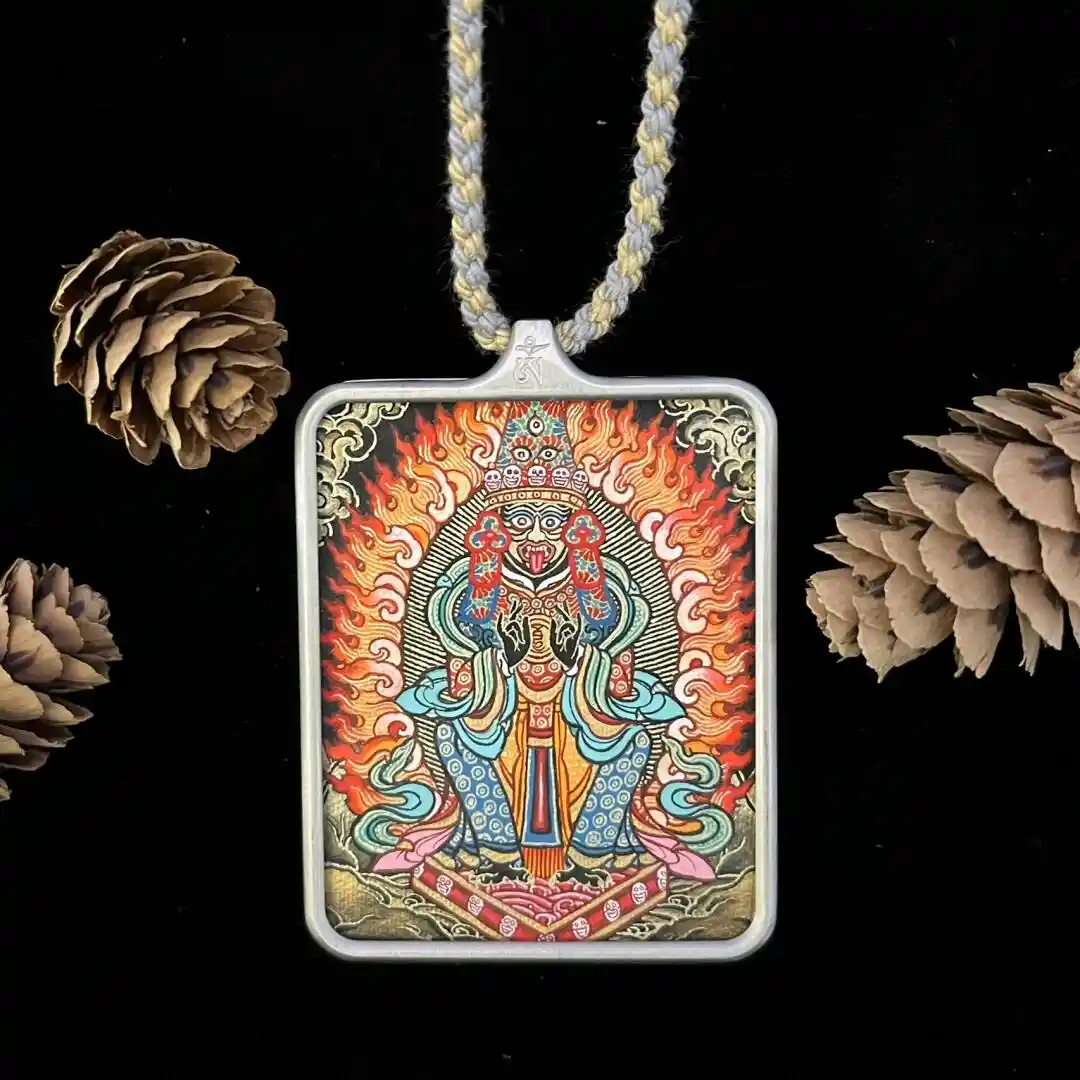
A **Thangka** (meaning “recorded message”) is a Tibetan Buddhist scroll painting. They are portable shrines used by nomadic monks.
The painting process is a spiritual discipline. Artists follow strict grid measurements according to ancient scriptures. The goal is not “self-expression” but accurate representation of the divine, helping the viewer visualize the deity during meditation.
🔍 Hand-Painted vs. Printed: How to Tell?
Real Thangkas are investments; prints are decorations. How to spot the difference:
- Gold Shine: Real Thangkas use **24K Gold dust**. Tilt the painting under light; the gold lines should catch the light and shimmer. Prints use flat yellow ink that doesn’t shine.
- Texture: Look closely (or use a magnifying glass). Hand-painted canvas has texture, brush strokes, and raised pigment layers. Prints are perfectly flat pixels.
- Smell: Authentic old Thangkas often smell of yak butter smoke or incense from temples.
☸️ Popular Thangka Subjects
- The Mandala: A geometric map of the universe and the pure land of a Buddha. Used for focus and mental clarity.
- Wheel of Life (Bhavachakra): Depicts the cycle of Samsara and Karma. Held by the demon Yama.
- Green Tara / White Tara: The female Buddhas of compassion and longevity.
🏠 Where to Hang a Thangka?
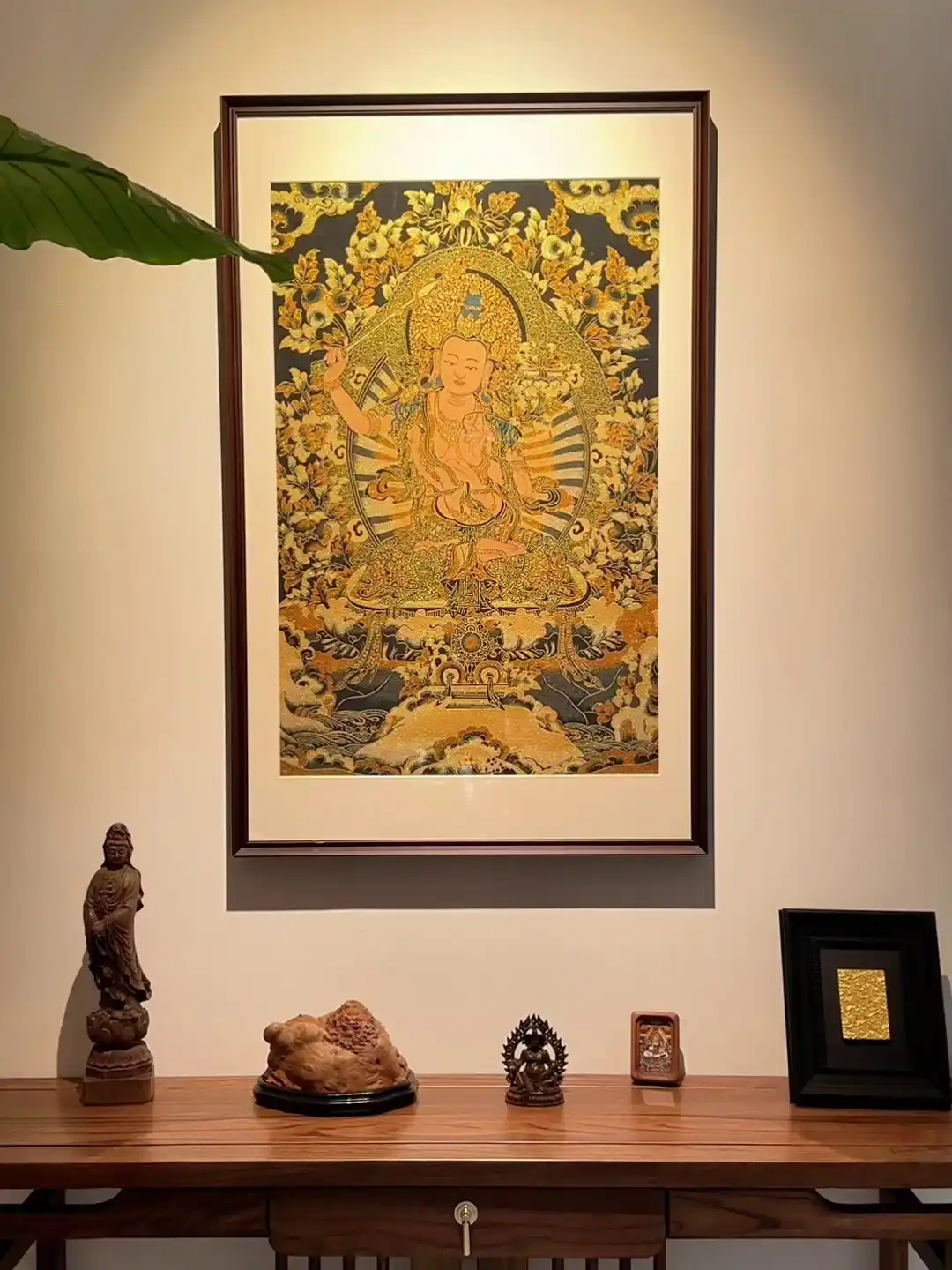
Treat it with respect:
- High Place: Hang it high on a wall, never near the floor.
- Meditation Room: Ideal for your altar space. Cover it with its silk curtain when not in use to protect the energy.
- Avoid: Do not hang it in bathrooms or kitchens.
Create a Sacred Sanctuary
Surround your Thangka with ritual items:
-
- + Buddha Statue: The Thangka provides the background; the Statue provides the center.
-
- + Singing Bowl: Use sound to activate the space before gazing at the painting.
-
- + Incense: Offer scent to the deity depicted in the painting.
⚠️ Care Instruction
Thangkas are delicate scrolls.
Best Methods:
- No Sunlight: Direct sun will fade the natural mineral pigments.
- Keep Dry: Moisture is the enemy. Keep in a dry place.
- Roll Up: When storing, roll it from bottom to top, but do not crease it.
❓ Frequently Asked Questions
Q: What is a Thangka painting?
A: A Thangka is a traditional Tibetan Buddhist painting on cotton or silk appliqué, usually depicting a Buddhist deity, scene, or mandala. It acts as a teaching tool and a focus for meditation.
Q: Are your Thangkas hand-painted or printed?
A: We specialize in authentic, hand-painted Thangkas created by master artisans in Nepal and Tibet. They use traditional mineral pigments and real 24K gold dust, not machine printing.
Q: Can I frame my Thangka?
A: Yes. While traditionally mounted in silk brocades, many collectors choose to frame them in glass (UV protective glass is best) to preserve the pigments and display them as fine art.
Q: Where should I hang a Thangka in my home?
A: Hang it in a clean, high place of respect, such as a meditation room, living room, or study. Avoid hanging it in the bedroom, bathroom, or kitchen, and never place it on the floor.
Explore our gallery of masterpiece Hand-Painted Thangkas below.
📝 Curated by: Buddha Bodhis Art Team
✨ Verified by: Thangka Artist