



The sound of rain on water. Meditation in the palm of your hands.
The **Kalimba** (also known as the *Thumb Piano* or *Mbira*) is the ultimate instrument for Serenity. Unlike a guitar or piano that takes years to master, the Kalimba is intuitive. Simply pluck the metal tines with your thumbs to create soft, bell-like melodies that instantly calm the nervous system.
Whether you are a musician or a complete beginner seeking Anxiety Relief, this portable instrument allows you to carry a “Sound Bath” in your pocket.
Buying Guide: Should you get a Hollow Box or Flat Board Kalimba?
- Keys: Standard 17-Key (C Major), tuned and ready to play
- Materials: Mahogany, Koa Wood, Crystal Acrylic
- Benefit: Instant relaxation, brain coordination, stress reduction
No products were found matching your selection.
🌍 From Africa to the World: The Story of the Mbira
While often called a “Thumb Piano” in the West, this instrument has ancient roots in Africa, specifically Zimbabwe, where it is known as the Mbira.
Traditionally, the Mbira was used by the Shona people to contact ancestral spirits. It consists of metal tines attached to a wooden board. In the 1960s, ethnomusicologist Hugh Tracey adapted the design for Western tuning (Do-Re-Mi), creating the modern Kalimba.
Spiritual Significance: Playing the Kalimba is a form of Active Meditation. The vibration travels through your thumbs directly into your body, grounding you in the present moment.

📦 Hollow Box vs. Flat Board vs. Acrylic: Which sounds best?
The shape and material of the body drastically change the sound. Use this chart to find your preference:
| Body Type | Sound Profile | Pros & Cons |
|---|---|---|
| Hollow Wood Box (Resonant Box) |
Loud & Warm. Has a sound hole in the center. Creates a deep “Wah-Wah” effect if you cover/uncover the back holes. | Pros: Highest volume, classic sound. Cons: Larger size, slightly fragile. |
| Flat Board (Solid Wood) |
Crisp & Bright. A solid piece of wood without a sound hole. The sound is quieter but very clear, especially on high notes. | Pros: Very durable, thinner profile. Cons: Softer volume (good for apartments). |
| Acrylic (Crystal) |
Soft & Muted. Like a gentle music box. It has less resonance than wood but looks stunning. | Pros: Beautiful visuals, waterproof. Cons: Heavy weight, quietest sound. |
🎶 Why is it a “Healing Instrument”?
The Kalimba creates sound through Tine Vibration. Unlike drums which can be aggressive, the Kalimba produces soft, harmonic overtones.
- Alpha Waves: The gentle, repetitive plucking helps shift the brain into an Alpha state (relaxed focus), similar to the effect of Singing Bowls.
- Tactile Therapy: The physical sensation of the vibration in your hands is soothing for people with sensory processing sensitivities or anxiety. It is often used as a sophisticated “Fidget Tool.”
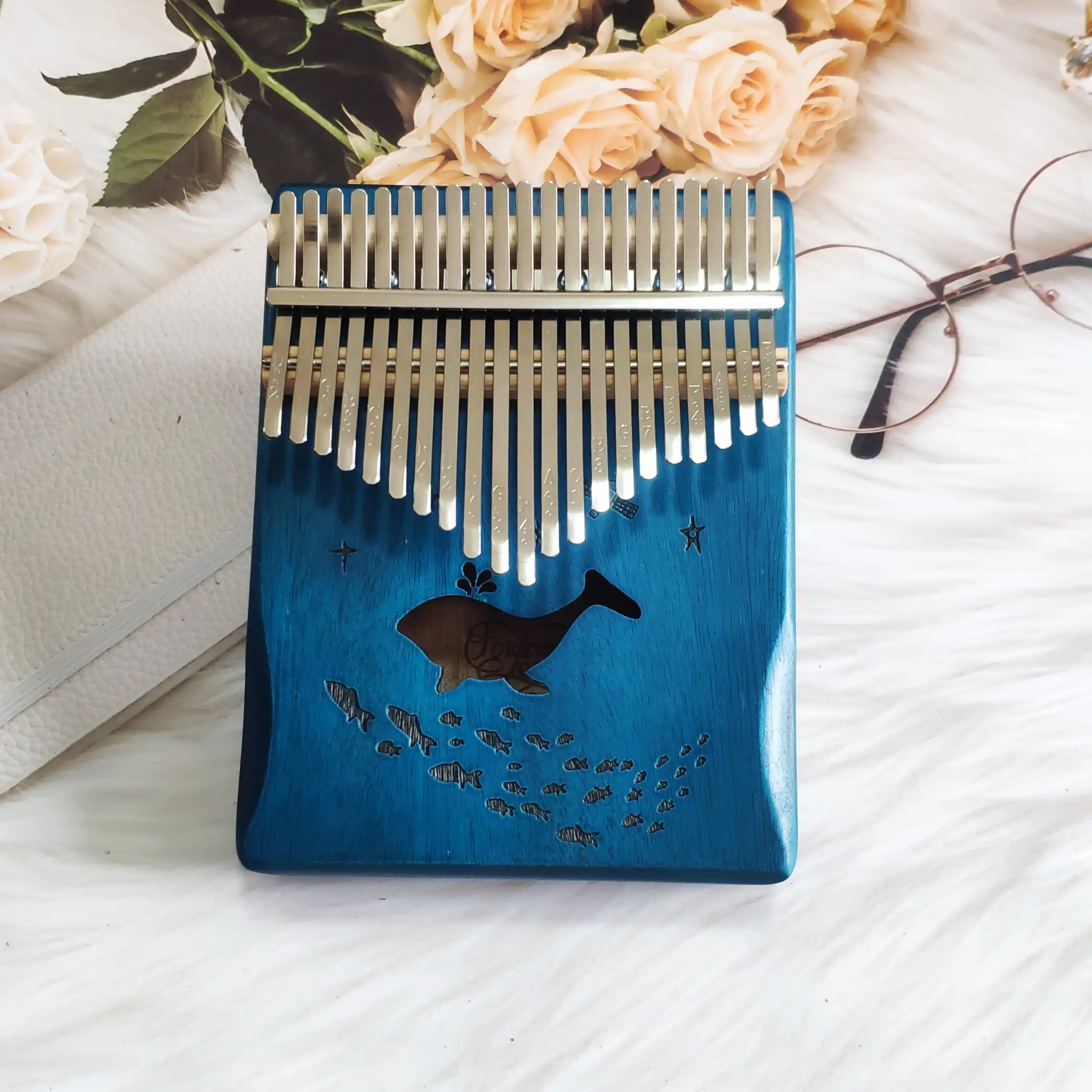
🔨 Demystifying the “17 Keys”
Most of our Kalimbas come in standard 17-Key C Major Tuning. This is the “magic” configuration because it contains No Wrong Notes.
All the notes are in the same key scale. You can close your eyes, pluck random tines, and it will still sound harmonious. This removes the fear of failure, making it perfect for intuitive play.
Tuning: Every Kalimba comes with a small hammer.
- To lower pitch: Tap the tine from the top down.
- To raise pitch: Tap the tine from the bottom up.
🪵 Koa, Mahogany, or Bamboo?
The wood species affects the timbre (tone color):
- Mahogany: Warm, balanced, and classic. Good sustain.
- Koa (Acacia): Brighter, sweeter sound. Often used in high-end ukuleles.
- Bamboo: Very bright, punchy, and eco-friendly.
Care: Like all wooden instruments, avoid extreme heat or humidity (don’t leave it in a hot car). Wipe the metal tines with a dry cloth after playing to prevent rust from finger oils.
❓ Frequently Asked Questions
Q: Is it hard to learn?
A: No. It is widely considered one of the easiest instruments in the world. Because the notes are engraved on the tines and there are no “bad notes” in the scale, you can play a recognizable melody within 10 minutes. We include a starter booklet with tabs (numbers) to get you started.
Q: Will it hurt my thumbs?
A: In the beginning, you might feel slight sensitivity if you play for hours. However, you don’t need long fingernails (in fact, short nails are better for the meat of the thumb to mute/control, or a little nail to create a crisp sound). We also provide silicone thumb protectors for beginners.
Q: What are “Dead Tines”?
A: Sometimes the highest notes (on the far ends) don’t resonate as long as the middle notes. This is normal physics for short metal bars. Our Kalimbas are quality-checked to ensure even the high notes have clarity, but they will always be shorter in sustain than the bass notes.
Q: Can I retune it to a different scale?
A: Yes! While it comes in C Major, advanced players often retune their Kalimbas to minor scales or specific frequencies (like 432Hz) for deeper meditation vibes. The tuning hammer makes this possible.
Create your own melody. Shop our collection of tuned, handcrafted Kalimbas below.
📝 Curated by: Buddha Bodhis Spiritual Team