


The art of stillness in motion. A visual anchor for your daily practice.
While traditional deity statues represent divine beings, a **Yoga Statue** represents *you*—your potential for balance, strength, and inner peace. These handcrafted figures capture the beauty of the human form in deep meditation or dynamic flow (Asana).
Whether it is the grounding symmetry of the **Lotus Pose** or the welcoming gesture of **Namaste**, these sculptures serve as a mirror. They invite you to pause, check your alignment, and return to your breath. Perfect for your home studio or as a secular centerpiece for Serenity.
The Pose Guide: What is the meaning behind the “Namaste” gesture?
- Styles: Abstract Modern, Bronze Cast, Wood Carved
- Poses: Padmasana (Lotus), Vrikshasana (Tree), Anjali (Prayer)
- Placement: Sacred Space, Yoga Studio, Office Desk
No products were found matching your selection.
🧘 Beyond Decor: The Meaning of Yoga Art
In Sanskrit, *Yoga* means “Union”—the union of mind, body, and spirit. A Yoga Statue is the physical crystallization of this concept.
Unlike a Buddha statue which represents Enlightenment (the goal), a Yoga figure represents The Practice (The Path). It honors the discipline, the struggle, and the beauty of the human body striving for balance. Placing one in your line of sight triggers “Mirror Neurons” in the brain, subconsciously encouraging you to straighten your spine and deepen your breath.
🥨 Decoding the Poses: Which energy do you need?
Each posture (Asana) carries a specific vibration. Use this guide to choose the right sculpture for your space:
| Pose Name | Visual Form | Spiritual Meaning |
|---|---|---|
| The Lotus (Padmasana) |
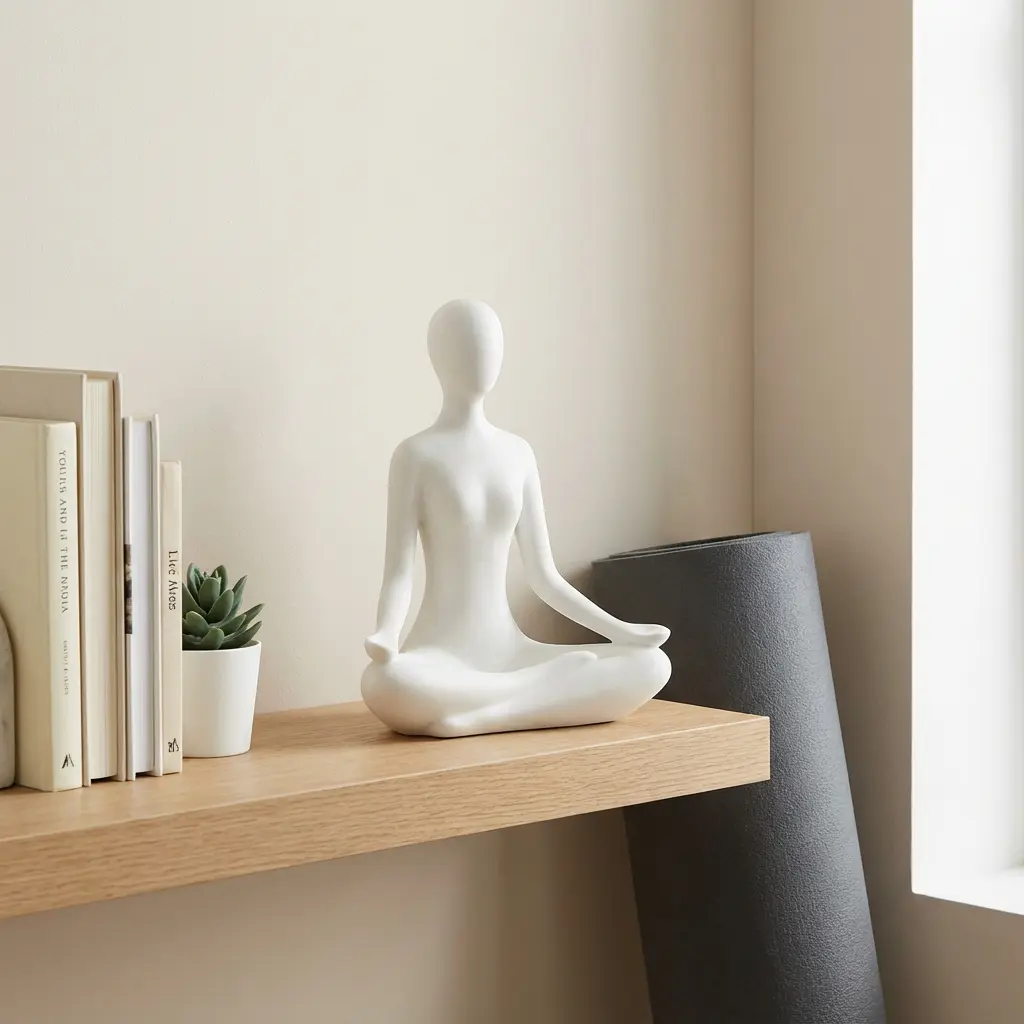
Seated cross-legged, hands on knees or in lap. | Grounding & Meditation. Represents the blossoming of consciousness. Best for creating a calm, centered atmosphere in a bedroom or study. |
| Namaste (Anjali Mudra) |
Hands pressed together at the heart center. | Gratitude & Unity. “The divine in me bows to the divine in you.” The perfect welcoming piece for an entryway or living room. |
| The Tree (Vrikshasana) |
Standing on one leg, arms raised or at heart. | Balance & Growth. Represents stability amidst change. Ideal for offices or creative spaces where focus is needed. |
| Child’s Pose (Balasana) |
Kneeling, forehead touching the floor. | Surrender & Rest. A reminder to let go of ego and rest. Great for a healing sanctuary or recovery space. |
🗿 Abstract vs. Detailed: Choosing a Style
Our collection spans the spectrum of art history:
- Modern Abstract: Often elongated, faceless figures made of Resin or Silver. These focus on the “flow” and “line” of the body rather than individual identity. They fit perfectly in contemporary, minimalist homes (Zen Modern).
- Traditional Rustic: Hand-carved Wood or Stone. These pieces feel earthy and raw, often showing the tool marks of the artisan. They align well with Wabi-Sabi Aesthetics.
- Bronze/Brass: Heavy and timeless. Metal conducts energy and adds a sense of permanence and value to the altar.
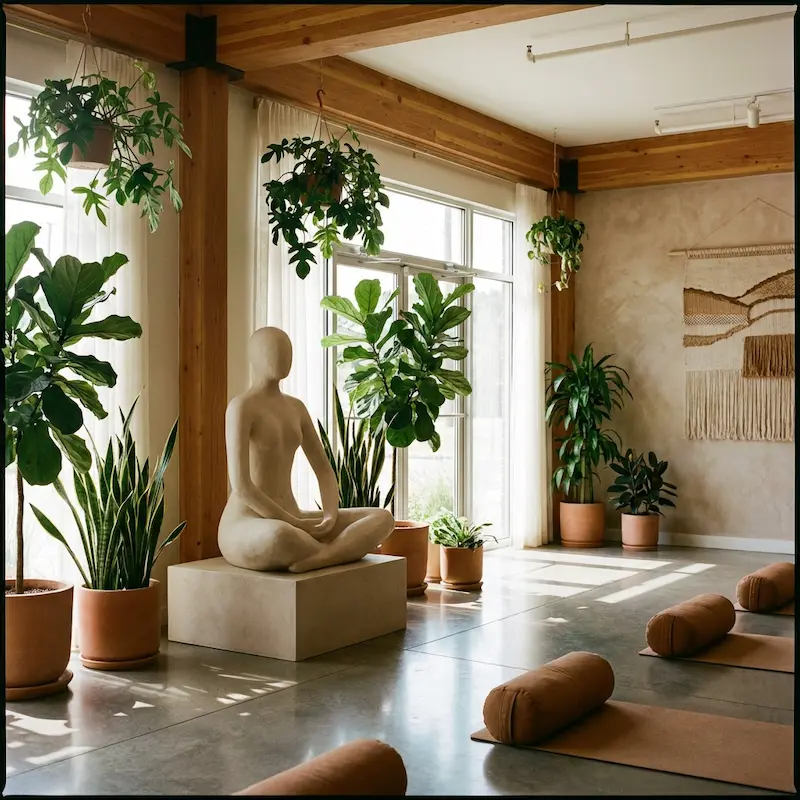
🌿 Design Your “Zen Corner”
You don’t need a huge studio. You can create a micro-sanctuary in the corner of your bedroom.
The Triad of Peace:
- The Anchor: Place your Yoga Statue as the focal point.
- The Atmosphere: Add an Aromatherapy Diffuser or incense to trigger the olfactory sense.
- The Foundation: Lay down your Meditation Cushion facing the statue.
This visual setup creates a “Behavioral Cue.” When you see it, your body remembers to relax.
🎁 The Perfect Gift for the Yogi
Struggling to find a gift for the yoga lover in your life?
A statue is often more meaningful than another yoga mat or pair of leggings. It honors their dedication to the practice.
For the Teacher: A “Namaste” figure is a traditional way to say “Thank You” to a guru or instructor.
For the Beginner: A “Lotus Pose” figure encourages them to keep showing up on the mat.
❓ Frequently Asked Questions
Q: Are these statues religious?
A: Generally, no. While they draw from Hindu and Buddhist roots, our Yoga Statues are designed to be Secular and Spiritual rather than strictly religious. They celebrate the universal human experience of seeking balance and peace, making them suitable for any home regardless of faith.
Q: Where is the best place to put a yoga statue?
A: Place it where you will see it most often but where it won’t be cluttered. Good spots include: a bookshelf in your home office (for stress relief), the entrance console table (to welcome guests), or next to your yoga mat.
Q: How do I clean the textured statues?
A: For intricate resin or bronze statues, dust can settle in the crevices. We recommend using a soft, dry paintbrush or a microfiber cloth to gently dust them. Avoid water or harsh chemicals, especially on hand-painted or patinated finishes.
Q: Can I put these outside in the garden?
A: It depends on the material. Stone and Bronze are excellent for gardens and will develop a beautiful weathered look. Wood and Resin should generally be kept indoors or on a covered porch, as direct sun and rain can cause fading or cracking over time.
Inspire your flow. Shop our collection of artistic yoga and meditation sculptures below.
📝 Curated by: Buddha Bodhis Spiritual Team