



Within the vast lexicon of spiritual sounds, few resonate with the universal power and profound depth of Om Mani Padme Hum. This six-syllable Sanskrit mantra, the vibrational heart of Tibetan Buddhism, transcends mere language. It is an invocation, a complete philosophical system, and a potent tool for transforming the very fabric of our consciousness.
Many encounter this mantra as an elegant script on jewelry or a calming chant in a meditation class, sparking a natural curiosity about its purpose. Our work as cultural researchers is to guide that curiosity from a sonic appreciation to a deep, practical understanding of it as a path to inner freedom. This journey reveals how six simple sounds can contain the entirety of the Buddha’s compassionate teachings.
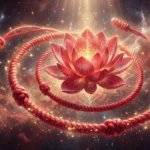
In essence, Om Mani Padme Hum is a sacred mantra from the Mahayana Buddhist tradition, most closely associated with Avalokiteshvara, the Bodhisattva of Compassion. Its most common translation is “The Jewel is in the Lotus,” symbolizing the indivisible union of wisdom (the lotus) and compassionate method (the jewel). It represents the purification of our own mind and the profound truth that enlightenment—our inherent Buddha-nature—is already present within us, waiting to be discovered.
Mantra: Om Mani Padme Hum (Sanskrit: ॐ मणि पद्मे हूँ)
Primary Translation: “The Jewel in the Lotus” or “Praise to the Jewel in the Lotus.”
Cultural Origin: Sanskrit, central to Mahayana and particularly Tibetan Buddhism.
Core Symbolism: It represents the purification of the practitioner’s body, speech, and mind, transforming them into the enlightened state of a Buddha. It signifies that the ‘jewel’ of enlightenment is found within the ‘lotus’ of our own ordinary, imperfect existence.
Table of Contents
The Ancient Origins & Sacred Legends: Avalokiteshvara’s Vow
To understand the mantra, we must first understand its source: the boundless compassion of a Bodhisattva. The origin story is tied directly to Avalokiteshvara (known as Chenrezig in Tibetan), the embodiment of the compassion of all Buddhas. Legend tells that Avalokiteshvara surveyed the realms of existence and wept upon seeing the immense, unending suffering of sentient beings.
From his deep commitment, he made a powerful vow: to not rest until every single being was liberated from suffering and its causes. It is from this profound vow that the mantra Om Mani Padme Hum is said to have emerged. It is not merely a collection of sounds but the very essence of Avalokiteshvara’s compassionate mind, a sonic manifestation of his promise to the universe.
Within the Mahayana tradition, it is believed that this six-syllable mantra contains the complete Dharma—all 84,000 teachings of the Buddha condensed into their most potent form. Chanting it, therefore, is not just a simple prayer but a practice that embodies the entire path to enlightenment. It is the compassionate power to purify lifetimes of negative karma and awaken the seed of our inner Buddha-nature.
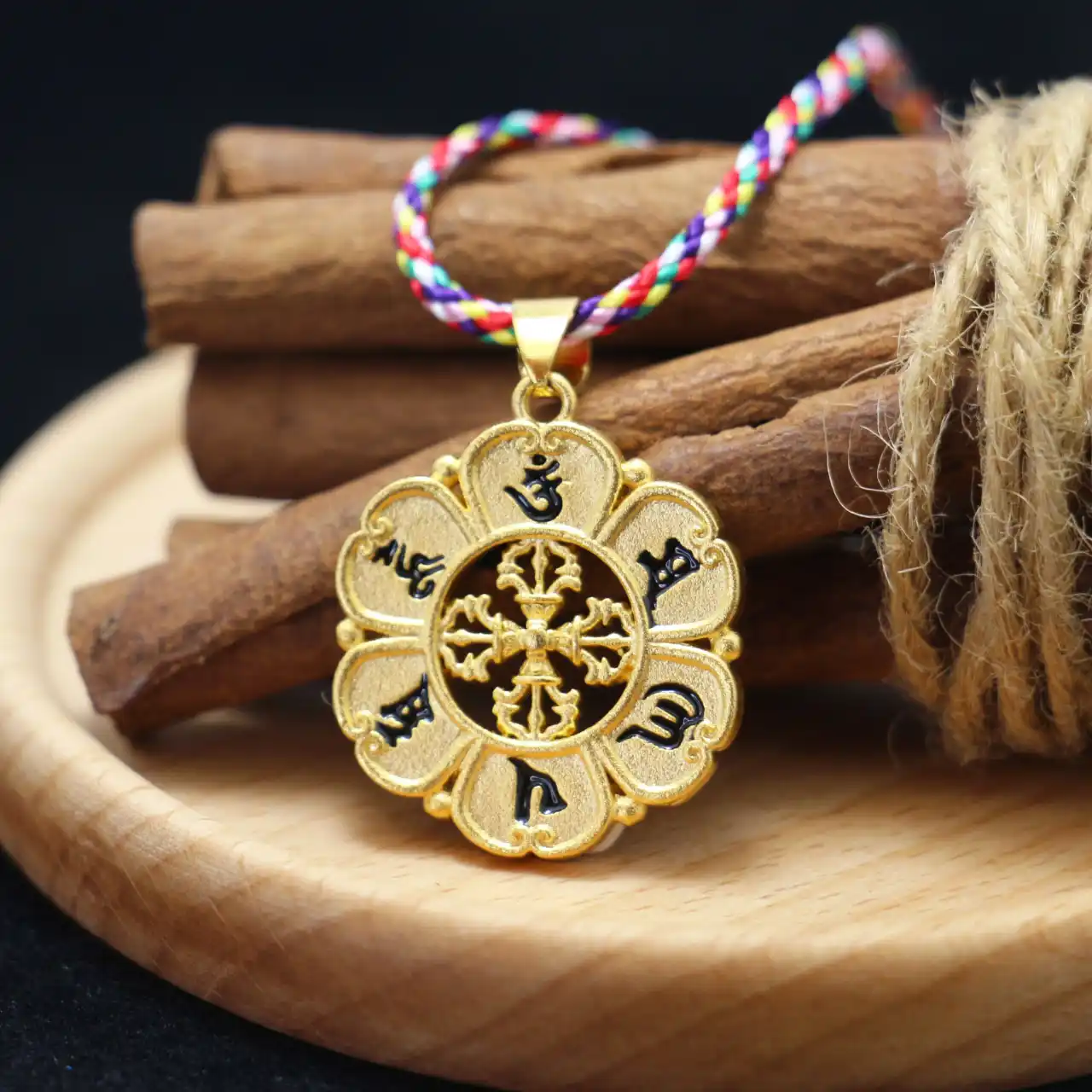
The mantra’s journey began with ancient Sanskrit manuscripts in India before traveling across the Himalayas to become the cultural and spiritual heartbeat of Tibet. There, its presence is ubiquitous. It is carved into “mani stones” that line pilgrimage routes, printed on prayer flags that carry its blessings on the wind, and spun millions of times a day inside prayer wheels, amplifying its benevolent energy across the land.
The Hidden Philosophy: Decoding the Six Syllables of Liberation
The true genius of Om Mani Padme Hum lies in its multi-layered structure, where each syllable serves a specific, transformative purpose. It is a precise spiritual technology designed to purify the “six root poisons” or afflictive emotions that keep beings trapped in the cycle of rebirth and suffering (samsara). By chanting each sound, we address a specific poison and close the door to rebirth in one of the corresponding six realms of existence.
OM (ཨོཾ): The Primordial Vibration & The Realm of the Gods
OM is not a word but the sound of the universe itself, the primordial vibration. It represents the practitioner’s impure body, speech, and mind, but also holds the potential to be transformed into the pure, exalted body, speech, and mind of a Buddha. Symbolically, it purifies the subtle yet destructive poison of Pride and Ego, closing the door to rebirth in the God (Deva) realm—a state of temporary bliss that ends in a painful fall once its good karma is exhausted. This syllable represents the perfection of Generosity (dana).
MA (མ): Dissolving Jealousy & The Realm of the Jealous Gods
MA directly targets the afflictive emotion of Jealousy and Envy. This poison fuels a life of constant competition and conflict, leading to rebirth in the Asura (demi-god or jealous god) realm. Chanting MA helps dissolve this state of resentful striving and instead cultivates appreciative joy. It represents the perfection of Ethics and Discipline (shila).
NI (ཎི): Conquering Desire & The Human Realm
NI works to purify the poison of Passion and Craving Desire. This is the primary affliction of the Human realm, where we are constantly chasing fleeting pleasures and running from discomfort, leading to perpetual dissatisfaction. NI helps us find contentment and inner peace, independent of external conditions. It represents the perfection of Patience and Forbearance (kshanti).
PAD (པ): Overcoming Ignorance & The Animal Realm
PAD is a powerful antidote to the poison of Ignorance, Stupidity, and Prejudice. This closed-minded state, characterized by acting on instinct without wisdom, leads to rebirth in the Animal realm. Chanting PAD helps to cut through confusion and develop clarity and insight. It represents the perfection of Diligence and Perseverance (virya).
ME (དྨེ): Releasing Greed & The Realm of the Hungry Ghosts
ME targets the deep-seated affliction of Greed, Possessiveness, and Poverty Mindset. This insatiable hunger for more leads to rebirth in the Hungry Ghost (Preta) realm, a state of profound and perpetual dissatisfaction where needs can never be met. The sound ME helps to cultivate contentment and release attachment. It represents the perfection of the practice of Concentration (dhyana).
HUM (ཧཱུྃ): Eradicating Hatred & The Hell Realm
HUM, the final seed syllable, is the unshakeable, immovable force that purifies the most destructive poison: Anger, Hatred, and Aggression. These powerful negative emotions lead directly to rebirth in the Hell (Naraka) realms of intense suffering. Chanting HUM transforms this fiery energy into purifying wisdom. It represents the perfection of Wisdom (prajna).
The mantra’s philosophy is encapsulated in its two central components: Mani, meaning “the jewel,” and Padme, meaning “in the lotus.” The jewel represents the compassionate method—the Bodhisattva’s altruistic intention to attain enlightenment for the benefit
of all beings. The lotus represents wisdom—specifically, the wisdom that realizes the true nature of reality, emptiness.
In Tibetan Buddhism, method and wisdom are like the two wings of a bird; both are required to fly. The mantra signifies this indivisible union, teaching us that true spiritual progress is only possible when boundless compassion is guided by profound wisdom. It is a complete
path contained in two words.
Cultural Evolution: How Om Mani Padme Hum is Viewed in East vs. West
Our research reveals a fascinating divergence in how this sacred mantra is perceived and utilized across different cultural landscapes. The journey from the Himalayan peaks to Western yoga studios has reshaped its application while preserving its core benevolent energy.
The East: A Cultural Heartbeat
In Tibet, Nepal, Bhutan, and other Himalayan regions, Om Mani Padme Hum is not just a meditation tool; it is woven into the very fabric of daily life. It is considered a direct connection to the compassionate mind of Chenrezig and a powerful agent for purifying negative karma for oneself, one’s family, and all sentient beings. According to teachings from His Holiness the Dalai Lama, reciting this mantra helps to develop a compassionate worldview, transforming how one interacts with the world.
The West: A Symbol of Mindfulness & Inner Peace
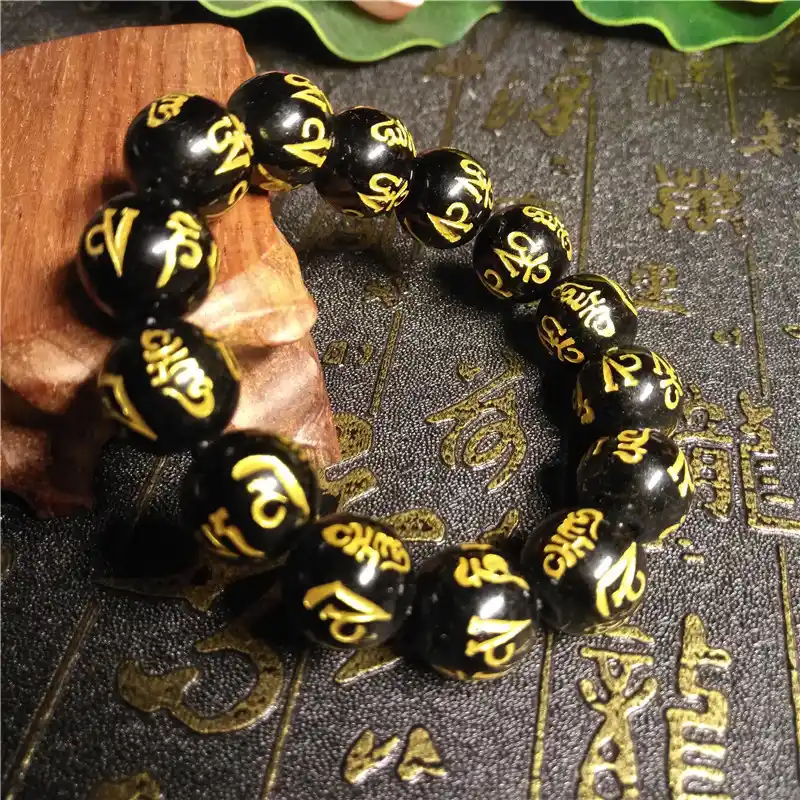
In the West, the mantra has been embraced by secular mindfulness, yoga, and New Age spiritual communities. Here, its primary perception is often as a tool for vibrational healing, stress reduction, and achieving a state of inner calm. While this is a valid and beneficial application, it sometimes detaches the mantra from its deep soteriological context—its ultimate goal of liberation from samsara for all beings. Its prominent use in mantra jewelry and art serves as a beautiful reminder of spiritual values in a fast-paced, material world.
Wearing the Talisman: Why Om Mani Padme Hum Jewelry Matters Today
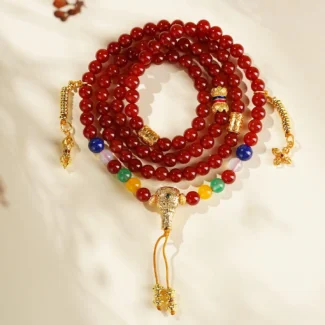
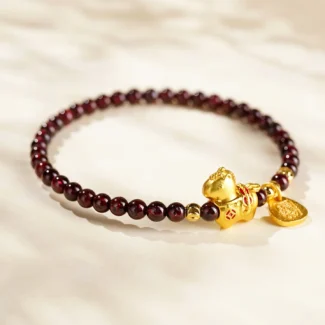
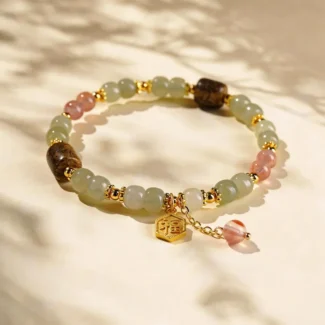
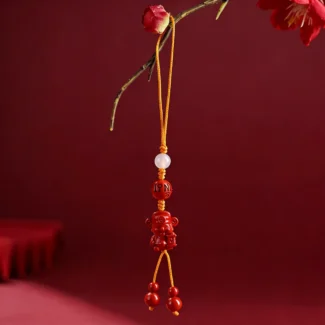
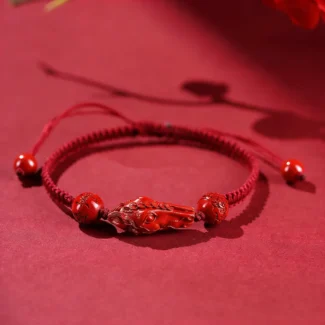
In an age of digital distraction and constant anxiety, the simple act of wearing a physical talisman can be profoundly grounding. An Om Mani Padme Hum bracelet or necklace becomes more than an accessory; it serves as a tactile, constant reminder to return to a state of compassion and mindful awareness throughout the day.
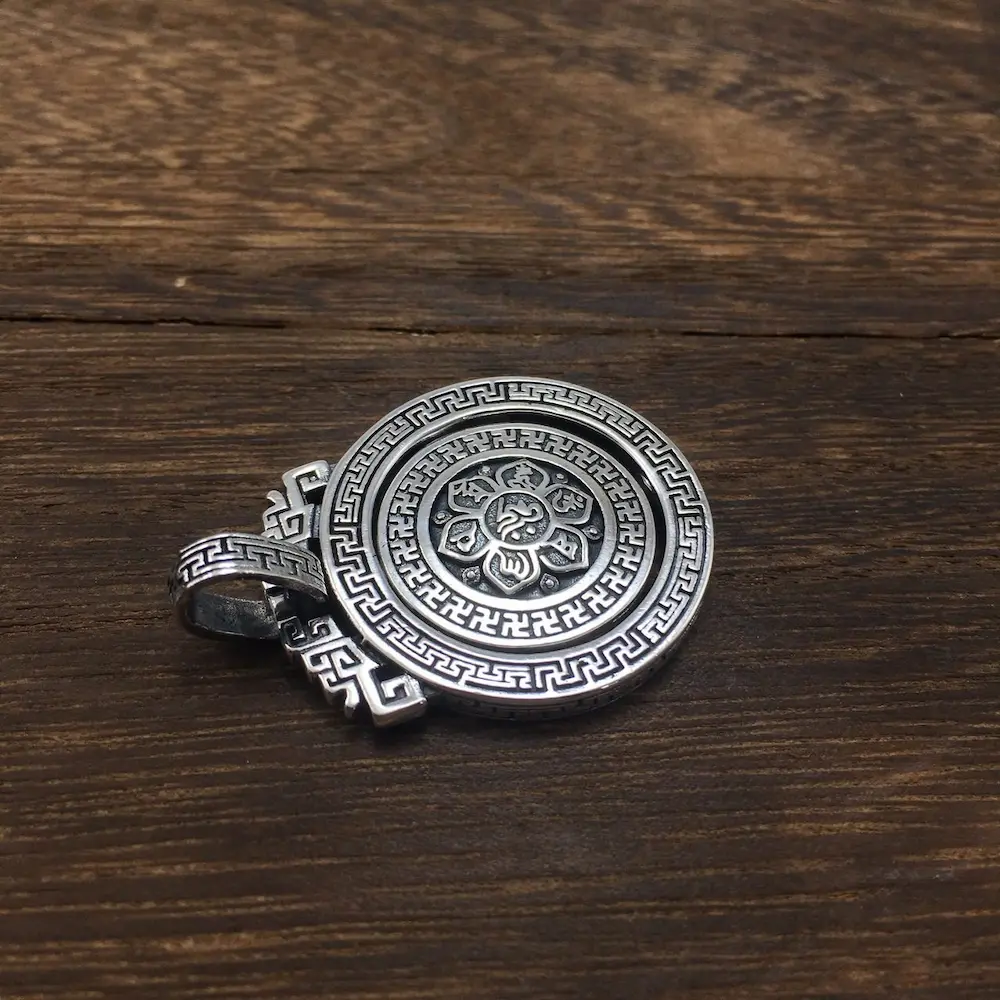
This ancient energy translates directly to modern challenges. The mantra acts as a form of spiritual protection, not from external demons, but from the internal poisons of ego, anger, and jealousy that disrupt our peace. By touching the engraving on a ring or feeling the weight of a pendant, we can consciously pause and choose empathy in a world that often feels disconnected.
Connecting the ‘jewel’ (Mani) to our modern quest for personal development is particularly relevant as we navigate complex times. The symbolism reminds us that our greatest potential, our innate wisdom and compassion, is not something we need to acquire from the outside. It is already within
us, like a jewel hidden within the lotus of our own hearts, waiting to be revealed. To see our best options for the coming period, you can see OM MANI PADME HUM picks for this year.
Ultimately, wearing the mantra is an act of embodying the Bodhisattva’s vow. It is a personal, visible commitment to the path of benefiting others, transforming a piece of jewelry into a powerful statement of purpose. Those looking to understand the energies of the upcoming year can also explore this year related guides for deeper insights.
Ritual & Practice: How to Meditate with Om Mani Padme Hum
Engaging with the mantra through chanting is a powerful way to experience its transformative energy directly. The practice is simple, yet its effects can be profound when approached with sincerity and the right intention.
The Foundations of Chanting
Find a comfortable posture, either seated on a cushion or in a chair, with your spine erect but not stiff. Begin with a few deep breaths to settle the mind and set a sacred intention: to chant not just for your own peace, but for the welfare of all beings. As you vocalize the mantra, feel the vibrational healing of the sacred sounds resonating through your chest and body. While the Sanskrit ‘Hum’ is common, some practitioners prefer the more forceful Tibetan pronunciation ‘Hung,’ which is said to have a more grounding energetic quality.
Visualization Meditation with Chenrezig
A traditional and potent practice involves visualization. As you chant, picture the four-armed Avalokiteshvara, radiant and white like the full moon, seated on a lotus above your head. He embodies pure, unconditional compassion. With each repetition of the mantra, visualize brilliant white light streaming from his heart into the crown of your head, filling your entire body, purifying all negativities, and healing all suffering.
Using a Mala (Prayer Beads)
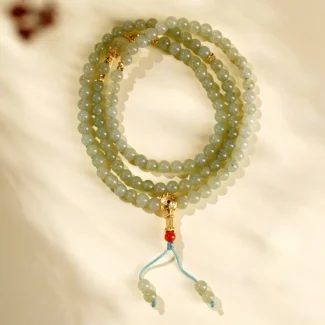
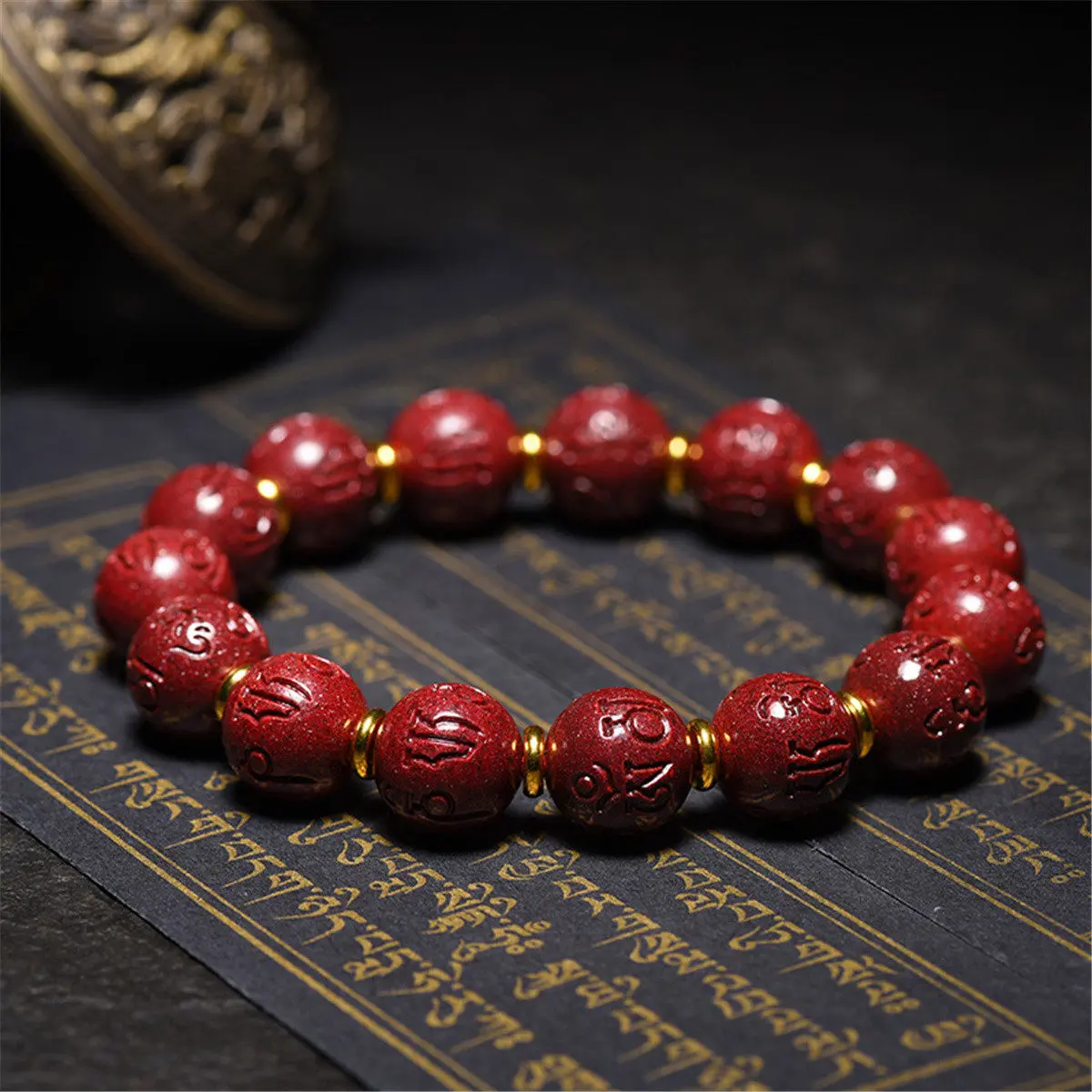
A 108-bead mala is a traditional tool for counting mantra repetitions. Hold the mala in your left hand, and with your thumb, draw one bead towards you for each recitation of the mantra. This practice helps to keep the mind focused and allows you to dedicate a full round of 108 chants to the welfare of all sentient beings, amplifying the compassionate intention of the practice.
- ☸️ Set a Daily Intention: Each morning, hold your mantra jewelry or mala and recite the mantra three times. Set the intention to bring more compassion into your interactions for the day.
- 🌸 Mindful Visualization: During a stressful moment, close your eyes and visualize the syllable ‘OM’ as brilliant white light at your forehead. Inhale the light, exhale the stress.
- 🧿 Vocalize with Purpose: Find a quiet space and chant the mantra aloud for 5-10 minutes. Focus on the physical vibration in your chest, allowing it to calm your nervous system.
- 🕉️ Dedicated Action: After your practice, dedicate the positive energy (merit) to someone you know who is suffering. This transforms the practice from a personal to a compassionate act.
Cultural Etiquette & Taboos: Respecting the Sacred Sounds
As with any sacred symbol, approaching Om Mani Padme Hum with reverence is essential. The power of the mantra is intrinsically linked to the motivation and respect with which it is used. The principle of ‘right intention’ is paramount; it should be used with a mind of compassion, not as a trivial decoration or a magical incantation for selfish gain.
Sacred texts, jewelry, or any object bearing the mantra should be treated with care. This means avoiding placing them directly on the floor, in a bathroom, or in other unclean places. According to tradition, it’s respectful to remove mantra jewelry during activities considered impure. While perfect Sanskrit or Tibetan pronunciation isn’t expected from a novice, making a sincere effort to learn the correct sounds, as explained by resources like Tricycle: The Buddhist Review, shows genuine respect for the tradition.
A common question is whether it’s appropriate for non-Buddhists to use the mantra. The overwhelming view within the tradition is that the path of compassion is universal and open to all. Anyone who approaches the mantra with a sincere, respectful heart and a wish to cultivate kindness is welcome to engage with its practice. It’s about appreciation, not appropriation. More in-depth information about this is available if you read: The Year of the Fire Horse 2026: A Practical Guide to Predictions, Feng Shui & Luck.
Frequently Asked Questions (FAQ)
What is the syllable-by-syllable meaning of Om Mani Padme Hum for modern life?
For modern life, the syllables act as a guide for emotional intelligence. OM reminds us to check our ego. MA helps us overcome professional jealousy. NI addresses our consumerist desires. PAD pushes us to challenge our own biases. ME helps us release our attachment to wealth and status. HUM gives us a tool to transform anger before it becomes destructive action.
How does chanting Om Mani Padme Hum affect the brain and reduce anxiety?
While spiritual in origin, the effects can be explained neurologically. The rhythmic chanting and deep breathing involved can activate the parasympathetic nervous system, lowering heart rate and blood pressure. Focusing on the sound provides an anchor for the “monkey mind,” reducing activity in the brain’s default mode network, which is associated with rumination and anxiety. This is a core concept that many resources, like Learn Religions, explore in detail.
What are the cultural protocols for using or displaying this sacred mantra respectfully?
The key principle is reverence. Avoid placing items with the mantra on the floor or in unclean spaces like bathrooms. Treat it as a sacred object. If you wear it as jewelry, consider removing it during activities like intense exercise or showering. The goal is to maintain a sense of purity and respect around the sacred sounds.
Why is this mantra considered the ‘essence’ of all Buddhist teachings?
It’s considered the essence because it contains the entire path. ‘Om’ and ‘Hum’ represent the transformation from an impure state to a pure one. ‘Mani’ (the jewel) symbolizes the compassionate method, the desire to help all beings. ‘Padme’ (the lotus) symbolizes the wisdom that understands reality. The union of method and wisdom is the complete and entire path to enlightenment in Mahayana Buddhism.
Is it appropriate for a non-Buddhist to use this mantra for personal growth?
Yes. Compassion is not exclusive to any religion. The mantra is a tool to cultivate universal qualities of kindness, patience, and wisdom. As long as it is approached with a respectful and sincere intention, it is considered beneficial for anyone, regardless of their spiritual background.
Conclusion: Integrating the Wisdom of the Jewel in the Lotus
Our journey through the six sacred syllables reveals that Om Mani Padme Hum is far more than a beautiful sound. It is a complete path to be walked—a daily practice of transforming the internal poisons of ego, jealousy, desire, ignorance, greed, and anger into the six perfections of a compassionate and enlightened mind.
The mantra’s ultimate teaching is one of profound hope and empowerment. It reminds us that we do not need to look outside ourselves for salvation or peace. The radiant, indestructible jewel of our own enlightened nature is already here, resting within the lotus of our present moment, no matter how muddy the circumstances may feel.
We encourage you to embody the mantra not just as a chant, but as a living practice. Let its vibration remind you of the boundless compassion that resides within you, waiting to be shared with the world.
Cultural Researchers & Feng Shui Practitioners. We have been exploring traditional year-based wisdom and spiritual symbolism since 2020.