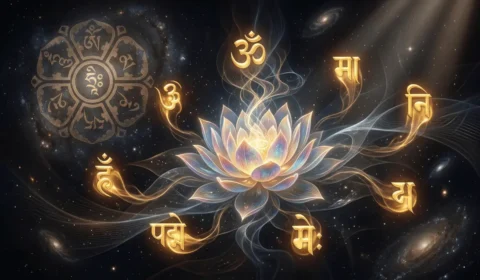




The mantra Om Mani Padme Hum is much more than a religious relic or a pretty design. It is a living sonic vibration that has served as the vocal manifestation of universal compassion for over a thousand years. In our high-stress and digitally saturated world, this ancient frequency offers a true sanctuary for the nervous system. We believe it bridges the gap between ancient Himalayan wisdom and modern cognitive wellness by providing a steady point of focus. By reciting these six syllables, we tap into a resonance that has calmed hearts and minds across centuries.
Quick Answer: Om Mani Padme Hum is the six-syllable mantra of Avalokiteshvara, the Bodhisattva of Compassion. It symbolizes the Jewel in the Lotus, representing the potential for every person to transform an impure body, speech, and mind into the pure, enlightened state of a Buddha through the union of method and wisdom.
This sacred sound is rooted in Tibetan Buddhism History and the Mahayana tradition. It is not just a sequence of letters but a divine blueprint for the human psyche. When we chant, we are practicing a form of inner alchemy that purifies our past mistakes and current stressors. Our team at Buddha Bodhis has seen how this simple practice can shift a person’s entire energetic field from one of anxiety to one of profound peace.
The Legend of Chenrezig: Why This Mantra is the Voice of a Bodhisattva
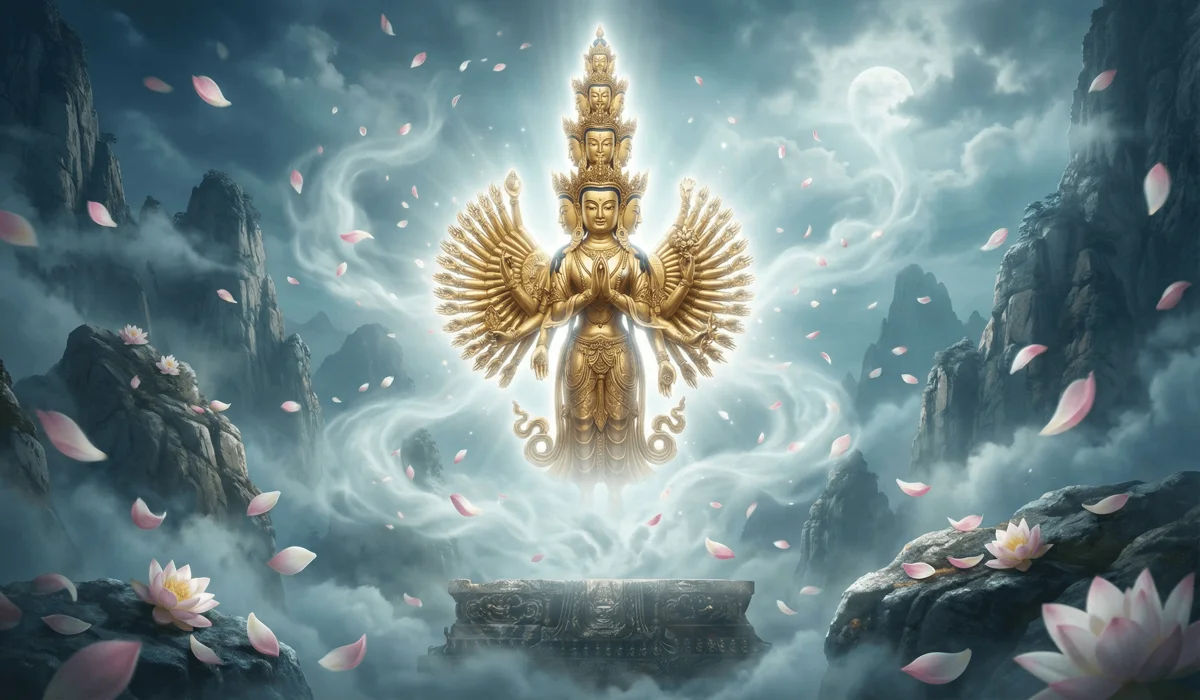
The story of this mantra begins with the tears of Avalokiteshvara (Chenrezig), the Bodhisattva of Infinite Compassion. He made a solemn vow not to rest until every single living being was liberated from the cycle of suffering (Samsara). This commitment was so vast that when the task seemed impossible, his head shattered from the weight of the world’s grief. To help him continue his mission, the mantra emerged as a healing vibration that reconstructed his form. He became a being with eleven heads and a thousand arms, ready to reach out to anyone in need.
Historically, these roots reach back to the ancient Sanskrit tradition of India. The mantra was first recorded in the Karandavyuha Sutra between the 4th and 5th centuries. It was described as the heart-essence of all spiritual teachings. When it reached Tibet in the 7th century, it became the foundation of daily life. Kings inscribed it on stones and built prayer wheels to spread its frequency across the mountains. Today, we carry this tradition forward by understanding that the mantra is a call for help and a promise of relief.
Decoding the Six Syllables: A Roadmap to Purifying the Six Realms
The phrase Jewel in the Lotus holds a deep alchemical meaning for the practitioner. Mani (The Jewel) represents the method aspect of the path, which includes the altruistic intention to become enlightened (Bodhicitta), love, and compassion. Just as a jewel can remove physical poverty, this spiritual jewel removes the poverty of selfishness. Padme (The Lotus) represents wisdom or the realization of emptiness. Like a lotus that grows from murky mud but stays clean, wisdom grows within the messy world but remains pure and untouched.
Each of the six syllables also corresponds to one of the six realms of existence and their specific emotional poisons. Chanting them systematically purifies the subconscious mind and closes the doors to lower rebirths.
- OM: Purifies pride and ego; targets the Deva (god) realm.
- MA: Purifies jealousy and the lust for entertainment; targets the Asura (demigod) realm.
- NI: Purifies passion and desire; targets the Human realm.
- PAD: Purifies ignorance and prejudice; targets the Animal realm.
- ME: Purifies possessiveness and greed; targets the Hungry Ghost realm.
- HUM: Purifies aggression and hatred; targets the Hell realm.
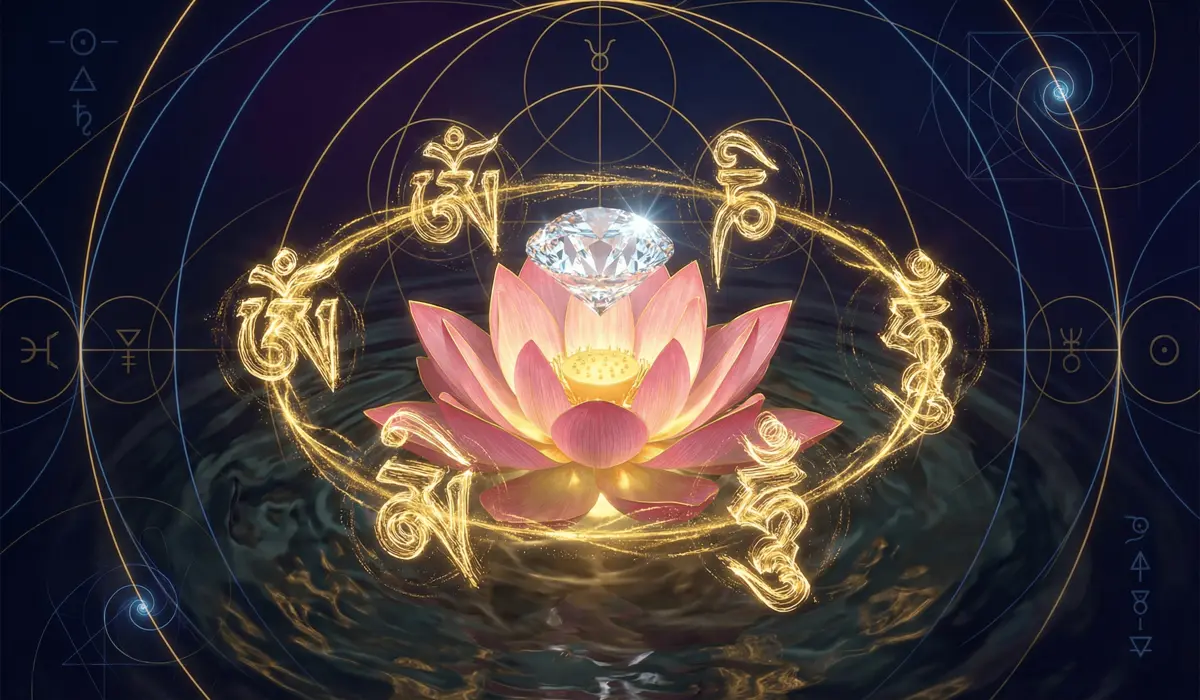
The final syllable, HUM, represents the union of non-duality. it signifies that method and wisdom cannot be separated. By reciting this full sequence, we stabilize the mind so it cannot be disturbed by the illusions of the material world. This process is often explored in Sacred Cultural Symbols that explain how we can achieve balance. It is a complete system of psychological and spiritual transformation contained within a single short phrase.
Scientific Resonance: How Ancient Sound Frequencies Solve Modern Stress
In the modern world, we often look at the “Jewel in the Lotus” through the lens of psychology and biology. Repetitive chanting acts as a powerful tool for neuroplasticity. By using sound therapy, we can override the ruminative thinking patterns that cause so much of our daily anxiety. This rhythmic, low-frequency sound stimulates the vagus nerve, which tells the body it is safe to relax and heal. Many people find that this practice allows them to enter a state of flow that is hard to find in a busy office.
The Power of Vibration: Studies in sound therapy suggest that chanting the Mani mantra helps the brain move from a high-stress Beta state to a meditative Alpha or Theta state. This biological shift acts as a buffer against digital burnout and information overload in our modern lives.
While Eastern practitioners focus on communal merit and universal liberation, Westerners often use the mantra for personal growth. Both perspectives agree that the mantra functions as a divine blueprint for the human heart. It helps us process negative karma and old traumas by replacing those heavy energies with a lighter, more compassionate frequency. This cross-cultural bridge shows that the need for peace is a universal human experience. You can find more about how these symbols work in our Ancient Wisdom Guides which detail the benefits of traditional practices.
Wearing the Sacred: Why Om Mani Padme Hum Jewelry is a Spiritual Shield
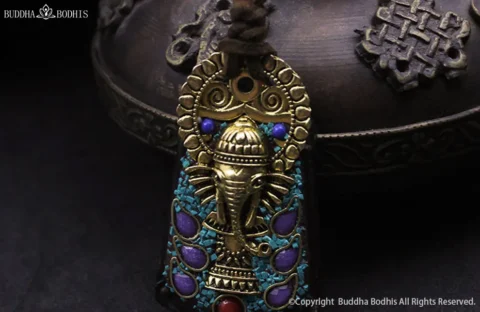
Wearing an Om Mani Padme Hum ring or pendant serves as a physical anchor of mindfulness. In a world of constant notifications and distractions, a piece of jewelry can remind you to return to your breath. It is a tactile prompt to practice compassion whenever you feel overwhelmed by your surroundings. Traditional wisdom even suggests that wearing the symbol is like a continuous prayer. As you move through your day, the symbol moves with you, supposedly blessing the environment and your own energy field.

Practitioners believe that the mantra creates a protective spiritual frequency. By keeping the script close to your pulse points, such as the wrist or neck, it may help filter out negative external energies. This is especially helpful for those who feel drained by the modern digital landscape. Wearing the symbol is also a public statement of Bodhicitta, or the mind of enlightenment. It shows a commitment to being kind to others and promoting harmony in your community. For those interested in this practice, we recommend looking at Buddhist Mantra Jewelry to find a piece that resonates with your personal style.
Integrating the Mantra: Meditation, Prayer Wheels, and Walking Practice
You can practice this mantra in many different ways depending on your lifestyle. Vocal chanting is great for beginners because the physical vibration helps focus the mind. Silent or mental recitation is considered more advanced because it requires a very steady concentration. Regardless of the method, the most important part is your intention. We always suggest visualizing a brilliant white light coming from your heart and spreading out to touch all living beings while you chant.
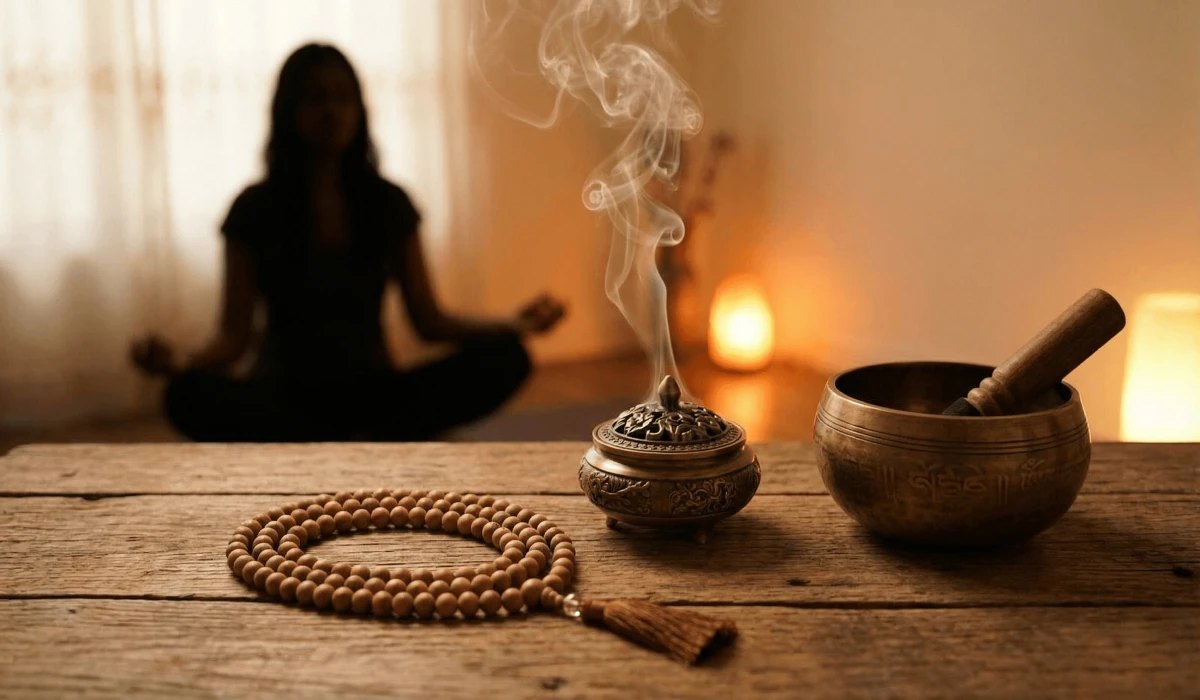
Using a Mala, or a string of 108 beads, is a traditional way to keep track of your recitations. Chanting the mantra 108 times daily helps synchronize your breath with your spirit. This practice grounds you in the Six Perfections and helps clear away the mental clutter of the day. You can also use prayer wheels, which are common in classical Feng Shui environments to enhance the positive energy of a room. Whether you are sitting in a quiet room or walking through a park, the mantra can be your constant companion.
Actionable Steps for Your Daily Practice
- Set a Daily Intention: Before you begin chanting, take a moment to dedicate your practice to the well-being of someone you know who is suffering.
- Use a Physical Anchor: Wear a mantra ring or carry Mala beads to remind you to recite the syllables during small breaks in your day.
- Practice Mindful Visualization: As you chant, imagine a soft white light dissolving your anger and replacing it with patience.
- Maintain Sacred Space: Keep your mantra symbols and jewelry in a clean, elevated place when you are not using them to show respect for the teaching.
When it comes to cultural etiquette, respect is key. Since the mantra represents the holy speech of a Buddha, you should treat items bearing the script with care. Avoid placing mantra jewelry on the floor or in bathrooms. While it is fine to wear these symbols as fashion, their true power is activated when you understand their meaning. The effectiveness of the mantra as an amulet is tied directly to your own practice of mindfulness and kindness toward others. You can learn more about these cultural nuances in the World Religions Encyclopedia online.

FAQ: Common Questions About the Mani Mantra Benefits
Q: How does the vibration of Om Mani Padme Hum affect the nervous system in 2026’s high-stress environment?
A: The rhythmic, low-frequency chanting stimulates the parasympathetic nervous system, reducing cortisol levels and helping the brain move from Beta (alert/stress) to Alpha or Theta (relaxed/meditative) states, providing a biological buffer against information overload.
Q: How does each syllable of the mantra correspond to the six realms of existence?
A: Each syllable targets a specific emotional poison (pride, jealousy, desire, ignorance, greed, anger) associated with the Deva, Asura, Human, Animal, Preta, and Hell realms, systematically purifying the subconscious mind.
Q: Why is wearing an Om Mani Padme Hum ring considered a constant prayer?
A: In Vajrayana tradition, a sacred symbol in motion creates spiritual merit similar to a turning prayer wheel. As your hand moves throughout the day, the mantra acts upon the world, even when your mind is occupied.
Q: What are the specific karmic benefits of chanting the Mani mantra 108 times daily?
A: It is taught that 108 recitations can purify vast amounts of negative karma, specifically the imprints of past harmful actions, ensuring a more peaceful life and faster progress toward enlightenment.
Q: How to properly pronounce Om Mani Padme Hum for maximum spiritual efficacy?
A: While the Sanskrit is Om Mani Padme Hum, the Tibetan Om Mani Peme Hung is equally effective. The most important factor is the vibration of the heart and the purity of intention rather than perfect linguistic syntax.
Conclusion: Integrating the Wisdom of Chenrezig
Reciting Om Mani Padme Hum is a journey from the mud of everyday suffering to the jewel of enlightened awareness. By bringing this mantra into your daily life—whether through chanting, meditation, or wearing sacred jewelry—you align yourself with a long lineage of compassion. We believe that this simple practice can become a light for yourself and a refuge for everyone around you. As we navigate the complexities of the modern world, let this ancient sound be your guide toward a more intentional and peaceful existence.
This content is for informational purposes and cultural exchange only. It does not constitute medical, legal, financial, or other professional advice. Readers should consult with qualified professionals for specific needs or concerns.
Written by the Buddha Bodhis Team
Since 2020, we have been devoted to exploring traditional year-based wisdom, classical Feng Shui principles, and the rich spiritual symbolism rooted in Eastern cultural heritage. Our work bridges ancient metaphysical systems with modern life, interpreting annual cycles, elemental energies, and symbolic meanings to offer thoughtful insight and practical guidance. Through continuous research and practice, we aim to preserve traditional knowledge while making it accessible, relevant, and meaningful for contemporary seekers of balance, intention, and personal growth.
TikTok | YouTube | Pinterest | X
buddhabodhis@gmail.com