


Learning How to Use a Wrist Mala for Mantra Chanting is a simple yet powerful way to bring more peace into your daily life. We believe that these sacred beads act as a physical anchor for your mind, helping you stay present during a busy day. Many people use these portable tools to count their prayers, focus their thoughts, and feel more grounded in the modern world.
- Hold the wrist mala in your right hand to begin your practice.
- Use your thumb to move each bead toward your body as you chant.
- Avoid touching the beads with your index finger to stay humble.
- Most wrist malas have 27 beads, which is a fraction of the sacred 108.
- Always stop at the guru bead and never cross over it.
What Is a Wrist Mala?
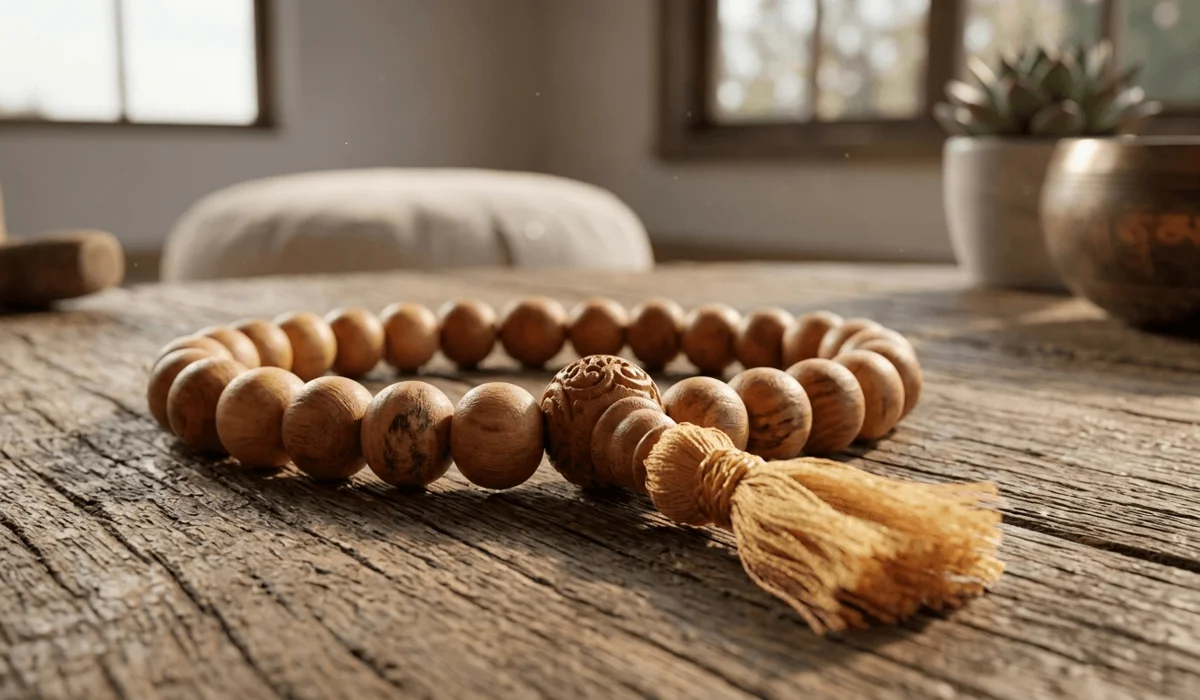
A wrist mala is a smaller version of the traditional 108-bead necklace used in many Eastern traditions. We often call these “hand malas” or “prayer bracelets” because they are designed to be worn and used on the go. These beads help you keep track of your mantras without needing a full-sized necklace nearby.
Wrist Mala Meaning and Origin
The meaning of a wrist mala comes from ancient times when monks and travelers needed a way to pray while moving. These beads are deeply rooted in Buddhist and Hindu traditions, where they are used for Japa meditation. According to Global Historical Knowledge, these tools have helped seekers stay focused for thousands of years. They serve as a constant reminder of one’s spiritual path and the energy of Chi (气).
Basic Characteristics and 27 Beads Significance
Most wrist malas consist of 27 beads, which is exactly one-fourth of the sacred number 108. We often make these beads from natural materials like sandalwood, fragrant cedar, or semi-precious stones. The number 27 is very special because it allows you to complete four full rounds to reach a traditional count of 108. This makes the bracelet both a practical piece of jewelry and a deep spiritual tool.
Guru Bead Importance
The guru bead is the most important part of your mala because it represents your teacher or the “mountain” of knowledge. It is usually larger than the other beads and often has a small tassel attached to it. This bead marks the start and the end of your chanting session. We never cross over the guru bead because it is considered a sacred boundary in your practice.
Spiritual Meaning & Symbolism
Using a wrist mala is more than just a way to count; it is a symbolic act that connects your physical body to your spiritual goals. Each bead represents a step on your journey toward clarity and peace. By holding the beads, you are physically holding onto your intentions and keeping them close to your heart.
Traditional Symbolism in Japa
In Japa meditation, the circle of beads represents the endless cycle of life and the continuity of mindfulness. When you move the beads, you are symbolically moving through your thoughts and letting go of distractions. The physical touch of the wood or stone helps you feel stable and connected to the Earth. It is like holding a garland of prayers that you offer to your inner self.
Cultural and Historical Context
Ancient Vedic traditions first used beads for counting prayers long before they became popular in the West. Later, Tibetan and Zen Buddhist practices adopted the wrist mala as a sign of spiritual discipline. These cultures chose specific materials to represent different elemental energies or protections. Today, we continue this tradition by using these bracelets as a badge of commitment to our daily practice.
| Mala Material | Traditional Benefit | Element |
|---|---|---|
| Sandalwood | Calming the mind and peace | Wood |
| Amethyst | Intuition and spiritual growth | Spirit |
| Obsidian | Protection and grounding | Earth |
Benefits & Intentions Associated with Wrist Malas
Many of our clients find that wearing a wrist mala helps them manage stress during a busy work day. The weight of the beads against your skin serves as a gentle reminder to breathe and stay calm. You can set specific intentions for your mala, turning it into a personalized shield against negative energy.
Commonly Associated Intentions
We suggest setting a Sankalpa (意图), which is a clear goal for your meditation practice. You might focus on virtues like compassion, patience, or inner strength while holding your beads. Using a wrist mala can help lower your stress levels and create a peaceful environment wherever you go. It is a grounding anchor that keeps you steady when life feels too fast.
Mindfulness & Personal Practices
A wrist mala is a wonderful tool for catching your mind when it starts to wander during prayer. The rhythmic movement of your thumb on the beads naturally calms your nervous system. This practice builds a strong bridge between the physical touch of the beads and your mental clarity. Over time, simply touching your mala can help you feel instant relief and focus.
How to Wear and Use a Wrist Mala
Choosing how to wear your mala is a personal decision, but there are traditional rules that can help you. Most traditions suggest that the right hand is for active chanting, while the left wrist is for wearing and receiving energy. We recommend trying both to see what feels most natural for your own spiritual journey.
Left Hand vs Right Hand Logic
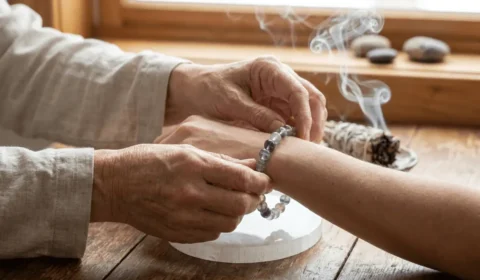
Many practitioners wear their mala on the left wrist to receive internal protection and spiritual gifts. When it is time to chant, they move it to the right hand to perform the active work of mantra recitation. You can find many styles in our collection of Spiritual Wrist Malas that suit either hand comfortably. Your choice should always be guided by your comfort and your personal yoga etiquette.
Step-by-Step Mantra Recitation Guide
To begin your practice, sit in a comfortable spot and take a few deep, grounding breaths. Follow these steps to use your beads correctly:
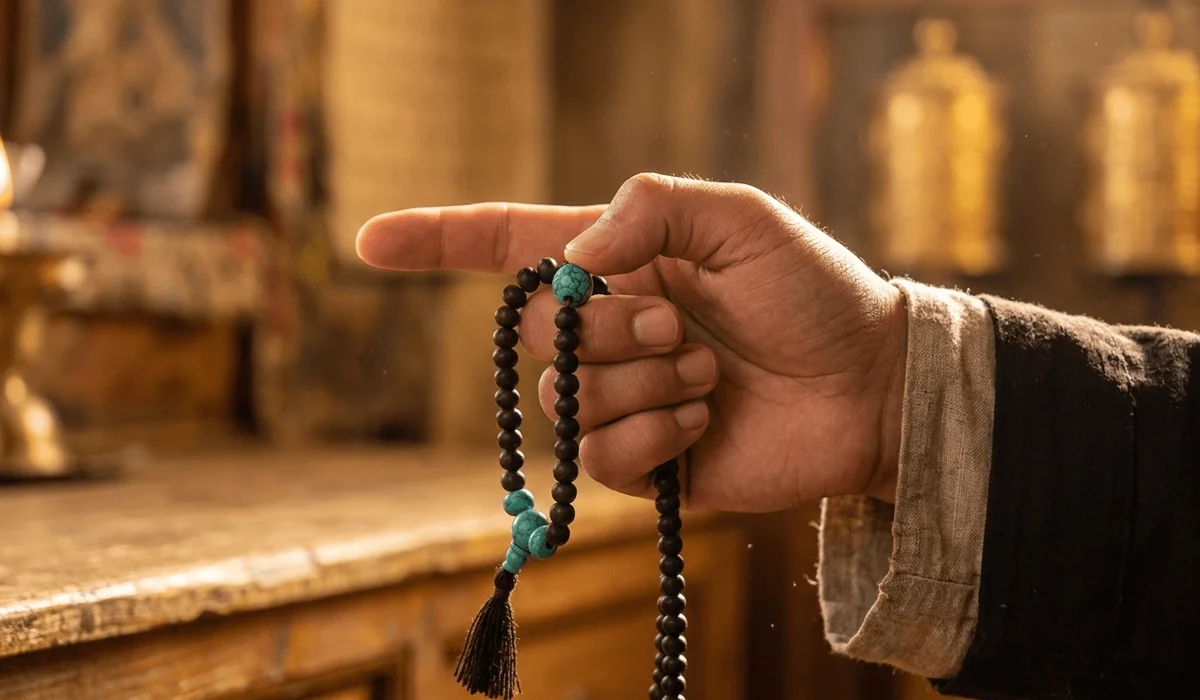
- Hold the mala in your right hand, letting it drape over your middle finger.
- Place your thumb on the very first bead next to the guru bead.
- Say your chosen mantra once, either out loud or silently in your head.
- Use your thumb to pull that bead toward your palm and move to the next one.
- Keep your index finger pointed away from the beads, as it represents the ego.
- Repeat this until you go all the way around and reach the guru bead again.
- If you want to do more, turn the mala around and go back the other way without crossing the guru bead.
Watching a demonstration can help you master the finger movements more quickly. We recommend this video to see the proper technique in action.
Video source:YouTube
Author:Shane Wilson: The Sonic Rest
Original video link:https://www.youtube.com/watch?v=dUh51Uq_PGQ&t=1s
Wrist Mala vs. Necklace Mala
People often ask us if a wrist mala is better than a full necklace mala for daily use. While both are sacred, they serve slightly different purposes in a modern spiritual life. A wrist mala is much easier to carry and wear throughout the day without it getting in the way.
Portability and Daily Integration
Wrist malas are perfect for travel or for those who want to pray during short breaks at work. They are compact and discreet, making them excellent yoga accessories for a busy lifestyle. Necklace malas are usually reserved for longer, formal meditation sessions where you want to complete 108 repetitions at once. The wrist version serves as a constant reminder of your goals even when you are not actively meditating.
Differences in Technique
When using a 27-bead wrist mala, you must complete four full circuits to equal one round on a standard 108-bead necklace. This requires a bit more focus to keep track of how many rounds you have finished. Many practitioners find this extra counting helps them stay more engaged with their practice. It turns a short break into a meaningful ritual of discipline and focus.
Who Is a Wrist Mala Suitable For?
Anyone can benefit from using a wrist mala, whether you are a beginner or an advanced student of yoga. We see these bracelets used by people from all walks of life who want more peace and balance. They are especially helpful for those who find long meditation sessions difficult to start.
Spiritual Seekers and Yoga Practitioners
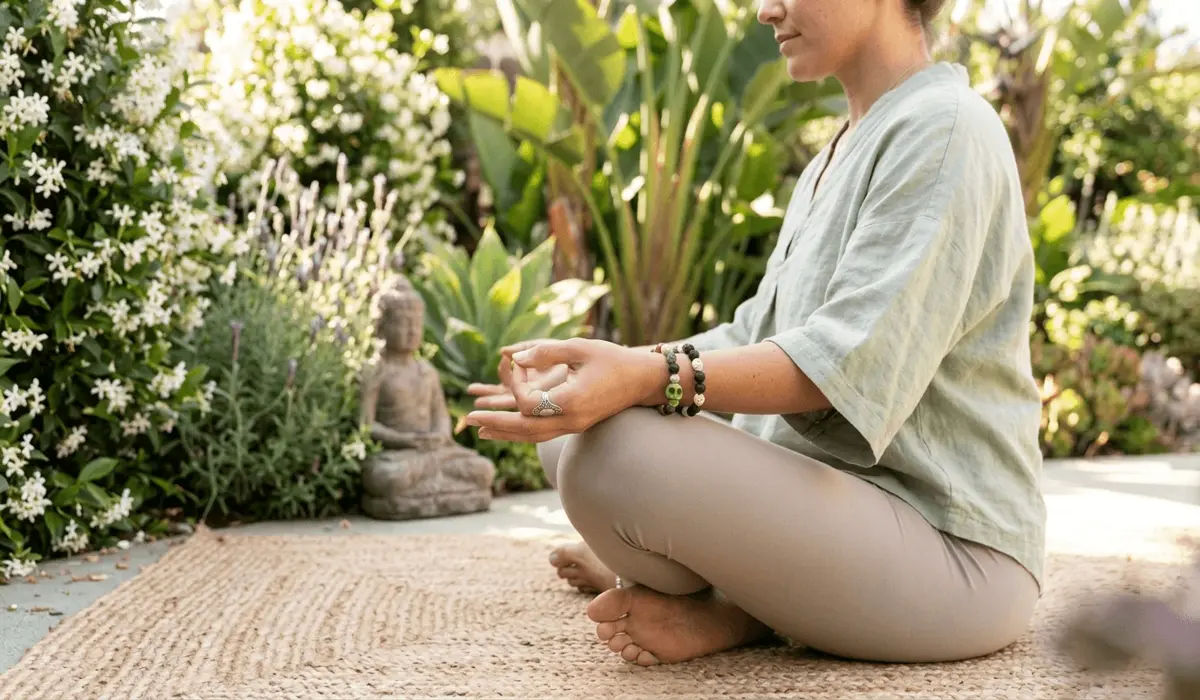
If you are looking for spiritual accessories that go from the yoga mat to the office, a wrist mala is ideal. It is a great entry point for those beginning their journey into Japa and spiritual discipline. To understand which stones might help you most, check out our guide on Crystal Healing Properties. This will help you choose beads that align with your specific personal energy needs.
Zodiac and Energetic Alignment
You can select specific stones based on your astrological sign to enhance your personal grounding. For example, some people use a Cinnabar Zodiac Shield during their Tai Sui (太岁) year for extra protection. Choosing beads that match your zodiac can help balance your energy centers or chakras. This adds another layer of meaning to your daily chanting practice.
How to Cleanse, Charge, and Care for a Wrist Mala
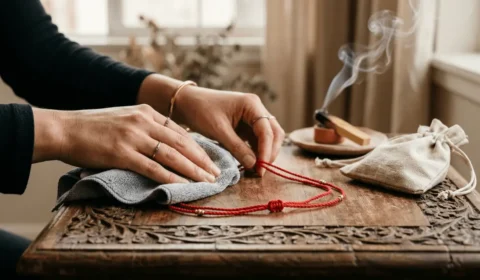
Taking care of your mala is just as important as using it correctly for your prayers. Since the beads absorb energy from you and your surroundings, they need regular cleaning to stay effective. We recommend a simple ritual every few weeks to keep the energy of your beads high and pure.
Cleansing Wrist Malas
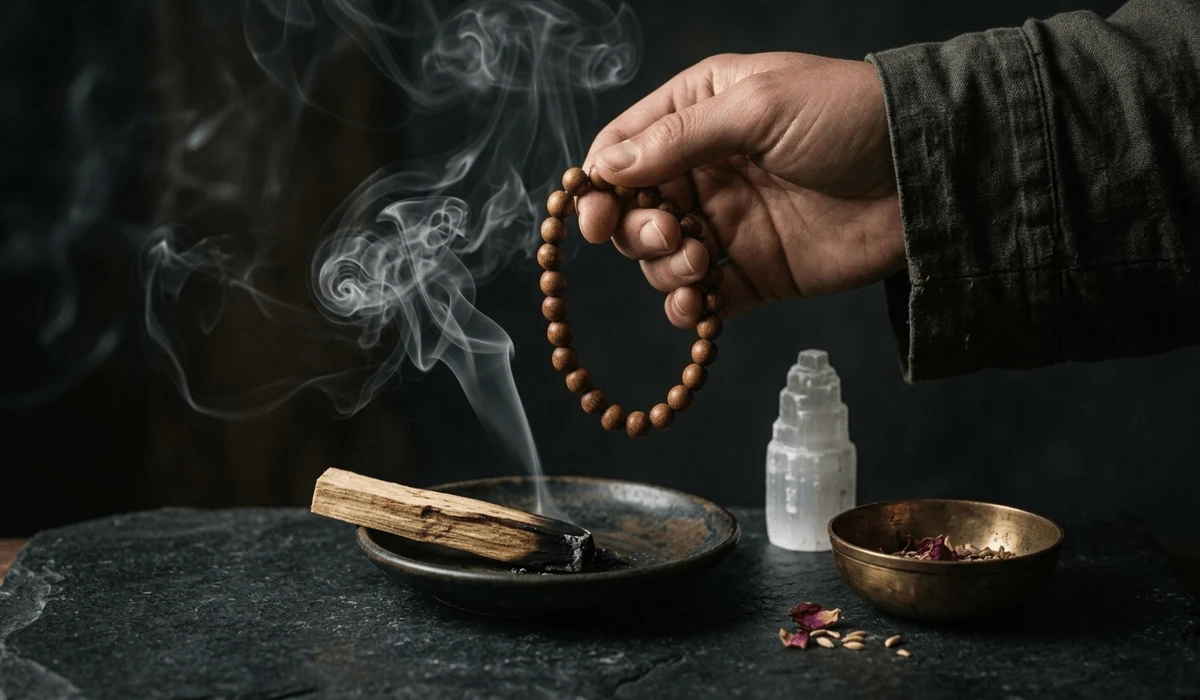
You can cleanse your beads by passing them through the smoke of sacred herbs like sage or Palo Santo. This helps clear away any stagnant energy that the beads have picked up during emotional or stressful times. Some people also place their beads on a bed of sea salt or near a piece of selenite. It is very important to cleanse them after a long trip or a difficult day to refresh their power.
Charging and Preparing Your Beads
To charge your beads, place them under the light of a full moon to soak up natural vibrations. This refreshes the stones and woods, making them feel new and strong again. According to Professional Gemstone Evaluation standards, natural materials respond well to environmental changes. You can also place your mala on a clear quartz cluster to amplify its natural healing properties.
Daily Care & Sacred Jewelry Etiquette
Always store your mala in a clean pouch or on your personal altar when you are not wearing it. Keep the beads away from water and harsh chemicals to protect the natural materials. We should treat these beads with respect, which means not placing them on the floor or in dirty locations. As noted by The Gemmological Association of Great Britain, proper care ensures that your jewelry lasts for many years of practice.
Frequently Asked Questions
Q: How many beads should be on a wrist mala?
A: Most traditional wrist malas have 27 beads, which is exactly one-quarter of 108. Some versions may have 18 or 21 beads depending on the size of the beads and the tradition followed. The number is chosen to help you count your mantra repetitions in specific sets.
Q: Which hand should you wear a wrist mala on?
A: Traditionally, many people wear the mala on their left wrist to receive and hold spiritual energy. However, when you are actually chanting, it is standard practice to hold the beads in your right hand. You can choose based on your own comfort and what feels right for your practice.
Q: Why shouldn’t you touch the mala with your index finger?
A: In many Eastern traditions, the index finger represents the ego or the individual self. By avoiding this finger, you are practicing selflessness and staying humble during your meditation. Using the middle or ring finger with your thumb is the traditional way to move the beads.
Q: How do I cleanse and charge my wrist mala beads?
A: You can cleanse your beads by passing them through incense smoke or by leaving them in the moonlight overnight. It is also helpful to set a new intention for your beads by holding them during a quiet breathwork session. Regular cleansing keeps the energy of the beads clear and positive.
Q: What is the significance of the guru bead in a wrist mala?
A: The guru bead represents the divine, your teacher, or a state of high awareness. It acts as a marker to let you know when you have finished one full round of chanting. It is a sign of respect to pause at this bead and offer a moment of gratitude before starting again.
Conclusion & Gentle Next Step
Integrating a Wrist Mala for Mantra Chanting into your life can truly transform your spiritual discipline. By following the proper steps and caring for your beads, you create a powerful tool for mindfulness and peace. We invite you to explore different materials and find the beads that feel most connected to your own personal journey. Whether you use sandalwood for peace or crystals for strength, your wrist mala will be a faithful companion on your path.
Ready to start your journey? We encourage you to look at our special selection of Spiritual Wrist Malas to find the perfect piece for your daily practice today.
The information provided in this article is for informational and cultural exchange purposes only. It does not constitute medical, legal, financial, or other professional advice. Readers should consult with a qualified professional for any specific concerns or advice regarding their personal health or spiritual practices.

Written by the Buddha Bodhis Team
Since 2020, we have been devoted to exploring traditional year-based wisdom, classical Feng Shui principles, and the rich spiritual symbolism rooted in Eastern cultural heritage. Our work bridges ancient metaphysical systems with modern life, interpreting annual cycles, elemental energies, and symbolic meanings to offer thoughtful insight and practical guidance. Through continuous research and practice, we aim to preserve traditional knowledge while making it accessible, relevant, and meaningful for contemporary seekers of balance, intention, and personal growth.
TikTok | YouTube | Pinterest | X
buddhabodhis@gmail.com