



Crystals, a crystalline mineral form of silicon dioxide (SiO₂), are more than just beautiful stones. Also known as quartz, they are categorized based on several distinct characteristics that define their appearance, energy, and origin. Understanding these classifications is the first step to appreciating their unique qualities.
Table of Contents
🔍 How Are Crystals Classified?
Here are the five primary methods for crystal classification:
- By Color: Crystals are grouped into colored (purple, yellow, pink) and non-colored (black, white, brown) categories.
- By Inclusions: This refers to materials trapped inside a crystal during its formation. This can include other minerals like tourmaline or rutile, creating popular varieties like Phantom Quartz and Rutilated Quartz.
- By Optical Effects: Special effects like the cat’s-eye effect (chatoyancy) or the star effect (asterism) are caused by light interacting with internal structures, as detailed by the Gemological Institute of America (GIA).
- By Formation: Crystals can be natural (formed within the Earth’s crust), synthetic (lab-grown), or smelted (melted and reformed, losing crystalline properties).
- By Energetic Properties: In healing practices, crystals are often categorized as either radiating (projecting energy) or absorbing (drawing in energy). This concept is central to using crystals for wellness, a topic often explored on platforms like MindBodyGreen.
✨ A Closer Look at Energetic Crystal Types
Crystals are often divided into two main energetic groups that are believed to influence our magnetic fields differently.
- Radiating Crystals: These are considered high-frequency stones that project energy outward to attract positive influences. They are often used to manifest goals related to career, wealth, and health.
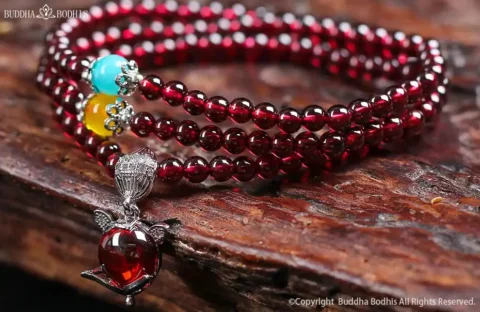
- Examples: Amber, Ametrine, Clear Quartz, Citrine, Garnet, Rutilated Quartz, Tiger’s Eye, Green Phantom Quartz, Tourmaline, and Onyx.
- Absorbing Crystals: These are thought to be low-frequency stones that absorb and neutralize negative energy. They are commonly used for emotional healing, love, and protection.
- Examples: Amethyst, Chalcedony, Fluorite, Jade, Moonstone, Peridot, Rose Quartz, Iolite, Aquamarine, Sugilite, Blue Lace Agate, and Malachite.
💎 Common Types of Crystals and Their Properties
1. Clear Quartz
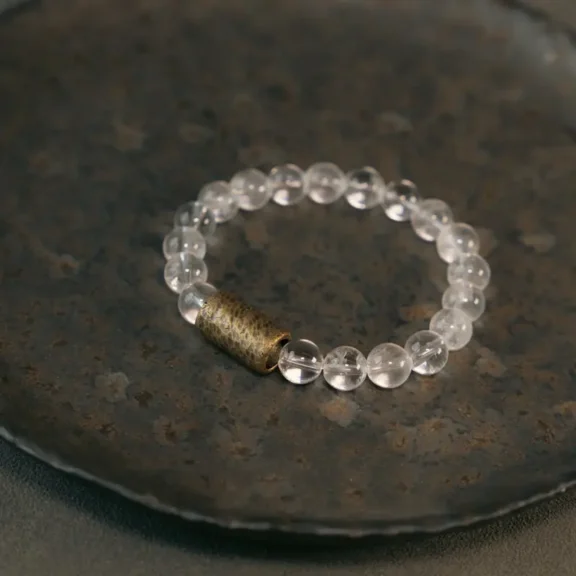
Known as the “Master Healer,” Clear Quartz is one of the most abundant and versatile types of crystals. It is prized for its ability to amplify energy and thought, as well as the effect of other crystals.
- Appearance: Typically transparent and colorless, often with internal fractures or “inclusions” that create a cloudy or frosty look.
- Key Properties: Believed to clear negative energy, enhance mental clarity, and promote spiritual growth.
- Uses: Ideal for meditation, gridding, and as a “master charger” for other stones. Placing a small cluster near electronics may help reduce electromagnetic radiation.
2. Citrine
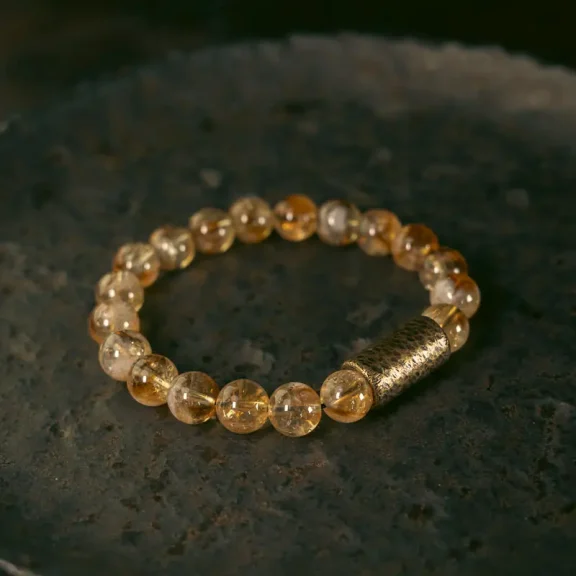
Often called the “Merchant’s Stone,” Citrine is a yellow-to-golden variety of quartz associated with abundance, prosperity, and success.
- Appearance: Ranges from pale yellow to a deep, orange-brown. Natural Citrine is rare; most on the market is heat-treated Amethyst.
- Key Properties: Known as a stone of manifestation and personal will. It is believed to stimulate the solar plexus chakra, boosting confidence and creativity. At Buddha Bodhis, we value Citrine for its joyful, energizing vibrations.
- Uses: Place it in your home or office’s “wealth corner” (far-left corner from the entrance) to attract financial luck. It does not hold negative energy and rarely needs cleansing.
3. Smoky Quartz
Smoky Quartz is a grounding and stabilizing stone known for its protective and detoxifying properties.
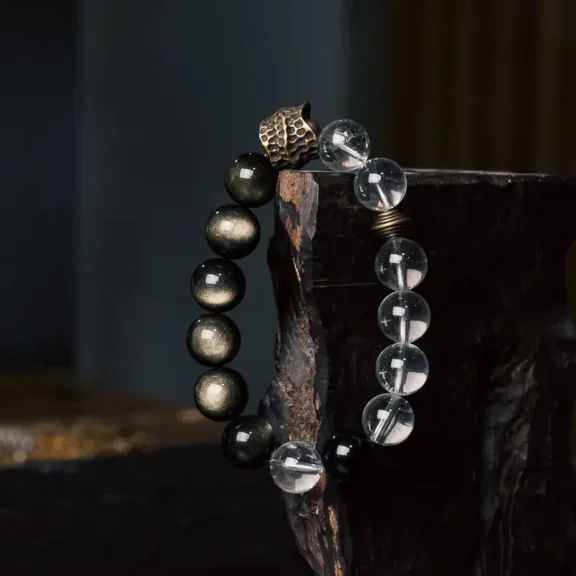
- Appearance: Its color ranges from a light, smoky gray to deep, nearly black-brown. The color comes from natural irradiation within the earth.
- Key Properties: Excellent for grounding, balancing, and neutralizing negative energy. It can help one overcome stress, fear, and anxiety by promoting calmness.
- Uses: Wear Smoky Quartz jewelry to stay grounded and centered throughout the day. It’s particularly helpful for those who feel overwhelmed or emotionally scattered.
4. Other Popular Crystal Types
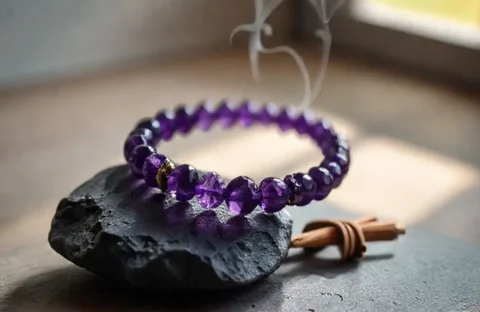
- Amethyst: A purple variety of quartz known for its calming energy and connection to intuition and spirituality. It is the birthstone for February.
- Rutilated Quartz: Clear Quartz with needle-like inclusions of rutile. It’s believed to be an illuminator for the soul, promoting spiritual growth and cleansing the aura.
- Rose Quartz: The stone of unconditional love. This pink crystal is used to attract love, foster self-love, and heal emotional wounds. Sourcing high-quality, ethically mined crystals is a core principle at Buddha Bodhis.
- Enhydro Quartz: An exceptionally rare crystal containing pockets of water, trapped as the crystal formed millions of years ago. It is considered a stone of purity and adaptability.
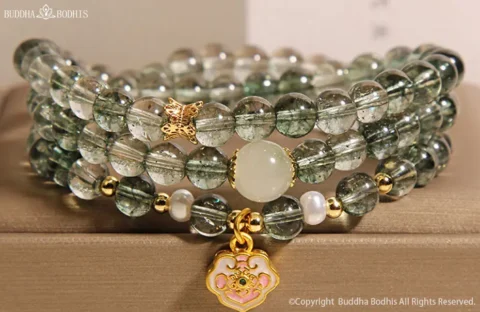
- Green Phantom Quartz: A crystal that supports growth and overcoming stagnation. The “phantoms” are mineral inclusions that show the crystal’s past stages of growth, symbolizing one’s own journey.
- Star Rose Quartz: A type of Rose Quartz that exhibits a six-rayed star effect (asterism) when polished and viewed under a direct light source.
- Quartz Cat’s Eye: Contains parallel fibrous inclusions that create a band of light across the surface, resembling a cat’s eye.
💬 Frequently Asked Questions (FAQ)
1. What is the main chemical component of a crystal?
The vast majority of common crystals, such as Amethyst, Citrine, and Rose Quartz, are varieties of Quartz, and their primary chemical component is silicon dioxide (SiO₂).
2. How can you tell the difference between natural and synthetic crystals?
Natural crystals often have minor imperfections, such as inclusions, color zoning, or slight irregularities. Lab-grown (synthetic) crystals are typically flawless, with perfect clarity and uniform color, and are often sold at a lower price point.
3. What are “radiating” and “absorbing” crystals?
This is a metaphysical classification. Radiating crystals (e.g., Clear Quartz, Citrine) are believed to project energy outward to attract intentions, while absorbing crystals (e.g., Rose Quartz, Amethyst) are thought to draw in and neutralize negative energy.
4. What is the best crystal for a beginner?
Clear Quartz is widely recommended for beginners due to its versatility, powerful amplifying energy, and ease of programming with any intention. Rose Quartz (for love) and Amethyst (for calm) are also excellent starting points.
5. What are inclusions in crystals?
Inclusions are any materials that were trapped inside a mineral during its formation. This can include other minerals, gas bubbles, or water. Far from being flaws, inclusions often make a crystal unique and more powerful, as seen in Rutilated Quartz and Phantom Quartz.
6. How do I cleanse my crystals?
Common cleansing methods include smudging with sage, placing them in moonlight (especially during a full moon), burying them in the earth, or using sound from a singing bowl. Note that some crystals, like Selenite, should not be placed in water.
7. Can I wear or use different types of crystals at the same time?
Yes, you can combine crystals to amplify their energies. It’s often recommended to pair crystals that have complementary properties, such as Amethyst for calm and Rose Quartz for love, to create a harmonious energetic field.
8. What is the difference between Smoky Quartz and Black Tourmaline?
While both are protective and grounding, Smoky Quartz is known for transmuting negative energy into positive energy, while Black Tourmaline is thought to absorb and repel it, acting as a powerful energetic shield.