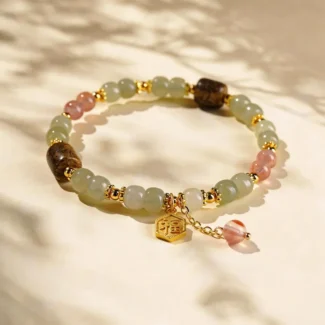


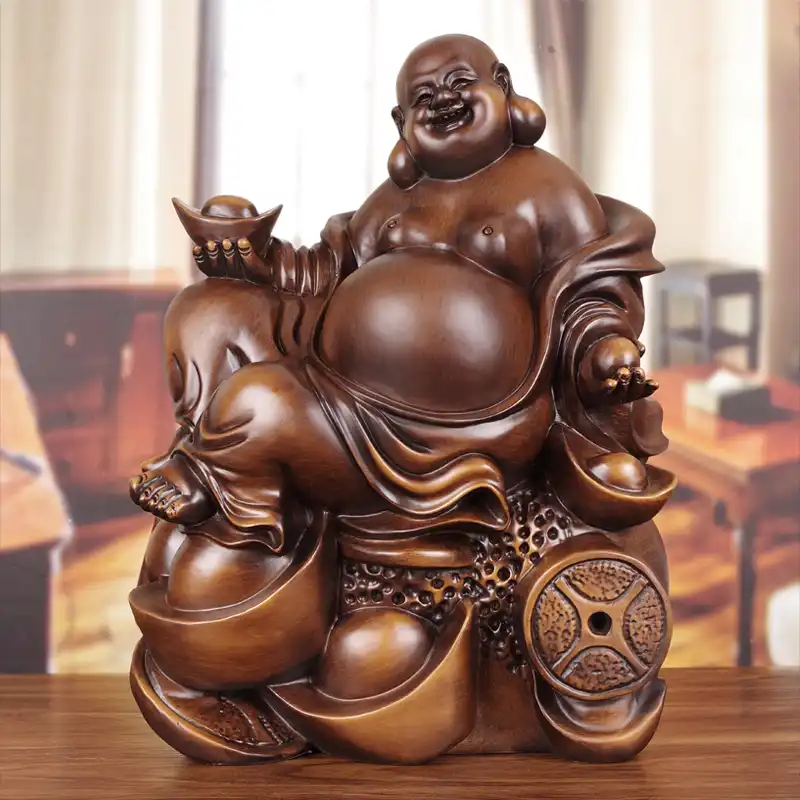

For millennia, jade has been more than just a gemstone; it has been a symbol of purity, a vessel of spiritual energy, and a cornerstone of entire cultures. Many are drawn to its serene beauty, yet feel intimidated when it comes to selecting a piece. Without expert knowledge, choosing high-quality, authentic jade can feel like a daunting task.
But becoming a confident jade buyer is a journey, not a race. This comprehensive guide will walk you through everything a beginner needs to know. From understanding the profound spiritual benefits of jade to distinguishing between its two main types and mastering the key principles of jade quality, you will learn how to choose a piece that is not only beautiful but also resonates with your spirit.
Table of Contents
✨ The Spiritual and Physical Benefits of Jade
Jade is revered as a “living” stone, one that offers a host of benefits to its wearer. Its power is both subtle and profound, touching on emotional, spiritual, and physical well-being.
- 🧘 A Stone of Serenity and Calm: The beauty of jade lies in its spiritual essence. Wearing or simply holding a piece of jade can help quiet the mind, calm a restless spirit, and encourage a state of tranquility. As detailed in spiritual publications like Tricycle: The Buddhist Review, this kind of mindfulness is key to a balanced life, and jade serves as a perfect physical anchor for this practice.
- 🛡️ Energetic Protection and Dispelling Negativity: Since ancient times, jade has been used as a sacred object in rituals and as a powerful amulet for protection. It is believed to create a shield around the wearer, warding off negative energy and clearing away inauspicious influences.
- 🌿 Promoting Vitality and Longevity: Jade contains a variety of trace elements beneficial to the human body, such as zinc, magnesium, and iron. It is believed that when worn against the skin, these elements can be absorbed, helping to activate cells and enhance the body’s immune function.
- ❄️ A Soothing, Cooling Touch: With its high thermal capacity and crystalline structure, jade has a unique physical property: it feels cool and smooth to the touch. This can help to cool the body, regulate temperature, and keep the mind feeling clear and refreshed.
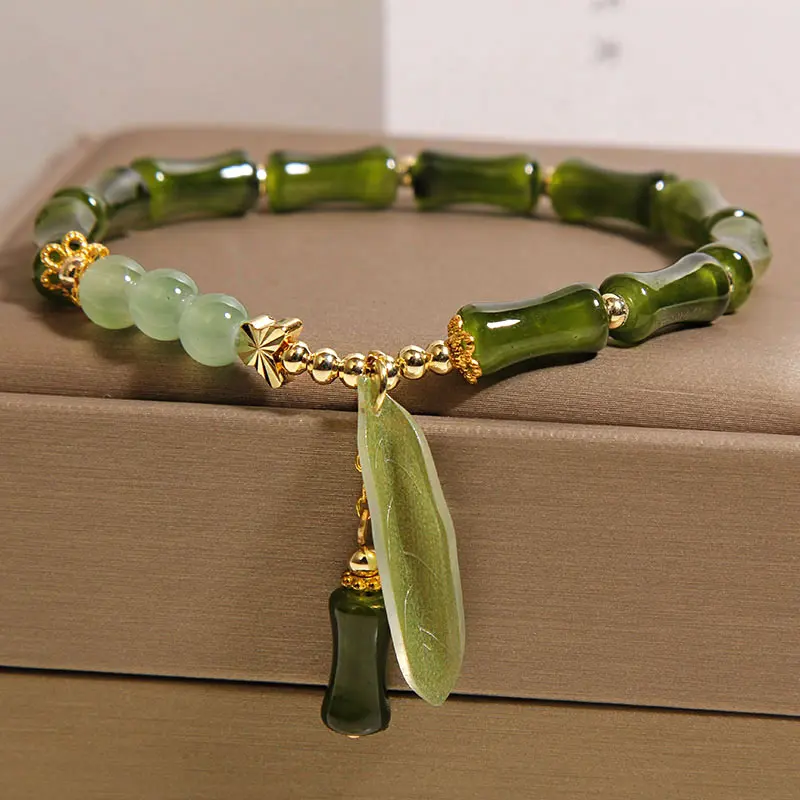
💎 Jadeite vs Nephrite: Understanding the Two Types of Jade
This is the most crucial distinction for any buyer to understand. The term “jade” actually refers to two different minerals.
- 💚 Jadeite (Hard Jade): This is the rarer, more valuable, and more sought-after type of jade.
- Hardness: 6.5 – 7 on the Mohs scale.
- Luster: It has a vibrant, glassy luster and often a crystalline appearance.
- Color: It comes in a wide range of colors, but it is most famous for its intense, emerald-like green, known as “Imperial Jade.”
- Use: Primarily used for high-end gemstone jewelry.
- 🤍 Nephrite (Soft Jade): More common and generally more affordable, Nephrite is known for its incredible toughness.
- Hardness: 6 – 6.5 on the Mohs scale.
- Luster: It has a waxy or oily, resinous luster that feels exceptionally smooth and almost soft to the touch.
- Color: Its colors are typically more muted, including creamy whites, deep spinach greens, and earthy browns.
- Use: Often used for intricate carvings, ornaments, and traditional jewelry.
For a deep dive into the mineral properties of both, the Gemological Institute of America (GIA) offers a detailed comparison of Jadeite and Nephrite.
🌟 The 5 Pillars of Judging Jade Quality
Experts evaluate jade based on five key criteria. Learning these will empower you to make an informed choice.
- Color (Se): Look for a vibrant and uniform color. For green jade, a rich, medium-to-deep tone is most desirable. For white jade, a pure, even white is best.
- Clarity & Purity (Jing): High-quality jade should be free of significant flaws, cracks, or dark impurities. Some natural stone “veins” are acceptable, but major fractures reduce its value.
- Transparency (Tou): This refers to how well light passes through the stone. For colored jade, higher transparency is generally better. For white jade, a slight translucence is often preferred.
- Texture (Run): The texture should be fine, smooth, and feel “moist” or “oily.” The finest jade feels like a bar of soap or even baby’s skin.
- Craftsmanship (Gong): The final value of a piece is heavily influenced by the skill of the carver. Excellent craftsmanship can enhance the natural beauty of the stone and turn it into a true work of art. At Buddha Bodhis, we believe that exceptional craftsmanship is a form of reverence for the stone itself.
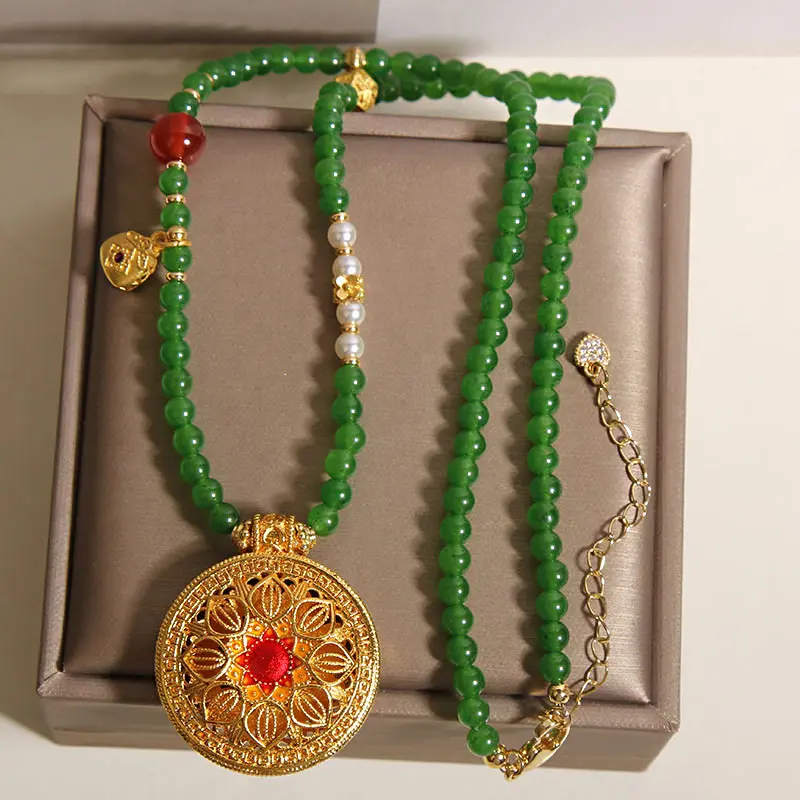
✅ How to Spot Real Jade: 4 Simple Authenticity Tests
- 1. The Sound Test: Gently tap the jade piece with another stone or a metal object. If the sound is clear and bell-like, it is likely free of significant internal cracks. A dull, muffled sound suggests a fracture.
- 2. The Touch Test: Real jade is a poor heat conductor and should feel cool, smooth, and dense in your hand. Fakes made of glass or plastic will warm up much more quickly.
- 3. The Visual Inspection: Look at the jade under a strong light. Check for a uniform, pure color. Real jade will almost always have some minor natural inclusions or fine fibrous patterns. If a piece looks too perfect and flawless, it might be a fake.
- 4. The Water Drop Test: Place a drop of water on the surface of the jade. On real, untreated jade, the water should bead up like a dewdrop and remain intact for some time due to the stone’s surface tension. On fakes, the water may spread out more quickly.
🧼 How to Care For Your Jade Jewelry
To ensure your jade remains beautiful for generations, proper care is essential. It is a durable gem, but it is not indestructible.
- Gentle Cleaning: The best way to clean your jade is with a soft cloth and lukewarm water. Avoid harsh chemicals, soaps, and ultrasonic cleaners that can damage the stone’s surface or seep into micro-fractures.
- Avoid Impact: While Nephrite is tough and Jadeite is hard, a sharp blow can cause either to chip or fracture. Be especially mindful when wearing a jade bangle.
- Proper Storage: Store your jade pieces separately in soft pouches or a lined jewelry box. This prevents them from being scratched by harder gemstones like diamonds. The American Gem Society (AGS) provides excellent detailed guides on the proper care and storage of all precious jewelry.
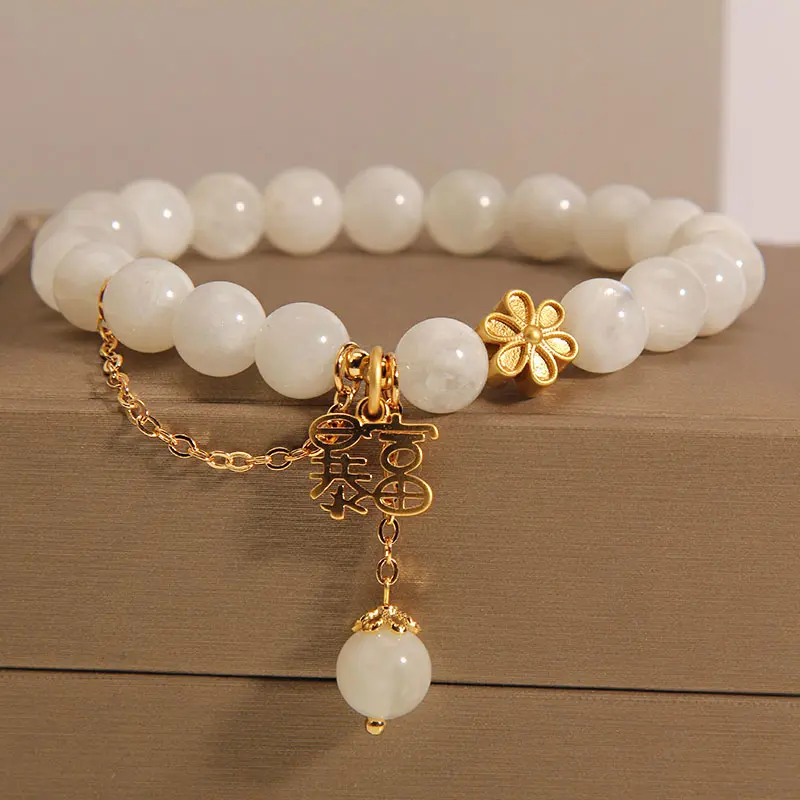
Conclusion
Choosing jade is a beautiful and personal journey. By understanding the profound spiritual benefits of jade, the difference between Jadeite vs Nephrite, and the key markers of jade quality, you can move from a novice buyer to a confident collector. Remember to trust your intuition, take your time, and choose a piece that speaks to you.
A piece of high-quality jade is more than an investment; it is a spiritual companion that will last for generations. For authentic and masterfully crafted jade jewelry that honors this timeless tradition, explore the exquisite collection at Buddha Bodhis.
Frequently Asked Questions (FAQ)
1. What is the difference between Jadeite and Nephrite?
Jadeite and Nephrite are two distinct minerals. Jadeite is rarer, harder, and more valuable, known for its vibrant, glassy luster. Nephrite is more common, tougher (less prone to breaking), and has a softer, waxy appearance.
2. What is the most valuable color of jade?
For Jadeite, the most valuable color is an intense, vibrant emerald green known as “Imperial Jade.” For Nephrite, pure, flawless white (known as “mutton fat” jade) is often the most prized.
3. How can I tell if my jade is real?
Perform the simple tests: genuine jade is cool to the touch, dense, and produces a clear, ringing sound when tapped. For certainty, a lab certificate from a reputable institution is the best proof.
4. Which hand should I wear a jade bracelet on?
Traditionally, it is worn on the left wrist to receive its protective and nurturing energies, as the left side is considered closer to the heart.
5. How should I clean my jade jewelry?
Clean it gently with a soft, untreated cloth and lukewarm water. Avoid using harsh chemicals, soaps, or ultrasonic cleaners that could damage the stone.
6. What does it mean if my jade bangle breaks?
In many cultures, it is believed that if a jade bangle breaks, it has absorbed a significant negative impact or illness that was meant for you, thereby sacrificing itself to protect you.
7. Is jade a good investment?
High-quality, certified Jadeite has historically been a strong investment, with its value often appreciating over time due to its rarity and high demand.
8. What does jade symbolize?
Jade symbolizes purity, wisdom, harmony, and protection. It is believed to bring good fortune, health, and longevity to its wearer.
9. Can I wear my jade jewelry in the shower?
It is best to avoid it. Soaps and shampoos can build up on the surface, dulling its luster over time.
10. Why is jade considered a “living” stone?
It is believed that jade absorbs the natural oils from your skin, and over time, its color can appear to become richer and more vibrant the more it is worn, creating a deep bond with its owner.