


Authenticity Guide: Identifying Acid-Etched vs. Natural Dzi is the first step for anyone looking to own a true piece of Himalayan history. We know that finding a real stone can feel hard because the market is full of modern fakes that look very similar to the old ones. Our team at Buddha Bodhis has spent years studying these “Heaven’s Pearls” to help you tell the difference between a mass-produced bead and a treasure with real spiritual value.
- Authentic Dzi beads are made from high-grade Himalayan agate with deep-set patterns.
- True ancient beads show a waxy or oily surface texture from centuries of wear.
- Cinnabar dots and crescent-shaped weathering marks are key signs of age.
- Modern imitations often use harsh chemicals for acid-etched patterns that look sharp and flat.
- Real stones are seen as protective amulets that connect to the Root Chakra.
What Is Dzi Bead Authenticity?
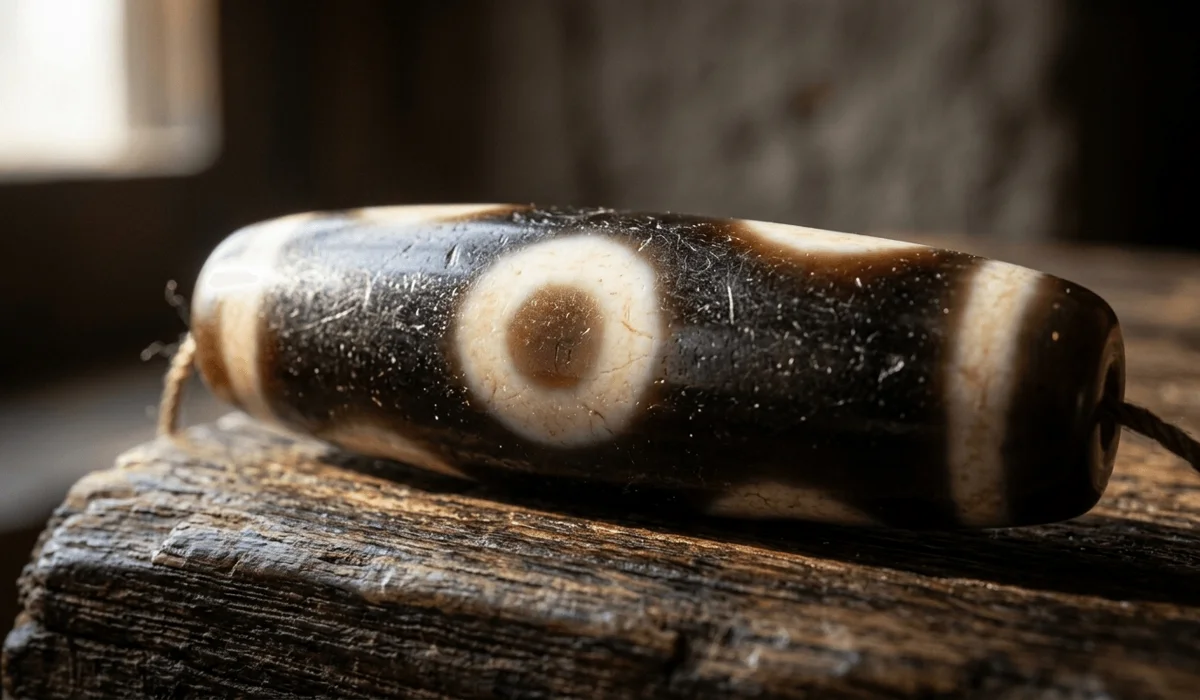
Authenticity in Dzi beads is about the history and the stone itself. We define a real bead as one that has historical integrity, meaning it was made long ago using traditional ways rather than modern machines. Collectors often talk about “Ancient Dzi” versus “New Dzi,” where the older ones carry the most value and cultural weight.
Origin and Materials
Genuine beads come from the Himalayan regions, such as Tibet, Bhutan, and Ladakh. The stones used are a special type of Himalayan agate that has its own unique feel and weight. You can learn more about different stones by checking out Crystal Healing Properties to see how minerals affect our energy.
Basic Characteristics
An authentic bead usually has a waxy surface that feels soft to the touch, almost like skin. This texture happens because the stone has been worn against skin and cloth for hundreds of years. When we look closely, the patterns seem to be part of the stone, not just something painted on top.
Spiritual Meaning and Symbolism
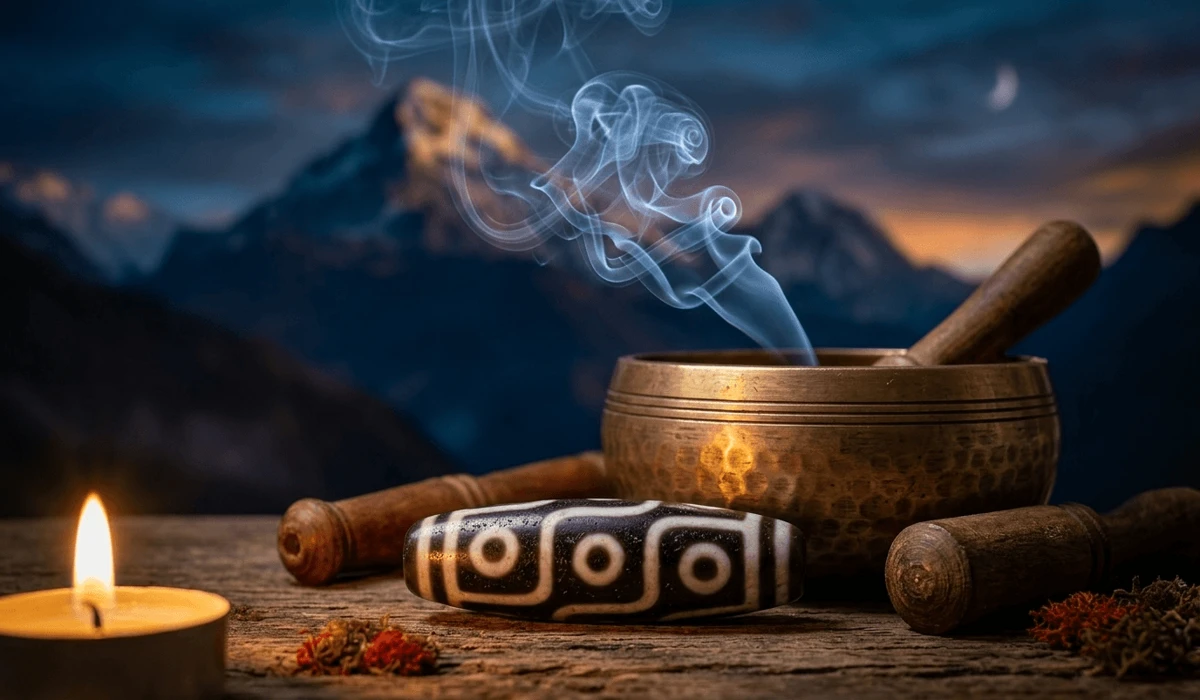
In Tibetan culture, Dzi beads are known as Heaven’s Pearls. Many people believe they are not made by humans but are gifts from the sky. Each pattern, especially the number of “eyes,” holds a specific meaning for the person wearing it.
Traditional Symbolism
The number of eyes on a Tibetan Dzi can mean many things. For example, a 9-eye bead is often worn for great wisdom and luck. These beads act as shields, protecting the wearer from bad luck or negative energy in their daily life.
Chakra Associations
Most Dzi beads are linked to the Root Chakra (根轮) to help people feel grounded. When you feel safe and steady, it is easier to focus on your goals. Some higher-eye beads also help the Third Eye (第三眼) and Crown Chakra (顶轮) for better spiritual focus.
Benefits and Intentions Associated with Tibetan Dzi Beads
People choose these beads for many reasons, but the main goal is usually protection. We have seen many clients wear them during big life changes or when they travel to stay safe. They are more than just jewelry; they are tools for the mind and spirit.
- Protection: Used to shield the user from negative vibes or stress.
- Abundance: Patterns like the “Money Hook” focus on bringing wealth.
- Balance: The round shapes help create a sense of inner peace.
- Focus: Many use them during prayer to stay present.
Using these stones as a focal point during mindfulness practices can help you stay calm. If you want to see how these patterns look on real jewelry, you can browse Tibetan Beads in our latest collection. Observing the stone under a lens also helps you appreciate the slow work of nature over time.
How to Wear Tibetan Dzi Beads
Knowing which hand to wear your bead on is a common question in Feng Shui (风水). Traditionally, the Left Hand is the “receiving” hand. Wearing your bead here helps you take in the energy and protection the stone offers.
The Right Hand is known as the “giving” hand. If you want to project strength to others or clear out your own blockages, the right side is best. We suggest choosing the hand that fits what you need most right now, whether it is inner growth or an outer shield.
Video source: YouTube
Author: Ancient Dzi Shop
Original video link: https://www.youtube.com/watch?v=OEoNgpJmR94
Acid-Etched Dzi vs. Natural Agate Patterns
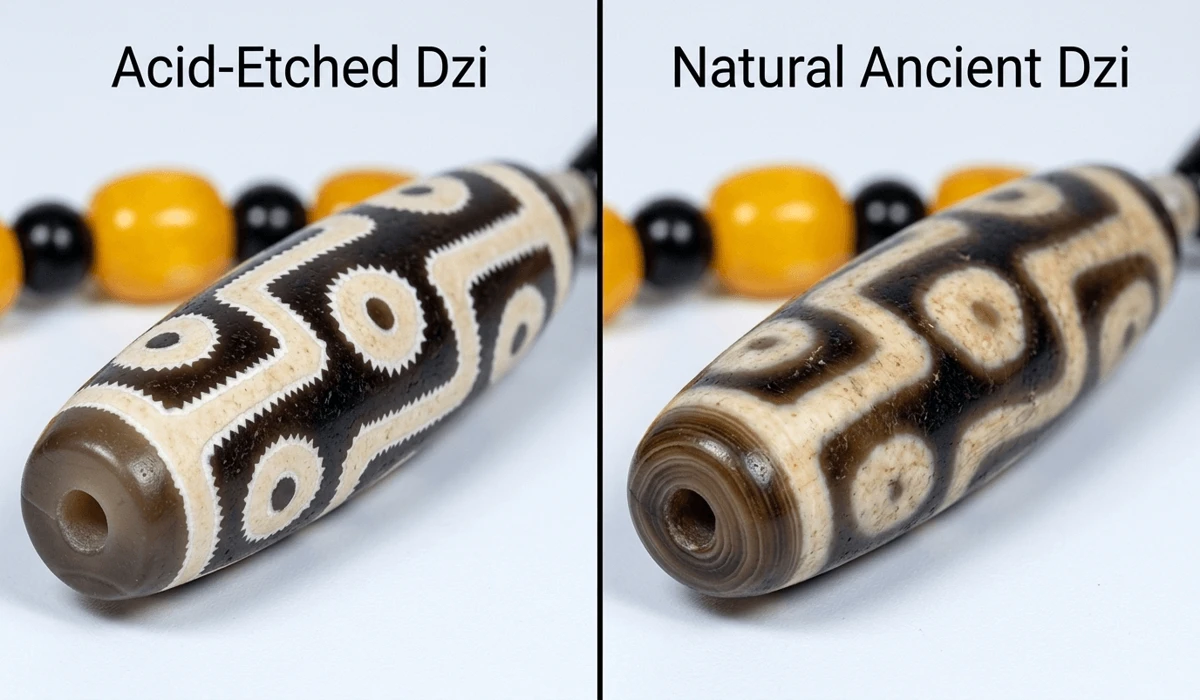
The biggest problem for collectors is the rise of acid-etched Dzi. These are made in factories using strong chemicals to burn patterns into the stone. They often look too perfect, which is usually the first sign that they are not old or natural.
Identifying Chemical Etching
When chemicals are used, the lines often have jagged edges. If you look through a lens, you might see small “bleeding” marks where the acid ate into the agate. These patterns sit on the surface and do not have the depth of a real ancient stone.
Natural Agate Banding
Natural patterns in Himalayan agate are three-dimensional. They follow the way the stone grew over millions of years. Ancient makers used heat to set the white patterns, making them part of the stone’s body so they never fade away.
| Feature | Authentic Ancient Dzi | Acid-Etched Imitation |
|---|---|---|
| Pattern Edges | Soft, integrated, smooth | Sharp, jagged, painted look |
| Surface Texture | Waxy, oily, matte | Glassy, shiny, or rough |
| Weathering Marks | Crescent-shaped “C-marks” | Scratched or sandblasted |
| Internal Growth | Visible natural banding | Dull or chemically altered |
Who Is a Dzi Bead Suitable For?
Dzi beads are perfect for anyone who wants a grounded energy. If you often feel overwhelmed by the world around you, the weight and vibration of this stone can help you find your center. They are especially good for people who enjoy historical artifacts and spiritual tools.
While anyone can wear them, those born under Earth signs like Taurus or Capricorn often feel a strong pull toward them. This is because the stone represents stability. If you are going through a tough time, the protective reputation of the bead can provide a sense of comfort.
How to Identify Authenticity: Physical Markers
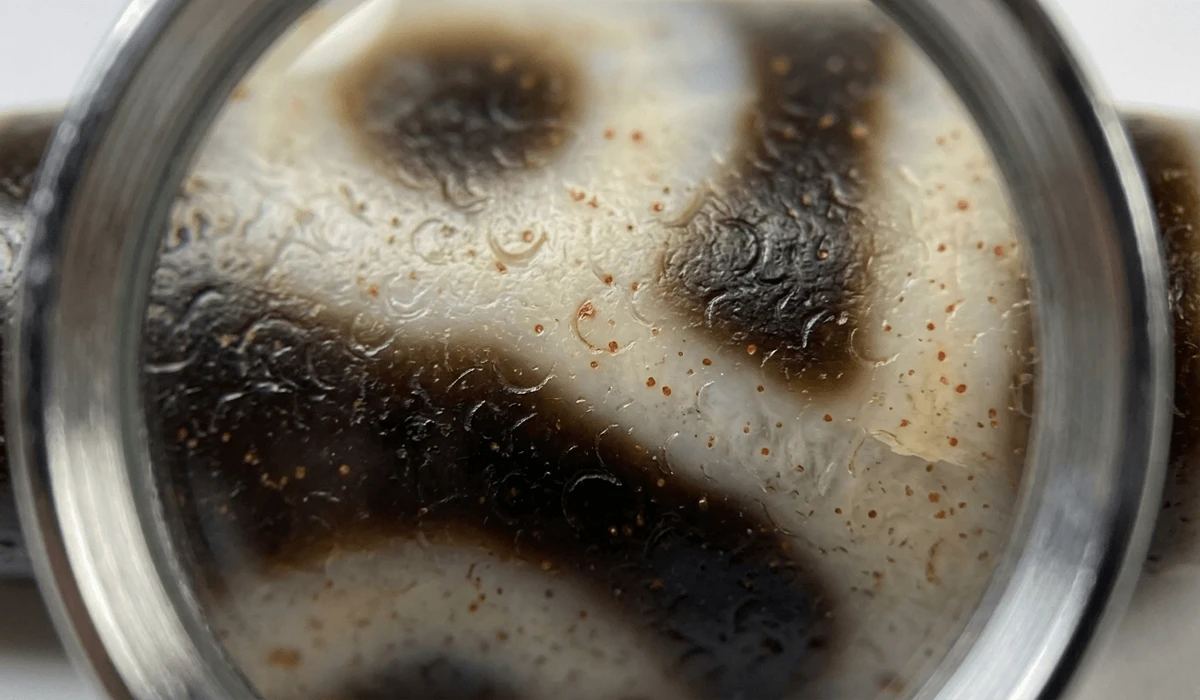
To really know if a bead is real, you must look for weathering marks. These are tiny crescent-shaped lines that we call “C-marks.” They happen naturally when stones hit each other over hundreds of years, and they should have smooth edges.
Cinnabar Dots in Dzi Beads
Another key sign is cinnabar dots. These are tiny red or black spots that grow from inside the agate. They are very hard to fake and are a sure sign of a very old bead. You can find more details in our Dzi Authentication Guide to help you shop with confidence.
Microscopic Examination
Using a loupe is the best way to see the truth. Check the cracks on the surface; they should look worn and soft. Authentic Himalayan agate also has a special way of letting light pass through it, which chemical treatments often destroy.
How to Cleanse, Charge, and Care for Dzi Beads
Taking care of your bead is important to keep its energy fresh. We recommend using smoke cleansing with sandalwood or Tibetan incense. This clears away any old imprints and prepares the stone for your own use.
To charge your bead, you can leave it in the moonlight during a full moon. This is a gentle way to refresh the stone without using heat. You can also place it on a sacred altar or near a singing bowl to use sound for clearing.
Daily care involves keeping the bead away from harsh chemicals like perfume or soap. Store it in a soft silk pouch when you are not wearing it. This shows respect for the stone as a spiritual companion and keeps the oily luster bright for years to come.
We suggest checking professional resources like Gemological Research Center or British Gemmology Association for more technical info on agate. For general history, Online Encyclopedia Information is a good place to start.
Frequently Asked Questions
Q: How can I tell if my Dzi bead is acid-etched?
A: Look at the lines under a magnifying glass. If they look like a flat crust on the surface or have very sharp, jagged edges, they are likely acid-etched. Real patterns look like they are soaked deep into the stone.
Q: What are cinnabar dots on a Dzi bead and why do they matter?
A: These are tiny mineral spots that come from within the stone over a very long time. They are important because they are natural signs of extreme age and are almost impossible for fakers to copy well.
Q: How do I identify natural weathering marks on Himalayan agate?
A: Look for small, crescent-shaped indentations called C-marks. These should be scattered randomly and have smooth, rounded edges. Fake marks often look like straight scratches or sandblasted pits.
Q: Should I wear my Dzi bead on the left or right hand?
A: Wear it on your left hand if you want to receive protection and healing energy. Wear it on your right hand if you want to project strength and guard your surroundings from negative energy.
Q: How do I properly cleanse and prepare a Tibetan Dzi bead?
A: You can use incense smoke or the sound of a singing bowl to clear the stone. After cleansing, hold the bead in your hands and set a clear goal or intention to prepare it for your journey.
Conclusion
Finding a real Dzi bead takes time and a bit of knowledge about Himalayan agate. While factory-made beads can look nice, they lack the deep history and soul of an ancient piece. Always look for the waxy feel, the cinnabar dots, and the soft weathering marks that prove a stone has seen the world. We invite you to stay curious and choose stones that feel grounded and true to your spirit.
This content is for information and cultural exchange only. It does not constitute medical, legal, financial, or other professional advice. Readers should consult with qualified professionals if needed.

Written by the Buddha Bodhis Team
Since 2020, we have been devoted to exploring traditional year-based wisdom, classical Feng Shui principles, and the rich spiritual symbolism rooted in Eastern cultural heritage. Our work bridges ancient metaphysical systems with modern life, interpreting annual cycles, elemental energies, and symbolic meanings to offer thoughtful insight and practical guidance. Through continuous research and practice, we aim to preserve traditional knowledge while making it accessible, relevant, and meaningful for contemporary seekers of balance, intention, and personal growth.
TikTok | YouTube | Pinterest | X
buddhabodhis@gmail.com