


We believe the elephant is more than just a beautiful animal. In our research at Buddha Bodhis, we see the elephant as a bridge between the physical world and the spiritual sky. It acts as a steady anchor for the human mind in our fast world of digital noise. By bringing this symbol into your home, you invite a rhythmic pulse of patience and strength. The elephant reminds us that true power is gentle and grounded in the earth while reaching for high wisdom.
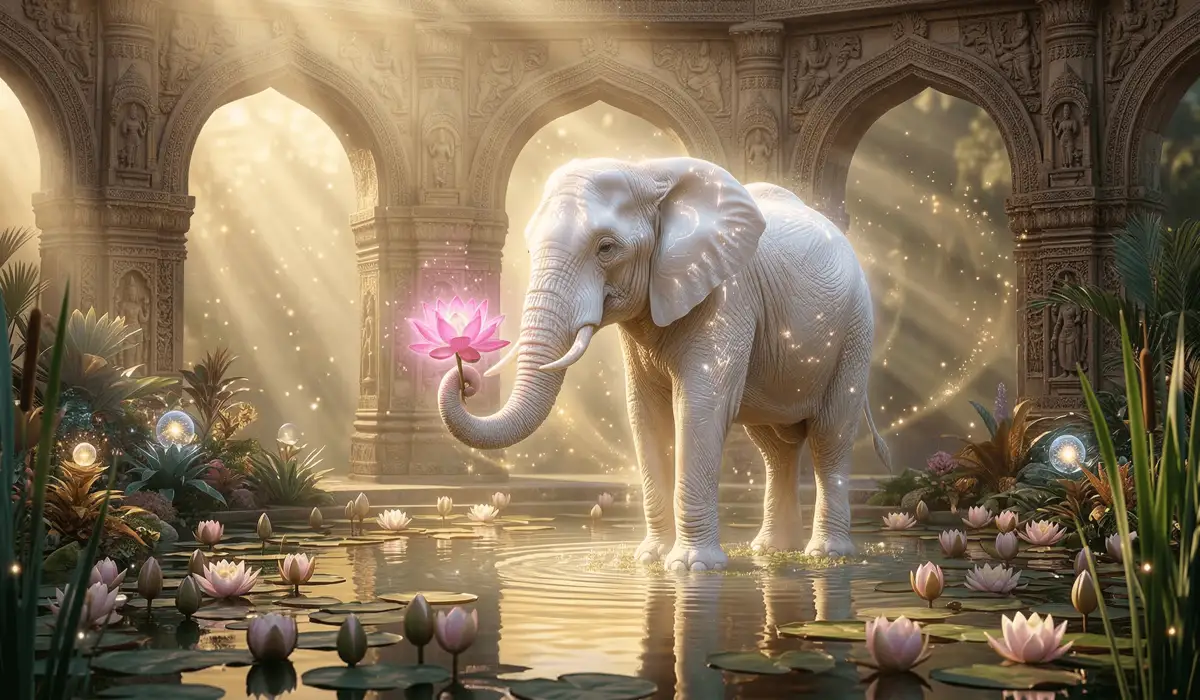
Quick Summary: In Feng Shui and ancient Eastern traditions, the elephant represents primordial strength, spiritual wisdom, and unshakable protection. Whether used for wealth (trunk up) or grounding (trunk down), it serves as a “Sacred Mountain” in the home. It harmonizes the flow of Chi (energy) and acts as a guardian against negative vibrations.
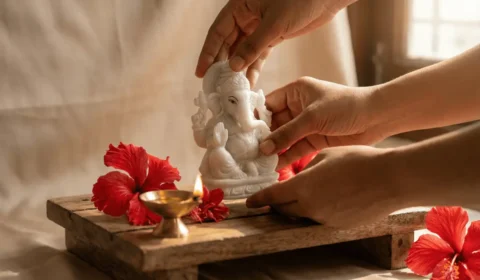
The elephant has deep roots in Vedic, Buddhist, and Taoist traditions. In Buddhist legend, Queen Maya dreamt of a white elephant offering her a lotus flower before the birth of the Buddha. This marked the elephant as a herald of spiritual greatness and a protector of the soul. In the Vedic tradition, Ganesha is the elephant-headed deity known as the Remover of Obstacles. He provides the stable foundation for all new beginnings and success.
Ancient Origins and Sacred Lore: The Genesis of the Elephant Totem
The white elephant is a “Precious Jewel” in many ancient stories. It represents the sovereignty of the soul and the power of a fair ruler. We often see elephants supporting the thrones of enlightened beings in old art. This shows they are guardians of the Dharma (universal truth) and keep the world in balance. Their presence in a home signals that the space is protected by a divine and noble force.
In the science of Vastu Shastra, elephant energy is called Gaja. It is the core of a prosperous household because it offers a solid base. The cosmic elephant Airavata is said to have churned the ocean of milk to bring rain and fertility. This connects the elephant to the abundance of the heavens and the growth of the land. In Taoist culture, the word for elephant sounds like the word for peace or auspiciousness.
The Elephant as a Bringer of Peace
Historically, large elephant statues stood at the gates of imperial palaces and tombs. They were meant to anchor the Mandate of Heaven and keep the kingdom safe. This tradition continues today when we place elephants at our front doors. They act as filters that let in good energy while blocking harmful vibes. Even a small statue carries the weight of this ancient history and royal dignity.
We have observed how the elephant’s role has evolved over thousands of years. It began as a literal royal vehicle for kings and gods. Today, it has become a psychological tool for modern people seeking stability. It is a symbol that tells us to slow down and move with intention. To find the right piece for your space, you might look at Cute Animal Decor options that fit your style.
The Hidden Philosophy: Decoding Elephant Symbolism and Anatomy
The core concept of the elephant is physical strength guided by spiritual wisdom. This is a beautiful paradox that we love to study. An elephant is massive and strong, yet it is incredibly gentle with its young. It shows us that true power does not need to be aggressive. Instead, it is patient, nurturing, and deeply rooted in the ground.
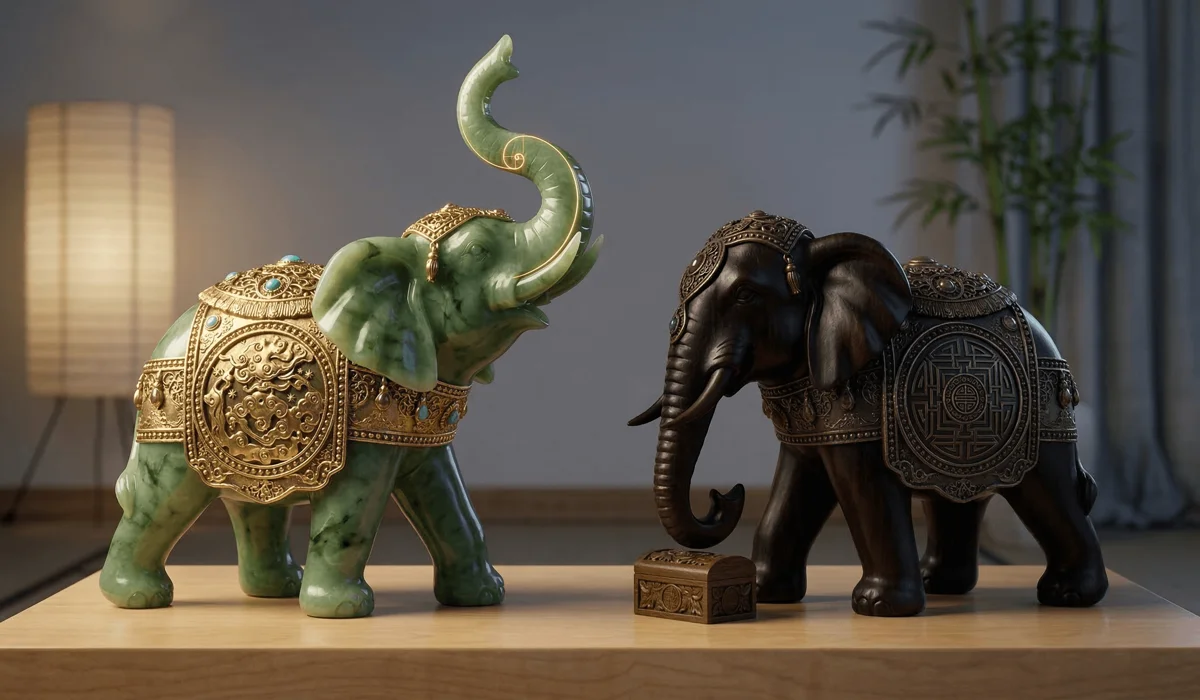
The trunk is the most famous part of the elephant’s sacred geometry. A trunk pointing up is like a shower of good luck. it represents victory and the ability to pull in blessings from the sky. A trunk pointing down is for the storage of wisdom and longevity. It helps with grounding and keeping wealth from flowing out of the house too quickly.
- ☸️ Trunk Up: Best for the entrance to invite joy and prosperity into the home.
- 🕉️ Trunk Down: Best for the bedroom or office to promote focus and long-term health.
- 🧿 White Color: Represents purity, high status, and the birth of new spiritual ideas.
- 🌸 Tusk Detail: Represents the ability to overcome obstacles and defend one’s boundaries.
The eyes and ears of the elephant also hold secret meanings. Their small eyes represent internal insight and the ability to see through lies. Their large ears make them the “Listeners of the World.” This teaches us the virtue of silence and the power of paying attention. When we listen more than we speak, we gain the wisdom of the ancient sages.
Cultural Evolution: Eastern vs. Western Perspectives
In the East, the elephant is a noble vehicle that follows the Eightfold Path. It is steady, mindful, and never wanders off the track. It is used in rituals to ward off Sha Chi (killing energy) from sharp corners or busy roads. Many families keep an elephant near the door to ensure that only peace enters their sanctuary. This view is very traditional and follows strict rules of placement.
In the West, the elephant often represents memory and reliability. We often hear that an “elephant never forgets.” This has turned the animal into a symbol of intelligence and high character. Modern interior designers use elephants to show a sense of worldliness. It adds a layer of intellectual taste to a room while providing a calm atmosphere. As you plan your home for the future, consider the Horse Horoscope 2026 Forecast to see how energy shifts.
The elephant serves as a perfect antidote to our digital age. It moves slowly in a world that is too fast. It stays focused in a world full of distractions. Placing an elephant on your desk is a silent promise to stay grounded and calm during stressful work hours.
This convergence of ideas makes the elephant a global symbol of hope. It doesn’t matter where you are from; the elephant speaks a universal language. It tells us that we can be both strong and kind. It proves that we can carry heavy burdens without losing our inner peace. This is the ultimate lesson of the noble giant.
Adorning the Sanctuary: Why Elephant Decor is Essential?
Modern life can feel like a storm of social anxiety and digital burnout. We are constantly connected to screens, which pulls our energy away from the earth. The elephant acts as a “grounding cord.” It helps us reconnect with our physical bodies and the steady ground beneath us. Having this symbol in your room can reduce the “noise” of modern life.
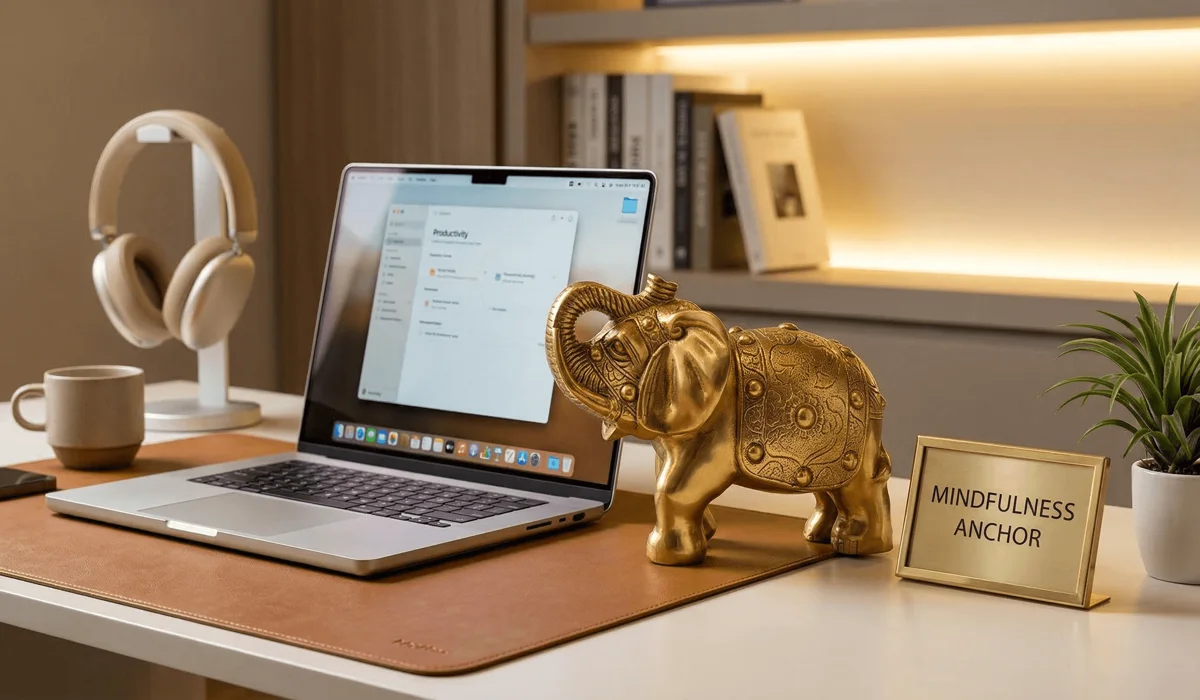
An elephant on an office desk is a powerful mindfulness anchor. It is a visual cue to breathe and pause before reacting to an angry email. This “Zen Zone” helps you act with wisdom rather than impulse. Over time, this leads to better decision-making and a more successful career. You can learn more about these cycles in The Year of the Fire Horse 2026 guides.
The Spiritual ROI of the Elephant Mascot
We believe there is a real spiritual return on investment when using these symbols. When your home feels harmonious, your mind becomes clear. A clear mind leads to better health and stronger relationships. Investing in decor that carries historical weight is a way of honoring your own journey. It is not just a statue; it is a frequency of peace.
The trend of “Talismanic Living” is growing quickly. People want items in their homes that mean something deep. The elephant is the perfect choice because it has thousands of years of positive energy behind it. It is a timeless piece that will never go out of style. It provides a sense of security that modern plastic items simply cannot offer.
Rituals and Practices: How to Use the Elephant?
When you bring a new elephant statue home, you should cleanse it first. This removes any “commercial energy” from the factory or store. You can use the four elements to do this. Pass the statue through incense smoke (air), sprinkle it with a bit of water (water), place it on a bed of salt (earth), or let it sit in the sun (fire). This awakens the spirit of the icon.
After cleansing, set an intention or “Sankalpa.” Speak your goals clearly to the statue. You might say, “Please guard my family’s health,” or “Help me find wisdom in my work.” By doing this, you program the elephant to be a guardian of your vision. It becomes a partner in your daily life rather than just a piece of dust-catching art. Many people use a Wikipedia search to find more specific regional myths to add to their rituals.
The Bagua Wealth Corner Practice
In Feng Shui, the “Xun” position (巽位) is the wealth area of your home. This is usually the far left corner from your front door. Placing a trunk-down elephant here can help stabilize your income. It acts like a heavy weight that prevents money from “leaking” away. This is a classic cure for those who feel their finances are unstable.
For those following Feng Shui Society tips, the material of the statue also matters. A jade elephant is wonderful for healing and heart energy. A brass or metal elephant is better for mental clarity and career power. Wooden elephants are perfect for family unity and organic growth. Choose the material that matches the area of life you want to improve most.
Cultural Etiquette and Taboos: Respecting the Icon
There are rules for how to treat an elephant statue with respect. The most important is the Rule of Elevation. You should never place an elephant directly on the floor. This is seen as disrespectful to the spirit of the animal. Always place it on a table, a shelf, or a mantle at eye level or higher.
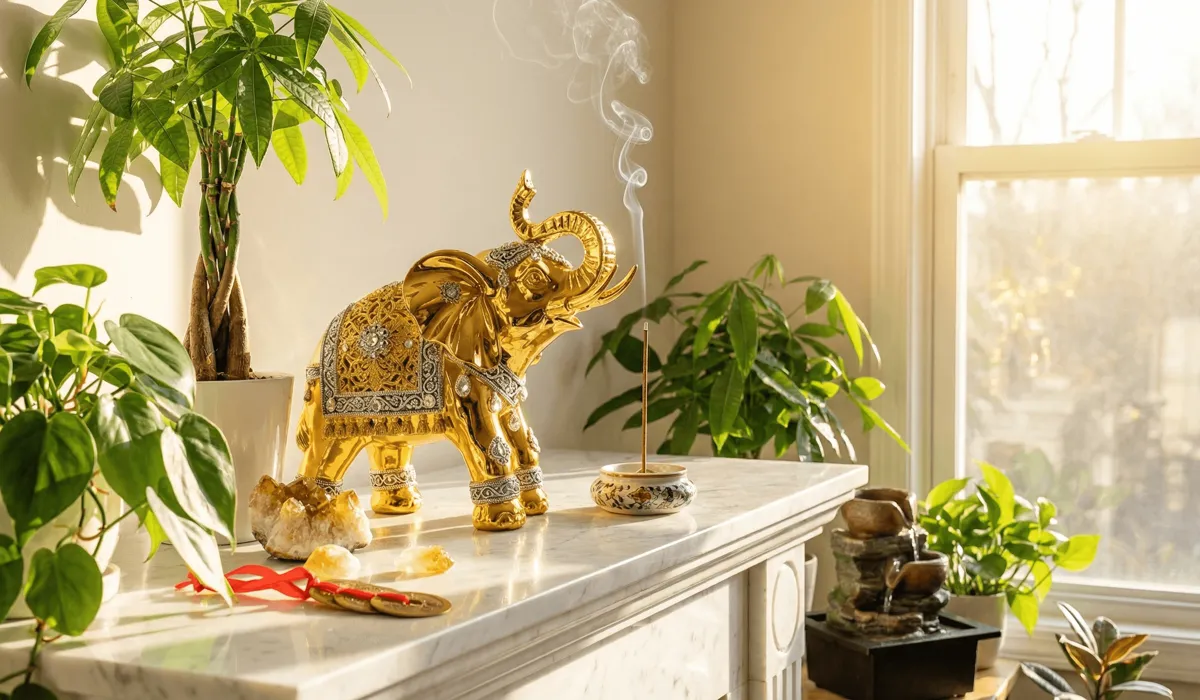
Another taboo involves damaged icons. If an elephant statue gets chipped or broken, its protective energy is considered fractured. It may no longer be able to shield your home effectively. If this happens, you should respectfully decommission the statue. Thank it for its service and bury it in the earth or place it in a flowing river.
Choosing the right frequency is key to your success. Look for statues made from natural materials whenever possible. Natural stone, wood, and metal carry the energy of the earth much better than synthetic materials. This helps the elephant connect with the natural flow of Chi in your environment.
We suggest checking resources like World of Feng Shui for more specific placement rules. The direction the elephant faces can also change its effect. For example, facing the door provides protection. Facing into the room brings the luck and blessings inside. Experiment with what feels right for your specific floor plan and energy needs.
FAQ: Essential Questions on Elephant Energy
Q: What is the spiritual ROI of placing an elephant in your workspace in 2026?
A: Placing an elephant in your workspace provides a “Mountain backing.” This psychological support increases your focus and reduces the feeling of burnout. It signals authority and stability, which is vital for high-stakes environments. In 2026, as digital stress increases, the elephant acts as a constant reminder to stay grounded and move with deliberate wisdom.
Q: Should I choose a trunk-up or trunk-down elephant for wealth accumulation?
A: For attracting new wealth and “luck,” a trunk-up elephant is the best choice. It acts like a magnet for positive opportunities. However, for retaining wealth and preventing financial loss, a trunk-down elephant is superior. It represents the storage of resources and the building of a solid, lasting foundation for your bank account.
Q: What is the difference between Vastu and Feng Shui elephant placement?
A: Vastu Shastra often focuses on the North-East direction for spiritual growth and the main entrance for general prosperity. Feng Shui uses the Bagua map, which looks at the specific “sectors” of your home based on the front door. While the goals are similar, Vastu is more about alignment with the compass, while Feng Shui is about the flow of energy through the house layout.
Q: How do elephants symbolize family unity in modern fragmented households?
A: The “Mother and Baby” elephant statue is a powerful cure for disconnected families. It represents the strong, unbreakable bond between parent and child. Placing this symbol in the family room or center of the home promotes a sense of belonging and mutual support. It reminds family members to protect and nurture one another through life’s challenges.
Q: How does an elephant statue act as a mountain for office backing?
A: In symbolic energy work, having a “solid” object behind your back provides a sense of security. It prevents “backstabbing” and makes you feel more confident in your seat of power. An elephant, being the largest land animal, represents the ultimate “mountain.” It gives you the energetic support needed to lead and make tough decisions without fear.
Actionable Ritual Steps:
- Mindfulness Visualization: Sit quietly and imagine the four legs of the elephant as pillars for your health, career, relationships, and spirit.
- Set Daily Intentions: Each morning, touch your elephant statue and state one small goal you wish to achieve with wisdom.
- Cleanse with Sunlight: Once a month, place your statue in a sunlit window for three hours to recharge its solar energy.
- The Ganesha Breath: Practice deep belly breathing while looking at the elephant to clear mental obstacles and calm your nerves.
Conclusion: Integrating the Elephant’s Wisdom
The path of the noble giant is one of quiet strength. We have seen that true power is not found in noise or force. It is found in the steady application of wisdom and the courage to be gentle. By bringing an elephant into your home, you transform a simple house into a sanctuary of guarded peace. May your home be as stable as the earth and your spirit as vast as the wisdom in the elephant’s eyes.
The information provided in this article is for cultural exchange and educational purposes only. It does not constitute medical, legal, financial, or other professional advice. Readers should consult with qualified professionals regarding specific personal or professional matters.

Written by the Buddha Bodhis Team
Since 2020, we have been devoted to exploring traditional year-based wisdom, classical Feng Shui principles, and the rich spiritual symbolism rooted in Eastern cultural heritage. Our work bridges ancient metaphysical systems with modern life, interpreting annual cycles, elemental energies, and symbolic meanings to offer thoughtful insight and practical guidance. Through continuous research and practice, we aim to preserve traditional knowledge while making it accessible, relevant, and meaningful for contemporary seekers of balance, intention, and personal growth.
TikTok | YouTube | Pinterest | X
buddhabodhis@gmail.com