

A 108 mala necklace is the traditional standard for complete Japa meditation cycles, while a Wrist Mala offers a portable aid for mindfulness. Many practitioners wonder which tool best fits their spiritual lifestyle and daily routine. In this guide, we explore the efficiency of these Buddhist prayer beads to help you find your perfect match.
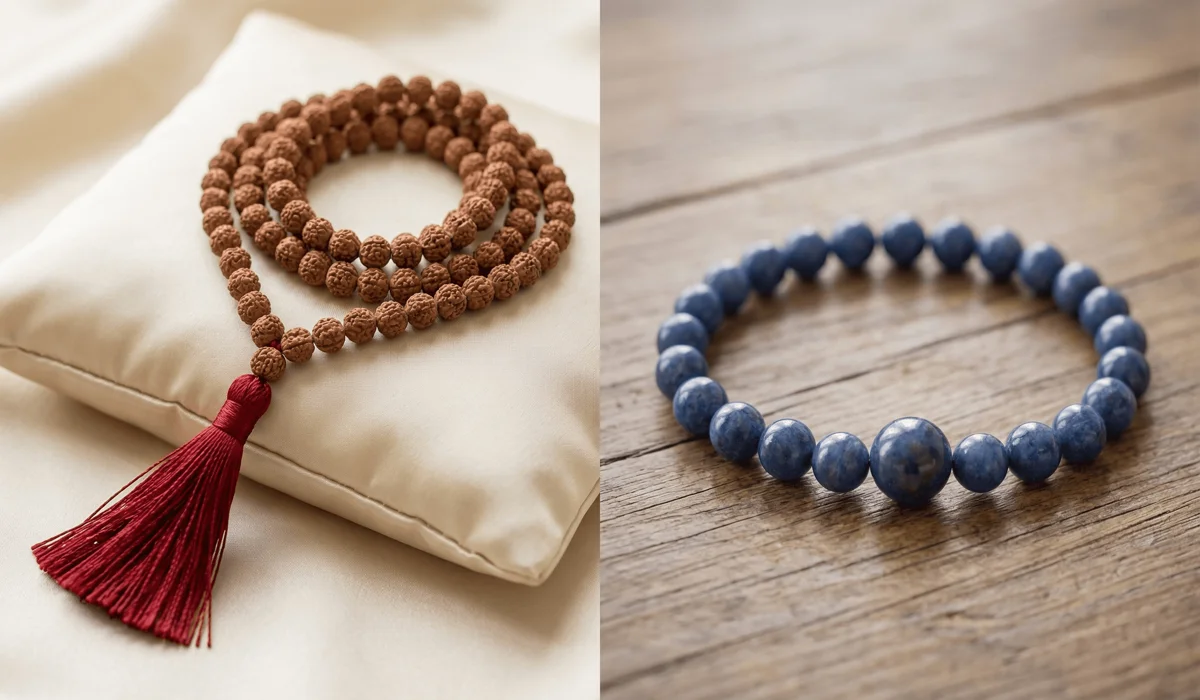
- The 108 mala necklace is best for long, seated meditation sessions.
- Wrist malas provide convenience for busy schedules and quick mantra repetitions.
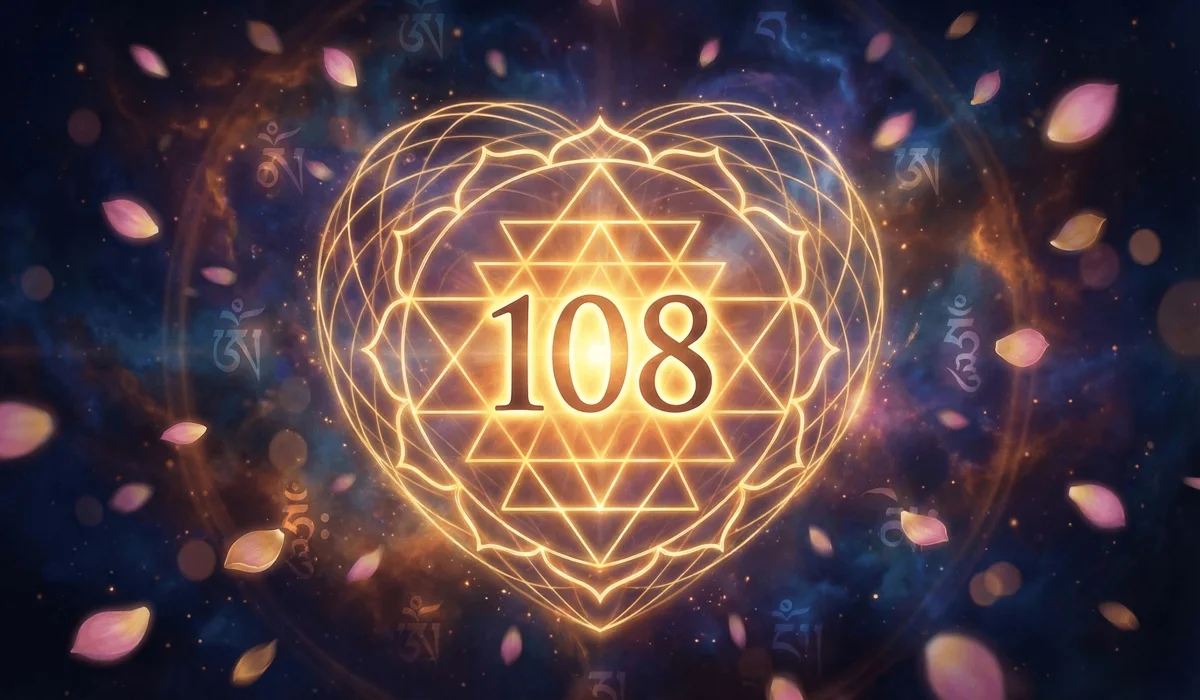
- Sacred geometry links the number 108 to the energy lines of the heart.
- Materials like sandalwood and crystals influence the energy of your practice.
- Choosing between a necklace or bracelet depends on your personal focus goals.
What Is 108 Mala Necklace?
Definition
A 108 mala necklace is a traditional string of Buddhist counting beads that consists of exactly 108 primary beads and one guru bead. A wrist mala, also known as a meditation bracelet, usually features a number of beads divisible by 108, such as 18, 21, or 27. Japa is the meditative practice of repeating a mantra while using these beads for physical feedback and focus.
Origin & Materials
These tools started in ancient India and Tibet as both counting devices and spiritual anchors for the mind. We often use materials like sandalwood, rudraksha seeds, and healing crystals when crafting these sacred items. The guru bead, which means “teacher,” marks the end of a cycle and honors the bond between a student and their mentor.
Basic Characteristics
Necklace malas are quite long, usually measuring between 32 and 40 inches, and are designed for formal seated practice. Wrist malas are typically elastic or adjustable, making them easy to wear and access during your daily movements. Both types of spiritual jewelry serve as a constant reminder of your path and intentions.
Spiritual Meaning & Symbolism
Traditional Symbolism
The number 108 is significant because it represents the 108 earthly desires or “kleshas” that humans strive to overcome. In sacred geometry, the number 1 stands for higher truth, 0 means emptiness, and 8 represents infinity. The guru bead acts as a “meru” or mountain, prompting the practitioner to pause with gratitude before starting a new count.
Chakra Associations
The materials in your mala can align with specific energy centers in the body to enhance your practice. Heart Chakra stones are common in 108 necklaces to help foster compassion during long chanting sessions. Root Chakra materials are often used for wrist malas to keep you grounded during a busy work day.
Cultural or Historical Context
In Tibetan Buddhism, many people keep their malas out of sight to protect the energy of their personal mantra. Traditional etiquette tells us never to cross over the guru bead when counting. Instead, we turn the beads around and move in the opposite direction to begin the next cycle.
Benefits & Intentions Associated with 108 Mala Necklace
Commonly Associated Intentions
Using a 108 mala necklace is usually linked to deep, formal meditation where you have time for a full cycle. Wrist malas are chosen for protection and grounding while navigating high-stress environments like an office or commute. Both tools use tactile feedback to keep the mind anchored in the present moment during silent prayer.
Mindfulness & Personal Practices
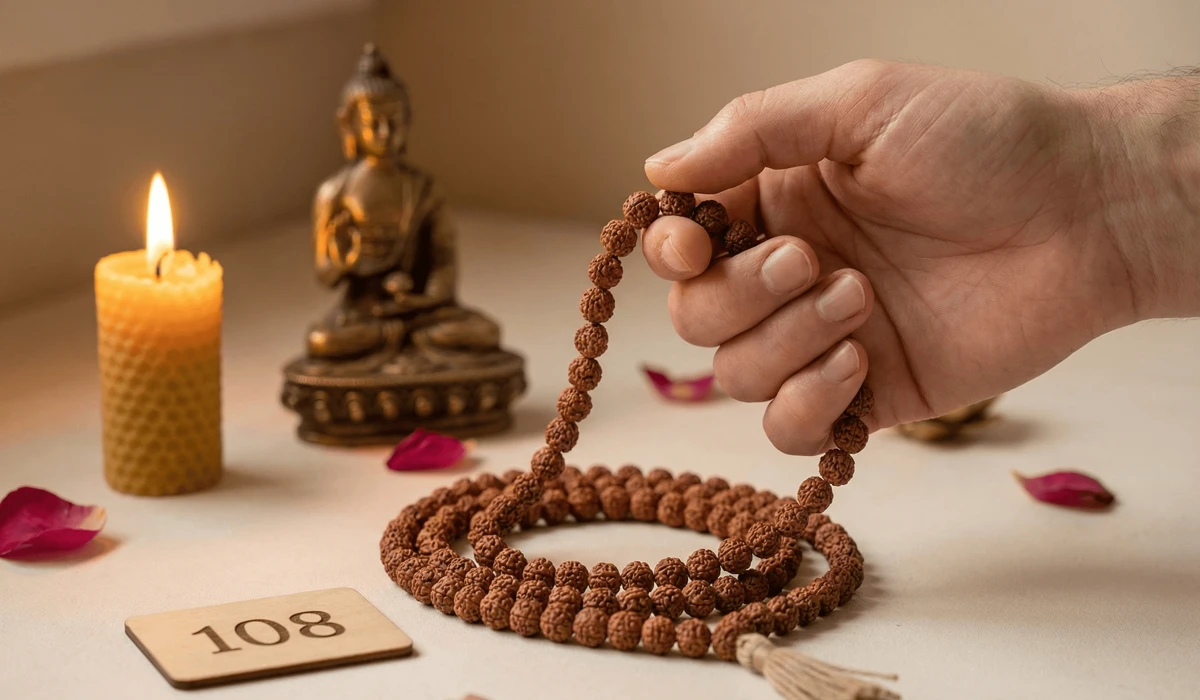
We find that a full necklace encourages a longer and more disciplined commitment to a daily spiritual ritual. Wrist malas offer great convenience, allowing for short bursts of mantra counting during small breaks in your day. Your choice often reflects your current stage of life or the specific goal you want to achieve.
| Feature | 108 Mala Necklace | Wrist Mala Bracelet |
|---|---|---|
| Primary Use | Formal Seated Meditation | Daily Mindfulness & Travel |
| Bead Count | 108 Beads | 18, 21, or 27 Beads |
| Portability | Medium (Wearable) | High (Compact) |
| Energy Focus | Deep Spiritual Immersion | Grounding & Protection |
When selecting your beads, you might want to learn more about Crystal Meanings to find the best match for your energy. Choosing the right stone can significantly boost the impact of your Japa sessions.
How to Wear 108 Mala Necklace and Wrist Malas?
Left Hand vs. Right Hand (Feng Shui Logic)
The left hand is often seen as the “receiving” hand for energy, which is why many people wear wrist malas there. The right hand is usually the active hand we use to move the beads while counting during meditation. Some practitioners wear their mala on the right for protection and on the left for internal growth.
When People Choose to Wear It?
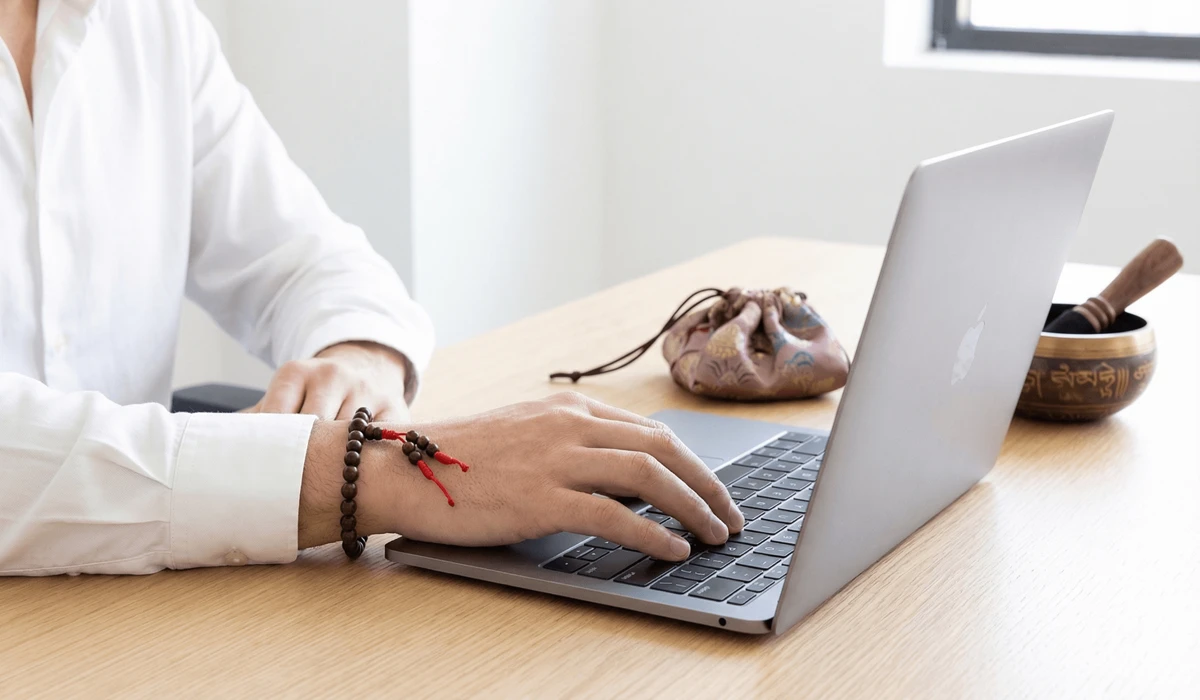
You can wear a 108 mala necklace under your clothes to keep it near your heart or over them during ceremonies. Wrist malas are perfect for travel or work because they do not get in the way of your tasks. We often suggest switching to a wrist mala for long trips to keep your practice alive without carrying a large necklace.
Intention-Setting Practices
Before putting on your beads, hold them in your palms and set a specific goal or dedication for your practice. To see beautiful and authentic designs, you can explore Wrist Malas in our current collection. Breathing gently onto the beads is a traditional way to seal the energy of your new intention.
108 Mala Necklace vs. 27-Bead Wrist Mala
108 Mala vs. 27-Bead Mala
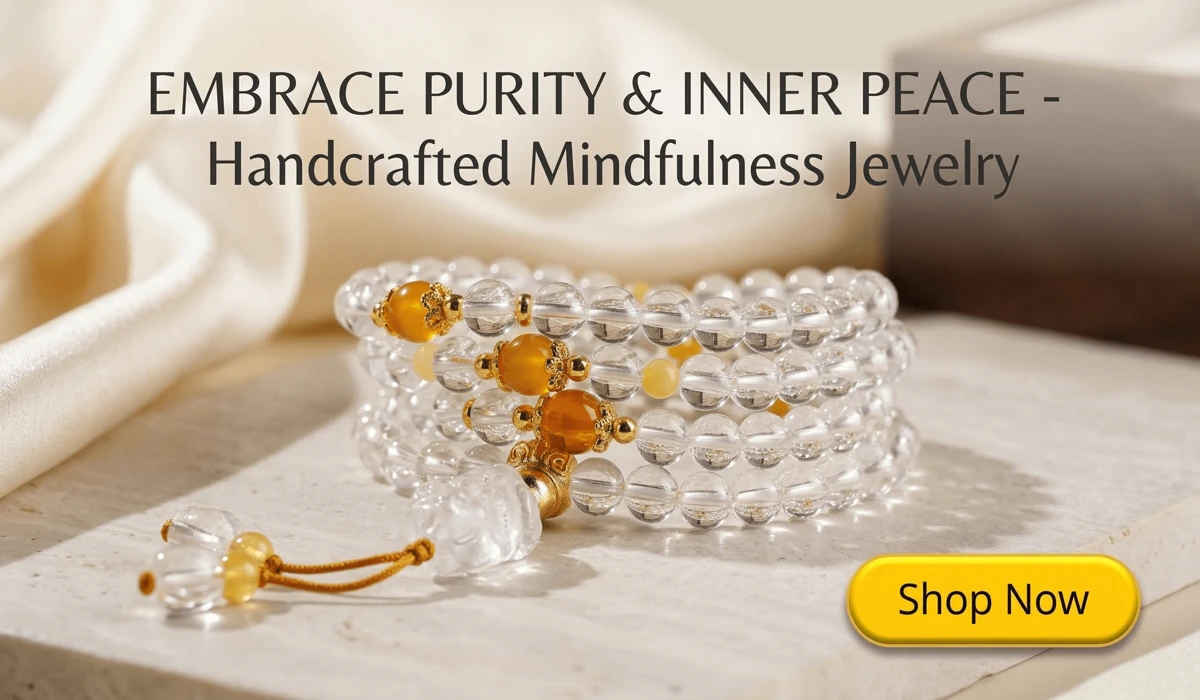
The 108 necklace represents one full cycle of repetitions, which is the standard for traditional Japa practice. A 27-bead wrist mala is exactly one-quarter of that, meaning you need to go around the bracelet four times to finish a full set. This smaller version is much easier to carry while still helping you track your spiritual progress.
For more details on the history of these items, check out the entries on Wikipedia for cultural background. Understanding the roots of these tools makes your practice feel much deeper and more connected.
Symbolism of the Divisible
Small bead counts often hold their own special meanings within various spiritual traditions. For example, 27 beads can represent the 27 lunar mansions found in ancient Vedic astrology. Choosing a smaller count does not lower the spiritual value; it simply makes the practice fit better into a modern life.
Who Are These Tools Suitable For?
Chakra or Energy Alignment
New students often prefer the 108 necklace because it makes counting very simple without needing any mental math. Advanced practitioners might like the wrist mala because it helps them stay mindful during every small task. Many people use both types depending on where they are and what they are doing.
If you want to understand the physical quality of stone beads, you can visit the Gemological Institute of America website. Knowing the hardness and origin of your stones helps you care for them properly over many years.
Zodiac or Astrological Associations
People with active air signs, like Gemini or Libra, often love the convenience that a wrist mala offers for their busy lives. Earth signs, such as Taurus or Capricorn, might find the traditional necklace more helpful for staying disciplined. You should choose the tool that feels most natural for your unique personality and energy.
Lifestyle & Personal Intentions
In a professional setting, a wrist mala acts as a subtle tool for mindfulness that does not draw too much attention. For those who can sit for long periods, the weight and feel of a full necklace provide a great anchor for focus. You may find that reading about Wrist Mala Significance helps you decide which style fits your daily routine.
How to Cleanse, Charge, and Care for Your Mala?
Cleansing Methods
You should gently wipe your beads with a damp cloth to remove any oils or dust from your skin. Sound cleansing with a singing bowl is a great way to clear out any old or heavy energy. Never use harsh chemicals or soak wooden beads in water, as this can cause them to crack or rot over time.
For those interested in the science of gems, the Gemmological Association of Great Britain provides excellent data on how different materials react to light and moisture. This knowledge ensures your sacred beads stay beautiful and strong for a lifetime.
Charging Practices
Leave your mala in the light of the full moon to refresh its natural energy and spiritual properties. When you are not using them, store your beads on an altar or in a silk pouch to keep the energy focused. It is good to set new intentions regularly by holding the beads and repeating your mantra a few times.
Daily Care & Storage
Always take off your wrist malas before you go swimming or take a shower to protect the elastic cord. Check the string of your 108 necklace often to see if it is starting to fray, especially near the guru bead. Treating your mala with respect ensures it stays a powerful tool for your spiritual growth for many years.
Frequently Asked Questions
Q: What is the main purpose of a wrist mala compared to a necklace?
A: The main purpose of a wrist mala is portability and accessibility, serving as a reminder tool for mindfulness throughout the day. A necklace is primarily used for formal, seated Japa meditation where a full 108-count cycle is required without interruption.
Q: How do you count 108 repetitions on a smaller wrist mala?
A: To reach 108 repetitions on a 27-bead wrist mala, you simply complete four full rotations of the bracelet. Practitioners often use their thumb to move the beads and count the sets on their other fingers or use a separate counter.
Q: Is it respectful to wear a mala as a bracelet?
A: Yes, it is generally considered respectful as long as the mala is treated with care and not placed on the floor or in dirty areas. In many Buddhist traditions, wrapping a 108 mala around the wrist is a common way to carry it when not in use.
Q: What is the significance of the number 108 in mala beads?
A: The number 108 is sacred across many Eastern traditions, representing the 108 energy lines of the heart and the 108 earthly temptations. It serves as a mathematical and spiritual roadmap for a complete meditative journey.
Q: How do I choose the right bead size for Japa practice?
A: For formal Japa, 7mm to 8mm beads are standard as they provide a comfortable tactile feedback for the fingers. Smaller 6mm beads are often preferred for wrist malas to keep the profile low and comfortable for all-day wear.
Conclusion & Gentle Next Step
Whether you choose a 108 mala necklace or a wrist mala, the most important part is your intention. The 108 mala offers deep tradition for formal sessions, while the wrist mala provides efficiency for a modern lifestyle. We invite you to look through our collection of hand-knotted and elasticated malas to find the one that speaks to your heart.
Consistency is the key to any spiritual practice. By choosing the tool that fits your life, you make it easier to stay connected to your path every single day.
The information in this article is for educational and cultural purposes only. It does not serve as medical, legal, financial, or professional advice. Readers should consult with a qualified professional for any specific needs or health concerns.
Written by the Buddha Bodhis Team
Since 2020, we have been devoted to exploring traditional year-based wisdom, classical Feng Shui principles, and the rich spiritual symbolism rooted in Eastern cultural heritage. Our work bridges ancient metaphysical systems with modern life, interpreting annual cycles, elemental energies, and symbolic meanings to offer thoughtful insight and practical guidance. Through continuous research and practice, we aim to preserve traditional knowledge while making it accessible, relevant, and meaningful for contemporary seekers of balance, intention, and personal growth.
TikTok | YouTube | Pinterest | X
buddhabodhis@gmail.com