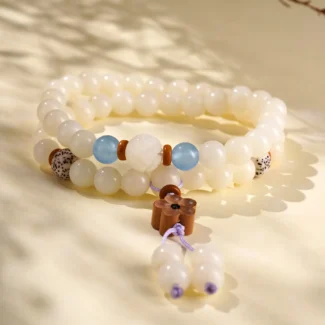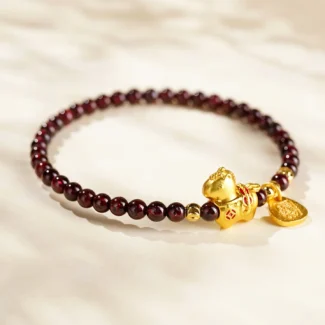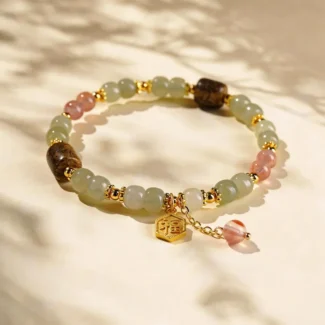



Wooden bracelets hold a unique and timeless status, revered for their natural beauty, spiritual significance, and investment value. But with so many types available, what are the best and most precious wood bracelets a collector can own?
This guide explores the top 10 most valuable and sought-after woods, from the divine scent of Agarwood to the mesmerizing grain of Hainan Huanghuali.
Table of Contents
1. Agarwood (Chen Xiang)
👑 Nickname: “The Scent of the Gods”
Topping any list of precious woods is Agarwood. It is not a wood in itself, but a resin-infused heartwood from the Aquilaria tree, which forms over decades as a response to injury or infection.
- Characteristics: Known for its complex, intoxicating fragrance that is elegant, subtle, and deeply calming. The highest grades, known as Kynam or Qinan, are exceptionally rare. The wood’s density determines its value, with sinking-grade pieces being the most prized.
- Why It’s Special: Agarwood has been used for millennia in religious ceremonies, traditional medicine, and as a high-status personal adornment. Its formation process is entirely natural and cannot be replicated, making it rarer than gold. You can learn more about its origins from its detailed Wikipedia page.
- Varieties: Kynam, Nha Trang Kynam, Tiger-Stripe Agarwood, Boddhisatva Kynam.
2. Sandalwood (Tan Mu)
✨ Nickname: “The Fragrant King”
Sandalwood is cherished for its tight grain, vibrant colors, and enduring fragrance. It is considered a sacred material in many cultures, believed to ward off negativity and promote tranquility.
- Characteristics: Dense, hard, and available in various colors. The most famous varieties are Red Sandalwood (Zitan) and Indian Sandalwood (Laoshan).
- Why It’s Special: Its aromatic scent is a key feature, making it a natural perfume. True Zitan was historically reserved for Chinese emperors, giving it the name “Wood of Kings.”
- Varieties: Small-Leaf Red Sandalwood (Zitan), Laoshan Sandalwood, Golden Silk Sandalwood.

3. Golden Silk Nanmu (Jin Si Nan Mu)
🌟 Nickname: “The King of Softwoods”
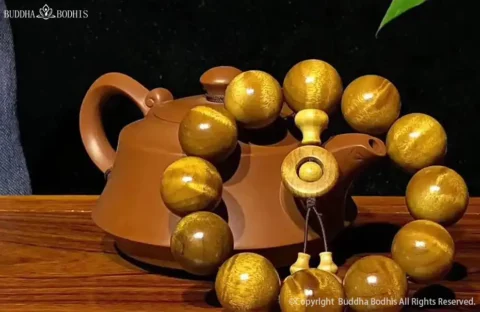
Golden Silk Nanmu is revered as a wood that captures the essence of heaven and earth. It is known for its beautiful golden sheen and exceptionally fine texture.
- Characteristics: The wood contains mesmerizing golden threads that shimmer under light. It feels warm to the touch in winter and cool in summer, and it develops a beautiful luster without any polish.
- Why It’s Special: Wearing or handling a Golden Silk Nanmu bracelet is believed to calm the mind and spirit. When properly seasoned, the golden threads become more pronounced, creating an amber-like, translucent effect.

4. Hainan Huanghuali
🎨 Nickname: “The Crown of Woods”
Often called the “gold of woods,” Hainan Huanghuali (Dalbergia odorifera) is one of the most precious and protected hardwoods in the world. As the saying goes, “The world’s rosewood is in China, and China’s best rosewood is in Hainan.”
- Characteristics: Its most prized feature is its stunning, picturesque grain patterns, often resembling faces, landscapes, or animals, known as “ghost faces.”
- Why It’s Special: Its beauty is legendary among collectors. However, it should not be polished directly by hand, as sweat can darken the wood and obscure its magnificent patterns. The Gemological Institute of America (GIA) has documented the unique characteristics of this rare rosewood.

5. Bodhi Seeds (Pu Ti Zi)
🌱 Nickname: “The Seeds of Enlightenment”
While not technically a wood, Bodhi Seeds are a cornerstone of Buddhist prayer beads and are essential in any list of precious natural bracelets. The term “Bodhi” now refers to over 200 types of seeds and nuts used for malas.
- Characteristics: Each type of seed has a unique texture, shape, and pattern. They develop a beautiful, deep patina over years of handling and chanting.
- Why It’s Special: In Buddhism, using a Bodhi seed mala for chanting is said to bring immeasurable blessings. Their connection to the Buddha’s enlightenment makes them spiritually potent.
- Varieties: Vajra Bodhi, Star-Moon Bodhi, Eighteen Seeds Bodhi.
6. Taihang Yabai Cypress (Tai Hang Ya Bai)
🏔️ Nickname: “The Cliff Treasure”
The saying goes, “Cypress is found all over the country, but the Taihang variety is supreme.” Taihang Yabai grows on the steep cliffs of the Taihang Mountains, enduring harsh conditions for centuries.
- Characteristics: It is known for its rich, mellow, and deeply pleasant fragrance. The wood from this region is denser and finer-grained than other cypress varieties. Old-growth, weathered pieces are the most valuable.
- Why It’s Special: Its aroma is believed to calm the nerves and purify the air. The “burl” pieces with swirling patterns are especially sought after by collectors.

7. Golden Dragon Blood Resin (Jin Long Xue Zhi)
🐉 Nickname: “The Iron Tree’s Blood”
This unique material is a combination of wood from the Dragon’s Blood Tree (Dracaena) and the red resin it secretes.
- Characteristics: The bracelet features a beautiful blend of wood grain and rich, red resin deposits. Polished beads have a warm, jade-like luster.
- Why It’s Special: In Chinese culture, the color red symbolizes good fortune and joy. This bracelet is believed to be a powerful talisman for attracting positive energy and luck.
8. Dragon’s Blood Jinsi Bamboo
🎋 Nickname: “The New Favorite”
A recent sensation in the world of wood bracelets, this is actually a type of bamboo, not wood. Its name comes from its blood-red color when freshly cut.
- Characteristics: Known for its dense “fish roe” texture and a golden “cat’s eye” effect under light. It has high oil content and density, allowing it to develop a beautiful patina quickly.
- Why It’s Special: After seasoning, the beads take on a deep, blood-red agate color. Its rarity and unique appearance have made it a highly sought-after material.
9. Six-Path Wood (Liu Dao Mu)
☸️ Nickname: “The Dragon-Subduing Wood”
Six-Path Wood is famous for the six distinct lines that naturally run through its branches, symbolizing the six realms in Buddhism.
- Characteristics: The six lines are a natural part of the wood’s grain. The wood itself is extremely slow-growing.
- Why It’s Special: Folklore says the wood contains the blessings of six enlightened monks, offering powerful protection against evil. It is also known as “Dragon-Subduing Wood” and is highly cherished by Buddhist practitioners. A piece just a few centimeters thick can be nearly a century old, making it very precious.
10. Northern Agarwood (Bei Chen Xiang)
🌲 Nickname: “Amber Wood”
This material is a modern favorite, but it’s crucial to know that it has no relation to true Agarwood. It is actually fossilized resin from Red Pine trees, also known as Amberwood or Song Ming.
- Characteristics: Formed over hundreds of years as fallen pine trees decay, leaving behind the resin-saturated heartwood. It is dense, waterproof, and has a rich medicinal and pine fragrance.
- Why It’s Special: It represents the resilient essence of the pine tree. It offers a wonderful fragrance and durability at an affordable price, but should never be confused with true Agarwood.
Conclusion
From the divine aroma of Agarwood to the spiritual significance of Bodhi Seeds, the world of precious wood bracelets is rich with history, beauty, and meaning. The “best” wood is a personal choice, depending on your connection to its story, scent, or appearance.
For a curated selection of authentic, high-quality bracelets crafted with spiritual intention, explore the collections at Buddha Bodhis.
Frequently Asked Questions (FAQ)
1. What is the most expensive wood for a bracelet?
Agarwood, particularly sinking-grade or Kynam varieties, is by far the most expensive, with prices sometimes exceeding gold by weight.
2. What is the difference between Agarwood and Sandalwood?
Agarwood is a resin-infused heartwood known for its complex scent, while Sandalwood is a fragrant wood known for its creamy, sweet aroma. Both are highly valued but have distinct fragrances and origins.
3. Are Bodhi seeds a type of wood?
No, they are the seeds of various plants. They are included in this list due to their immense popularity and significance in the world of prayer beads (malas).
4. How do I care for my precious wood bracelet?
Avoid contact with water, soap, and chemicals. Store it in a soft cloth pouch when not in use. The natural oils from your skin are the best polish, so wear it often.
5. What makes Hainan Huanghuali wood so special?
Its incredibly beautiful and unique grain patterns, known as “ghost faces,” which are considered works of art by nature. It is also extremely rare and protected.
6. Is “Northern Agarwood” real Agarwood?
No. It is fossilized pine resin, also called Amberwood. It has its own pleasant scent but is completely different from true Agarwood from the Aquilaria tree.
7. Which wood is best for beginners?
Sandalwood or Taihang Yabai Cypress are excellent choices. They are beautiful, fragrant, relatively durable, and more affordable than top-tier woods like Agarwood or Huanghuali.
8. What does it mean when a wooden bracelet develops a “patina”?
A patina is the glossy sheen that develops on the surface of the beads over years of being handled. It’s a sign of a well-loved and properly seasoned bracelet.
9. Why are these wood bracelets so valuable?
Their value comes from a combination of rarity, long maturation time (often hundreds of years), cultural and spiritual significance, and unique beauty or fragrance.
10. Can I wear multiple wood bracelets at once?
Yes, many people enjoy stacking bracelets. It is believed that combining the energies of different woods can create a harmonious and powerful effect.